
Moving from Denver, CO to Alaska
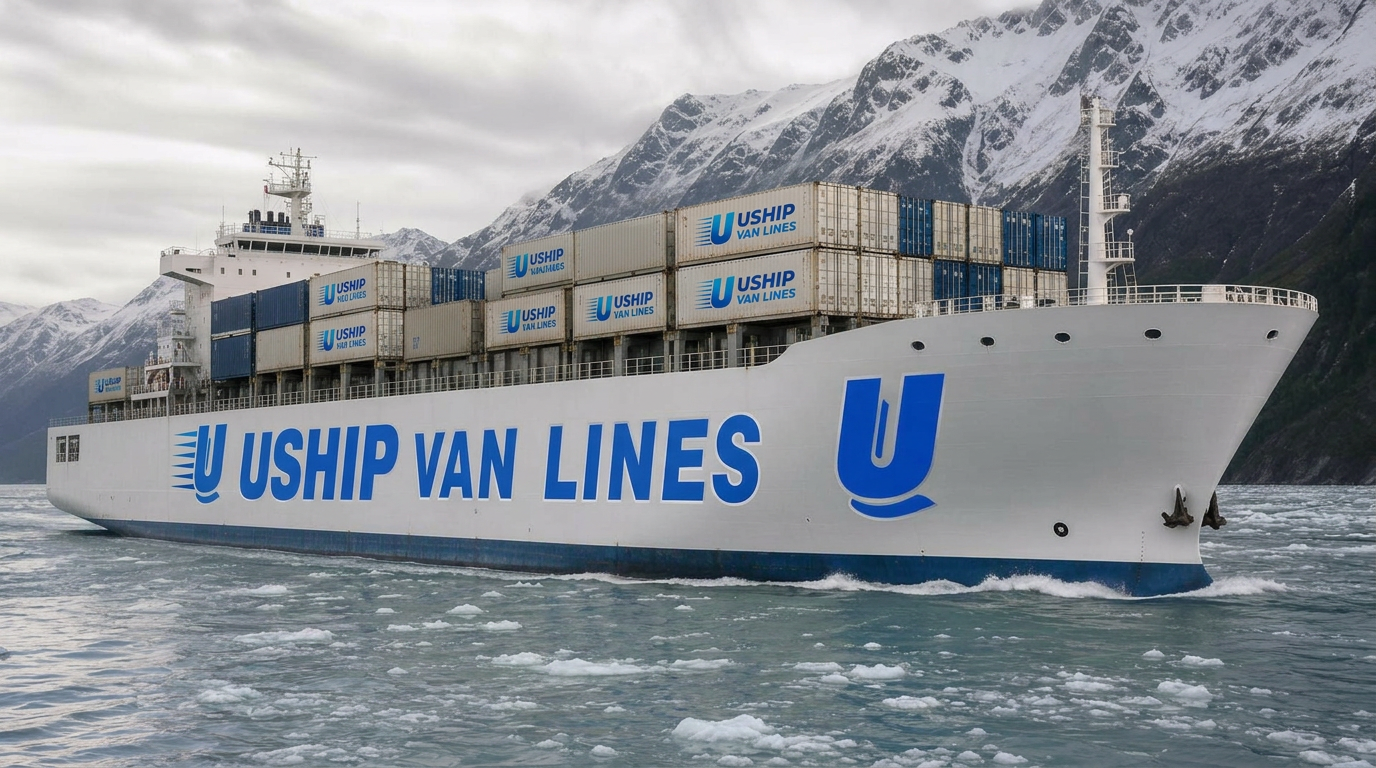
Moving from Denver's Mile High City to the Last Frontier represents one of the most dramatic relocations in North America. Unlike a standard long-distance move, your household goods will travel by truck to the Port of Tacoma, then voyage by barge across the Gulf of Alaska before final delivery to Anchorage, Fairbanks, or beyond.
Best Alaska & Hawaii Movers, powered by UShip Van Lines, specializes in coordinating these complex multi-modal moves. We handle the entire journey—from your Denver doorstep through marine transit to your new Alaska home—so you can focus on your adventure ahead. Ready to begin? Request a detailed quote tailored to your timeline and destination.
Route overview
How Your Belongings Travel from Denver to Alaska
Your move begins with professional loading in Denver, followed by overland transit approximately 1,250 miles northwest to the Port of Tacoma, Washington. This initial leg typically takes 2–3 days. Your containerized shipment then waits for the next scheduled barge departure—sailings to Alaska occur weekly during peak season (May–September) and bi-weekly during winter months.
The ocean voyage from Tacoma to the Port of Anchorage covers roughly 1,450 nautical miles and takes 5–7 days depending on weather and routing. Upon arrival in Alaska, your goods clear the port and transfer to local trucks for final delivery. If you're moving to Fairbanks, the Mat-Su Valley, Kenai Peninsula, or bush communities, add 1–3 additional days for ground transport from Anchorage.
This route requires careful coordination between trucking companies, marine carriers, port operators, and Alaska-based delivery teams. Experienced Alaska movers synchronize these moving parts to minimize delays and keep you informed at every stage.
How the moving process works
Your Step-by-Step Moving Process
-
Initial Consultation & Inventory — We assess your household volume (typically measured in cubic feet or by room count), discuss your Alaska destination, and identify any items requiring special handling or that cannot ship (hazardous materials, propane tanks, ammunition).
-
Packing & Loading in Denver — Professional movers arrive at your Denver home to pack fragile items, disassemble furniture, and load everything into a secure container or dedicated truck compartment. Marine-grade containers offer maximum protection during the barge voyage.
-
Overland Transport to Tacoma — Your shipment travels by truck through Wyoming and across the Pacific Northwest to the Port of Tacoma, arriving 2–3 days after pickup. The container is staged in the port's secure yard awaiting the next Alaska barge.
-
Marine Transit to Anchorage — Your container boards a Tacoma-Anchorage barge service operated by carriers like TOTE Maritime or similar vessels. The Gulf of Alaska crossing takes 5–7 days, with vessels navigating through open ocean and the Inside Passage.
-
Port Clearance & Customs Documentation — While Alaska is a U.S. state and requires no customs clearance for domestic moves, port paperwork and container release procedures add 1–2 business days after vessel arrival.
-
Last-Mile Delivery — Alaska-based trucking partners transport your goods from the Anchorage port to your final address. Delivery to Anchorage proper happens within 1–2 days; Fairbanks or Kenai deliveries add 1–3 days depending on road conditions and scheduling.
-
Unloading & Inspection — Movers place items in designated rooms, reassemble major furniture pieces, and remove packing materials. You conduct a final inventory check and note any damage for insurance claims.
Estimated moving costs
What to Budget for Your Denver to Alaska Move
A typical 2-bedroom household (approximately 5,000–7,000 pounds or 700–1,000 cubic feet) moving from Denver to Anchorage generally ranges from $6,800 to $11,500 for full-service door-to-door delivery. A 3-bedroom home (1,200–1,600 cubic feet) typically costs $10,500 to $16,000. These estimates include pickup, overland trucking, marine barge freight, port handling, and Alaska delivery.
Key cost drivers include:
- Shipment volume — Pricing is primarily based on cubic footage or weight; every additional room or large item increases your cost.
- Barge scheduling — Peak summer season (June–August) commands premium rates due to high demand; shoulder seasons (April–May, September–October) offer better pricing.
- Final destination — Anchorage deliveries are most economical; Fairbanks adds $800–$1,500; remote communities accessible only by smaller plane or seasonal barge incur significantly higher costs.
- Packing services — Full professional packing adds $800–$2,000 but provides insurance protection and saves considerable time.
- Vehicle shipping — Adding a car or truck to your move costs $1,800–$3,200 via roll-on/roll-off barge service.
- Storage — If your Alaska housing isn't ready, warehouse storage in Anchorage runs $150–$300 per month for a typical household.
We never guarantee prices without a detailed inventory. Request a personalized quote to receive accurate estimates based on your specific move date, volume, and services needed.
Estimated transit times
Realistic Timeline: Door-to-Door Delivery
Plan for 14–24 days total transit time from your Denver pickup date to final delivery in Alaska. Here's how that breaks down:
- Denver to Tacoma (truck): 2–3 days of driving, though your container may stage for 1–3 additional days awaiting the next barge sailing window.
- Port staging in Tacoma: 1–7 days depending on when your shipment arrives relative to the next scheduled Alaska departure.
- Tacoma to Anchorage (barge): 5–7 days on the water, with vessels typically departing Tuesdays or Wednesdays during peak season.
- Port processing in Anchorage: 1–2 business days for container offloading, paperwork completion, and transfer to local delivery trucks.
- Anchorage to final destination: Same-day to 3 days depending on location—Anchorage deliveries happen quickest; Fairbanks typically adds 1–2 days; Kenai or Mat-Su Valley 1–2 days.
Winter moves (November–March) often extend to 21–28 days due to reduced barge frequency (bi-weekly instead of weekly), potential weather delays in the Gulf of Alaska, and challenging road conditions for Alaska-based delivery trucks. Summer moves (May–September) typically fall on the faster end of the range thanks to weekly sailings and optimal driving conditions.
We provide tracking updates at each milestone so you're never left wondering where your belongings are.
Regional logistics
Alaska-Specific Moving Logistics
Port & Marine Requirements: Your shipment will be containerized—typically in a 20-foot or 40-foot marine container shared with other households (consolidated) or dedicated to your goods alone (exclusive use). Consolidated shipping offers cost savings; exclusive containers provide faster timelines and eliminate the risk of other customers' delays affecting your delivery. Port handling fees in Tacoma and Anchorage are included in full-service quotes but can add $400–$800 if you're coordinating your own move.
Vehicle Shipping: If you're driving the Alaska Highway yourself, you'll face 2,200+ miles and 4–5 days of driving from Denver through Canada. Many customers opt to ship one vehicle via the same barge carrying household goods. Roll-on/roll-off (RORO) vehicle service requires an empty, clean car with less than a quarter tank of fuel. Enclosed container shipping costs more but protects classic or luxury vehicles from salt air exposure.
Prohibited & Restricted Items: Alaska-bound shipments cannot include hazardous materials (paint, cleaning chemicals, gasoline, propane cylinders, ammunition, fireworks). Perishable foods aren't recommended given the 2–3 week journey. House plants face no legal restrictions but may not survive the temperature fluctuations. Prescription medications, important documents, and valuables should travel with you.
Delivery Access in Alaska: If you're moving beyond Anchorage, confirm your final address is truck-accessible. Most Mat-Su Valley and Kenai Peninsula homes present no issues. Fairbanks and surrounding areas are fully truck-accessible year-round. Remote bush communities may require small-plane cargo flights or seasonal barge service, dramatically increasing costs and complexity—discuss these scenarios during your initial consultation.
Storage Options: If your Alaska home isn't ready or you're arriving before your shipment, secure warehouse storage in Anchorage is available. Climate-controlled units protect belongings from Alaska's extreme temperature swings. Short-term storage (under 30 days) often costs less than rebooking delivery dates.
Seasonal considerations
Best Times to Move from Denver to Alaska
Summer (May–September) is peak moving season for Alaska relocations. Weekly barge sailings, 18+ hours of daylight, and dry road conditions create the most predictable timelines. Expect premium pricing—book 6–8 weeks ahead to secure space during June and July when many families relocate before the school year. The weather advantage is substantial: warm temperatures reduce risks to temperature-sensitive items, and your delivery crew won't battle ice and snow.
Shoulder Seasons (April, October) offer a sweet spot of reduced pricing and decent logistics. Barge frequency transitions from weekly to bi-weekly, but weather remains generally cooperative. You'll save 10–20% compared to summer peak, and scheduling is more flexible. Early October moves arrive before Alaska's hard freeze; April departures catch the tail end of winter barge schedules.
Winter (November–March) presents the most challenging—and economical—moving window. Barge sailings drop to bi-weekly or even monthly for some routes. Gulf of Alaska storms can delay vessels by 2–5 days. Snow and ice complicate both Denver loading and Alaska delivery, particularly if you're moving to Fairbanks or beyond Anchorage. However, pricing drops 20–30% below summer rates, and if your timeline is flexible, winter moves are entirely feasible. Just budget an extra week for potential weather delays.
Barge Schedule Note: Confirm current sailing schedules during your quote process. Carriers occasionally adjust frequency based on cargo volume, and holiday weeks (Thanksgiving, Christmas, New Year's) may see modified departure dates.
Why choose Best Alaska & Hawaii Movers
Why Best Alaska & Hawaii Movers for Your Denver-Alaska Move
-
Alaska Specialists, Not Generalists — We coordinate Alaska and Hawaii moves exclusively, powered by UShip Van Lines' logistics network. This isn't a side service; it's our core expertise. We understand barge schedules, port procedures, and Alaska delivery realities that general long-distance movers simply don't encounter.
-
Full-Service, Single Point of Contact — You'll work with one coordinator who manages every leg: Denver pickup, Tacoma port transfer, marine booking, Anchorage clearance, and final delivery. No finger-pointing between trucking companies and marine carriers—we own the entire process.
-
Transparent Pricing & Realistic Timelines — We provide detailed written estimates breaking down each cost component. Our timeline projections account for real-world variables like barge schedules and Alaska road conditions, not best-case fantasies. You'll know what to expect before signing anything.
-
Tracking & Communication — Receive updates when your shipment departs Denver, arrives in Tacoma, boards the barge, reaches Anchorage, and is out for final delivery. We proactively notify you of any weather delays or schedule changes.
-
Insurance & Accountability — Comprehensive cargo insurance options protect your belongings during the entire journey, including the marine leg. We work with you to document and resolve any damage claims quickly.