
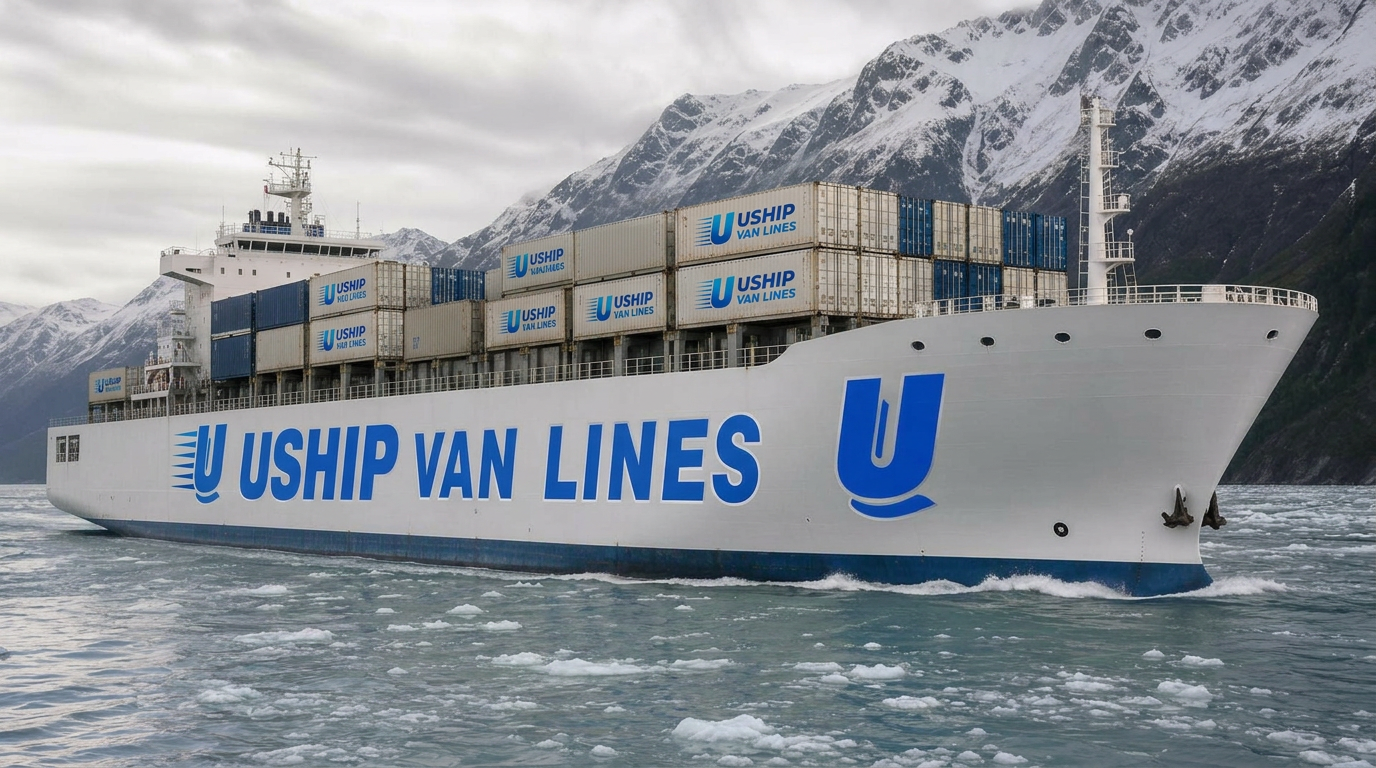
Moving from Alaska to Denver, CO
Moving from Alaska to Denver, CO involves a multi-stage journey combining ocean barge transport, ground logistics, and careful coordination across thousands of miles. Whether you're relocating from Anchorage, Fairbanks, the Mat-Su Valley, or remote communities, your household goods will travel by barge to Tacoma or Seattle, then overland through the Pacific Northwest and Rocky Mountain corridors to Colorado's Mile High City.
This route requires specialized experience with Alaska's unique logistics—port schedules, seasonal weather windows, customs documentation, and last-mile coordination. Best Alaska & Hawaii Movers, powered by UShip Van Lines, manages every leg of your Alaska-to-Denver move with transparent pricing and realistic timelines. Ready to start planning? Request your free, no-obligation quote today.
Route overview
Alaska to Denver: A Multi-Modal Journey
The Alaska-to-Denver moving route spans approximately 2,300–2,500 road miles (after the ocean crossing) and combines maritime and ground transport. Your belongings depart Alaska via commercial barge from ports like Anchorage, Whittier, or dedicated terminals serving Fairbanks and the Mat-Su Valley. The barge sails to Tacoma or Seattle, where containerized freight is offloaded and transferred to over-the-road trucking.
From the Pacific Northwest, your shipment travels south through Washington, crosses into Idaho, then follows I-84 and I-25 corridors through Utah or Wyoming into Colorado. Denver's central Front Range location and excellent interstate access make final delivery straightforward, but timing depends heavily on barge schedules, weather in Alaska, and seasonal road conditions through mountain passes.
This lane is popular among military families, retirees seeking lower costs of living, and professionals relocating to Denver's booming tech and energy sectors. Understanding the barge component—sailing frequency, weather delays, and port logistics—is critical to setting realistic expectations and avoiding surprise costs.
How the moving process works
How Your Alaska-to-Denver Move Works: Step by Step
-
Schedule Your Move and Reserve Barge Space
Contact Best Alaska & Hawaii Movers 6–10 weeks before your target move date. We'll reserve barge space based on Alaska Marine Lines or Totem Ocean Trailer Express (TOTE) sailing schedules and coordinate your preferred Denver delivery window. -
In-Home or Virtual Survey
We conduct a detailed inventory assessment—in-person in major hubs like Anchorage or via video call for remote locations. This determines cubic footage, special handling needs (pianos, firearms, fragile items), and whether you're shipping vehicles alongside household goods. -
Packing and Loading in Alaska
Professional crews pack your belongings using marine-grade materials designed for barge transit. Items are loaded into 20- or 40-foot shipping containers or secure trailer vans, which are sealed and documented before departing your Alaska residence. -
Barge Transit to Tacoma/Seattle
Your container sails from Alaska to the Lower 48, typically a 3–5 day ocean voyage depending on weather and port stops. Barges sail weekly during peak season (May–September) but less frequently in winter months. -
Port Offload and Customs Clearance
Once docked in Tacoma or Seattle, containers are offloaded, inspected, and transferred to our ground transportation network. Any customs or agricultural inspections are completed at this stage. -
Overland Transport to Denver
Your shipment travels by truck through the Intermountain West—typically I-84 to I-80/I-25 or I-15 to I-70 corridors. Transit time is 2–4 days depending on weather, route, and consolidation schedules. -
Final Delivery and Unpacking in Denver
Our delivery team contacts you 24–48 hours before arrival to schedule your delivery window. We unload, place furniture in designated rooms, and offer optional unpacking services. You inspect and sign off on the delivery inventory before the crew departs.
Estimated moving costs
What Does an Alaska-to-Denver Move Cost?
For a typical 2–3 bedroom household (7,000–12,000 lbs or 800–1,200 cubic feet), expect to invest $6,500–$12,000 for a full-service move from Alaska to Denver. Smaller 1-bedroom or studio moves may range $3,500–$5,500, while larger 4-bedroom homes can reach $14,000–$18,000 or more.
Key cost drivers include:
- Volume and weight: Barge freight is priced by cubic feet or container size; ground transport by weight and mileage
- Origin location in Alaska: Anchorage and Wasilla are most cost-effective; Fairbanks, Kenai, Juneau, or bush communities add last-mile trucking or air/barge feeder costs
- Barge season: Peak summer sailings (June–August) cost 10–20% more than shoulder or winter months
- Packing services: Full professional packing adds $800–$1,800; partial packing (fragile items only) $300–$600
- Vehicle shipping: Adding a car or truck costs $1,200–$2,200 (barge + ground) depending on vehicle size
- Storage: If barge schedules and Denver delivery dates don't align, short-term storage in Tacoma or Denver runs $150–$400/month
- Accessorial services: Stairs, long carries, elevator fees, or bulky items (gun safes, exercise equipment) add $100–$500
We never quote guaranteed prices without a detailed inventory. Costs vary based on your specific volume, services, and timing. Request a free quote to receive a binding estimate tailored to your Alaska-to-Denver move.
Estimated transit times
How Long Does an Alaska-to-Denver Move Take?
Door-to-door transit time from Alaska to Denver typically ranges 10–21 days, broken down as follows:
- Alaska pickup to port departure: 1–3 days (loading, container prep, transport to Anchorage/Whittier port)
- Barge sailing (Alaska to Tacoma/Seattle): 3–5 days on the water; add 2–7 days for weekly sailing schedules
- Port offload and transfer: 1–2 days (customs clearance, container transfer to truck chassis)
- Overland trucking (Pacific Northwest to Denver): 2–4 days depending on consolidation and weather
- Final delivery scheduling: 1–2 days (we coordinate your delivery window upon arrival in Denver)
Total realistic timeline: 2–3 weeks from Alaska pickup to Denver delivery.
Summer moves (May–September) are fastest due to frequent barge sailings and favorable weather. Winter moves (October–April) can extend to 3–4 weeks because barges sail less frequently and severe weather may delay port operations or mountain pass travel. Always build flexibility into your Denver arrival plans—temporary lodging, vehicle shipping, or storage options help bridge any timing gaps.
Regional logistics
Alaska-Specific Moving Logistics You Need to Know
Port and Barge Operations
Most Alaska shipments depart via the Port of Anchorage or Whittier. Alaska Marine Lines and TOTE operate regular container/barge services to Tacoma and Seattle. Your goods are loaded into marine containers or secure trailer vans designed for ocean transport. Barge schedules are published months in advance, but severe weather or mechanical issues can cause delays—build buffer time into your plans.
Last-Mile Challenges in Alaska
If you're moving from Fairbanks, Mat-Su communities (Wasilla, Palmer), Kenai Peninsula, or bush locations, your belongings must first be trucked to Anchorage/Whittier ports. Winter road conditions (ice, avalanches on the Seward Highway) can impact pickup timing. Remote communities not connected by road may require air freight or seasonal barge feeder services, significantly increasing cost and complexity.
Vehicle Shipping
Many Alaska-to-Denver movers ship a vehicle alongside household goods. Cars and trucks travel in the same barge/container system, then are driven or trucked from Tacoma to Denver. Expect $1,200–$2,200 total. Ensure your vehicle is cleaned (Alaska agricultural inspections are strict), has less than 1/4 tank of fuel, and contains no personal items.
Customs and Documentation
Alaska-to-Lower 48 moves don't cross international borders, but USDA agricultural inspections apply to prevent pest/disease transfer. Declare any wooden furniture, plants, or soil-containing items. Firearms must be properly documented and secured per federal and state laws (Alaska and Colorado have different regulations).
Insurance and Valuation
Standard carrier liability (60 cents/lb) is inadequate for most households. Opt for full-value protection or third-party moving insurance to cover replacement cost. Marine transit and long overland hauls carry higher risk than local moves—protect your investment.
Timing Coordination
Because barge schedules are fixed and ground transit variables exist, your Alaska pickup date and Denver delivery date may be 2–3 weeks apart. Arrange temporary housing, vehicle transport, or short-term storage to bridge gaps. We provide real-time tracking and proactive communication to minimize uncertainty.
Seasonal considerations
Best Times to Move from Alaska to Denver
Summer (May–September): Peak Season
Barge sailings run weekly, weather is most predictable, and ground transport through mountain passes is straightforward. Expect highest costs (10–20% premium) but fastest, most reliable timelines. Ideal if you're coordinating school starts, job transitions, or want to avoid Alaska winter challenges. Book 8–12 weeks ahead—summer slots fill early.
Fall (September–October): Shoulder Season
Barge frequency decreases but weather remains manageable. Costs drop 10–15% compared to summer. Early snowfall in Alaska or Colorado mountain passes can cause minor delays. Good option if you have flexible timelines and want moderate savings.
Winter (November–March): Off-Season
Barge sailings are less frequent (bi-weekly or monthly), and severe weather can delay port operations in Alaska or truck transit through Wyoming/Colorado mountain corridors. Costs are lowest (15–25% below peak), making this attractive for budget-conscious moves with flexible delivery dates. Ensure your Denver residence is ready for uncertain arrival windows.
Spring (April–May): Transition Period
Barge schedules ramp up as ice conditions improve. Weather is unpredictable—late snow in Alaska, spring storms in the Rockies. Costs begin climbing toward summer rates. Book early to secure preferred sailing dates as demand increases.
Pro tip: If you're moving in winter, ask about storage options in Tacoma or Denver to decouple barge schedules from final delivery, reducing weather-related stress.
Why choose Best Alaska & Hawaii Movers
Why Choose Best Alaska & Hawaii Movers for Your Alaska-to-Denver Relocation
-
Alaska Logistics Expertise: We specialize in the unique challenges of Alaska moves—barge scheduling, port coordination, last-mile access to remote communities, and seasonal weather planning. Our team understands the Port of Anchorage, Whittier terminals, and Fairbanks feeder routes.
-
Transparent, Binding Estimates: We provide detailed, written quotes based on thorough inventories—no surprise fees or hidden charges. You'll know exactly what to expect from Alaska pickup through Denver delivery.
-
End-to-End Coordination: From marine container loading in Alaska to final room placement in Denver, we manage every leg. You get a single point of contact, real-time tracking, and proactive updates throughout your move.
-
Flexible Service Options: Whether you need full-service packing, partial packing, vehicle shipping, storage, or custom crating for high-value items, we tailor services to your budget and timeline.
-
Powered by UShip Van Lines: Our partnership with UShip Van Lines gives you access to a vetted nationwide network of professional movers, competitive pricing, and customer protections backed by a trusted platform.
-
Customer-First Communication: We know Alaska-to-Denver moves involve complex logistics and long timelines. Our team provides clear explanations, realistic expectations, and responsive support from your first quote request through final delivery sign-off.