
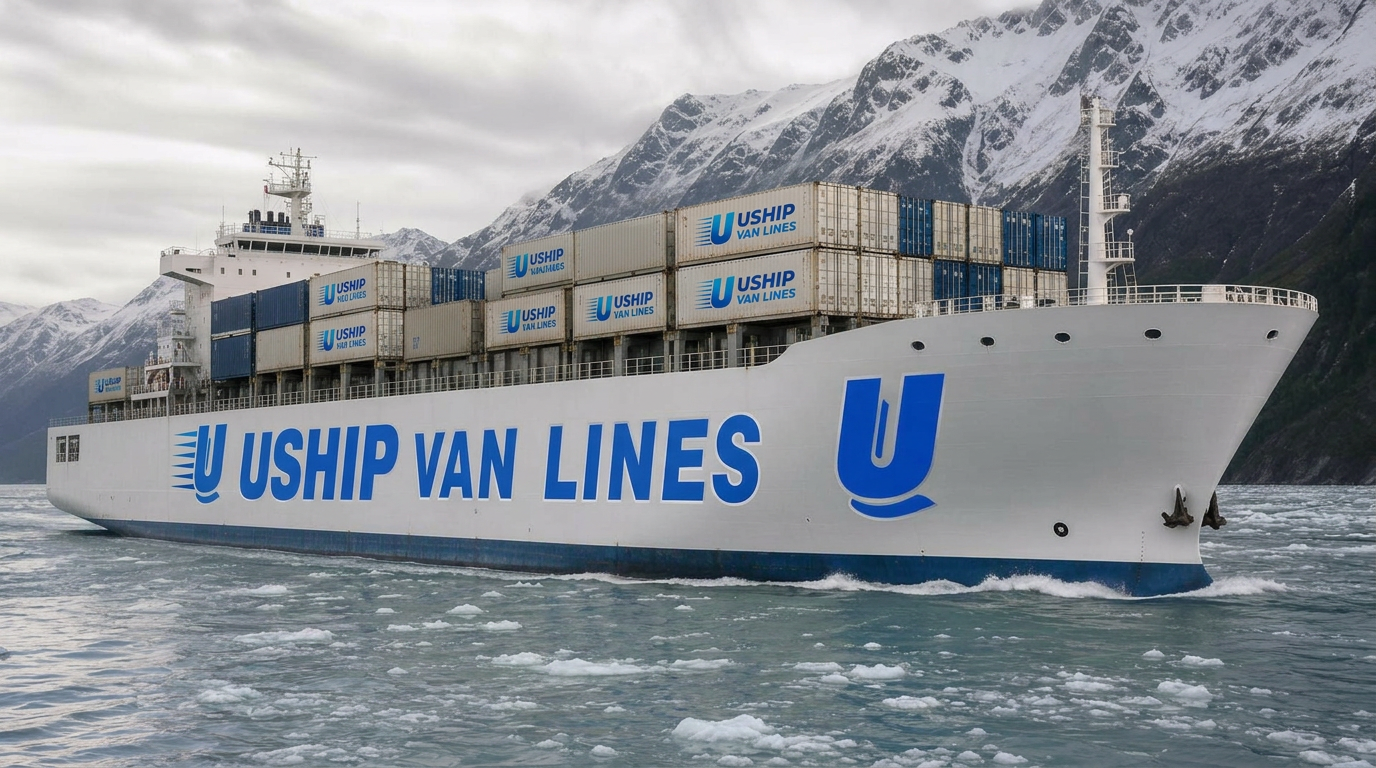
Moving from Alaska to Kansas City, MO
Relocating from Alaska to Kansas City, MO involves a unique logistics chain that few moving companies understand. Your household goods will travel by barge from Alaska to the Port of Tacoma, then overland approximately 1,800 miles to the heart of the Midwest—a journey that requires specialized coordination, realistic timeline planning, and careful attention to seasonal shipping windows.
Best Alaska & Hawaii Movers, powered by UShip Van Lines, manages every stage of this complex route. We coordinate barge schedules, handle port transfers, and deliver your belongings door-to-door in Kansas City. Request a free quote today to see transparent pricing and a detailed timeline for your specific move date.
Route overview
The Alaska to Kansas City Moving Lane
Moving from Alaska to Kansas City combines maritime and overland transportation in a carefully orchestrated sequence. Your belongings depart from Anchorage, Fairbanks, Mat-Su Valley, or other Alaska locations and travel to the Port of Anchorage or Whittier for barge loading. After a 4–7 day ocean voyage to Tacoma, Washington, containers are offloaded and transferred to long-haul trucks for the 1,800-mile journey through Idaho, Wyoming, Nebraska, and into Missouri.
Kansas City sits at the geographic center of the continental United States, making it a major distribution hub with excellent highway access. Your goods will typically arrive via I-70 or I-35, entering a metro area known for moderate four-season weather—a dramatic shift from Alaska's extreme climate. The total door-to-door timeline averages 10–18 days depending on barge schedules, weather conditions, and whether you're moving from Alaska's road system or a more remote community.
This route sees steady year-round demand from military families relocating to or from Fort Leavenworth, retirees seeking lower cost of living and easier winters, and professionals drawn to Kansas City's growing healthcare, technology, and logistics sectors. Understanding the barge schedule limitations and transit variables is essential for a smooth relocation.
How the moving process works
How Your Alaska to Kansas City Move Works
-
Initial Survey and Quote — We conduct a virtual or in-person assessment of your household goods, noting any high-value items, special packing requirements, or vehicles. You receive a detailed quote showing barge fees, overland transport, labor, and optional services like packing or storage.
-
Barge Booking and Scheduling — We reserve space on the next available Alaska Marine Lines or Totem Ocean Trailer Express barge sailing from Anchorage, Whittier, or your nearest port. Barge schedules vary by season; summer offers weekly sailings while winter may have reduced frequency. We coordinate pickup dates to align with your barge cutoff.
-
Alaska Pickup and Containerization — Our crew arrives at your Alaska home to load your belongings into a 20-foot or 40-foot shipping container. Items are carefully secured with padding, straps, and load bars to withstand the ocean voyage. If you're in Fairbanks, Mat-Su, or Kenai, we handle the last-mile trucking to the departure port.
-
Ocean Transit to Tacoma — Your container sails south through the Inside Passage, typically taking 4–7 days depending on port calls and weather. The barge docks at the Port of Tacoma, where containers are offloaded and transferred to our secure facility for inspection and overland dispatch.
-
Overland Transport to Kansas City — A dedicated truck hauls your container approximately 1,800 miles east across Washington, Idaho, Wyoming, Nebraska, and into Missouri. This leg takes 3–5 days under normal conditions, with real-time GPS tracking available.
-
Delivery and Unpacking — Our Kansas City crew contacts you 24–48 hours before arrival to confirm delivery window. We unload your container, place items in designated rooms, reassemble furniture, and remove all packing materials. You inspect and sign off on the delivery.
-
Vehicle and Final Details — If shipping a vehicle separately, we coordinate auto transport from Anchorage to Kansas City via enclosed or open carrier, typically adding 7–14 days. Final payment is processed upon successful delivery, and we follow up to ensure your satisfaction.
Estimated moving costs
What Does an Alaska to Kansas City Move Cost?
A typical 2–3 bedroom household moving from Alaska to Kansas City ranges from $6,800 to $12,500 for full-service door-to-door transport. Studio and 1-bedroom moves average $4,200–$6,500, while large 4+ bedroom homes can reach $14,000–$19,000. These figures include barge freight, overland trucking, labor on both ends, basic valuation coverage, and fuel surcharges.
Key cost drivers for this route:
- Container size and volume — A 20-foot container (1–2 bedrooms) costs substantially less than a 40-foot container (3+ bedrooms). Partial container loads sharing space can reduce costs for smaller moves.
- Origin location in Alaska — Moves from Anchorage or Wasilla have lower pickup fees than remote locations requiring extended last-mile transport or bush plane access.
- Barge schedule and season — Peak summer barge demand (May–August) may carry higher rates. Winter sailings are less frequent but sometimes offer lower base pricing.
- Packing and crating services — Professional packing adds $800–$2,200 depending on household size. High-value items like artwork or antiques may require custom crating.
- Vehicle shipping — Adding a car to your move costs $1,400–$2,600 from Anchorage to Kansas City via open carrier, or $2,200–$3,800 for enclosed transport.
- Storage needs — If your Kansas City home isn't ready, climate-controlled storage in Tacoma or Kansas City runs $150–$350 per month for a typical load.
- Insurance and valuation — Standard coverage is $0.60 per pound per article. Full-value replacement protection adds 1–3% of the declared value to your total cost.
We never quote guaranteed prices without a detailed inventory, as every move is unique. Request a free estimate to receive transparent, itemized pricing for your specific needs and timeline.
Estimated transit times
How Long Does the Move Take?
Door-to-door transit from Alaska to Kansas City typically takes 10–18 days under normal conditions. This timeline breaks down into three distinct legs:
Alaska pickup to barge departure: 1–3 days, depending on whether you're in Anchorage (same-day port delivery) or a more distant location like Fairbanks or Kenai (requiring 1–2 days of overland transport to the port).
Barge transit to Tacoma: 4–7 days on the water. Direct sailings take 4–5 days, while routes with intermediate port calls in Kodiak, Cordova, or other communities add 1–2 days. Weather delays in the Gulf of Alaska can extend this leg by 12–24 hours.
Overland trucking to Kansas City: 3–5 days for the 1,800-mile journey. Trucks travel I-90 east to I-29 or I-35 south, then I-70 into Kansas City. Winter weather in Wyoming or Nebraska can add 1–2 days if highways close temporarily.
Delivery window coordination: We typically offer a 2–3 day delivery window once your container departs Tacoma. Expedited service can tighten this to a specific date for an additional fee.
If you're moving to Kansas City during peak summer (June–August), barge space fills quickly and scheduling may require booking 3–4 weeks in advance. Winter moves (November–March) often have more flexible barge availability but face higher risk of weather delays. Always build in 3–5 days of buffer time between your Alaska departure and any hard deadlines in Kansas City.
Regional logistics
Alaska-Specific Moving Logistics
Port and barge operations: Most Alaska moves depart from the Port of Anchorage (primary year-round terminal) or Whittier (seasonal alternative with rail access). If you're in Southeast Alaska (Juneau, Ketchikan, Sitka), your goods may barge directly to Tacoma via Alaska Marine Highway or private carriers, bypassing Anchorage entirely. We handle all port documentation, customs forms (if applicable for Canadian routing), and hazardous material declarations.
Last-mile Alaska transport: If you live outside Anchorage—in Fairbanks, Wasilla, Palmer, Soldotna, Homer, or other road-accessible towns—we coordinate pickup and delivery to the port. Remote communities off the road system (bush Alaska) require additional planning: goods may travel by bush plane, winter ice road, or seasonal barge to reach the main shipping port, adding 3–10 days and $1,500–$5,000 depending on location.
Vehicle shipping: Cars, trucks, and RVs can roll onto the same barge as your household goods or ship separately via dedicated auto carrier. Vehicles must have less than a quarter tank of fuel for barge transport per safety regulations. We drain fluids if required and provide door-to-door auto delivery to Kansas City, typically arriving within 1–2 days of your household goods.
Restricted and prohibited items: Alaska moves cannot include firearms (ship separately via licensed FFL dealer), hazardous materials (propane, ammunition, cleaning chemicals), or perishable foods. Alcohol is limited to personal-use quantities and must be declared. Plants require USDA inspection certificates when entering the Lower 48; we can coordinate phytosanitary certification if needed.
Storage options: If your Kansas City home isn't ready when your goods arrive in Tacoma, we offer short-term warehouse storage in our climate-controlled Tacoma facility or can arrange storage in Kansas City upon arrival. Storage is billed monthly and your container remains sealed for security.
Insurance and claims: Basic carrier liability covers $0.60 per pound per article, which severely undervalues most household goods. We strongly recommend full-value replacement coverage, adding 1–3% of your declared shipment value. Document high-value items with photos and appraisals before the move. Marine insurance policies cover ocean transit risks including rough seas and port handling.
Kansas City delivery requires clear access for a 53-foot tractor-trailer or smaller truck depending on your neighborhood. Narrow historic streets in areas like Westport or Brookside may require shuttle service from a nearby staging location—discuss your delivery address with us during the quote process to avoid surprises.
Seasonal considerations
Timing Your Alaska to Kansas City Move
Spring (March–May): Barge frequency increases in late April as weather improves and tourism season begins. Early spring moves benefit from lower demand and competitive pricing, but late-season snowstorms in Alaska and Wyoming can still cause delays. Roads in Mat-Su and Kenai become more accessible as snow melts. Kansas City weather is mild and pleasant for move-in.
Summer (June–August): Peak moving season in Alaska with the most frequent barge sailings—often twice weekly from Anchorage. However, demand is highest from military PCS moves and families relocating before the school year, leading to premium pricing and the need to book 4–6 weeks ahead. Road access to remote Alaska locations is best. Kansas City summers are hot and humid (85–95°F), so plan delivery for early morning to avoid heat stress.
Fall (September–November): Excellent window for Alaska moves as tourism drops, barge rates soften, and weather remains relatively stable through mid-October. After early November, barge schedules begin reducing frequency for winter. Kansas City enjoys comfortable fall temperatures ideal for unpacking and settling in. Book by late August for September moves.
Winter (December–February): Barge sailings drop to weekly or less frequent service. Severe weather in the Gulf of Alaska can delay departures or extend transit times by 1–3 days. Overland trucking faces potential delays from snow and ice closures on I-90 or I-80 through Wyoming. Kansas City winters are cold (20–40°F) with occasional ice storms, so ensure your delivery window allows flexibility. Winter moves offer the lowest rates—often 15–25% below summer pricing—if you can accommodate longer timelines.
We recommend booking spring or fall moves for the best balance of weather, barge availability, and cost. Always discuss your target dates with us early so we can secure optimal barge space and plan contingencies for weather delays.
Why choose Best Alaska & Hawaii Movers
Why Choose Best Alaska & Hawaii Movers for Your Alaska to Kansas City Relocation
-
Alaska logistics expertise — We specialize exclusively in Alaska and Hawaii moves, managing barge schedules, port transfers, and last-mile transport that general moving companies cannot handle. Our team understands Anchorage port operations, seasonal sailing patterns, and the unique challenges of Alaska relocations.
-
End-to-end coordination — You work with a single point of contact from quote to delivery. We manage the barge line, trucking carriers, customs paperwork, and delivery scheduling so you never chase down multiple vendors or worry about handoff failures between legs.
-
Transparent pricing and realistic timelines — We provide itemized quotes showing exactly what you pay for barge freight, trucking, labor, and optional services. No surprise fees, no bait-and-switch estimates. We give you honest transit timelines with buffer days for weather, not optimistic promises we can't keep.
-
Powered by UShip Van Lines infrastructure — Our partnership with UShip Van Lines gives us access to a nationwide carrier network, GPS tracking technology, and cargo insurance programs that independent brokers cannot match. Your move benefits from enterprise-grade logistics while maintaining personalized service.
-
Flexible service levels — Choose full-service packing and unpacking, or save money with a hybrid approach where we load and transport while you pack. We accommodate partial loads, vehicle shipping, and storage without forcing you into one-size-fits-all packages.
-
Real-time communication — Receive text or email updates when your container loads, when the barge departs, when it arrives in Tacoma, when the truck dispatches, and 24–48 hours before Kansas City delivery. Call or text your coordinator anytime for status checks—no phone trees or offshore call centers.