
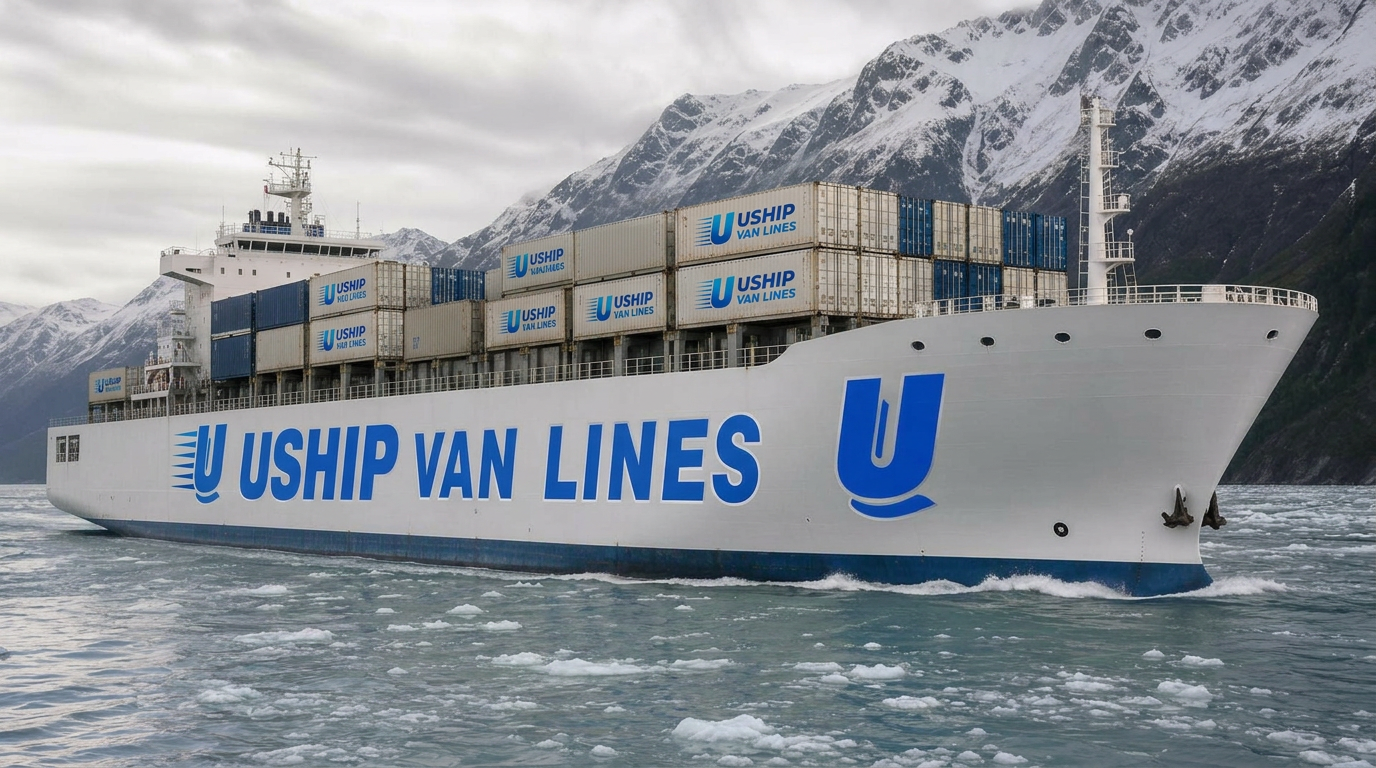
Moving from Alaska to Arizona
Relocating from Alaska to Arizona means trading the midnight sun and rugged wilderness for year-round sunshine and desert landscapes. This cross-country move involves specialized logistics—your belongings travel by barge from Alaska to the Lower 48, then overland to the Grand Canyon State.
Whether you're leaving Anchorage, Fairbanks, or the Mat-Su Valley for Phoenix, Tucson, or Flagstaff, understanding the unique Alaska-to-Arizona moving process helps you plan smarter. Request your free quote today to get accurate pricing tailored to your origin, destination, and household size.
Route overview
What Makes Alaska-to-Arizona Moves Unique
Moving from Alaska to Arizona is one of the longest domestic relocations you can make—roughly 3,000 to 3,500 miles depending on your exact cities. Because Alaska isn't connected to the continental road network, your household goods must travel by marine freight from Alaska ports (typically Anchorage, Whittier, or Kodiak) to Tacoma, Washington, then transfer to long-haul trucks for the remaining 1,400+ miles to Arizona.
This dual-mode journey takes longer than a typical interstate move but offers significant cost savings compared to air freight. Arizona's booming metro areas—Phoenix, Scottsdale, Tucson, Mesa—attract many Alaska transplants seeking affordable living, no state income tax, and outdoor recreation without the extreme cold. The logistics are complex, but experienced Alaska movers coordinate every handoff so your belongings arrive intact at your new Sonoran Desert home.
How the moving process works
How Your Alaska-to-Arizona Move Works: Step by Step
-
Free In-Home or Virtual Survey: A moving consultant assesses your inventory—furniture, boxes, vehicles, specialty items—and provides a binding or not-to-exceed estimate. For remote Alaska locations (bush communities, Kenai Peninsula), virtual surveys via video call are common.
-
Packing and Preparation: Professional crews pack fragile items, disassemble furniture, and inventory everything. Alaska humidity is low; Arizona is even drier—electronics and wood furniture typically handle the transition well, but proper padding prevents damage during barge movement.
-
Pickup and Containerization: Movers load your goods into a 20-foot or 40-foot shipping container at your Alaska residence. Containers are sealed, labeled, and trucked to the departure port (Anchorage or Whittier are most common for southbound freight).
-
Barge Transit to Tacoma: Your container sails from Alaska to the Port of Tacoma, Washington—typically 5–7 days at sea. Sailing schedules vary by season; summer offers more frequent departures than winter.
-
Port Processing and Truck Transfer: In Tacoma, the container is offloaded, cleared through port logistics, and transferred to a long-haul semi-truck. This intermodal handoff usually takes 1–3 business days.
-
Overland Haul to Arizona: The truck drives from Tacoma through Oregon, across Idaho or Nevada, and into Arizona—approximately 3–5 days of road time depending on weather and routing.
-
Final Delivery and Unloading: Movers deliver your container to your Arizona address, unload, unpack (if purchased), reassemble furniture, and remove debris. You inspect and sign off on the inventory checklist.
Total door-to-door timeline: 14–28 days, with most moves completing in 18–21 days during peak summer season.
Estimated moving costs
What You'll Pay to Move from Alaska to Arizona
A typical 2–3 bedroom household moving from Anchorage to Phoenix or Tucson costs $6,500–$11,000 for full-service door-to-door moving. Studio or 1-bedroom moves run $4,200–$6,800, while larger 4–5 bedroom homes can reach $12,000–$18,000 or more.
Key cost drivers include:
- Volume and weight: Charged per cubic foot or per pound; a 3BR home averages 800–1,200 cubic feet.
- Origin accessibility: Moving from downtown Anchorage costs less than remote Mat-Su Valley or bush communities requiring barge and air/ferry legs.
- Barge schedule: Peak summer sailings (May–September) may carry premium rates due to high demand.
- Packing services: Full-pack adds $800–$1,800; fragile-only or partial-pack is mid-range.
- Vehicle shipping: Adding a car or truck to the same barge runs $1,200–$2,200 Alaska to Tacoma, then $600–$900 Tacoma to Arizona.
- Storage: If your Arizona home isn't ready, warehouse storage in Tacoma or Arizona costs $150–$350/month.
- Insurance: Full-value protection (replacement cost) adds 1–2% of shipment value; released-value (60¢/lb) is included.
These are estimates, not guarantees. Request a personalized quote for binding prices based on your exact inventory and addresses.
Estimated transit times
How Long Does It Take to Move from Alaska to Arizona?
Expect 14–28 days door-to-door, with most moves averaging 18–21 days in summer and 21–28 days in winter.
Timeline breakdown by leg:
- Pickup and port delivery (Alaska): 1–3 days, depending on whether you're in Anchorage or a more remote area.
- Barge sailing to Tacoma: 5–7 days on the water.
- Port processing and truck transfer: 1–3 days for offloading, customs (if applicable), and loading onto a semi.
- Overland truck haul (Tacoma to Arizona): 3–5 days, occasionally 6 in winter weather.
- Final delivery window: Movers typically offer a 2–3 day delivery window; you'll receive 24-hour notice.
Delays can occur due to:
- Weather: Winter storms in Alaska, Pacific Northwest ice, or Arizona monsoon washouts (July–August).
- Barge schedule gaps: Fewer sailings November–March mean longer waits between departures.
- Port congestion: Tacoma occasionally experiences backups during peak shipping season.
Flexible delivery dates and early booking minimize delays.
Regional logistics
Alaska-Specific Logistics for Your Arizona Move
Ports and Marine Freight
Most Alaska southbound shipments depart from the Port of Anchorage (for Anchorage, Eagle River, Mat-Su Valley) or Whittier (for Kenai Peninsula, some Southcentral areas). Containers are loaded onto Alaska Marine Lines, Totem Ocean Trailer Express (TOTE), or similar carriers. Sailing schedules, container availability, and weather windows dictate pickup dates—plan around the published sailing calendar, not arbitrary move dates.
Vehicle Shipping
Shipping your car or truck on the same barge as your household goods is common and cost-effective. Vehicles must be empty (no personal items), operable (or noted as non-runner with extra fees), and have less than ¼ tank of gas. From Tacoma, vehicles are driven or trucked to Arizona, adding 5–7 days to total transit. Alternatively, drive the Alaska Highway to the Lower 48 and then south—a 3,500+ mile, multi-day adventure.
Paperwork and Documentation
While Alaska-to-Arizona is a domestic move (no customs), you'll need a detailed inventory list, bill of lading, and proof of insurance. If shipping firearms, ensure compliance with TSA and carrier regulations. Movers handle most paperwork; you sign and retain copies.
Last-Mile Delivery in Arizona
Arizona's sprawling metro areas and rural regions require coordination. Urban Phoenix, Scottsdale, Tucson, and Mesa have straightforward access. Rural or remote desert communities (Sedona, Prescott, Bisbee) may incur extra mileage fees or require smaller shuttle trucks if roads are narrow.
Items That Require Special Handling
Hazardous materials (propane, fuel, paint, aerosols) cannot travel by barge or truck. Perishables spoil over 3+ weeks. Houseplants face Arizona agriculture inspection; some species are restricted. Prescription medications and valuables (jewelry, documents) should travel with you, not in the moving container.
Seasonal considerations
Best Time to Move from Alaska to Arizona (Season by Season)
Summer (May–September): Peak Season
Most Alaska-to-Arizona moves happen in summer. Barge schedules are frequent (weekly or bi-weekly sailings), roads are clear, and daylight hours are long for efficient packing and loading. Expect higher rates due to demand, and book 6–8 weeks ahead. Phoenix and Tucson temperatures soar above 100°F in July–August; plan delivery for early morning to avoid heat stress on crews and heat-sensitive items.
Fall (October–November): Shoulder Season
Cooler Arizona weather makes unloading more comfortable. Barge frequency drops slightly, so confirm sailing dates early. Rates soften compared to summer peaks. Early snow can hit Alaska mountain passes by late October, but major routes remain passable.
Winter (December–March): Off-Season
Fewest sailings and longest lead times—some routes run only monthly. Alaska ice, short daylight, and Pacific Northwest snow can delay pickups and trucking. However, you'll often secure the lowest rates of the year. Arizona enjoys mild, pleasant winter weather, ideal for settling in. If moving from remote Alaska locations, confirm barge and road access before booking.
Spring (April–May): Transition Season
Sailing schedules ramp up, rates remain moderate, and both Alaska thaw and Arizona spring offer comfortable conditions. Ice breakup can briefly affect some Alaska ports in early April, but by mid-month logistics normalize. Book by late February for May moves to lock in early-season pricing.
Why choose Best Alaska & Hawaii Movers
Why Choose Best Alaska & Hawaii Movers (Powered by UShip Van Lines)
- Alaska Logistics Expertise: We coordinate barge schedules, port transfers, and last-mile delivery across Alaska's unique geography—from Anchorage high-rises to remote bush communities.
- Transparent Pricing: Receive a detailed, itemized estimate with no hidden fees. Our quotes account for marine freight, trucking, and Arizona delivery, so you know the full cost upfront.
- End-to-End Coordination: One point of contact manages your entire move—barge booking, truck dispatch, delivery scheduling, and issue resolution. You're never handed off to multiple vendors.
- Comprehensive Insurance Options: Choose between basic released-value coverage (included) or full-value protection for complete peace of mind on high-value items.
- Flexible Scheduling: We work around barge sailing calendars and your timeline. Need short-term storage in Tacoma or Arizona while you finalize housing? We offer secure warehouse solutions.
- Proven Track Record: Thousands of Alaska and Hawaii families have trusted us for seamless long-distance moves. Our crews understand the care required for cross-country, multi-modal shipments.