
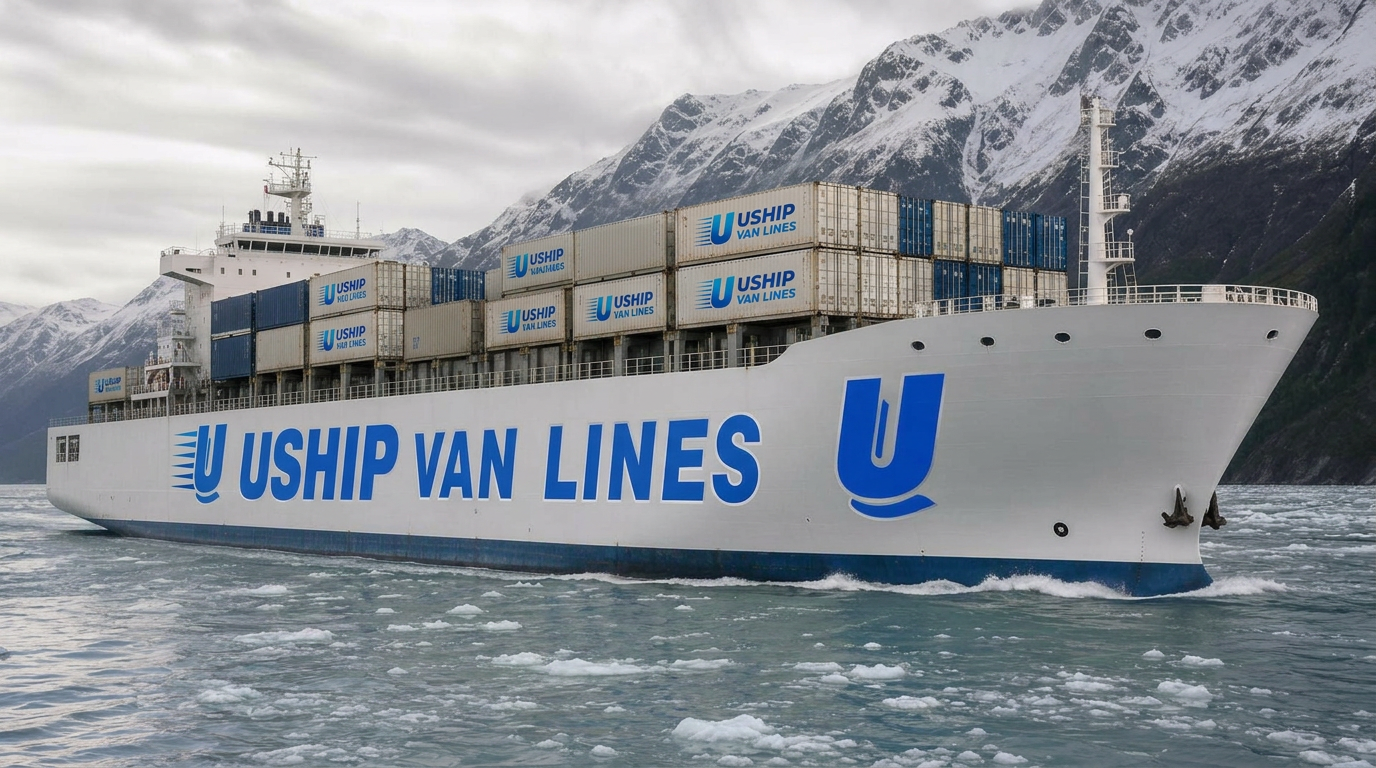
Moving from Alaska to Racine, WI
Relocating from Alaska to Racine, Wisconsin involves specialized logistics that go far beyond a typical long-distance move. Your household goods will travel by ocean barge from Alaska to the Port of Tacoma, then overland across the Pacific Northwest and Upper Midwest to your new Lake Michigan community. Best Alaska & Hawaii Movers, powered by UShip Van Lines, handles every phase of this complex journey with expertise honed over hundreds of Alaska moves.
Whether you're leaving Anchorage, Fairbanks, the Mat-Su Valley, or a bush community, we coordinate barge schedules, containerized loading, customs paperwork, and final delivery to Racine. Ready to start planning your move? Request your free, no-obligation quote today and speak with a move coordinator who understands Alaska's unique challenges.
Route overview
Understanding the Alaska to Racine Moving Route
Moving from Alaska to Racine covers approximately 2,800–3,200 road miles depending on your Alaska origin point, but the actual journey is multi-modal. Your belongings typically originate in communities like Anchorage, Fairbanks, Wasilla, Palmer, or Kenai, then travel to a consolidation point before being loaded into marine containers at the Port of Anchorage or Whittier. The barge voyage to Tacoma takes 3–5 days under normal conditions, navigating the Inside Passage and coastal waters.
From Tacoma, your shipment transfers to a long-haul truck for the 1,800-mile overland journey through Washington, Idaho, Montana, North Dakota, Minnesota, and into Wisconsin. Racine sits on Lake Michigan's western shore, about 30 miles south of Milwaukee in southeastern Wisconsin. The city's industrial heritage has evolved into a diverse economy, and its lakefront location offers four distinct seasons—a significant climate change from Alaska's subarctic and arctic zones.
This route requires careful scheduling around barge departures, weather windows, and transit connections. Professional coordination ensures your household goods move efficiently through each handoff point without unnecessary delays or storage fees.
How the moving process works
Your Step-by-Step Moving Process
-
Initial Survey and Quote – A move coordinator conducts a virtual or in-person assessment of your Alaska home, noting volume, special items (firearms, taxidermy, outdoor equipment), and access challenges. You receive a detailed quote covering all phases: local pickup, barge shipping, overland transport, and Racine delivery.
-
Barge Schedule Coordination – We book your shipment on an Alaska Marine Lines or equivalent barge departure from Anchorage/Whittier to Tacoma. Weekly departures run year-round, but summer slots fill quickly. Advance booking (6–8 weeks minimum) secures your preferred dates.
-
Professional Packing and Loading – Experienced crews pack your household using marine-grade materials. Items are loaded into 20-foot or 40-foot shipping containers at your Alaska residence or our warehouse. Containers are sealed, inventoried, and transported to the port via truck or rail.
-
Ocean Barge Transit – Your container travels 1,400+ nautical miles from Alaska to the Port of Tacoma. GPS tracking provides real-time updates. Marine transit typically takes 3–5 days in summer, occasionally longer during winter storm cycles.
-
Tacoma Port Processing and Truck Loading – At Tacoma, containers are offloaded, cleared through any necessary inspections, and transferred to long-haul trucks. This transfer typically occurs within 24–48 hours of barge arrival.
-
Cross-Country Transport – Your shipment travels I-90 and I-94 corridors through the Mountain West, Great Plains, and into Wisconsin. Professional drivers navigate this 1,800-mile leg in 3–5 days, with strategic stops at secure facilities.
-
Final Delivery in Racine – Our team contacts you 24–48 hours before arrival to confirm delivery details. We unload, place furniture, reassemble items, and remove packing materials. You inspect and sign off on inventory, completing your Alaska-to-Wisconsin journey.
Estimated moving costs
Cost Expectations for Your Alaska to Racine Move
A typical 2–3 bedroom household moving from Alaska to Racine, WI ranges from $8,500 to $16,000 depending on volume, services, and timing. This estimate reflects the multi-modal nature of Alaska moves—you're paying for professional packing, local Alaska pickup, barge ocean freight, Tacoma transfer operations, 1,800+ miles of overland trucking, and final delivery in Wisconsin.
Primary cost drivers include:
- Shipment volume – Measured in cubic feet or container space (a 20-foot container holds roughly 1,000–1,200 cubic feet; a 40-foot container holds 2,000–2,400 cubic feet)
- Alaska origin location – Bush communities, Kenai Peninsula, or Fairbanks require additional trucking/barge legs compared to Anchorage
- Barge season – Summer peak season (May–September) commands premium rates due to high demand; winter departures may offer lower base rates but weather risk
- Packing services – Full-service packing adds $1,200–$2,500 but protects valuables and simplifies logistics
- Special items – Vehicles, ATVs, boats, gun safes, and large appliances require dedicated container space and handling
- Storage needs – If your Racine home isn't ready, Wisconsin storage runs $150–$300/month
- Insurance coverage – Basic carrier liability is included; full-value protection costs 1–2% of declared value
We never guarantee prices without a detailed inventory. Request a personalized quote to understand your specific cost profile. Many customers find Alaska moves more affordable than expected when using efficient barge routing instead of all-land transport through Canada.
Estimated transit times
Realistic Transit Times: Alaska to Racine
Door-to-door transit from Alaska to Racine typically requires 14–28 days, with timing depending on barge schedules, weather, and Alaska origin logistics.
Timeline breakdown:
- Alaska pickup and containerization: 1–3 days (longer for remote communities requiring freight forwarding)
- Container transport to port: 1–2 days (Anchorage-area origins); up to 5–7 days for Fairbanks or bush locations via Alaska Railroad or feeder barge
- Barge transit Anchorage/Whittier to Tacoma: 3–5 days under normal conditions; occasionally 6–7 days in winter storms
- Tacoma port transfer and truck loading: 1–2 days
- Overland trucking Tacoma to Racine: 4–6 days (1,800 miles via I-90/I-94)
- Delivery scheduling and unloading: 1 day
Total: 11–26 days in ideal conditions, with most moves completing in the 16–21 day range during summer. Winter moves may extend to 25–30 days due to weather delays and reduced barge frequency. Bush Alaska origins can add 7–10 days for initial freight consolidation.
Expedited service isn't typically available for Alaska moves due to barge schedule constraints, but we prioritize efficient connections at each handoff point to minimize total transit time.
Regional logistics
Alaska-Specific Moving Logistics You Need to Know
Port Operations and Documentation Alaska moves require marine bill of lading documentation for barge shipment. Your household goods are treated as commercial freight, meaning proper manifests, container seals, and customs paperwork (even for domestic moves, due to Alaska's geographic separation). We handle all documentation, but you'll need to provide identification and sign shipping authorizations.
Container Types and Loading Most Alaska household moves use 20-foot shipping containers (interior dimensions roughly 19'4" × 7'9" × 7'10"). Larger homes may require 40-foot containers or multiple 20-foot units. Containers are loaded at your residence when access permits, or goods are transported to a warehouse for consolidated loading. Marine containers are built to withstand ocean conditions, providing excellent protection against salt air and weather.
Vehicle Shipping Considerations Many Alaska residents ship vehicles separately via roll-on/roll-off (RoRo) barge service. Vehicles can also be loaded into containers alongside household goods if space permits, though this is less common due to weight distribution requirements. If shipping a vehicle to Wisconsin, budget $1,500–$2,800 for Alaska-to-Tacoma transport, plus $800–$1,200 for Tacoma-to-Racine auto transport.
Alaska Railroad Connections Shipments originating in Fairbanks, North Pole, or Interior Alaska often use Alaska Railroad to move containers from origin to the Port of Anchorage. This adds 2–3 days but is more cost-effective than long-haul trucking through challenging terrain. The railroad runs year-round with reliable service.
Bush and Remote Community Access If you're moving from a community off the road system (Bethel, Kotzebue, Nome, Kodiak, Unalaska, Southeast Alaska villages), your goods first travel by small plane, landing craft, or feeder barge to a hub community, then consolidate for mainline barge service. These moves require 3–6 weeks of advance planning and flexible schedules.
Restricted Items for Marine Transit Barge shipping prohibits hazardous materials, propane tanks, ammunition (in some cases), and flammable liquids. Firearms are allowed with proper documentation. Perishable foods should be consumed or disposed of before packing. Plants require USDA documentation and may not survive the journey.
Racine Delivery Considerations Racine features a mix of historic homes, newer developments, and lakefront properties. Narrow streets in older neighborhoods may require shuttle trucks for final delivery. Wisconsin requires advance notice for certain oversized deliveries. Winter deliveries may face snow/ice challenges—our Wisconsin crews are experienced in cold-weather operations.
Seasonal considerations
Planning Around Alaska's Seasonal Moving Patterns
Summer (May–September): Peak Season Most Alaskans move during the midnight sun months when weather is optimal and barge schedules are most frequent. Expect premium pricing, but also maximum reliability. Book 8–12 weeks ahead to secure preferred dates. Roads are clear, ports operate efficiently, and Wisconsin arrival coincides with pleasant Midwest weather. Racine's lakefront is at its best, making move-in easier.
Fall (October–November): Shoulder Season Barge frequency decreases but remains reliable through October. Pricing moderates as demand drops. Weather becomes a variable—early winter storms can delay barge departures or cause North Pacific swells. Wisconsin arrival means preparing your Racine home for winter. This period offers a good balance of reasonable rates and acceptable weather risk.
Winter (December–March): Off-Peak with Weather Risk Winter barge service continues but runs less frequently (often every 10–14 days rather than weekly). Storms in the Gulf of Alaska can delay departures by 2–7 days. Rates are typically 10–20% lower than summer, attracting budget-conscious movers and those with flexible timelines. Anchorage and Fairbanks experience extreme cold, complicating loading operations. Racine winters are harsh—plan for snow, ice, and temperatures well below freezing at delivery.
Spring (April): Transition Season Barge schedules ramp up as ice breaks and demand increases. Pricing remains moderate through mid-April. Alaska experiences breakup season—muddy conditions in rural areas and unpredictable weather. Wisconsin thaw means potential delivery challenges if late-season snow hits Racine. Good option for those who can tolerate some weather uncertainty in exchange for better rates than summer.
Alaska-specific considerations: Bush community access varies dramatically by season. Some villages are only accessible by air during spring breakup when rivers thaw. The Alaska Marine Highway (state ferry) coordinates with commercial barge schedules for certain remote communities.
Why choose Best Alaska & Hawaii Movers
Why Best Alaska & Hawaii Movers for Your Alaska to Racine Relocation
-
Alaska Logistics Expertise – We've coordinated hundreds of Alaska moves, understanding barge schedules, port operations, marine container loading, and bush community access challenges that general movers can't navigate.
-
Seamless Multi-Modal Coordination – Your move involves ocean barge, port transfers, and long-haul trucking. We manage every handoff, so you're not juggling multiple vendors or tracking down lost shipments between Alaska and Wisconsin.
-
Transparent Pricing and Scheduling – Alaska moves have unique cost structures. We provide detailed quotes breaking down barge freight, container fees, overland transport, and delivery charges—no hidden surprises when your shipment arrives in Racine.
-
UShip Van Lines Network – Powered by UShip Van Lines' nationwide carrier network, we secure reliable trucking from Tacoma to Wisconsin and maintain quality standards throughout your journey.
-
Real-Time Tracking and Communication – From the moment your container is sealed in Alaska until delivery in Racine, you receive updates at each milestone. Our coordinators are available to answer questions throughout the 2–4 week transit period.
-
Comprehensive Service Options – Whether you need full-service packing, vehicle shipping, temporary storage in Alaska or Wisconsin, or partial container loads, we customize solutions to your specific situation and budget.