
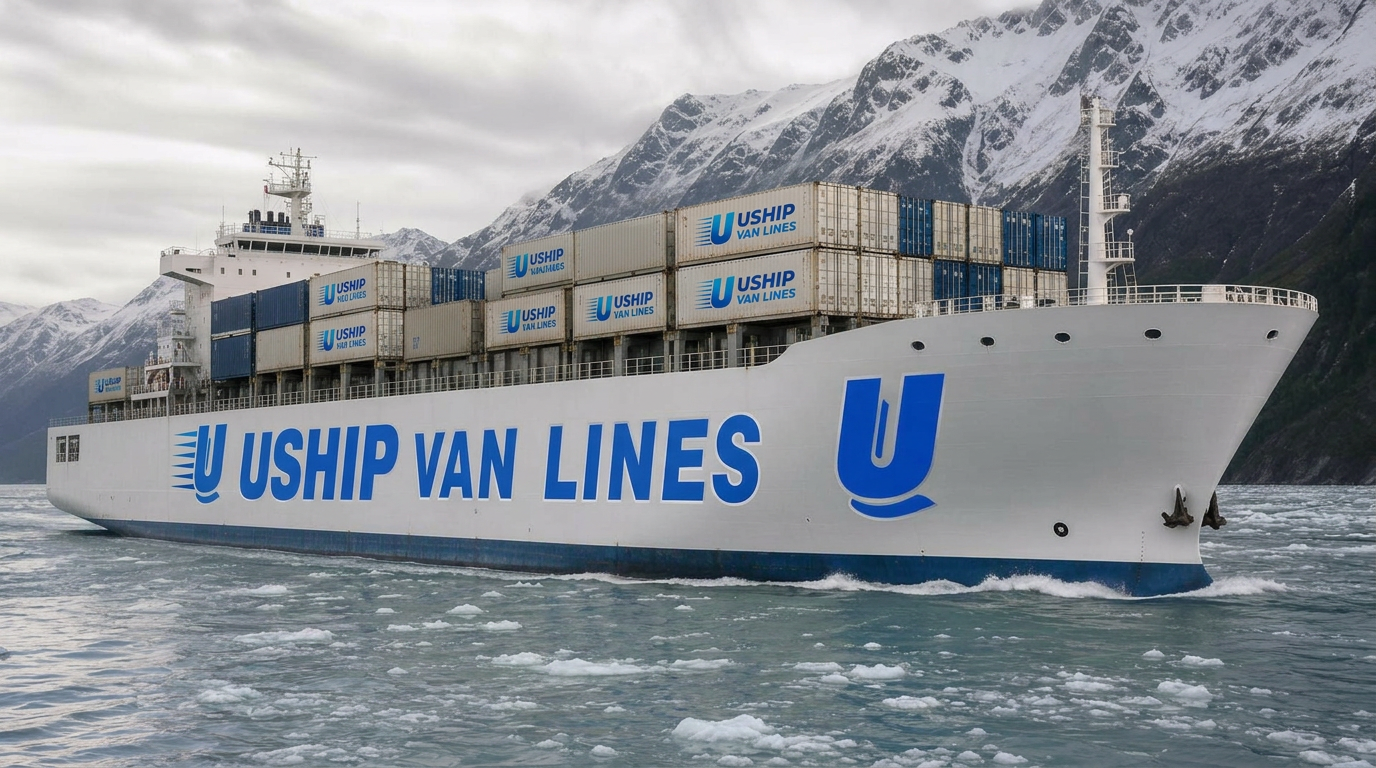
Moving from Alaska to Seattle, WA
Moving from Alaska to Seattle represents one of the most common relocation routes from the Last Frontier to the Lower 48. Whether you're leaving Anchorage, Fairbanks, or the Mat-Su Valley, this move combines maritime shipping with overland transit to deliver your household goods approximately 1,400 nautical miles south to the Emerald City.
Best Alaska & Hawaii Movers, powered by UShip Van Lines, specializes in Alaska-to-Seattle relocations, coordinating barge transport through the Port of Tacoma and seamless last-mile delivery throughout the Seattle metro area. Request your free, no-obligation quote today to start planning your move with confidence.
Route overview
Understanding the Alaska-to-Seattle Moving Route
The Alaska-to-Seattle corridor is the most heavily trafficked moving lane from Alaska to the continental United States. Your belongings travel by barge from Anchorage (or connecting ports like Whittier) south through the Inside Passage to the Port of Tacoma, then transfer to truck for the final 30-mile journey to Seattle.
This route serves residents relocating for employment (particularly tech, healthcare, and military transfers), retirees seeking milder climates, and families moving closer to extended family in the Pacific Northwest. Seattle's proximity to Alaska—both geographically and culturally—makes it a natural landing point for Alaskans seeking urban amenities while maintaining ties to the North.
Unlike cross-country moves, Alaska relocations require maritime expertise, customs documentation (even for domestic moves), and coordination across multiple carriers. Working with a specialized Alaska moving partner ensures your shipment clears port efficiently and arrives on your Seattle doorstep without unexpected delays.
How the moving process works
How Your Alaska-to-Seattle Move Works: Step-by-Step
-
Free In-Home or Virtual Estimate — A moving specialist evaluates your inventory (furniture, appliances, boxes) to calculate cubic footage and weight. Alaska moves are priced by volume and shipping method, not just mileage.
-
Container Loading in Alaska — Professional movers load your belongings into a dedicated shipping container (20-foot or 40-foot, depending on volume) at your Alaska residence. Proper loading and bracing prevent shifting damage during the ocean voyage.
-
Transport to Port of Anchorage or Whittier — Your sealed container travels by truck to the departure port. Anchorage handles most southbound freight; Whittier serves as an alternative for Mat-Su and interior Alaska shipments.
-
Barge Transit to Tacoma — Container ships operate weekly or bi-weekly schedules (weather-dependent) from Alaska to the Port of Tacoma, covering roughly 1,400 nautical miles in 3–5 days of ocean transit.
-
Port Clearance and Unloading — At Tacoma, your container clears customs inspection (USDA checks for restricted items), then transfers to a local warehouse for sorting and loading onto a delivery truck.
-
Final Delivery to Seattle — A local moving crew transports your container the short distance from Tacoma to your Seattle address, unloads your belongings, and places furniture according to your instructions.
-
Unpacking and Debris Removal — Full-service options include unpacking boxes, assembling furniture, and hauling away packing materials, letting you settle into your new Seattle home immediately.
Estimated moving costs
What Does It Cost to Move from Alaska to Seattle?
A typical 2–3 bedroom household moving from Alaska to Seattle costs $4,500–$8,500 for full-service door-to-door relocation. This estimate includes container loading, barge freight, port handling, and final delivery to the Seattle metro area.
Key cost drivers include:
- Volume and weight — Larger homes (3,500+ cubic feet) approach the upper range; studio/1-bedroom moves may cost $3,000–$4,800
- Barge schedule timing — Peak summer sailings (May–September) command premium rates due to high demand; winter sailings offer discounts but face weather delays
- Packing services — Professional packing adds $800–$1,800 but protects fragile items during ocean transit and ensures compliance with carrier requirements
- Vehicle shipping — Adding a car or truck to your barge shipment costs $1,200–$2,000 depending on size and whether it's driven on/off or containerized
- Storage — If your Seattle home isn't ready, warehouse storage in Tacoma runs $150–$350/month for typical household volumes
- Accessibility — Multi-story walk-ups, long carries, or restricted parking in Seattle's urban neighborhoods may incur additional labor charges ($150–$400)
These are representative ranges based on industry averages. Every move is unique. Request a detailed quote to receive accurate pricing for your specific inventory, timeline, and service level.
Estimated transit times
Alaska-to-Seattle Moving Timeline: How Long Does It Take?
Door-to-door transit from Alaska to Seattle typically takes 10–21 days, broken down as follows:
- Loading and port delivery (1–3 days): Crew loads your container in Alaska and transports it to the Port of Anchorage or Whittier, where it awaits the next available sailing.
- Barge transit (3–5 days): Ocean voyage from Alaska to the Port of Tacoma covers approximately 1,400 nautical miles. Actual sailing time depends on weather, vessel speed, and routing (direct vs. port calls).
- Port processing (2–4 days): Containers clear customs inspection, unload from the vessel, and transfer to the warehouse for sorting and delivery truck loading.
- Final delivery to Seattle (1–2 days): Short truck haul from Tacoma to your Seattle address, typically scheduled within 24–48 hours of port clearance.
- Scheduling buffer (3–7 days): Barge schedules run weekly or bi-weekly, so missing a sailing can add a full week. Weather delays (especially October–March) extend timelines unpredictably.
Fastest-case scenario: 10 days if your container catches an immediate sailing, enjoys calm seas, and clears port without inspection holds.
Typical scenario: 14–16 days accounting for realistic scheduling and port throughput.
Extended scenario: 21+ days during winter storms, peak summer congestion, or if you require storage before final delivery.
Book 4–6 weeks ahead of your desired delivery date to secure optimal barge space and allow flexibility for weather-related delays.
Regional logistics
Alaska-Specific Moving Logistics: What You Need to Know
Ports and Routing
Most Alaska-to-Seattle moves depart from the Port of Anchorage, Alaska's primary freight hub with weekly barge service. The Port of Whittier serves as an alternative for residents in the Mat-Su Valley, Kenai Peninsula, or interior Alaska, offering shorter truck hauls to port. Southbound barges sail to the Port of Tacoma, Washington's largest container facility, located 30 miles south of Seattle.
Required Documentation
Even though Alaska and Washington are both U.S. states, your shipment undergoes customs-style inspection. You'll provide a detailed inventory list (item descriptions, quantities, estimated values) for USDA review. Restricted items include houseplants (quarantine regulations), untreated firewood (pest concerns), and certain food products. Firearms must be declared and packed according to federal guidelines. Your moving company prepares the necessary paperwork, but you'll sign final disclosures.
Vehicle Shipping
Many Alaska movers add a vehicle to their household goods shipment. Cars, trucks, and SUVs travel on the same barge as your container (either roll-on/roll-off or inside a shared auto rack). Vehicles must be clean (no mud, dirt, or organic material—USDA requirement), under a quarter-tank of fuel, and emptied of all personal belongings except a spare tire and floor mats. Allow an extra $1,200–$2,000 for vehicle transport, with the same 10–21 day timeline as household goods.
Last-Mile Delivery in Seattle
Seattle's dense urban layout presents delivery challenges: narrow streets in neighborhoods like Capitol Hill and Queen Anne, limited truck access to older buildings, and strict parking regulations downtown. Confirm your building's loading dock availability or street parking permits with your landlord or HOA. High-rise deliveries may require freight elevator reservations (book 48–72 hours ahead). Communicate access details to your moving coordinator at least one week before delivery.
Storage Options
If your Seattle residence isn't ready when your container arrives in Tacoma, warehouse storage is available at the port or at Seattle-area facilities. Rates run $150–$350/month depending on volume. Storage-in-transit (SIT) coverage through your moving insurance may apply for up to 90 days. Plan ahead to avoid rush fees for same-day delivery once your home is ready.
Insurance and Valuation
Ocean transit exposes your belongings to unique risks (shifting cargo, salt air, weather events). Standard released-value coverage (typically $0.60/pound) provides minimal protection. Full-value replacement insurance is strongly recommended for Alaska barge moves, costing approximately 1–2% of your shipment's declared value. This covers repair, replacement, or cash settlement for damaged or lost items. Review your policy details carefully before loading day.
Seasonal considerations
Best Time to Move from Alaska to Seattle: Seasonal Factors
Summer (May–September): Peak Season
Alaska's summer moving window sees highest demand as families relocate between school years and weather conditions are most predictable. Barge schedules run most frequently, but expect premium pricing ($500–$1,200 above off-season rates) and longer booking lead times (6–8 weeks recommended). Seas are calmest June–August, minimizing transit delays. Seattle's dry summer weather simplifies delivery logistics—no snow, ice, or heavy rain complicating access.
Fall (October–November): Shoulder Season
Demand drops after Labor Day, bringing moderate pricing and better availability. However, Alaska's fall storm season increases the risk of sailing delays or cancellations. Barge lines may reduce weekly schedules to bi-weekly sailings. Book 4–5 weeks ahead. Seattle's rainy season begins in October, requiring weatherproofing for delivery day.
Winter (December–March): Off-Peak with Highest Risk
Lowest pricing of the year (potentially 15–25% below summer rates) attracts budget-conscious movers, but winter brings significant challenges. Gulf of Alaska storms delay or cancel sailings unpredictably. Reduced barge frequency may mean only 1–2 sailings per month. Snow and ice in Alaska complicate loading; Seattle's occasional winter storms (especially January–February) can disrupt final delivery. Only choose winter if you have flexible timelines and can tolerate 3–4 week delays.
Spring (April–May): Ideal Balance
Pricing transitions from off-season to peak, offering moderate rates with improving weather. Barge schedules increase to weekly sailings by late April. Daylight hours expand rapidly in Alaska, easing loading logistics. Seattle's spring rains are manageable, and you'll avoid the summer rush. Book 4–6 weeks out for best results.
Recommendation: If your timeline allows, target late April through June or September for the best combination of pricing, weather reliability, and schedule availability.
Why choose Best Alaska & Hawaii Movers
Why Best Alaska & Hawaii Movers for Your Alaska-to-Seattle Relocation
-
Alaska Barge Expertise — We coordinate hundreds of Alaska-to-Lower 48 moves annually, with established carrier relationships at the Port of Anchorage, Whittier, and Tacoma. Our logistics team navigates barge schedules, customs clearance, and port delays so you don't have to.
-
Transparent, All-Inclusive Pricing — Your quote includes container loading, ocean freight, port handling, and final delivery to Seattle—no hidden fees for fuel surcharges, port congestion, or "administrative costs." What we quote is what you pay (barring changes to your inventory).
-
Powered by UShip Van Lines — Our partnership with UShip Van Lines provides access to a vetted network of professional movers, cargo tracking technology, and robust claims support. You get the personalized service of a specialty Alaska mover backed by national infrastructure.
-
Flexible Service Levels — Choose full-service packing and unpacking, container loading only (you pack), or hybrid options. We tailor service to your budget and timeline, whether you need white-glove care for antiques or simple freight transport for a minimalist household.
-
Real-Time Shipment Updates — Track your container from Alaska loading through barge transit and final Seattle delivery via our online portal and SMS notifications. Know exactly where your belongings are at each stage of the journey.