
Moving from Alaska to Indianapolis, IN
Relocating from Alaska to Indianapolis, IN means coordinating ocean barge transport, cross-country trucking, and careful timing around Alaska's unique shipping seasons. Whether you're leaving Anchorage, Fairbanks, the Mat-Su Valley, or Kenai Peninsula for Indiana's capital city, this move requires specialized logistics that standard moving companies don't handle.
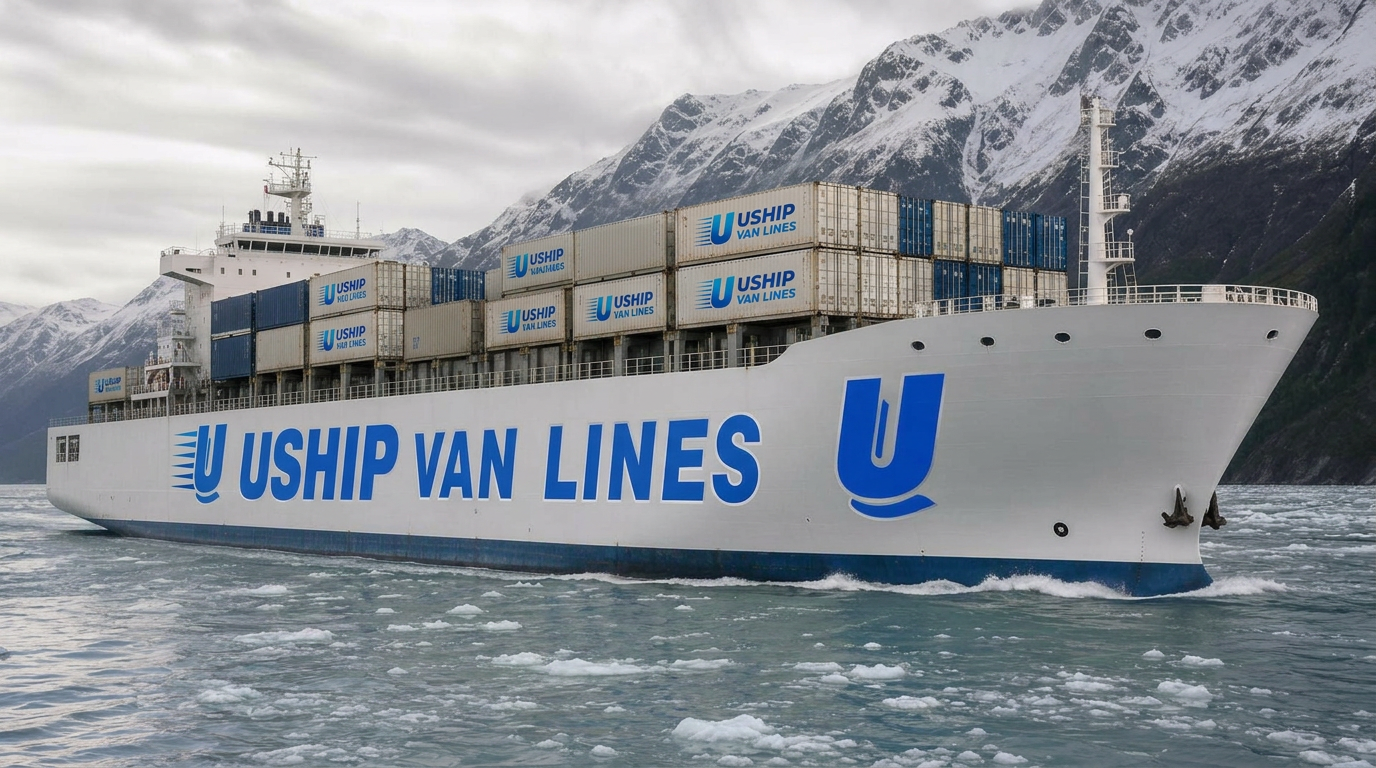
Best Alaska & Hawaii Movers, powered by UShip Van Lines, manages every leg of your Alaska-to-Indianapolis journey—from barge coordination through the Port of Anchorage or Port of Tacoma to final delivery in Indianapolis. Ready to start planning? Request your free, no-obligation quote today and speak with Alaska logistics specialists who understand this unique route.
Route overview
Understanding the Alaska to Indianapolis Moving Route
Moving from Alaska to Indianapolis involves a multi-modal journey spanning approximately 3,200–3,800 miles depending on your Alaska origin city. Your household goods travel by truck to the Port of Anchorage or Whittier, cross the Gulf of Alaska by ocean barge to Tacoma, WA, then move overland through Washington, Idaho, Montana or Wyoming, South Dakota, and into Indiana.
Indianapolis offers Alaska transplants a dramatically different lifestyle—four distinct seasons, affordable housing compared to Alaska's market, no state sales tax on groceries, and a thriving job market anchored by healthcare, manufacturing, and logistics industries. The city's central U.S. location means easier access to family across the Lower 48, while still offering outdoor recreation through state parks, Eagle Creek, and White River trails.
Timing this move requires awareness of Alaska's shipping calendar. Barge schedules run less frequently October through March, and severe weather can delay sailings. Most Alaska-to-Indianapolis moves happen May through September when barge frequency peaks and roads remain reliably passable throughout the northern route.
How the moving process works
How Your Alaska to Indianapolis Move Works: Step-by-Step
-
Initial consultation and survey – Our Alaska specialists assess your inventory (typically via video walk-through), discuss timing constraints, identify items requiring special handling, and provide a detailed written estimate covering all legs of transport.
-
Pre-barge preparation and packing – Professional crews pack and load your belongings in Alaska, preparing items for the marine environment with moisture barriers and secure crating for fragile goods. Vehicles can be shipped separately through roll-on/roll-off barge service.
-
Ground transport to Alaska port – Your shipment moves by truck from your Alaska residence to the Port of Anchorage or Whittier. For remote locations like Kenai or Fairbanks, this leg requires careful coordination with Alaska's limited highway system.
-
Ocean barge transit to Tacoma – Your goods sail approximately 1,500 nautical miles across the Gulf of Alaska to the Port of Tacoma, WA. This leg typically takes 5–8 days depending on weather, vessel, and routing through Inside Passage or open ocean routes.
-
Customs clearance and port processing – Though domestic, Alaska barge shipments undergo port authority inspections and documentation processing in Tacoma before release to overland carriers.
-
Cross-country trucking to Indianapolis – Once cleared, your shipment loads onto long-haul trucks for the 2,100-mile journey across the northern tier or central corridor to Indianapolis, typically following I-90 or I-80 routes depending on season and driver availability.
-
Final delivery and inspection – Our Indianapolis delivery team schedules a convenient arrival window, unloads your belongings, places furniture, and completes a final inventory check to ensure everything arrived as expected.
Estimated moving costs
What Does an Alaska to Indianapolis Move Cost?
A typical 2–3 bedroom household moving from Alaska to Indianapolis generally costs $7,800–$14,500 for full-service door-to-door transport. Studio and 1-bedroom moves may range $4,200–$7,500, while larger 4+ bedroom homes can exceed $16,000–$22,000.
Key factors affecting your Alaska to Indianapolis moving cost include:
- Volume and weight – Charges are typically based on cubic feet or weight; Alaska's limited road access makes efficient packing crucial
- Origin city accessibility – Anchorage and Mat-Su Valley locations cost less than Fairbanks, Kenai, or bush communities requiring additional ferry or air freight
- Barge season timing – Peak summer sailings (June–August) command premium rates; shoulder seasons (April–May, September–October) often offer better pricing
- Packing service level – Full-service professional packing adds $800–$2,200 but protects belongings during the marine leg and provides insurance coverage
- Vehicle shipping – Adding a car to your barge shipment costs approximately $1,800–$3,200 Alaska to Seattle, then $800–$1,400 Seattle to Indianapolis
- Storage needs – If barge and truck schedules don't align perfectly, short-term warehousing in Tacoma may add $200–$600
- Insurance coverage – Basic carrier liability covers $0.60/lb; full-value protection costs 1–3% of declared value but provides comprehensive coverage
We never guarantee final prices without a detailed inventory review, as Alaska's unique logistics create variables standard moving calculators miss. Request a personalized quote to receive accurate pricing for your specific situation.
Estimated transit times
How Long Does Alaska to Indianapolis Moving Take?
Door-to-door transit from Alaska to Indianapolis typically requires 14–28 days under normal conditions, significantly longer than typical continental U.S. moves due to the marine component and Alaska's geographic isolation.
Realistic timeline breakdown by leg:
- Alaska pickup and port delivery: 1–4 days (longer for Fairbanks, Kenai, or remote areas)
- Port processing and barge loading: 2–5 days (depends on your arrival relative to next scheduled sailing)
- Ocean barge transit Anchorage/Whittier to Tacoma: 5–8 days (weather-dependent; storms can add 2–4 days)
- Tacoma port unloading and customs clearance: 1–3 days
- Cross-country trucking Tacoma to Indianapolis: 4–7 days (approximately 2,100 miles)
- Buffer for coordination and scheduling: 1–3 days
Winter moves (November–March) often extend to 21–35 days due to reduced barge frequency—sometimes only one sailing per week—and weather delays affecting both marine and mountain highway segments. Rush moves are generally not available on this route; Alaska logistics require patience and flexibility.
For time-sensitive situations, we recommend shipping essential items separately via air freight to Indianapolis while your household goods follow the standard barge route. This hybrid approach balances cost with immediate needs.
Regional logistics
Alaska-Specific Moving Logistics to Indianapolis
Port and barge considerations: Most Alaska shipments route through the Port of Anchorage or Whittier, with Tacoma serving as the primary Lower 48 port. Your goods travel in sealed containers aboard Alaska Marine Highway vessels or commercial freight barges. Marine transport requires weatherproofing, secure blocking and bracing, and moisture-resistant packing materials. Sailings depend on tides, weather windows, and cargo volumes—schedules shift with little notice.
Vehicle shipping options: Cars and trucks ship separately via roll-on/roll-off (RoRo) barge service. Vehicles must be nearly empty (less than 1/4 tank fuel, no personal items except floor mats and spare tire) and operable for loading. Alaska to Seattle vehicle barge runs $1,800–$3,200; Seattle to Indianapolis auto transport adds $800–$1,400. Total vehicle transit typically takes 12–21 days. Alternatively, some clients drive the Alaska Highway to reduce costs, though the 2,300-mile Anchorage-to-Seattle drive presents its own challenges.
Documentation requirements: While Alaska to Indianapolis is a domestic move, barge shipments require detailed inventory manifests, weight tickets, and customs-style paperwork due to port authority regulations. Military members on PCS orders need additional DD-1299 forms. We handle all documentation, but you'll need to provide identification, destination address proof, and insurance selections.
Remote Alaska origins: Fairbanks adds 350+ miles of ground transport before barge loading. Kenai Peninsula locations may route through Whittier instead of Anchorage. Bush communities (Bethel, Nome, Kodiak, etc.) require air freight to Anchorage or seasonal ferry connections, adding $800–$3,500 to costs and 5–10 days to timelines.
What you cannot ship: Hazardous materials (ammunition, propane, gasoline, paint, aerosols), perishable foods, plants (subject to USDA restrictions), and pets (require separate air travel). Firearms ship legally but require special declaration and packaging. Alaska's hunting culture means many clients need guidance on transporting game mounts and fishing gear—both acceptable with proper preparation.
Indianapolis delivery considerations: Most Indianapolis residential areas accommodate full-size moving trucks without issues. Historic neighborhoods like Lockerbie Square or Fountain Square may have street parking restrictions requiring shuttle trucks. High-rise apartments downtown need freight elevator reservations. Unlike Alaska, Indianapolis requires no special winter delivery equipment during most of the year.
Seasonal considerations
Best Times to Move from Alaska to Indianapolis
Summer (June–August): Peak moving season with maximum barge frequency (often 2–3 sailings per week), most reliable weather, and greatest carrier availability. Expect premium pricing but shortest transit times (14–21 days typical). Book 6–8 weeks in advance as capacity fills quickly with military PCS moves and families relocating before school starts.
Spring (April–May): Shoulder season offering balance of improving weather and moderate pricing. Barge schedules increase from winter lows. Roads are mostly clear, though late spring storms can still impact mountain passes on the overland leg. Good availability with 4–6 week advance booking.
Fall (September–October): Another shoulder season with pleasant weather both in Alaska and along the route to Indianapolis. Barge frequency remains decent through mid-October. Pricing often better than summer peaks. Allow 18–25 days for transit. Indianapolis arrival means settling in before winter.
Winter (November–March): Most challenging period with reduced barge sailings (sometimes weekly or less), increased weather delay risk, and potential road closures through northern mountain passes. Significant cost savings possible, but transit times extend to 21–35 days. Only recommended for flexible schedules. Some carriers suspend Alaska service entirely December–February.
Alaska's daylight extremes don't significantly impact moving logistics, but consider that Indianapolis winters—while milder than Alaska's—still bring snow, ice, and freezing temperatures that feel different at lower elevation with higher humidity.
Why choose Best Alaska & Hawaii Movers
Why Best Alaska & Hawaii Movers for Your Alaska to Indianapolis Move
- Alaska logistics expertise – We specialize exclusively in Alaska and Hawaii moves, managing barge schedules, port coordination, and remote access challenges that general movers avoid or badly underprice
- Single-source accountability – One contract, one point of contact from your Alaska doorstep to Indianapolis delivery—no hand-offs between multiple carriers where items and responsibility get lost
- Transparent pricing – Detailed estimates breaking down every cost component (ground transport, barge fees, overland trucking, insurance) with no hidden port charges or fuel surcharges discovered later
- Powered by UShip Van Lines – Our partnership provides nationwide carrier networks for the Indianapolis delivery leg while maintaining our Alaska-specific expertise for the complex origin logistics
- Flexible timing and storage – We accommodate Alaska's unpredictable barge schedules and offer secure warehousing in Tacoma when arrival/departure windows don't align perfectly, so you're never forced into rushed decisions
- Real Alaska experience – Our coordinators understand Alaska DOT regulations, winter road conditions, military PCS timelines, and the unique packing requirements for marine transport—knowledge that prevents costly mistakes and delays