
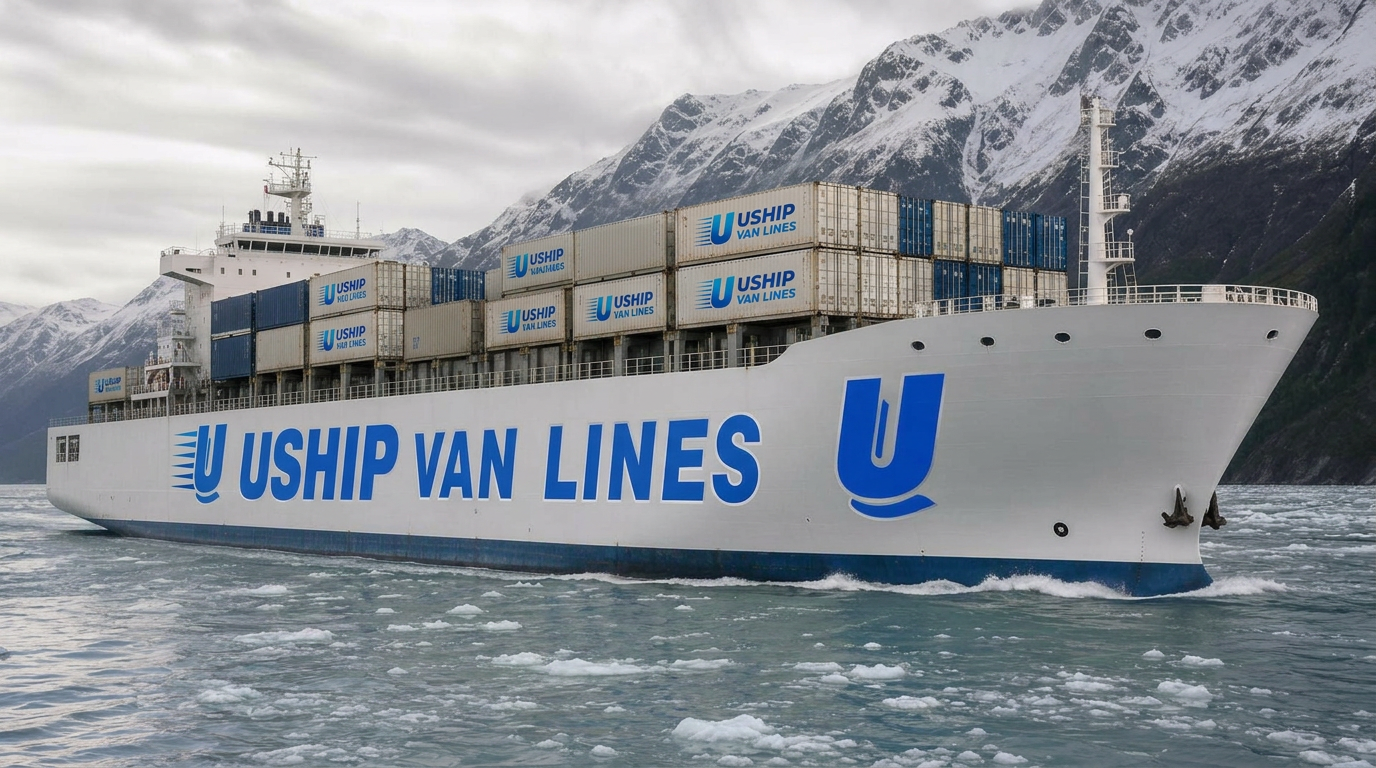
Moving from Alaska to Glendale, AZ
Relocating from Alaska to Glendale, Arizona means trading northern wilderness for southwestern sunshine, but the logistics require careful planning. This 2,500+ mile journey combines barge transport from Alaska's ports to the Lower 48 with overland delivery to the Phoenix metro area, creating a unique moving experience that typically spans 2–4 weeks from pickup to final delivery.
Best Alaska & Hawaii Movers, powered by UShip Van Lines, specializes in Alaska-to-Arizona relocations with transparent pricing, experienced logistics coordinators, and proven barge-to-truck coordination. Whether you're leaving Anchorage, Fairbanks, or a smaller Alaska community, we'll guide you through every step—from scheduling your barge slot to coordinating your Glendale delivery window. Ready to start planning? Request your personalized quote today and get exact timelines for your move date.
Route overview
Understanding the Alaska to Glendale Moving Route
Moving from Alaska to Glendale requires multi-modal transportation that begins with barge service from Alaska ports (typically Anchorage, Whittier, or Kodiak) to Tacoma, Washington. Your household goods travel approximately 1,450 nautical miles over 3–7 days of ocean transit, then transfer to long-haul trucks for the 1,400-mile overland journey through Washington, Oregon, Nevada, and into Arizona's Valley of the Sun.
Glendale sits in the northwest Phoenix metropolitan area, offering easy freeway access via I-10, Loop 101, and US-60. Final delivery to Glendale neighborhoods—whether you're moving to the historic downtown district, Arrowhead Ranch master-planned community, or near State Farm Stadium—benefits from Arizona's year-round dry weather and excellent road infrastructure. Unlike Alaska's seasonal moving constraints, Arizona destinations remain accessible in all seasons, though summer heat (June–August) requires special considerations for heat-sensitive items.
This route serves customers from all Alaska regions: Anchorage and Mat-Su Valley residents enjoy the most frequent barge schedules, while Fairbanks shipments typically route through Anchorage or require additional trucking to port. Southeast Alaska communities (Juneau, Sitka, Ketchikan) often use the Alaska Marine Highway System to connect with mainline barge services. Bush communities may require air freight for initial transport to hub cities before joining the standard barge route.
How the moving process works
Step-by-Step Moving Process from Alaska to Glendale
-
Initial Consultation & Barge Scheduling (8–12 weeks before move): Contact our team for a detailed inventory assessment and firm moving date. We'll reserve your barge space on Tacoma-bound vessels, coordinating with Alaska port availability. Early booking is critical—spring and summer barge slots fill quickly as families time moves around school schedules and Alaska's construction season.
-
Pre-Move Logistics & Documentation (4–6 weeks out): Receive your detailed moving timeline, bill of lading, and Alaska-specific packing guidelines. We'll coordinate vehicle shipping if needed (vehicles travel separately on roll-on/roll-off vessels), arrange for any required storage in Tacoma, and confirm your Glendale delivery window. You'll receive port drop-off instructions and container/trailer loading appointments.
-
Alaska Pickup & Port Delivery: Our Alaska-based crew loads your belongings into shipping containers or truck trailers at your residence, then transports them to your designated port (Anchorage Port, Whittier, or other departure point). Items are inventoried, sealed, and prepared for maritime transport with moisture barriers and climate considerations for the ocean crossing.
-
Barge Transit to Tacoma (3–7 days): Your shipment travels via established Alaska-Tacoma freight service, the same reliable route used for commercial goods between Alaska and the Lower 48. Transit time varies by service (some barges make multiple Alaska port stops), but typically ranges from 3 days for direct Anchorage-Tacoma runs to 7 days for routes serving multiple communities.
-
Tacoma Transfer & Overland Dispatch (1–3 days): Upon arrival at the Port of Tacoma, containers are offloaded, inspected, and transferred to long-haul trucks. Our logistics team coordinates the handoff, ensuring your shipment immediately begins the 1,400-mile overland journey to Arizona without unnecessary warehouse delays.
-
Cross-Country Transit to Arizona (3–5 days): Your household goods travel south through Washington and Oregon, then across Nevada into Arizona via I-15 or I-40 corridors. Professional long-haul drivers navigate this route efficiently, with typical transit times of 3–4 days to the Phoenix area depending on route and any intermediate consolidation points.
-
Glendale Delivery & Unpacking: Our delivery team contacts you 24–48 hours before arrival to confirm your Glendale delivery address and schedule a precise delivery window. Upon arrival, we unload all items, verify inventory against your bill of lading, place furniture in designated rooms, and remove packing materials. You'll inspect everything before signing off on successful delivery completion.
Estimated moving costs
Cost Breakdown for Alaska to Glendale Moves
A typical 2-bedroom move from Alaska to Glendale ranges from $5,800–$9,200, while 3-bedroom households generally cost $8,500–$13,500. These estimates reflect the combined barge and overland transportation required for this unique route, with final pricing determined by actual weight/volume, service level, and seasonal demand.
Primary Cost Drivers:
-
Shipment Volume & Weight: Household goods are charged by cubic feet or weight (whichever yields higher freight cost). A typical 2-BR apartment runs 800–1,200 cubic feet; a 3-BR house averages 1,400–2,200 cubic feet. Barge pricing operates on different metrics than standard trucking, making accurate inventory crucial.
-
Barge Service Tier: Economy consolidated barge service (your goods share container space with other shipments) costs significantly less than dedicated container service. Transit times are similar, but dedicated containers offer more predictable handling and reduced transfer points.
-
Alaska Origin Point: Anchorage and Wasilla pickups access ports most efficiently, while Fairbanks, Kenai Peninsula, and Southeast Alaska locations require additional trucking to reach barge terminals. Remote bush communities may need air freight to Anchorage before joining the barge route, adding $800–$2,500.
-
Vehicle Shipping: If shipping vehicles separately (recommended over driving the Alaska Highway in winter), expect $1,800–$2,800 per standard vehicle via roll-on/roll-off barge service. Vehicles travel on the same Tacoma route but require separate booking and paperwork.
-
Packing Services: Professional packing adds $800–$2,200 for full-service options but protects belongings during the multi-modal journey. Given the barge transit and multiple handling points, professional packing significantly reduces damage risk compared to self-packing.
-
Seasonal Timing: Peak summer moving season (May–August) sees 15–25% higher rates due to high Alaska demand. Off-season moves (October–March) offer better pricing but face weather-related scheduling uncertainties and reduced barge frequency.
-
Storage: If your Glendale residence isn't ready when your shipment arrives, Tacoma-area storage runs $150–$300 per month for typical household volumes. Some movers include brief storage (7–14 days) in their base pricing.
Insurance: Basic carrier liability covers $0.60 per pound, inadequate for most household goods. Full-value replacement protection typically adds 2–4% of declared shipment value (minimum $300–$500). Given the barge crossing and extended transit, comprehensive coverage is strongly recommended.
Request a detailed quote based on your specific inventory, origin city, and preferred moving dates for the most accurate pricing. We provide itemized estimates showing barge costs, overland transport, Alaska pickup logistics, and Glendale delivery separately.
Estimated transit times
Realistic Transit Times: Alaska to Glendale
Door-to-door delivery from Alaska to Glendale typically requires 14–28 days, broken down across distinct transportation legs:
Alaska Pickup to Port Delivery (1–3 days): Local crews load your belongings and transport them to your departure port. Anchorage-area pickups often deliver to port same-day or next-day. Fairbanks shipments require 1–2 days trucking to Anchorage port facilities. Southeast Alaska (Juneau, Ketchikan, Sitka) may need 2–4 days using Alaska Marine Highway ferry connections to reach mainline barge terminals.
Port Wait Time (0–7 days): Depending on barge schedules, your shipment may load immediately or wait for the next scheduled sailing. Summer sailings run frequently (often 2–3 weekly departures), while winter service reduces to weekly or bi-weekly schedules. Advance booking minimizes wait time.
Barge Transit to Tacoma (3–7 days): Ocean crossing time depends on the specific service. Direct Anchorage-Tacoma runs complete in 3–4 days. Barges serving multiple Alaska ports (Kodiak, Homer, Seward, Whittier) before heading south may take 5–7 days total. Weather delays are rare but possible during severe Gulf of Alaska storms.
Tacoma Processing & Truck Dispatch (1–3 days): Containers offload, clear port inspections, and transfer to waiting trucks. Efficient operations dispatch within 24 hours; conservative estimates allow 2–3 days for scheduling alignment and any customs documentation review.
Overland Transit to Glendale (3–5 days): Long-haul trucks cover the 1,400 miles in 3–4 days of driving time. Routes through Portland-Reno-Las Vegas-Phoenix or Seattle-Boise-Las Vegas-Phoenix both offer reliable interstates with minimal mountain pass weather issues except during winter storms.
Delivery Window Coordination (1–2 days): Final delivery scheduling builds in flexibility for your availability and delivery crew routing in the Phoenix metro area.
Fastest Possible Timeline: With optimal barge connections and expedited service, moves can complete in 12–14 days. Typical Timeline: Most moves finish in 18–23 days during summer season. Conservative Planning: Allow 25–30 days during winter months or for remote Alaska origins to account for weather and reduced barge frequency.
Regional logistics
Alaska-Specific Logistics for Your Glendale Move
Port Operations & Documentation
Alaska moves require coordination with commercial port facilities in Anchorage (Port of Alaska), Whittier, Kodiak, or other regional terminals. Your shipment travels as commercial freight, requiring specific documentation: a detailed inventory list (bill of lading), declared value for insurance purposes, and sometimes USDA/customs forms if you're shipping certain food items, plants, or agricultural products (generally discouraged). Unlike Lower 48 moves where your belongings rarely leave the original truck, Alaska shipments transfer between trucks, containers, and barge vessels—comprehensive documentation prevents loss and expedites processing at each handoff point.
Port delivery deadlines are strict: containers must arrive at the terminal 24–48 hours before scheduled sailing, and missed cutoffs mean waiting for the next available barge (potentially 3–7 days later in summer, longer in winter). Professional Alaska movers manage these timelines as part of standard service, ensuring your pickup schedule aligns with port requirements.
Vehicle Shipping Considerations
Many Alaska-to-Arizona movers choose to ship vehicles rather than drive the 2,500+ mile Alaska Highway route, particularly during winter. Vehicles travel on separate roll-on/roll-off (RORO) vessels using the same Alaska-Tacoma route, but require independent booking with vehicle shipping carriers. Expect 10–18 days transit time for vehicles and $1,800–$2,800 per standard car or truck.
Vehicle prep requirements: under 1/4 tank fuel (fire safety regulation), no personal items inside (not covered by vehicle shipping insurance), documented pre-existing damage via inspection forms. Alternatively, driving the Alaska Highway during May–September offers adventure but requires mechanical prep, appropriate tires, and 4–6 days of hard driving each way. Winter Alaska Highway travel is possible but challenging, requiring true winter driving experience and equipment.
Prohibited & Restricted Items
Barge transport prohibits hazardous materials more strictly than standard trucking: no propane tanks (even
Seasonal considerations
Seasonal Planning for Your Alaska to Glendale Move
Summer Peak Season (May–August)
Summer represents Alaska's prime moving window, with nearly 60% of annual relocations occurring during these months. Barge services run at maximum frequency, road conditions are excellent throughout Alaska, and predictable weather simplifies logistics. However, demand drives prices up 15–25% above off-season rates, and barge space books solid 8–12 weeks in advance. Glendale arrival during June–August means delivering into 105–115°F heat—plan to be home for delivery to prevent heat-sensitive items (electronics, candles, cosmetics, artwork) from sitting in closed trucks. If you're timing a move around school schedules or lease dates, book by March for July moves.
Fall Transition (September–October)
Early fall offers ideal moving conditions: Alaska weather remains manageable, barge schedules still run regularly (though less frequently than summer), and pricing begins dropping as demand softens. September moves avoid both summer premiums and winter complications. Glendale's fall weather (September highs in the 90s–100s, October in the 80s–90s) is more comfortable than summer extremes. This shoulder season provides excellent value for flexible movers who don't need summer-specific timing.
Winter Off-Season (November–March)
Winter moves from Alaska offer the lowest pricing—often 20–30% below summer rates—but come with important considerations. Barge frequency drops to weekly or bi-weekly sailings, extending potential port wait times. Alaska road conditions require winter-capable equipment and experienced drivers, particularly for Fairbanks and Mat-Su Valley pickups during severe cold snaps or heavy snowfall. Southeastern Alaska's wet winter weather rarely stops moves but may cause minor delays. Glendale delivery during Arizona's mild winter (highs in the 60s–70s) is pleasant and logistically simple. If your timeline is flexible and you're comfortable with potentially longer overall transit windows, winter moves provide substantial savings. Book winter moves 6–8 weeks ahead rather than the 10–12 weeks needed for summer.
Spring Ramp-Up (April–Early May)
Spring sees increasing barge frequency as operators prepare for summer demand. Pricing sits between winter lows and summer peaks. Alaska weather becomes more favorable—breakup season brings mud and occasional road challenges in rural areas, but major routes remain reliable. Many military and government relocations concentrate in late spring, creating competition for barge space by late April. Early April moves often secure near-winter pricing with improving service frequency—an excellent value window for strategic planners.
Year-Round Recommendation: Regardless of season, book as early as possible. Alaska's limited barge capacity means popular moving dates fill quickly, and last-minute bookings (under 4 weeks) face limited availability and premium pricing.
Why choose Best Alaska & Hawaii Movers
Why Choose Best Alaska & Hawaii Movers for Your Alaska to Glendale Relocation
-
Alaska Specialists with Proven Barge Coordination: We exclusively focus on Alaska and Hawaii moving logistics, giving us deep expertise in barge scheduling, port operations, and the unique challenges of non-contiguous state relocations that general moving companies rarely encounter.
-
Transparent Pricing with No Hidden Fees: You'll receive itemized quotes breaking down barge costs, overland transport, Alaska pickup logistics, and Glendale delivery separately—no surprise charges when your shipment arrives. Our estimates include realistic transit windows based on actual barge schedules, not optimistic projections.
-
Powered by UShip Van Lines' Network: Our partnership with UShip Van Lines provides access to vetted, licensed interstate carriers and comprehensive insurance options, combining specialized Alaska knowledge with nationwide moving infrastructure and consumer protections.
-
Single-Point Coordination for Multi-Modal Moves: You work with one dedicated moving coordinator from initial quote through Glendale delivery, eliminating the confusion of managing separate barge companies, trucking firms, and local movers yourself. We handle every transfer point and schedule alignment.
-
Real-Time Tracking and Communication: Receive updates at each major milestone—Alaska pickup completion, port delivery, barge departure, Tacoma arrival, truck dispatch, and delivery scheduling—so you always know where your belongings are during the 2–4 week journey.
-
Flexible Storage Solutions: If your Glendale residence isn't ready when your shipment reaches the Lower 48, we coordinate secure Tacoma-area storage without forcing you to arrange third-party warehousing, maintaining chain of custody and simplifying logistics.