
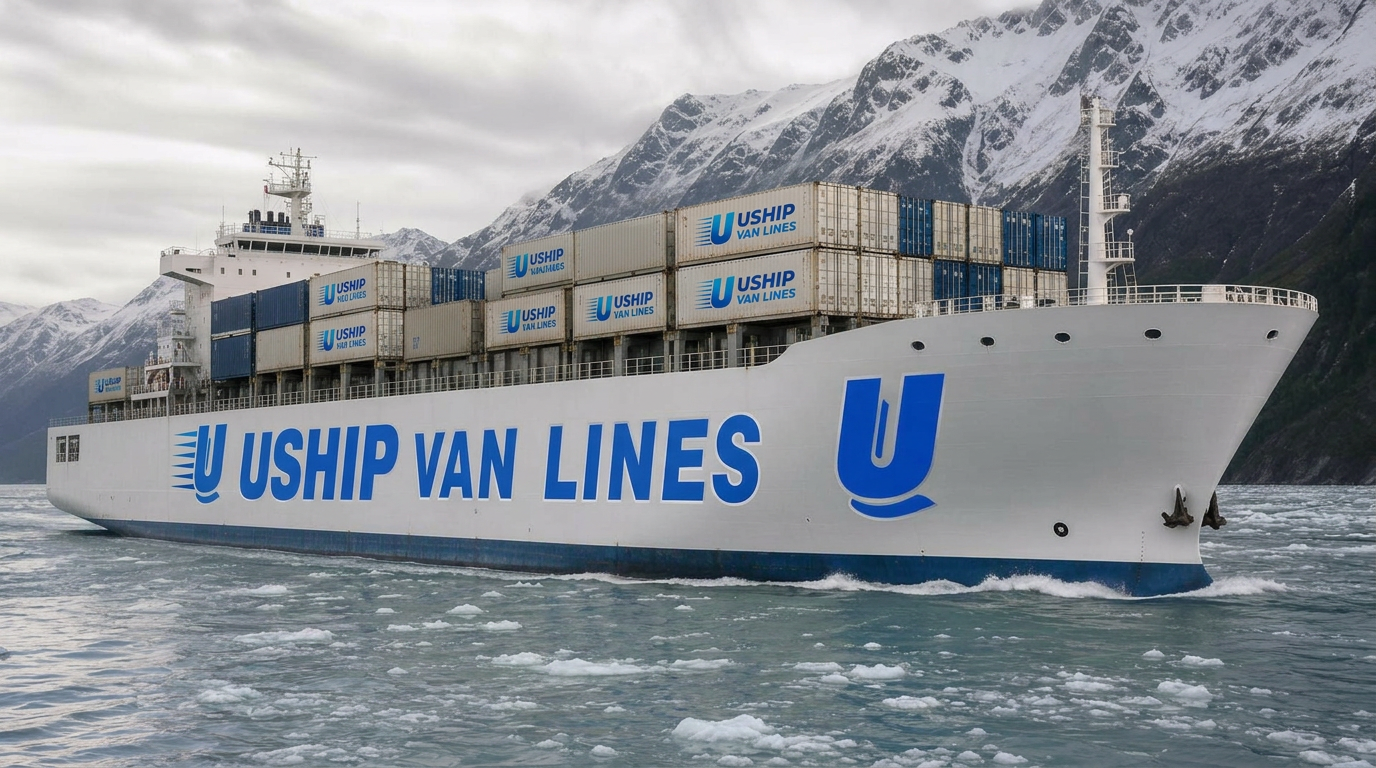
Moving from United States to Alaska
Moving from the Lower 48 to Alaska requires more than a moving truck—it demands ocean freight, careful timing, and specialized last-mile coordination across one of America's most challenging geographies. Whether you're relocating to Anchorage, Fairbanks, the Mat-Su Valley, the Kenai Peninsula, or remote bush communities, your household goods will travel by barge from Tacoma to the Port of Anchorage, then complete the journey by truck, ferry, or air.
Best Alaska & Hawaii Movers, powered by UShip Van Lines, coordinates every leg of your continental-to-Alaska move—from pickup in any Lower 48 state through barge transit and final delivery to your new home. Request your free moving quote to start planning your Alaska relocation with confidence.
Route overview
The Continental U.S. to Alaska Moving Corridor
Every household move from the contiguous United States to Alaska follows the same ocean gateway: the Port of Tacoma. Your belongings travel by truck from your origin city to our Tacoma consolidation facility, where they're containerized and loaded onto Alaska Marine Highway System barges or commercial freight vessels bound for the Port of Anchorage. This 1,450-nautical-mile ocean voyage typically takes 5–7 days, weather permitting.
Once your container clears customs and port operations in Anchorage, the final delivery leg depends on your destination. Anchorage, Eagle River, and Mat-Su Valley moves complete by truck within 1–2 days. Fairbanks and Interior Alaska deliveries add 6–8 hours of highway transit. Kenai Peninsula, Southeast Alaska, and bush locations require additional ferry service, smaller aircraft, or seasonal ice-road access. This checklist walks you through every phase of the journey.
Alaska moves operate on a fundamentally different timeline than Lower 48 relocations. Barge schedules run weekly in summer, bi-weekly in winter. Weather delays, port congestion, and seasonal access restrictions can extend your door-to-door timeline to 14–28 days. Planning 4–6 weeks ahead of your desired delivery date ensures space on preferred sailings and prevents costly storage fees.
How the moving process works
How Your U.S. to Alaska Move Works: Step-by-Step
-
Free In-Home or Virtual Survey (3–6 Weeks Before Move Date): Our team assesses your inventory, discusses Alaska-prohibited items (certain plants, soil, firewood), and provides a binding not-to-exceed quote. We confirm your destination zip code to determine last-mile logistics—Anchorage differs vastly from Kotzebue or Sitka.
-
Pack and Load at Origin (Lower 48 Location): Professional movers pack your household goods using Alaska-rated materials designed for ocean transit. Items are loaded into a 20-ft or 40-ft shipping container at your current home, sealed, and trucked to our Tacoma consolidation warehouse.
-
Tacoma Consolidation and Barge Booking (1–3 Days): Your container is staged at the Port of Tacoma, booked on the next available Alaska-bound barge, and cleared through U.S. Customs. You receive sailing confirmation with estimated Port of Anchorage arrival date.
-
Ocean Transit to Anchorage (5–7 Days at Sea): Your container travels aboard dedicated Alaska Marine Highway or commercial freight vessels. Northbound sailings run year-round but reduce frequency November–March. Real-time tracking updates available throughout the voyage.
-
Port of Anchorage Clearance and Unloading (1–3 Days): Upon arrival, longshoremen offload your container, and it clears Alaska Department of Agriculture inspections (random checks for prohibited materials). We coordinate pickup from the port bonded area.
-
Last-Mile Delivery to Final Destination (1–14 Days): Road-accessible locations (Anchorage, Wasilla, Palmer, Soldotna, Fairbanks) receive direct truck delivery. Remote communities on the Kenai, in Southeast Alaska, or the Bush require ferry transfer (Alaska Marine Highway), small plane charter, or seasonal barge service to villages.
-
Unpacking and Walkthrough: Our team unloads, places furniture in designated rooms, and removes packing materials. You inspect for damage and sign the final bill of lading. Claims must be filed within 9 months of delivery per federal regulation.
Estimated moving costs
What a U.S. to Alaska Move Costs
A typical 2-bedroom household (approximately 7,000–9,000 lbs) moving from the Lower 48 to Anchorage costs $6,500–$11,000 door-to-door. A 3-bedroom home (10,000–13,000 lbs) ranges $9,000–$15,000. These estimates include pickup in the continental U.S., trucking to Tacoma, ocean freight, port fees, and delivery in road-accessible Alaska communities.
Key cost drivers:
- Distance from origin to Tacoma: Moves from the West Coast (California, Oregon, Washington) cost less than Midwest or East Coast origins due to shorter overland trucking.
- Container size and weight: Alaska shipping is priced by cubic footage and weight. A 20-ft container holds a 1–2 bedroom apartment; a 40-ft container fits a 3–4 bedroom home. Overweight containers ($0.15–$0.25/lb over limit) add substantial fees.
- Final destination complexity: Anchorage, Wasilla, and Fairbanks deliveries are straightforward. Juneau, Ketchikan, and Sitka require Alaska Marine Highway ferry service ($800–$2,500 extra). Bush villages like Bethel, Nome, or Barrow add air freight ($1.50–$3.50/lb) or seasonal barge surcharges.
- Seasonal demand: May–September is peak moving season to Alaska. Barge space is limited, and rates rise 15–30%. Winter moves (October–April) offer lower pricing but face weather delays and reduced sailing frequency.
- Vehicle shipping: Adding a car to your household goods shipment costs $1,800–$3,200 Tacoma to Anchorage (roll-on/roll-off barge service).
We never guarantee prices without a detailed inventory. Request your free quote for an accurate, binding estimate based on your specific origin, destination, and household size.
Estimated transit times
How Long Your Move Takes Door-to-Door
Plan for 14–21 days for a complete Lower 48 to Anchorage move during summer months, and 21–28 days during winter. This timeline breaks down as follows:
- Origin pickup to Tacoma consolidation: 1–7 days depending on your starting city. West Coast origins (Seattle, Portland, San Francisco) reach Tacoma in 1–2 days. Midwest (Denver, Dallas) takes 3–4 days. East Coast (New York, Florida) requires 5–7 days of overland trucking.
- Tacoma staging and barge loading: 1–4 days. Summer sailings depart weekly; winter sailings run every 10–14 days. Missing a sailing window adds a full cycle to your timeline.
- Ocean transit Tacoma to Anchorage: 5–7 days under normal conditions. Severe weather in the Gulf of Alaska (especially October–March) can extend voyages by 1–3 days. Containers are secured and weatherproofed to handle rough seas.
- Port of Anchorage clearance: 1–2 days for offloading, customs inspection, and release to our local delivery team.
- Last-mile delivery: Same-day or next-day for Anchorage metro. 1–2 days for Mat-Su Valley, Kenai Peninsula (road-accessible), or Fairbanks. 3–14 days for Southeast Alaska (ferry-dependent) or bush locations (weather/charter-dependent).
Pro tip: Book your move 4–6 weeks before your required delivery date. This buffer accommodates barge schedules, weather delays, and Alaska's unpredictable spring breakup or fall freeze conditions that can close roads and slow port operations.
Regional logistics
Alaska-Specific Moving Logistics You Must Know
Port of Tacoma to Port of Anchorage: All household goods enter Alaska through Anchorage (no direct service to Fairbanks, Juneau, or other ports). Your container must clear U.S. Customs outbound and Alaska Department of Agriculture inspection inbound. Random inspections check for prohibited items: fresh soil, firewood with bark, certain houseplants, and non-commercially packaged food. Violations result in disposal fees or container holds.
Vehicle Shipping: If you're driving the Alaska Highway yourself, your household goods travel separately by barge. If shipping a vehicle, it goes roll-on/roll-off (RORO) on the same or parallel sailing. Vehicles must be empty (no personal items), with less than ¼ tank of fuel. Allow 10–14 days Tacoma to Anchorage. Motorcycles, boats, and RVs also ship RORO but require separate quotes.
Last-Mile Challenges:
- Anchorage/Eagle River/Mat-Su Valley: Standard truck delivery on paved roads year-round.
- Fairbanks and Interior Alaska: 6–8 hour drive north from Anchorage on the Parks Highway. Winter requires tire chains and cold-weather precautions.
- Kenai Peninsula (Soldotna, Homer, Seward): 2–4 hour drive south. Roads are paved and accessible year-round.
- Southeast Alaska (Juneau, Ketchikan, Sitka): No road connection. Goods transfer to Alaska Marine Highway ferry in Whittier or Haines, adding 2–7 days and $800–$2,500.
- Bush Alaska (Bethel, Nome, Kotzebue, Barrow, Dillingham): Air freight from Anchorage ($1.50–$3.50/lb) or seasonal barge service (summer only). Many movers limit bush deliveries to 5,000 lbs or less due to cost.
Storage Solutions: If your Alaska home isn't ready or barge schedules don't align, we offer climate-controlled storage in Tacoma (pre-barge) or Anchorage (post-arrival). Storage is priced per cubic foot per month. Plan for $150–$400/month for a 2-bedroom inventory.
Packing for Marine Transit: Ocean freight requires reinforced cartons, moisture-barrier wrapping for upholstered furniture, and containerization that prevents load shift in rough seas. DIY packing rarely meets marine standards—we recommend professional packing to avoid damage claims.
Seasonal considerations
Timing Your Move: Alaska's Seasons Matter
Summer (May–September): Peak moving season. Barge sailings run weekly, roads are clear, and daylight lasts 18–22 hours for efficient deliveries. Demand is highest—book 6–8 weeks ahead. Expect premium pricing but fewest delays. Best window for remote bush deliveries when tundra is accessible and weather is stable.
Fall (October–November): Shoulder season with moderate pricing and bi-weekly barge schedules. Gulf of Alaska storms increase, adding 1–3 days to ocean transit. Freeze-up begins in Interior Alaska by late October, limiting access to some gravel roads and requiring winter equipment for Fairbanks/North Slope deliveries. Good compromise between cost and reliability.
Winter (December–March): Lowest pricing and least competition for barge space. Sailings run every 10–14 days. Severe weather is common—expect delays. Port of Anchorage occasionally experiences ice closures in January–February. Roads require studded tires and chain laws are enforced. Remote deliveries are limited; many bush communities switch to ice-road or air-only access. Ideal if you have flexible delivery dates and want to save 15–25% on costs.
Spring (April–May): "Breakup" season. Snow melts, roads turn to mud, and the Dalton Highway and other remote routes become impassable. Avoid moving to Interior or bush Alaska in April. Anchorage and road-system communities are fine, but expect variability. Barge schedules ramp up to weekly service by mid-May. Pricing transitions from winter lows to summer peaks.
Seasonal booking tip: If your employer is relocating you, ask for a May–June or August–September move window when conditions are optimal and timelines are most predictable.
Why choose Best Alaska & Hawaii Movers
Why Best Alaska & Hawaii Movers for Your Continental-to-Alaska Move
- Alaska-Specialized Experience: We exclusively handle Alaska and Hawaii relocations, not occasional "specialty" moves tacked onto Lower 48 routes. Our team knows Tacoma barge schedules, Port of Anchorage operations, and last-mile realities from Prudhoe Bay to the Aleutians.
- Transparent, Binding Quotes: You receive a not-to-exceed price based on actual cubic footage and weight. No surprise fuel surcharges, "barge fees," or inflated accessorial charges at delivery. Our quote is your final cost unless you add items.
- Door-to-Door Coordination: One point of contact manages your entire move—origin pickup, Tacoma consolidation, barge booking, port clearance, and Alaska delivery. You're never handed off between disconnected contractors.
- Real-Time Tracking: Monitor your container from loading through ocean transit to final delivery. You'll receive barge sailing confirmations, Anchorage arrival alerts, and delivery appointment notifications by text and email.
- Powered by UShip Van Lines Infrastructure: Access to nationwide pickup networks, licensed carrier partnerships, and claims support backed by a federally registered moving broker (USDOT on file).