
Moving from Portsmouth, VA to Alaska
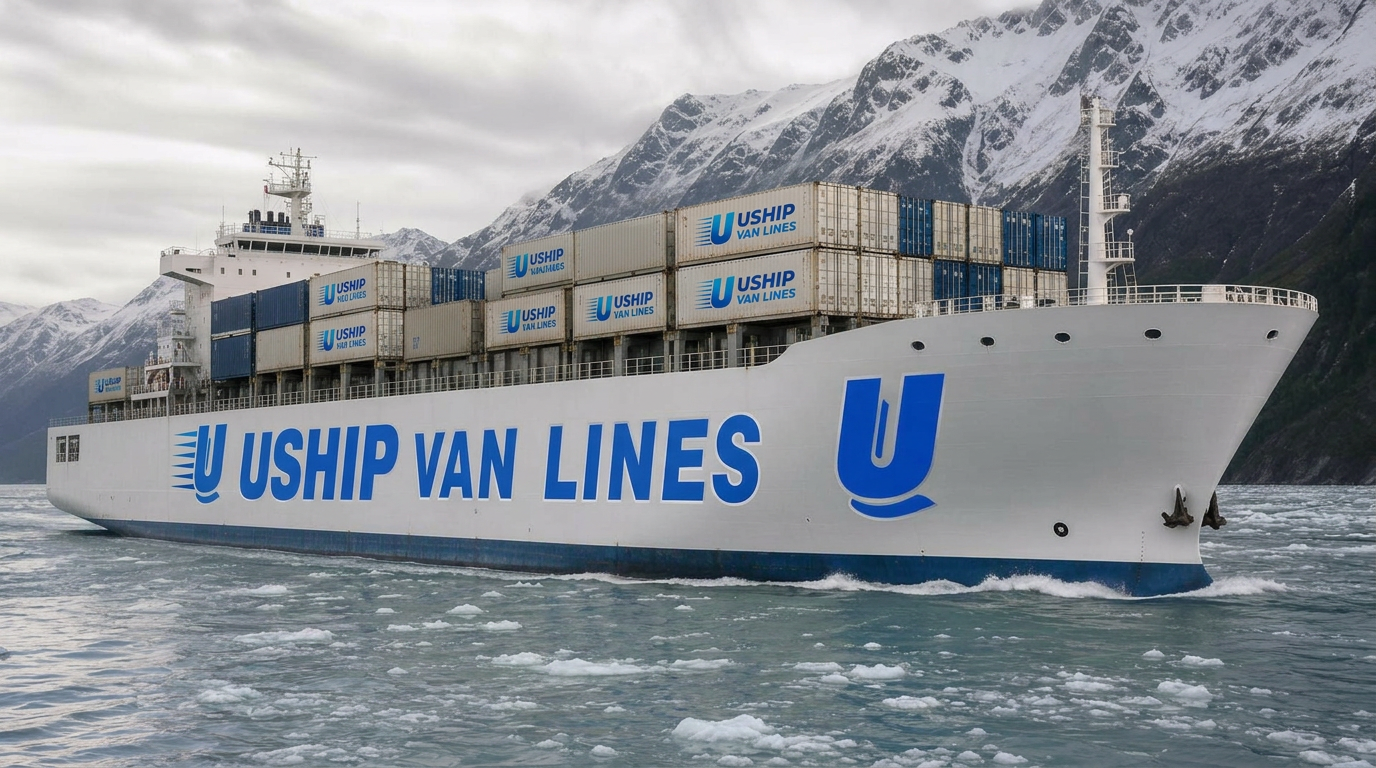
Moving from Portsmouth, VA to Alaska is one of the most complex residential relocations in North America. Your household goods will travel over 4,000 miles across the continental United States, then ship by barge from Tacoma, Washington through the Gulf of Alaska to reach Anchorage or other Alaska ports.
Best Alaska & Hawaii Movers, powered by UShip Van Lines, specializes in this exact route. We coordinate every phase—overland transport from Hampton Roads, barge consolidation at Tacoma, ocean transit, Alaska port clearance, and final delivery to your Anchorage, Fairbanks, or Mat-Su Valley home. Request your free detailed quote today to lock in capacity and transparent pricing.
Route overview
Understanding the Portsmouth to Alaska Moving Route
Your Portsmouth move begins with overland trucking approximately 2,800 miles from Virginia to Tacoma, Washington, the primary barge consolidation hub for Alaska shipments. Most carriers use a relay system through Chicago or cross-country direct haul, depending on load size and season. Your goods arrive at a Tacoma warehouse where they're inventoried, containerized (typically in 20' or 40' ocean containers), and staged for the next available Alaska Marine Lines or TOTE Maritime barge sailing.
From Tacoma, barges sail through the Inside Passage and Gulf of Alaska to the Port of Anchorage, a voyage that takes 6–8 days under normal conditions. Once cleared through the port, your container is transloaded to a local Alaska carrier for final delivery to Anchorage neighborhoods, or trucked north to Fairbanks (additional 360 miles), Wasilla/Palmer in the Mat-Su Borough, or down to the Kenai Peninsula. Communities off the road system require additional air freight or smaller barge arrangements, which we coordinate case-by-case.
This route demands precise scheduling. Barge sailings are weekly in summer, reduced to every 10–14 days in winter. Weather delays, port congestion, and Alaska's brief road construction season all factor into realistic timelines. Working with a carrier experienced in both continental logistics and Alaska's unique infrastructure is essential for on-time, damage-free delivery.
How the moving process works
Your Step-by-Step Portsmouth, VA to Alaska Moving Process
-
Initial Survey & Quote (3–4 Weeks Before): We conduct a virtual or in-home assessment of your Portsmouth residence, noting high-value items, vehicles, and special handling needs. You receive a binding not-to-exceed estimate covering overland, barge, and Alaska delivery legs. Early booking is critical—Alaska capacity fills months ahead during military PCS and summer seasons.
-
Pre-Move Preparation (2–3 Weeks Before): Dispose of or donate items restricted on Alaska barges: hazardous materials, propane tanks, aerosols, ammunition, perishables, and plants (USDA prohibits most soil-bearing plants into Alaska). Confirm your new Alaska address is finalized; rural route changes can derail final delivery. Arrange vehicle shipment separately—cars and trucks ship on the same Tacoma–Alaska barges but require distinct paperwork.
-
Loading Day in Portsmouth (Week of Move): Our certified crew arrives at your Virginia home, packs remaining items if you've chosen full-service packing, loads a 26' or 53' truck, and completes a detailed inventory. High-value electronics, artwork, and furniture receive extra padding and crating for the multi-leg journey. The truck departs Portsmouth for the cross-country haul to Tacoma, typically 4–6 days transit time.
-
Tacoma Consolidation & Barge Loading (1–3 Days): Your shipment arrives at our Tacoma partner warehouse, where it's transferred into a sealed ocean container, secured with load bars and dunnage, and manifested for the next scheduled sailing. You receive container number and barge booking confirmation. Summer sailings depart weekly; winter schedules are less frequent, so timing your move around these windows is vital.
-
Ocean Transit to Alaska (6–8 Days): The barge sails from Tacoma through Puget Sound, up the Inside Passage, across the Gulf of Alaska, and into Cook Inlet to the Port of Anchorage. Alaska Marine Lines and TOTE Maritime operate the primary services. Weather in the Gulf can add 1–2 days in winter storms. Containers remain sealed and climate-protected throughout the voyage.
-
Port of Anchorage Clearance & Transload (1–2 Days): Once docked, the container is offloaded, cleared through port authority, and transferred to a local Alaska trucking partner. If your destination is Anchorage proper, delivery can happen same-day or next-day. Fairbanks, Mat-Su, Kenai, or other interior/remote destinations require additional overland trucking—plan 1–3 extra days.
-
Final Delivery & Unpacking in Alaska: Our Alaska delivery crew brings your container to your new home, unloads all items per the original Portsmouth inventory, places furniture, and removes packing materials. You inspect for any damage (rare but file claims immediately if found) and sign off on delivery. We offer unpacking services to get you settled faster in your new Alaska home.
Estimated moving costs
What Does a Portsmouth, VA to Alaska Move Cost?
A typical 2-bedroom home (approximately 7,000–9,000 lbs) from Portsmouth to Anchorage generally ranges between $8,500 and $14,000, while a 3-bedroom home (10,000–14,000 lbs) typically costs $12,000 to $19,000. These estimates include overland transport from Virginia to Tacoma, ocean barge freight, and final delivery within the Anchorage bowl. Fairbanks or remote Alaska destinations add $1,500–$3,500 depending on distance and road conditions.
Key cost drivers:
- Total weight and cubic footage: Alaska barge pricing is hybrid—calculated on both weight and the space your goods occupy in a container. Decluttering before the move saves substantially.
- Packing services: Self-pack (you box everything) is cheapest. Partial packing (fragiles and specialty items) adds $800–$1,500. Full-service packing for a 3BR runs $2,000–$3,500.
- Time of year: June through August is peak season for Alaska moves—prices rise 15–25%, and barge space books out early. October through March offers lower rates and more flexibility, though winter weather can extend timelines.
- Vehicle shipment: Cars and trucks ship separately on the same barges. Expect $1,800–$2,800 per standard sedan or SUV from Tacoma to Anchorage. Oversized vehicles or RVs cost more.
- Accessorial services: Long carries from truck to door, shuttle service for narrow Alaska roads, storage at Tacoma or Anchorage warehouses, and high-value item insurance all add line items to your quote.
Best Alaska & Hawaii Movers provides itemized, binding estimates with no hidden fees. We never quote guaranteed flat rates without surveying your actual inventory, and we always disclose which costs are estimates versus fixed. Request your free quote to understand your specific Portsmouth to Alaska move budget.
Estimated transit times
Realistic Door-to-Door Timeline: Portsmouth to Alaska
Total transit time from Portsmouth, VA to Anchorage, Alaska typically ranges 18 to 28 days door-to-door, depending on season, barge schedules, and final Alaska destination.
Breakdown by leg:
- Portsmouth to Tacoma overland: 4–6 days for the 2,800-mile continental haul. Solo driver runs are faster; team relay adds a day but reduces rest stops.
- Tacoma warehouse staging: 1–3 days to transfer your goods into a container and await the next barge sailing. In peak summer season with weekly sailings, this is minimal; winter schedules may require 7–10 days if you just miss a departure.
- Tacoma to Anchorage barge: 6–8 days ocean transit under normal conditions. Gulf of Alaska storms in fall and winter can add 1–2 days. Spring and summer sailings are highly reliable.
- Port clearance and transload in Anchorage: 1–2 days for container offload, customs-style port clearance (Alaska is a domestic move, but port logistics apply), and transfer to local delivery truck.
- Final delivery within Alaska: Same-day to 1 day for Anchorage. Add 1 day for Wasilla/Palmer, 2–3 days for Fairbanks, 2–4 days for Kenai Peninsula or other highway-accessible towns. Bush communities off the road system require case-by-case air freight or seasonal barge arrangements.
Plan conservatively. Book your move with at least a 5–7 day delivery window at the Alaska end. Early summer moves during military PCS season and winter moves during holiday port closures can extend timelines. We provide real-time tracking once your shipment is on the barge, and proactive communication if weather or port delays occur.
Regional logistics
Alaska-Specific Logistics for Portsmouth Movers
Barge Ports & Routes: All Portsmouth to Alaska household goods funnel through Tacoma, WA for barge consolidation. Alaska Marine Lines and TOTE Maritime are the primary carriers, with sailings to the Port of Anchorage (90% of moves), Port of Whittier (seasonal, primarily vehicles and RVs), and occasionally Kodiak or Dutch Harbor for specialized shipments. Barges do not serve Southeast Alaska (Juneau, Sitka, Ketchikan) on the household goods schedule—those cities require dedicated LCL (less-than-container-load) or air freight arrangements.
Container Types: Most residential moves use 20' or 40' ocean containers. A 20' container holds roughly 3,000–4,000 lbs (1–2 bedrooms); a 40' container accommodates 8,000–12,000 lbs (3–4 bedrooms). Larger households may require exclusive use of a 40' container; smaller moves consolidate with other shipments (LCL), which can extend Tacoma staging time. Containers are weather-sealed but not climate-controlled—avoid packing temperature-sensitive items like wine, photographs, or musical instruments unless specially crated.
Vehicle Shipping: Cars, trucks, motorcycles, and RVs ship separately on the same Tacoma–Alaska barges via roll-on/roll-off (RoRo) service. Vehicles must be operable (or declared inoperable with fee), cleaned (Alaska agricultural inspection), and under ¼ tank fuel. Personal items are prohibited inside vehicles during ocean transit. Expect 2–3 weeks Tacoma to Anchorage for vehicles. We coordinate household goods and vehicle shipments to arrive within days of each other.
Restricted & Prohibited Items: Alaska barge carriers and USDA prohibit: hazardous materials (paint, solvents, propane, gasoline), live plants with soil (bare-root is sometimes allowed), perishable food, firearms ammunition (firearms themselves are allowed but must be declared), and pets (pets fly separately). Declare all alcohol—Alaska has quantity limits. High-value items (jewelry, collections, documents) should travel with you or ship via insured specialty carrier.
Final Mile Challenges: Anchorage and Fairbanks have straightforward road access, but Mat-Su Valley, Kenai Peninsula, and interior Alaska can present narrow roads, seasonal weight restrictions, and winter conditions. Remote communities like Homer, Valdez, or bush villages require small truck shuttles, barge-to-barge transfers, or air freight—coordinate these well in advance. Our Alaska partners are experienced with rural deliveries, but you must provide accurate address details and road condition updates.
Paperwork: Alaska is a U.S. state, so no customs paperwork is required. However, port documentation (container manifest, vehicle titles for separate vehicle shipments) must be accurate. Any military PCS moves require government bill of lading (GBL) and TMO coordination. We handle all barge booking and manifesting on your behalf.
Seasonal considerations
Best Time to Move from Portsmouth, VA to Alaska
Summer (June–August): Peak season for Alaska relocations. Barge sailings are weekly, weather is stable in the Gulf of Alaska, and road conditions are optimal for final delivery. Expect premium pricing (15–25% higher) and advance booking requirements—reserve 8–12 weeks ahead. Ideal for families moving with school-age children to settle before the academic year. Long daylight hours in Alaska make unpacking and setup easier.
Fall (September–October): Shoulder season with moderating prices and still-reliable barge schedules (sailings every 7–10 days). Early fall weather is generally calm, though late October brings the first Gulf storms. Good compromise for budget-conscious movers who need flexibility. Anchorage and Fairbanks are beautiful in fall, with autumn colors and fewer tourists.
Winter (November–February): Lowest rates and maximum availability, but the most challenging conditions. Barge sailings reduce to every 10–14 days, and Gulf of Alaska storms can delay voyages 2–4 days. Overland trucking across the Rockies and Alaska Highway (if applicable for vehicle transport) faces snow and ice—hire carriers with winter experience. Port operations in Anchorage slow during freeze-up. Fairbanks and interior Alaska deliveries contend with extreme cold (-20°F to -40°F), which can complicate unloading. Best for flexible, cost-sensitive moves or those relocating for winter jobs.
Spring (March–May): Another shoulder season with improving weather and ramping barge frequency. Ice breakup on Alaska rivers and early road construction can create brief delays. Pricing is moderate. Spring mud season affects rural and off-pavement final deliveries—confirm road conditions for remote Mat-Su or Kenai properties. Military PCS orders start in late April, tightening summer availability, so early May bookings capture value before peak rates kick in.
Alaska's barge schedule is the single biggest seasonal factor. Plan your Portsmouth packing and loading dates backward from your preferred Alaska delivery window, accounting for 18–28 days total transit.
Why choose Best Alaska & Hawaii Movers
Why Choose Best Alaska & Hawaii Movers (Powered by UShip Van Lines)
-
Alaska Route Expertise: We specialize exclusively in Alaska and Hawaii relocations. We know the Tacoma barge schedules, Alaska port logistics, and the final-mile carriers who actually operate on Anchorage, Fairbanks, and rural Alaska roads.
-
Single-Source Coordination: You get one point of contact from Portsmouth loading to Alaska delivery. We manage the overland carrier, Tacoma warehouse partner, barge booking, and Alaska delivery team—no handoffs or finger-pointing if issues arise.
-
Transparent, Binding Estimates: Every quote is itemized by leg (overland, barge, Alaska delivery) with clear explanations of fixed versus variable costs. No hidden accessorial fees, no surprise fuel surcharges after you've committed.
-
Real-Time Tracking & Communication: Once your shipment is containerized, you receive the container number, barge name, and sailing schedule. We update you at every milestone—Tacoma arrival, barge departure, Anchorage port clearance, and delivery dispatch.
-
Flexible Service Levels: Choose self-pack and save, or opt for our full-service packing with Alaska-grade materials (extra padding for barge vibration and Gulf weather). We offer storage at Tacoma or Anchorage if your new home isn't ready, and we coordinate vehicle shipments to align with household goods arrival.