
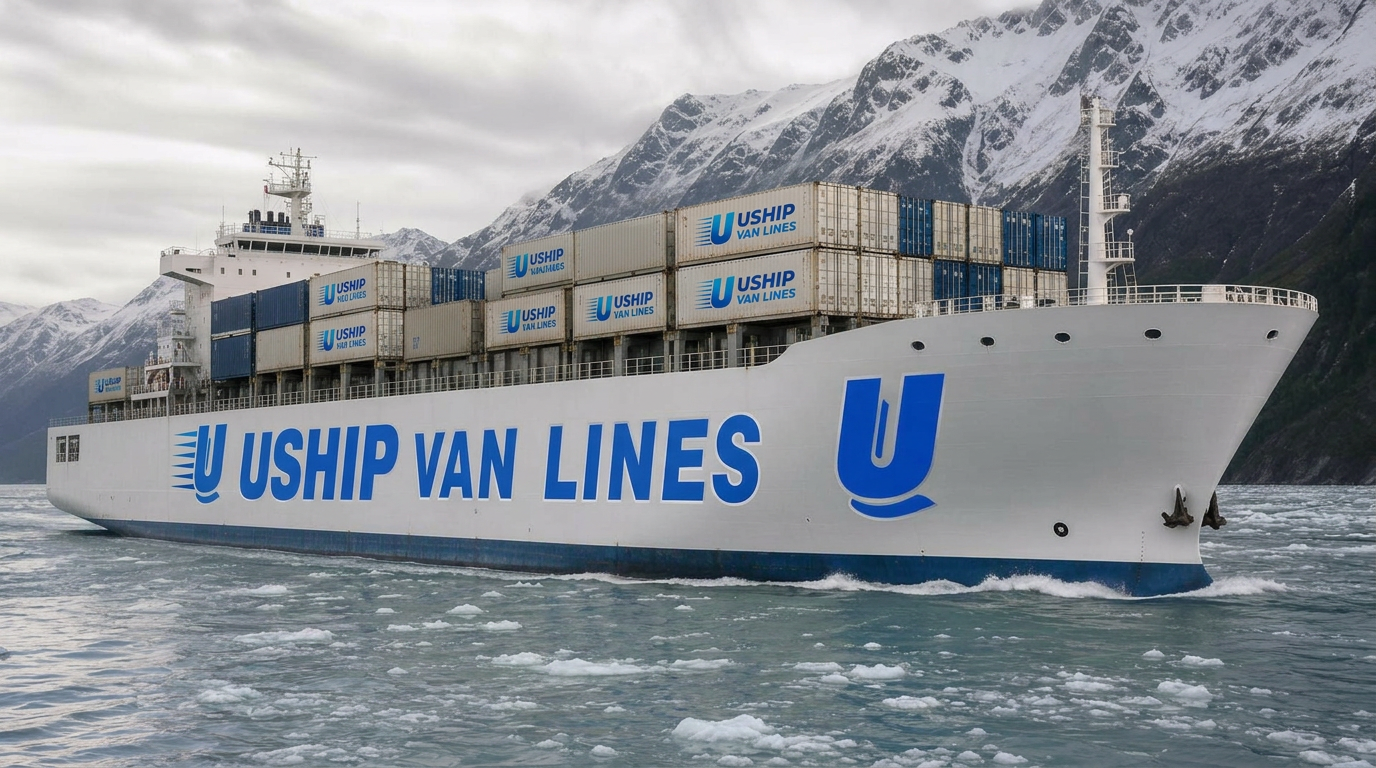
Moving from Lansing, MI to Alaska
Moving from Lansing, Michigan to Alaska represents one of the most logistically complex residential relocations in North America. Unlike typical interstate moves, your belongings will travel over 3,500 miles across multiple transportation modes—from ground transport to ocean barge—navigating unique maritime schedules, customs documentation, and Alaska's distinctive last-mile delivery challenges.
Best Alaska & Hawaii Movers, powered by UShip Van Lines, specializes in these intricate cross-continental relocations. We coordinate every phase from your Lansing doorstep to your final Alaska destination, whether that's Anchorage, Fairbanks, the Mat-Su Valley, or remote bush communities. Request your personalized quote today to understand exactly what your Michigan-to-Alaska move will entail.
Route overview
Understanding the Lansing to Alaska Moving Route
Your household goods will follow a carefully orchestrated path from mid-Michigan to America's Last Frontier. The journey begins with professional loading at your Lansing residence, followed by ground transport west to our Pacific consolidation hub near Tacoma, Washington. This overland segment covers approximately 2,100 miles and typically takes 3–5 days.
From the Tacoma marine terminal, your shipment joins a containerized barge service to Alaska—the only economical method for moving household goods to the state. Most shipments route through the Port of Anchorage, Alaska's primary deep-water facility that handles over 90% of consumer goods entering the state. Barge transit from Tacoma to Anchorage takes 6–9 days depending on weather, sea conditions, and seasonal scheduling.
Final delivery from the Anchorage port to your destination adds another layer of complexity. Urban deliveries to Anchorage or the Mat-Su Valley are relatively straightforward. Fairbanks-bound shipments require an additional 360-mile ground haul along the Parks Highway. Remote destinations in the Kenai Peninsula, Southeast Alaska panhandle, or off-road bush communities may require smaller trucks, float planes, or seasonal ice road access, significantly impacting both cost and timeline.
How the moving process works
How Your Lansing to Alaska Move Works: Step-by-Step
-
Initial Survey and Inventory — Our moving coordinator conducts a virtual or in-home assessment of your Lansing residence, cataloging items and identifying Alaska-restricted goods (certain plants, soil-based items, and perishables cannot enter the state). We provide a detailed quote covering all transportation legs.
-
Pre-Move Preparation and Packing — Professional packing services are strongly recommended for Alaska moves due to the multiple handling points. Items must withstand truck vibration, ocean moisture, and temperature fluctuations. We provide marine-grade packing materials and moisture barriers for sensitive belongings.
-
Loading and Ground Transport to Tacoma — Your possessions are loaded into a dedicated moving container at your Lansing home, then transported west to our Tacoma staging facility. This leg typically takes 3–5 days, with your shipment traveling I-90 through Wisconsin, South Dakota, Montana, and into Washington.
-
Container Consolidation and Marine Documentation — At the Tacoma terminal, we prepare customs documentation, verify container seals, and coordinate with barge line schedules. Your shipment is loaded onto a northbound Alaska Marine Highway vessel or commercial barge service—departures run weekly during peak season (April–October), less frequently in winter.
-
Ocean Barge Transit — The containerized barge journey covers approximately 1,400 nautical miles through the Inside Passage and Gulf of Alaska. Transit takes 6–9 days. You'll receive tracking updates as your shipment passes key waypoints.
-
Port Clearance in Alaska — Upon arrival at the Port of Anchorage, containers undergo USDA agricultural inspection (standard for all Alaska-bound shipments). Clearance typically takes 1–2 business days but can extend during peak summer months.
-
Final Delivery to Your Alaska Destination — For Anchorage-area deliveries, we transport directly from the port to your new residence. Fairbanks deliveries add 6–8 hours of ground transport. Remote locations require specialized logistics we'll coordinate in advance, potentially including bush plane charters, seasonal road access, or marine vessel transfers for island communities.
Estimated moving costs
What a Lansing to Alaska Move Actually Costs
A typical 2–3 bedroom household moving from Lansing to Alaska ranges from $8,500 to $16,000 depending on shipment volume, final destination, service level, and seasonal timing. This reflects the genuine complexity of cross-continental, multi-modal transportation—not inflated pricing.
Primary cost drivers include:
-
Shipment weight and volume — Barge pricing is volume-based. A 1,200 cubic foot shipment (roughly a 2-bedroom apartment) costs significantly less than 2,500 cubic feet (large 3-bedroom home). Purging unnecessary items before your move yields substantial savings.
-
Final Alaska destination — Anchorage delivery is the baseline. Fairbanks adds $1,200–$2,000 for the additional ground haul. Kenai Peninsula communities add $800–$1,500. Remote bush locations requiring air or specialized transport can add $3,000–$8,000+.
-
Seasonal timing — Summer (May–August) is peak moving season when barge schedules are most frequent but prices are 15–25% higher. Late fall and winter moves (November–March) offer lower rates but face limited barge departures and potential weather delays.
-
Packing and special services — Full professional packing adds $1,200–$2,800. Vehicle shipping (cars must be barged separately) adds $1,800–$3,200 per vehicle. Temporary storage in Tacoma or Anchorage runs $150–$300 per month.
-
Insurance coverage — Basic carrier liability (60 cents per pound) is included. Full replacement value insurance typically costs 1–2% of declared shipment value, highly recommended for Alaska's multi-leg journey.
We never quote guaranteed prices without assessing your specific situation. Request a detailed estimate to receive transparent, itemized pricing for your exact circumstances.
Estimated transit times
Realistic Timeline for Lansing to Alaska Delivery
Door-to-door delivery from Lansing, Michigan to Alaska typically requires 18–35 days, dramatically longer than continental U.S. moves. This extended timeline reflects mandatory marine schedules, port processing, and Alaska's geographic isolation.
Timeline breakdown by segment:
- Lansing to Tacoma ground transport: 3–5 days (2,100 miles via I-90 corridor)
- Tacoma terminal staging and container loading: 2–7 days (depends on barge departure schedule alignment)
- Ocean barge transit to Anchorage: 6–9 days (weather and sea conditions affect duration)
- Port of Anchorage clearance and unloading: 1–3 days (USDA inspection, container de-staging)
- Final delivery to destination: Same day for Anchorage metro; 1–2 days for Fairbanks; 3–14 days for remote bush communities requiring specialized transport
Peak summer moves (June–July) often complete faster due to frequent barge departures—potentially 18–25 days total. Winter moves (December–February) face reduced barge frequency (sometimes biweekly rather than weekly), extending total transit to 28–35+ days. Severe weather events can add additional days unpredictably.
Flexibility is essential for Alaska moves. We provide estimated delivery windows, not guaranteed dates, and recommend temporary housing arrangements at your destination if timing is critical. Most families plan to be without household goods for 4–6 weeks and are pleasantly surprised by faster delivery.
Regional logistics
Alaska-Specific Moving Logistics You Must Understand
Marine Terminal Operations: Your shipment clears through the Port of Anchorage's Alaska Marine Lines terminal, the state's primary freight hub. All containers undergo mandatory USDA agricultural inspection to prevent invasive species introduction. Inspectors examine for soil, plants, certain wood items, and fresh produce. Items flagged during inspection may be disposed of at your expense, so review Alaska's prohibited items list during packing.
Vehicle Shipping Requirements: Cars and trucks cannot ride inside household goods containers—they must be shipped separately via roll-on/roll-off (RoRo) barge service. Vehicles must be clean (no dirt, mud, or agricultural residue), operable, and contain no personal belongings except floor mats and standard equipment. Vehicle barge transit takes 6–10 days Tacoma to Anchorage, costing $1,800–$3,200 per vehicle. Many Lansing families drive the scenic Alaska Highway (ALCAN) instead, a 4,000-mile journey requiring 7–10 days and careful vehicle preparation.
Restricted and Prohibited Items: Alaska bans entry of certain items to protect its unique ecosystem: potted plants with soil, firewood, fresh fruits/vegetables, and some agricultural products. Firearms and ammunition require special documentation but can be transported. Propane tanks, hazardous chemicals, and flammable liquids cannot travel via barge. Review the complete restricted items list during your planning consultation.
Remote Delivery Challenges: Destinations beyond the Anchorage-Fairbanks road system require extraordinary logistics. Kenai Peninsula communities like Homer, Seward, or Soldotna are accessible year-round via highway but add delivery time and cost. Southeast Alaska towns (Juneau, Ketchikan, Sitka) require additional marine barge from Anchorage or direct barge from Seattle. True bush communities accessible only by air or seasonal ice roads may require breaking down your shipment into airplane-portable loads, adding substantial cost—discuss remote delivery options during your initial quote.
Storage Solutions: If your Alaska housing isn't ready when your shipment arrives, we offer climate-controlled storage at our Anchorage warehouse facility. Storage is billed monthly and includes security, inventory tracking, and flexible delivery scheduling. Many military families use this option to bridge PCS timing gaps.
Documentation Requirements: While Alaska is a U.S. state requiring no customs clearance, certain documentation is mandatory: detailed inventory list, declared valuation, certificate of insurance, and vehicle titles if shipping automobiles. Military personnel need PCS orders. We prepare all required paperwork as part of our service.
Seasonal considerations
Alaska Moving Seasons: When to Schedule Your Relocation
Spring (April–May): Barge schedules ramp up as winter ice clears from Alaska's coastal waters. This is an excellent value window—moderate pricing, increasing departure frequency, and milder weather than winter. Book 6–8 weeks in advance. Anchorage roads are typically clear, though rural areas may still have spring breakup mud conditions.
Summer (June–August): Peak moving season offers maximum barge frequency (often 2–3 departures weekly to Anchorage) and fastest overall transit times. However, prices are 15–25% higher, and capacity fills quickly—book 8–12 weeks ahead. Alaska's endless daylight makes delivery logistics easier. Expect higher competition for moving dates as military families relocate during PCS season and university students arrive.
Fall (September–October): The sweet spot for experienced Alaska movers. Barge schedules remain robust through mid-October, prices drop 10–20% from summer peaks, and you'll beat the winter schedule reductions. Weather is generally cooperative, though late October can bring early snow to interior Alaska. Book 6–8 weeks out.
Winter (November–March): Barge departures reduce to weekly or biweekly as winter storms impact Gulf of Alaska routes. Pricing is lowest of the year (20–30% below summer), but transit times extend and weather delays are common. Snow and ice complicate both Michigan loading and Alaska delivery—4WD access may be required at your destination. Only recommended if you have timeline flexibility and can manage potential 4–6 week transits. Some bush destinations become completely inaccessible until spring or require expensive winter ice road transport.
Wildcard factor: Alaska's unpredictable weather can affect timelines year-round. Summer storms, fall gales, and winter blizzards occasionally delay barges 2–5 days beyond scheduled arrival. Build buffer time into your relocation plans.
Why choose Best Alaska & Hawaii Movers
Why Lansing Families Trust Best Alaska & Hawaii Movers
-
Specialized Alaska Expertise — We exclusively handle Alaska and Hawaii relocations, not as a side service but as our core competency. Our team understands Tacoma marine terminal operations, Alaska port clearance procedures, and the state's unique last-mile delivery challenges that generalist movers struggle with.
-
Transparent Multi-Modal Coordination — Your move involves ground carriers, barge lines, port facilities, and final delivery teams. We manage every handoff, maintain single-point accountability, and provide tracking visibility across all transportation legs—no finger-pointing between contractors when you have questions.
-
Realistic Expectations, No Surprises — We provide honest timelines reflecting actual barge schedules and Alaska's logistical realities. You'll never receive a lowball quote that balloons with "unexpected" fees, nor promises of 10-day delivery that's physically impossible given marine transit times.
-
Powered by UShip Van Lines' Network — Our partnership with UShip Van Lines provides access to vetted ground carriers for your Lansing-to-Tacoma leg and established relationships with Alaska's most reliable final-mile delivery operators, ensuring quality service across your entire relocation.
-
Flexible Service Levels — Whether you need white-glove full-service packing or cost-conscious self-pack with professional loading, we tailor solutions to your budget and timeline. Partial shipments, vehicle coordination, and temporary storage integrate seamlessly into your moving plan.