
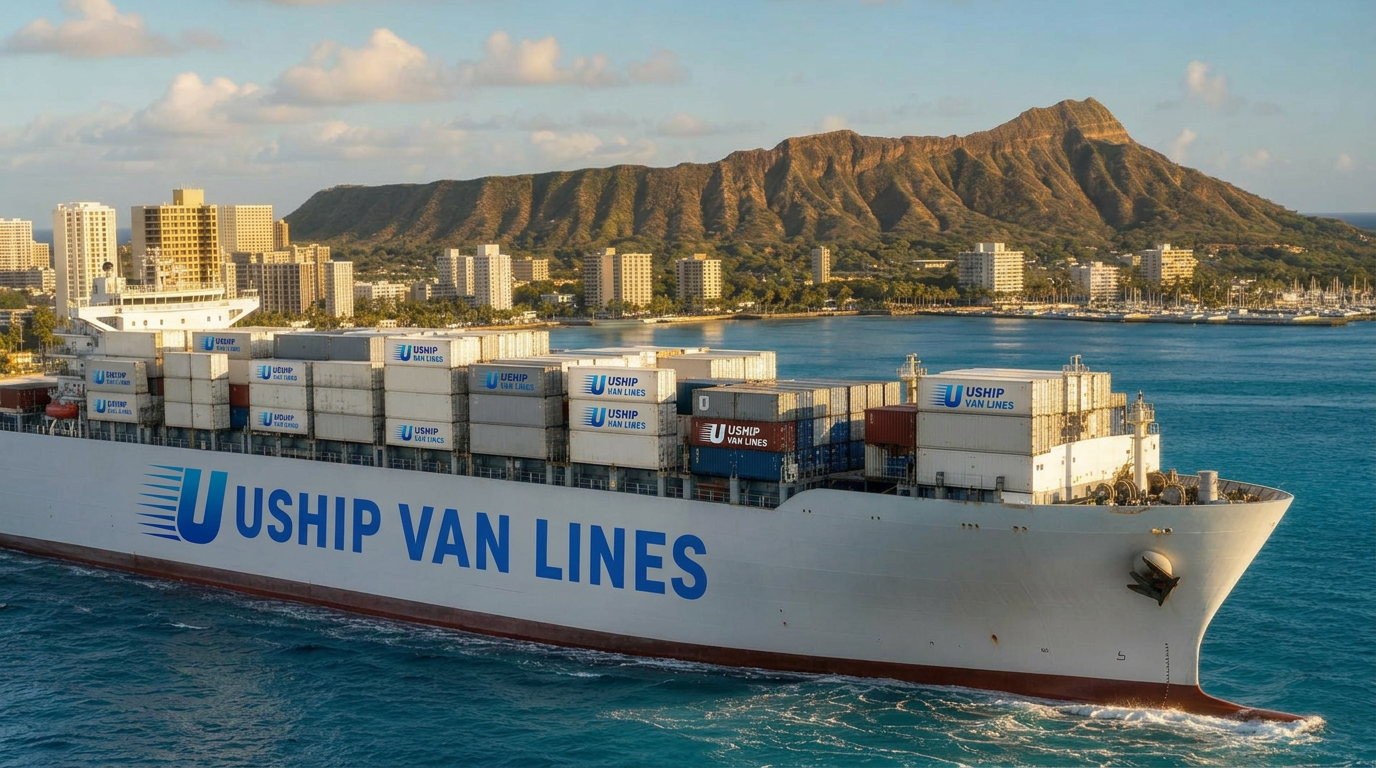
Moving from Lansing, MI to Hawaii
Moving from Lansing, MI to Hawaii is one of the most logistically complex domestic relocations you can make. Your household goods will travel roughly 2,400 miles overland to a West Coast port, then another 2,400 nautical miles across the Pacific Ocean in a shipping container. Unlike continental moves, this route requires coordination between land transport, ocean freight, and Hawaii's unique receiving requirements.
Best Alaska & Hawaii Movers, powered by UShip Van Lines, specializes in these multi-modal long-distance moves. We handle the entire journey—pickup in Lansing, overland transport to Long Beach or Oakland, container loading, ocean shipping via Matson or Pasha, and final delivery to your island destination. Ready to start planning your island move? Request a detailed quote today and we'll walk you through every step of the process.
Route overview
The Lansing to Hawaii Moving Route
Your belongings begin their journey in mid-Michigan, traveling west via I-80 or I-90 across Iowa, Nebraska, Wyoming, and Nevada to reach either the Port of Long Beach (Southern California) or Port of Oakland (Northern California). This overland leg typically takes 4–6 days depending on scheduling and routing. Once at port, your goods are loaded into a 20-foot or 40-foot ocean container—often shared with other households if you're shipping a partial load—and await the next available vessel departure.
Matson Navigation and Pasha Hawaii operate the primary container shipping routes from the mainland to Hawaii, with sailings departing multiple times weekly from both California ports. The ocean crossing to Honolulu takes 5–7 days in typical conditions. If your final destination is a neighbor island (Maui, Kauai, Big Island), your container will be offloaded in Honolulu, then reloaded onto an inter-island barge for an additional 1–3 days of transit. Total door-to-door timelines range from 14 to 28 days depending on departure schedules, weather, port congestion, and your specific island destination.
This route requires careful coordination of timing, documentation, and logistics. Hawaii has strict agricultural inspection requirements, vehicle registration rules, and delivery restrictions in certain areas. Working with a carrier experienced in Hawaii moves ensures these details are handled correctly the first time, avoiding costly delays or rejected shipments at the port.
How the moving process works
How Your Lansing to Hawaii Move Works: Step by Step
-
Free In-Home or Virtual Survey – A moving specialist evaluates your household inventory, discusses Hawaii's prohibited items (certain plants, soil, untreated wood furniture), and provides a detailed written estimate based on cubic feet and weight. This survey identifies items that require special handling or cannot be shipped.
-
Overland Transport to California Port – Your belongings are loaded onto a moving truck in Lansing and transported to either Long Beach or Oakland. This leg is typically consolidated with other shipments heading to the West Coast. You'll receive tracking updates and an estimated arrival date at the port facility.
-
Container Loading and Port Processing – At the port warehouse, your goods are loaded into a steel ocean container (either a dedicated container for large moves or a shared container for smaller loads). The container is sealed, weighed, and documented for customs and agricultural inspection. Paperwork includes your inventory list, bill of lading, and Hawaii agricultural declaration forms.
-
Ocean Freight to Honolulu – Your container is loaded onto a Matson or Pasha vessel for the Pacific crossing. Sailings depart multiple times per week, but your container will be scheduled based on availability and routing. Transit time is 5–7 days to Honolulu port, where all containers undergo mandatory agricultural inspection by Hawaii Department of Agriculture officials.
-
Agricultural Inspection and Customs Clearance – Hawaii inspectors examine containers for prohibited items, pests, and soil contamination. Compliant shipments clear quickly; non-compliant items may be treated, returned to the mainland, or destroyed at your expense. This is why the initial survey and proper packing are critical.
-
Inter-Island Transport (if applicable) – If you're moving to Maui, Kauai, Hilo, or Kona, your container is transferred to an inter-island barge for the final leg. This adds 1–3 days and requires coordination with neighbor island port schedules and warehouse availability.
-
Final Delivery and Unpacking – Once cleared and transported to your island, your container is delivered to the local warehouse. A local moving crew delivers your belongings to your new home, unloads, and can provide unpacking services if requested. You'll inspect items and sign off on the delivery receipt.
Estimated moving costs
What Does a Lansing to Hawaii Move Cost?
A typical 2-bedroom household (approximately 5,000–7,000 pounds or 400–600 cubic feet) moving from Lansing to Hawaii generally costs $6,500–$11,500 for a full-service move. A larger 3-bedroom home (8,000–12,000 pounds or 700–1,000 cubic feet) typically ranges from $10,000–$17,000. These estimates include overland transport from Lansing to a California port, ocean container shipping, and delivery to your Hawaiian residence.
Several factors influence your final cost. Volume and weight are the primary drivers—ocean freight is priced per container or per cubic foot for shared loads, and heavier shipments incur higher handling fees. Destination island matters significantly: Oahu moves are less expensive because containers arrive directly in Honolulu, while Maui, Kauai, and Big Island deliveries require inter-island barge transport adding $800–$2,000. Timing and seasonality affect availability and rates; summer months (May–August) see higher demand and prices, while winter offers more competitive rates but potential weather delays.
Packing services add $800–$2,500 depending on the scope. Professional packing is strongly recommended for Hawaii moves due to the long journey and salt-air exposure during ocean transit. Vehicle shipping is a separate service, typically $1,200–$1,800 per car using roll-on/roll-off (RORO) vessels from the same California ports. Storage at origin, port, or destination runs $150–$400 per month and may be necessary if your Hawaii housing isn't ready upon arrival. Insurance (full-value protection) costs 1–3% of declared value but provides crucial coverage for this complex multi-modal journey.
Best Alaska & Hawaii Movers provides transparent, itemized quotes with no hidden fees. We'll break down every cost component so you understand exactly what you're paying for and can make informed decisions about services and timing.
Estimated transit times
How Long Does a Lansing to Hawaii Move Take?
Plan for 14 to 28 days door-to-door for most Lansing to Hawaii moves, though timing varies based on several factors. Here's the typical breakdown:
Overland transport from Lansing to California port: 4–6 days. Your belongings travel approximately 2,400 miles across the continental U.S. This leg may involve consolidation with other shipments, which affects scheduling. Direct transport is faster but more expensive; consolidated transport is more economical but adds time.
Port processing and container loading: 1–4 days. Once your shipment arrives at Long Beach or Oakland, it's transferred to the port warehouse, inventoried, and loaded into an ocean container. Container availability and sailing schedules determine how quickly this happens. Peak season (summer) can extend this phase.
Ocean crossing to Honolulu: 5–7 days. Matson and Pasha vessels make regular sailings, but your container departs based on the next available vessel with space. The actual sailing time is consistent (about one week), but wait time for the next departure can add days. Weather delays are rare but possible, especially November–March.
Agricultural inspection and clearance: 1–3 days. All containers undergo mandatory inspection upon arrival in Honolulu. Most compliant shipments clear within 24–48 hours. Issues with prohibited items, pests, or documentation errors can extend this significantly.
Inter-island transport (Maui, Kauai, Big Island): 2–5 additional days. If your destination is a neighbor island, your container must be scheduled onto an inter-island barge. Barge frequency varies by island—Maui sees daily service, while Kauai and Big Island may have less frequent sailings. Weather can delay barge operations.
Final delivery scheduling: 1–3 days. Once your container reaches your island and clears all inspections, the local moving team schedules delivery based on your availability and their route schedule.
To ensure the smoothest timeline, book your move 4–6 weeks in advance during off-peak months, 6–8 weeks during summer. Maintain flexibility in your delivery window, especially for neighbor island moves where weather and barge schedules are less predictable.
Regional logistics
Hawaii Moving Logistics: What Makes This Route Unique
Port of Entry and Routing: Nearly all mainland-to-Hawaii household goods move through either the Port of Long Beach or Port of Oakland. From Lansing, Oakland is slightly closer (2,200 miles vs. 2,400 to Long Beach), but both ports offer regular Matson and Pasha sailings. Your carrier will choose based on container availability, sailing schedules, and consolidation opportunities. All containers arrive first at Honolulu's Sand Island port, regardless of final island destination.
Agricultural Restrictions: Hawaii enforces some of the nation's strictest biosecurity rules. You cannot bring most plants, soil, certain woods (unpainted or untreated), seeds, hay, straw, or fresh produce. Wooden furniture must be inspected; items with bark or untreated surfaces may be rejected or require fumigation. The Hawaii Department of Agriculture provides a detailed restricted items list—review it carefully during your packing phase. Violations result in confiscation, treatment costs, or even entire shipment rejection.
Container Types and Shared Loads: Smaller households (studio to 2-bedroom) typically use shared container service, where your goods occupy 200–400 cubic feet within a 40-foot container alongside other shipments. This is more economical but adds complexity to scheduling. Larger moves (3+ bedrooms, 600+ cubic feet) may warrant a dedicated 20-foot container, giving you more control over timing and reducing handling. Discuss options during your quote—dedicated containers cost more but simplify logistics and reduce damage risk.
Vehicle Shipping Coordination: Most families moving to Hawaii also ship at least one vehicle. Cars ship separately via roll-on/roll-off (RORO) vessels, using the same California ports and often the same shipping lines (Matson, Pasha). Vehicle shipping takes 7–14 days total and requires different paperwork, including title, registration, and safety inspection certificates. You can coordinate household goods and vehicle shipping through Best Alaska & Hawaii Movers for simpler logistics and often better combined pricing.
Delivery Restrictions and Access: Hawaii's unique geography creates delivery challenges. Some areas have narrow roads, low-hanging trees, or weight-restricted bridges that large moving trucks cannot navigate. Neighbor island rural properties may require smaller local trucks for final delivery, adding cost and time. Condo and apartment buildings often have strict moving hour policies and elevator reservations. High-rise buildings may charge move-in fees. Discuss your exact Hawaii address during booking so your carrier can plan appropriate equipment and schedule.
Documentation Requirements: You'll need to complete a Hawaii Agricultural Declaration form listing all items, a detailed inventory for customs (even though Hawaii is a U.S. state, ocean shipments require documentation), proof of Hawaii residence or military orders, and if applicable, vehicle registration documents. Your moving company will provide and help complete these forms, but you're responsible for accuracy. Incomplete or incorrect paperwork delays clearance and can incur storage fees at the port.
Storage Options: Delays happen—your Hawaii housing may not be ready, or weather may postpone delivery. Most carriers offer short-term storage at the port warehouse (in California or Honolulu) or long-term storage at Hawaii facilities. Honolulu storage costs $150–$350/month for a typical household; neighbor island storage is slightly more expensive due to limited facilities. Clarify storage terms and costs upfront to avoid surprises.
Seasonal considerations
Best Times to Move from Lansing to Hawaii
Winter (December–February): This is the off-peak season for Hawaii moves, offering better rates and more flexible scheduling. However, winter brings challenges: Michigan weather can delay pickup, Pacific storms occasionally disrupt sailing schedules, and winter surf can impact neighbor island barge operations. Plan extra buffer time if moving during these months. Advantage: 10–20% lower rates and better availability.
Spring (March–May): An excellent window for Michigan-to-Hawaii moves. Michigan weather improves, ocean conditions stabilize, and rates remain reasonable before summer peak season. March and early April offer particularly good value. Book 6+ weeks ahead as demand increases toward summer. This is ideal for families coordinating with school year endings.
Summer (June–August): Peak moving season with highest demand and rates. Many mainland families relocate to Hawaii during summer for school transitions. Expect premium pricing (15–25% higher), longer lead times for booking, and potential delays due to port congestion. Hurricane season begins in June (though peak is August–October), but direct hurricane impacts on shipping are rare. Book 8–10 weeks in advance minimum.
Fall (September–November): Hurricane season peaks in September and October, creating some uncertainty for Pacific shipping. While major disruptions are uncommon, tropical systems can delay sailings by 1–3 days. November is excellent for moves—rates drop after summer peak, weather stabilizes, and holiday shipping volume hasn't yet filled port capacity. Avoid the Thanksgiving week for actual moving dates due to limited crew availability.
Hawaii-specific considerations: Port congestion in Honolulu can affect any season but worsens during summer and holiday periods. Agricultural inspection staffing remains consistent year-round, but processing times may extend during peak months. Neighbor island barge schedules are most reliable during calm summer months, least predictable during winter swells (November–March). If you have flexibility, late April–early May and late October–early November offer the best balance of favorable rates, good weather, and reliable scheduling.
Why choose Best Alaska & Hawaii Movers
Why Best Alaska & Hawaii Movers for Your Lansing to Hawaii Move
-
Hawaii Specialists with Multi-Modal Expertise – We focus exclusively on Alaska and Hawaii moves, handling hundreds of Pacific shipments annually. We understand the nuances of overland-to-ocean transitions, container logistics, agricultural compliance, and island delivery requirements that general moving companies rarely encounter.
-
Single-Point Coordination, End-to-End – You work with one dedicated moving coordinator from your Lansing pickup through your Hawaii delivery. We manage the trucking company, port warehouse, ocean carrier, agricultural inspection, and island delivery team—you don't juggle multiple vendors across a 4,000-mile journey.
-
Transparent Pricing, No Hidden Fees – Our quotes itemize every cost: overland transport, container fees, ocean freight, port handling, agricultural inspection, neighbor island barge (if applicable), and delivery. You'll know exactly what you're paying before you commit. We don't surprise you with