
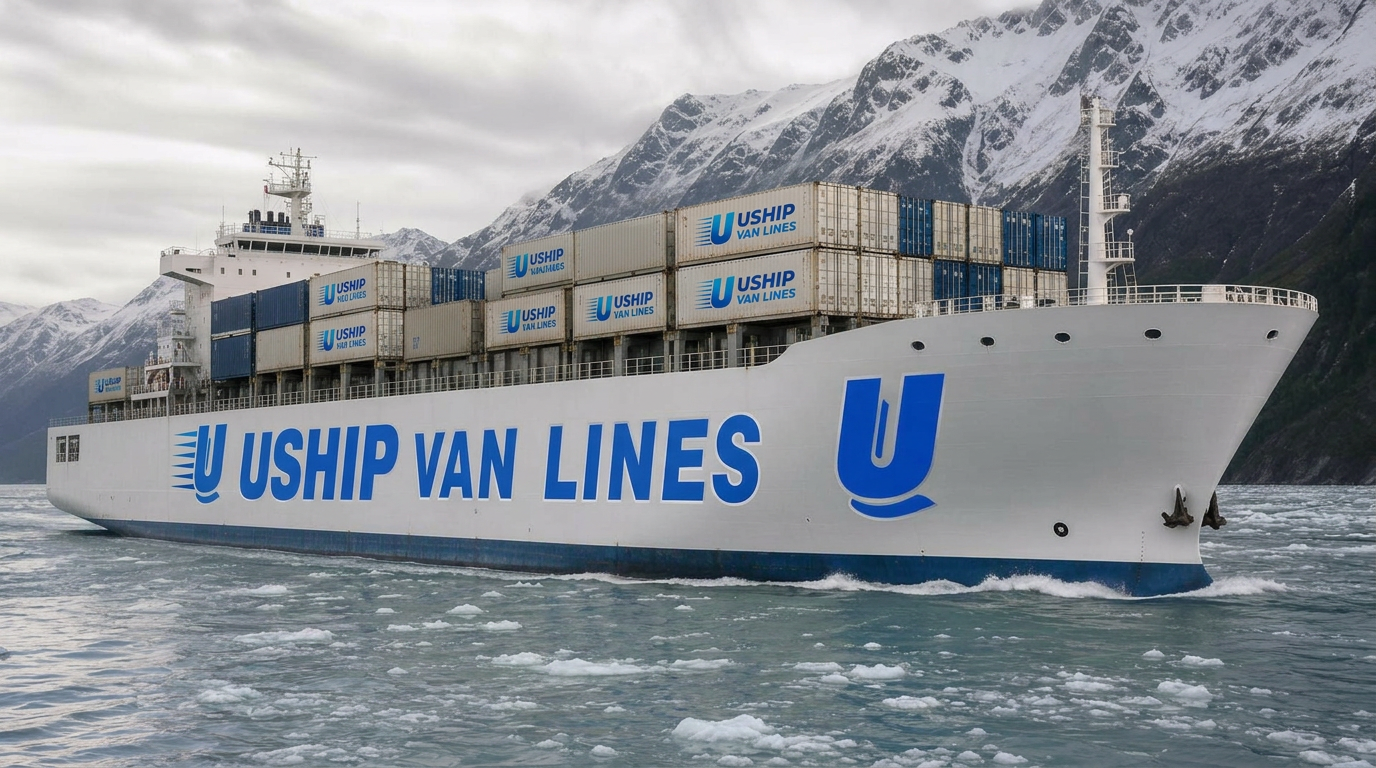
Moving from United States to Alaska
Moving to Alaska from anywhere in the lower 48 states requires specialized logistics that standard moving companies simply can't provide. Whether you're relocating to Anchorage, Fairbanks, the Mat-Su Valley, Kenai Peninsula, or remote bush communities, your household goods will travel by truck to Tacoma, then by ocean barge to Alaska ports, and finally overland to your new home.
Best Alaska & Hawaii Movers, powered by UShip Van Lines, coordinates every leg of this complex journey. We handle the truck pickup at your current address, containerized barge transport through the Port of Anchorage or other Alaska terminals, customs documentation, and last-mile delivery across Alaska's road system and beyond. Request your free moving quote today to start planning your Alaska adventure with confidence.
Route overview
How Continental U.S. to Alaska Moves Work
Every household move to Alaska begins with ground transportation from your current state to our consolidation hub near the Port of Tacoma in Washington. Your belongings are loaded into secure, weatherproof containers—typically 20-foot or 40-foot steel shipping containers—that protect your furniture and boxes during the ocean voyage. These containers are sealed at origin and remain sealed until delivery, minimizing handling and risk.
From Tacoma, containers board weekly barge sailings operated by carriers like Totem Ocean Trailer Express (TOTE) or Alaska Marine Lines. The voyage to the Port of Anchorage takes approximately 5–7 days depending on weather and sailing schedule. Upon arrival in Alaska, containers clear customs and are loaded onto flatbed trucks for overland delivery to Anchorage, Fairbanks, Wasilla, Palmer, Soldotna, Homer, and communities along Alaska's highway system.
For destinations beyond the road network—including many Southeast Alaska towns, Aleutian communities, and North Slope villages—we coordinate additional barge or air freight connections. This multi-modal approach is the only practical way to move full households to America's largest and most geographically challenging state.
How the moving process works
Your Step-by-Step Alaska Moving Process
-
Free Quote & Planning Consultation – Contact us with your origin city, destination in Alaska, home size, and preferred moving dates. We'll provide a detailed estimate covering truck pickup, barge transport, and Alaska delivery, plus a timeline tailored to barge sailing schedules.
-
Pre-Move Survey & Inventory – For larger homes or complex moves, we conduct a virtual or in-person survey to catalog your belongings, identify items requiring special handling (pianos, artwork, fragile antiques), and finalize your container size and services.
-
Packing & Loading at Origin – Our crew arrives at your current home with packing materials, protective padding, and loading equipment. We load your belongings into a truck for transport to Tacoma, or in some cases, pack directly into the shipping container if you're in the Pacific Northwest.
-
Container Staging & Barge Booking – Your goods arrive at our Tacoma-area facility where they're transferred into a sealed ocean container. We book your container on the next available barge sailing, typically departing weekly, and provide you with booking confirmation and tracking information.
-
Ocean Transit to Alaska – Your container sails from Tacoma to the Port of Anchorage (or Whittier for some routes). This leg takes 5–7 days under normal conditions. You receive voyage updates and estimated port arrival dates.
-
Customs Clearance & Port Processing – Upon arrival in Alaska, your container clears U.S. Customs (even though Alaska is a U.S. state, shipments from the lower 48 undergo agricultural and customs inspections). We handle all paperwork on your behalf.
-
Overland Delivery to Your Alaska Home – After customs release, your container is loaded onto a truck for delivery to your new address. For Anchorage-area deliveries, this typically happens within 1–3 days of port arrival. Fairbanks, Mat-Su, and Kenai Peninsula destinations add 1–2 days. Our crew unloads your belongings and places furniture in rooms as directed.
Estimated moving costs
What a Move to Alaska Costs
A typical 2-bedroom household moving from the continental United States to Alaska costs between $5,800 and $9,500 for full-service door-to-door transport. A 3-bedroom home generally ranges from $8,200 to $14,000. These estimates include truck pickup at origin, barge freight, and delivery in Anchorage or other Alaska road-system communities.
Several factors influence your final cost: distance from origin to Tacoma (East Coast origins cost more than Pacific Northwest origins due to longer truck hauls), total weight and volume (full container versus shared container space affects per-pound rates), delivery location in Alaska (Fairbanks and Kenai Peninsula deliveries cost more than Anchorage due to additional trucking), and service level (full packing service, vehicle shipping, storage, and expedited scheduling all add to base rates).
Off-season moves (September through April) sometimes offer lower barge rates due to reduced demand, while peak summer months see higher prices and tighter container availability. Bush and off-road destinations requiring additional barge or air freight connections are quoted separately based on specific logistics. We never guarantee prices without a detailed inventory, but our quotes are comprehensive with no hidden fees—what we quote is what you pay, barring significant changes to your inventory or services.
Estimated transit times
How Long Your Alaska Move Takes
Plan for 2 to 4 weeks total transit time from pickup at your current home to delivery at your Alaska address. This timeline breaks down into distinct legs with some variability based on scheduling and weather.
Truck transit to Tacoma: 3–10 days depending on your origin state. West Coast pickups may reach Tacoma in 3–5 days, while East Coast and Southern states require 7–10 days for cross-country haul. Container staging and barge boarding: 2–5 days while we consolidate shipments, load containers, and await the next scheduled sailing. Ocean voyage: 5–7 days from Tacoma to Anchorage under normal weather conditions. Winter storms occasionally add 1–2 days. Customs and port processing: 1–2 days for clearance and container release. Final Alaska delivery: 1–5 days depending on destination. Anchorage deliveries often occur within 24–48 hours of port release, while Fairbanks, Kenai, and remote highway communities add travel time.
Expedited service is available for an additional fee, prioritizing your container for the next barge sailing and fast-tracking Alaska delivery. For time-sensitive moves, we recommend booking at least 4–6 weeks in advance to secure optimal sailing dates, especially during the busy May–August moving season when barge space fills quickly.
Regional logistics
Alaska-Specific Moving Logistics
Port Operations: Most household goods enter Alaska through the Port of Anchorage, the state's largest deepwater port with direct barge connections to Tacoma. Some Southeast Alaska moves use Whittier (60 miles south of Anchorage, accessed through a single-lane tunnel) or direct barge to Juneau, Ketchikan, and other Southeast communities. We select the most efficient routing based on your destination.
Customs and Inspections: Even though Alaska is a U.S. state, shipments from the lower 48 undergo U.S. Customs and Border Protection review and USDA agricultural inspections to prevent invasive species introduction. We prepare all required documentation—commercial invoices, packing lists, and declarations. Most household goods clear quickly, but certain items (soil in potted plants, untreated wooden furniture, certain foods) face restrictions.
Vehicle Shipping: If you're driving to Alaska via the Alaska Highway, your vehicle travels with you. If you prefer to ship your car or need to transport multiple vehicles, we coordinate roll-on/roll-off (RoRo) vehicle shipping on the same barge as your household goods or via dedicated auto carriers. Vehicle shipping typically costs $1,200–$2,500 per car from Seattle/Tacoma to Anchorage. Vehicles must be clean (free of dirt and mud to pass agricultural inspection) and cannot contain personal belongings during ocean transport.
Last-Mile Alaska Delivery: Alaska's road system connects Anchorage, Fairbanks, the Mat-Su Valley (Wasilla, Palmer), Kenai Peninsula (Soldotna, Homer, Seward), and a few other communities. We deliver anywhere on the road network. For off-road locations—hundreds of Alaska towns accessible only by plane, boat, or snow machine—we arrange connections with bush freight operators, small-plane cargo services, or seasonal ice road transport. These remote deliveries require additional planning and cost but are routine for experienced Alaska movers.
Storage Options: If your Alaska home isn't ready when your container arrives, we offer short-term and long-term storage in climate-controlled Anchorage facilities. Your container can remain sealed in storage, or we can warehouse your belongings in our secure facility until you're ready for delivery.
Seasonal considerations
Best Times to Move to Alaska
Summer (May–August): Peak moving season when most people relocate to Alaska. Barge sailings are frequent, weather is mild, and Alaska road conditions are excellent. However, demand is highest—book 6–8 weeks ahead to secure your preferred dates. Costs are typically 15–20% higher than off-season rates. Long daylight hours make delivery and unpacking easier.
Fall (September–October): Shoulder season with good weather, lower demand, and better pricing. Barge schedules remain frequent through early October. This is an excellent value window if your move timing is flexible. Early snow can arrive in Interior Alaska (Fairbanks, Delta Junction) by late September, but road access remains good.
Winter (November–March): Off-peak season with the lowest rates and best availability. Barge sailings continue year-round but may run less frequently. Winter weather adds complexity: storms can delay ocean transit, icy roads slow Alaska trucking, and extreme cold (especially in Fairbanks where temperatures reach -40°F) requires extra care for sensitive items. Experienced Alaska movers navigate these challenges routinely, and we take precautions to protect your belongings from freezing temperatures.
Spring (April–early May): Rates begin increasing as summer demand builds. Weather improves but spring breakup (when frozen ground thaws) can create muddy, difficult road conditions on unpaved Alaska highways and rural routes. Coastal regions experience heavy rain. If you're moving to a remote or off-highway location, verify road accessibility during this transitional period.
Why choose Best Alaska & Hawaii Movers
Why Choose Best Alaska & Hawaii Movers
-
Alaska Specialists, Not Generalists – We focus exclusively on moves to and from Alaska and Hawaii, giving us deep expertise in barge logistics, Alaska regulations, and the unique challenges of non-contiguous state relocations that typical moving companies rarely handle.
-
Powered by UShip Van Lines – Our partnership with UShip Van Lines provides the nationwide pickup network to serve you anywhere in the lower 48, combined with our specialized Alaska delivery capabilities. You get big-network reach with Alaska-focused execution.
-
Single-Point Coordination – One team manages your entire move from origin-state pickup through barge booking, customs clearance, and final Alaska delivery. You're not handed off between multiple companies—we own the relationship and accountability from start to finish.
-
Transparent Pricing & Realistic Timelines – We provide detailed quotes breaking down each cost component and realistic transit timelines based on actual barge schedules, not optimistic estimates. No surprises, no hidden fees, no overpromising.
-
Year-Round Service Including Remote Destinations – Whether you're moving to downtown Anchorage in July or a bush village in January, we have the experience and connections to deliver your household goods safely. Our network includes bush freight partners for destinations beyond the road system.