
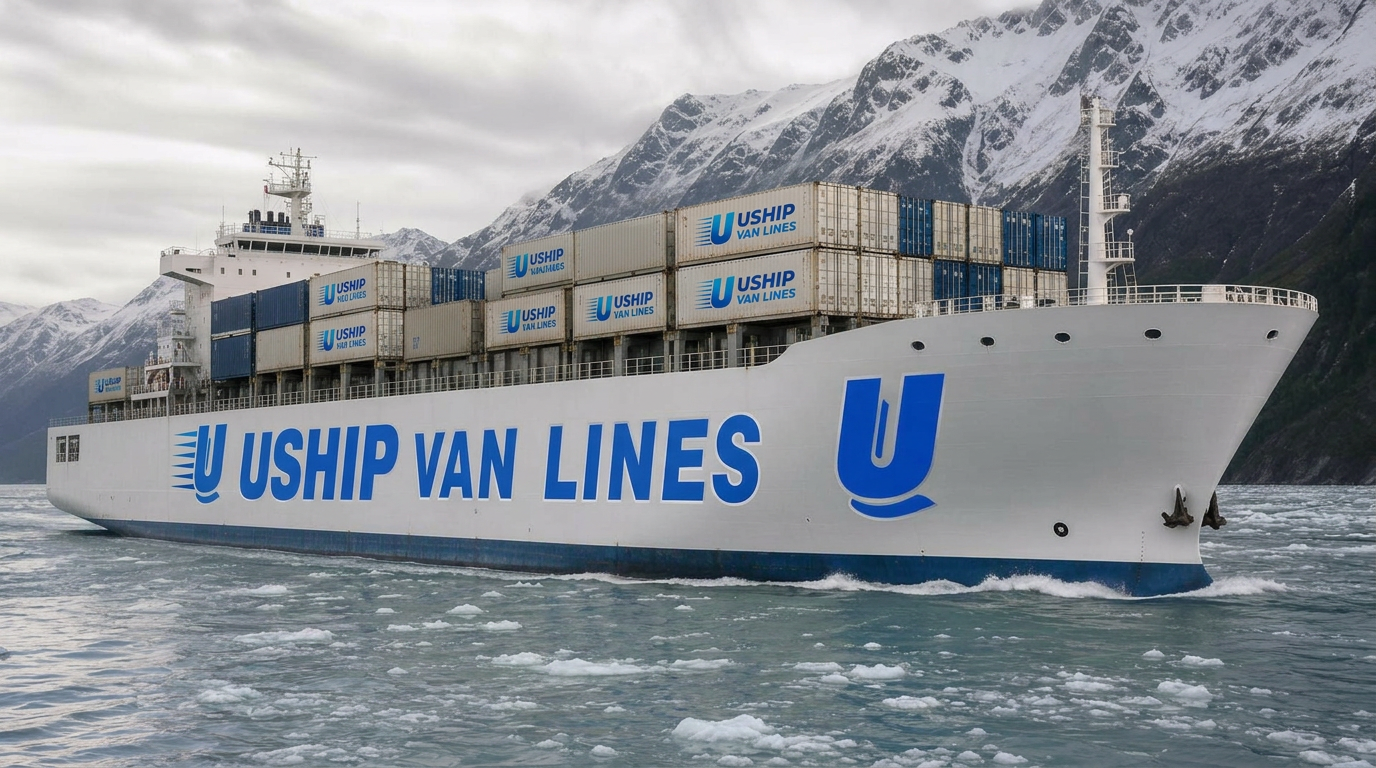
Moving from Port St Lucie, FL to Alaska
Moving from Port St Lucie's sunny Atlantic coast to Alaska's frontier demands specialized expertise that standard moving companies simply don't have. This 4,400+ mile journey involves coordinated ground transport across the continental U.S., marine barge shipping through the Port of Tacoma, and final delivery across Alaska's challenging terrain—whether you're headed to Anchorage, Fairbanks, the Mat-Su Valley, or beyond.
Best Alaska & Hawaii Movers, powered by UShip Van Lines, manages every phase of your cross-country-to-Last-Frontier relocation. From initial packing in Port St Lucie through barge coordination and Alaska delivery, we handle the complex logistics so you can focus on your new adventure. Request your free, no-obligation quote today to begin planning your move with confidence.
Route overview
Understanding the Port St Lucie to Alaska Moving Route
Your household goods travel approximately 3,300 miles overland from Port St Lucie to the Port of Tacoma, Washington—typically via I-95 North, connecting to I-10 West through the South, then up through I-5 to the Pacific Northwest. This cross-continental leg takes 5–7 days depending on scheduling and weather conditions.
From Tacoma, your belongings load onto ocean barges operated by carriers like TOTE Maritime or Alaska Marine Lines, sailing roughly 1,500 nautical miles to Anchorage (or occasionally Whittier). The marine leg adds 7–10 days of transit, with weekly or biweekly sailings depending on season. Barges arrive at the Port of Anchorage, Alaska's primary freight hub handling over 90% of the state's consumer goods.
Final delivery from the port to your Alaska address adds 1–4 days depending on location. Anchorage and surrounding Mat-Su Valley deliveries happen quickest, while Fairbanks requires an additional 360-mile drive north on the Parks Highway. Remote communities on the Kenai Peninsula, Southeast Alaska, or bush locations may require additional marine or air freight, extending timelines and costs significantly.
How the moving process works
How Your Port St Lucie to Alaska Move Works: Step-by-Step
1. Free Consultation and Detailed Inventory We conduct a virtual or in-home survey of your Port St Lucie residence, documenting everything you're shipping north. This inventory determines container size, special handling needs (firearms, artwork, wine collections), and identifies items restricted from Alaska transport like certain plants or propane tanks.
2. Packing and Preparation in Port St Lucie Our team arrives at your Florida home to professionally pack your belongings using materials designed for multi-modal transport. Fragile items receive extra cushioning for the long overland journey and marine transit. We clearly label boxes with Alaska delivery addresses and any cold-weather storage instructions.
3. Loading and Cross-Country Ground Transport Your household goods load into a dedicated section of our long-haul truck or into your own shipping container. The driver routes through the southern tier or northern route depending on season and weather, reaching Tacoma in 5–7 days with secure overnight staging.
4. Port of Tacoma Barge Transfer At Tacoma, your shipment transfers to the Alaska barge terminal. We handle all marine documentation, customs paperwork (Alaska is technically domestic but requires specific forms), and container securing for ocean transit. Barges typically sail weekly during peak season (May–September), less frequently in winter.
5. Ocean Transit to Port of Anchorage The barge sails north through inside and outside passages, taking 7–10 days depending on weather and routing. Your goods remain in climate-neutral containers—Alaska barges don't offer climate control, so temperature-sensitive items require special consideration.
6. Port Clearance and Final Ground Transport Upon arrival in Anchorage, we clear your shipment through the port and transfer to local Alaska trucks. If you're staying in Anchorage or nearby communities, delivery happens within 1–2 days. Fairbanks and other Interior destinations add 2–3 days for the highway journey.
7. Delivery and Unpacking at Your Alaska Home Our Alaska-based team delivers your belongings, navigates any challenging driveways or winter conditions, and offers unpacking services. We conduct a final walkthrough, verify inventory, and ensure you're settled before considering the job complete.
Estimated moving costs
What Does It Cost to Move from Port St Lucie to Alaska?
For a typical 2–3 bedroom household (approximately 7,000–10,000 pounds), expect total moving costs between $8,500 and $16,000. Studio or 1-bedroom moves may range $5,500–$8,500, while larger 4+ bedroom homes can exceed $18,000–$25,000 depending on volume and destination.
Major Cost Factors:
- Distance and fuel surcharges: The 3,300-mile overland leg to Tacoma represents significant trucking expense, fluctuating with diesel prices
- Marine freight rates: Barge space pricing varies seasonally; peak summer months (June–August) command premium rates when demand is highest
- Container type: Shared container space (consolidated shipments) costs less than exclusive 20' or 40' containers but may extend transit times
- Final Alaska destination: Anchorage delivery is standard; Fairbanks adds $800–$1,500; remote bush communities requiring additional barge, air, or ice-road transport can double costs
- Packing services: Full professional packing adds $1,200–$2,500 depending on home size and fragile item volume
- Insurance coverage: Basic carrier liability covers $0.60/lb; full replacement value insurance adds 1–3% of declared shipment value
- Storage needs: If your Alaska housing isn't ready, temporary storage in Anchorage runs $150–$400/month depending on volume
- Vehicle shipping: Cars ship separately on the same barges; expect $1,800–$3,200 per vehicle Tacoma to Anchorage
- Timing and flexibility: Off-season moves (October–April) may offer 10–20% savings but face weather delays and limited sailing schedules
We provide detailed, binding estimates after completing your inventory survey. Request your free quote to receive a customized cost breakdown for your specific move.
Estimated transit times
How Long Does Port St Lucie to Alaska Moving Take?
Door-to-door transit from Port St Lucie to Alaska typically requires 18–28 days depending on destination, season, and barge schedules. Here's the realistic breakdown:
Ground Transport to Tacoma: 5–7 days Cross-country trucking from Florida to Washington covers 3,300 miles through multiple climate zones. Summer moves may complete in 5 days; winter weather through mountain passes can extend this to 7+ days.
Port Processing and Barge Boarding: 2–5 days Once your shipment reaches Tacoma, it must clear into the Alaska terminal, await the next scheduled sailing, and load onto the vessel. Peak season sailings (May–September) depart weekly, minimizing wait times. Winter months may have biweekly schedules, potentially adding a week.
Ocean Transit to Anchorage: 7–10 days The barge journey covers approximately 1,500 nautical miles at 15–20 knots, calling at intermediate ports. Direct sailings take 7 days; routes stopping at Kodiak, Whittier, or Southeast Alaska communities may extend to 10 days.
Port Clearance and Final Delivery: 1–4 days After docking at the Port of Anchorage, containers offload and clear through facility processing (1 day). Anchorage-area deliveries complete within 1–2 additional days. Fairbanks requires 2–3 days for the 360-mile highway transport north.
Remote Locations: Add 5–14 days Kenai Peninsula communities accessible by road add 2–3 days. Southeast Alaska towns requiring additional barge service add 5–7 days. True bush destinations reachable only by plane or seasonal ice roads can add 1–2 weeks and require advance coordination.
For planning purposes, allow 4–6 weeks from signing your moving contract to final delivery in Alaska, giving buffer for weather, scheduling, and the unexpected challenges inherent in Last Frontier logistics.
Regional logistics
Alaska-Specific Moving Logistics You Need to Know
Marine Barge Requirements and Documentation Alaska-bound shipments require specific paperwork even though it's a domestic move. You'll complete a commercial bill of lading, Alaska seafood/agriculture declaration (prohibiting certain plants and soil), and vehicle shipping documentation if applicable. We handle all forms, but you must provide accurate inventory lists and declared values for insurance purposes.
Vehicle Shipping Coordination Most families ship 1–2 vehicles alongside household goods on the same barges. Cars must be clean (Alaska agricultural inspection), operable (or declared inoperable with fees), and under 1/4 tank fuel. Personal items are not permitted inside vehicles during transport. Vehicle-only rates run $1,800–$3,200 Tacoma to Anchorage depending on size. Booking vehicle and household goods together often yields package discounts of $200–$500.
Restricted and Prohibited Items Alaska prohibits or restricts numerous items due to agricultural, environmental, and safety regulations. Absolutely prohibited: most live plants and all soil, certain fruits/vegetables, fireworks, and hazardous materials beyond normal household cleaners. Restricted items requiring declaration: firearms and ammunition (legal but must be documented), taxidermy, wooden furniture with bark, and certain foods. We provide a complete checklist during your consultation.
Port of Anchorage Operations The Port of Anchorage handles approximately 3.5 million tons of cargo annually and serves as Alaska's critical supply lifeline. It operates year-round despite harsh winter conditions. Your container arrives at the dedicated Alaska Marine Lines or TOTE Maritime terminal, where our local team coordinates pickup typically within 24–48 hours of vessel docking. Port demurrage (storage fees) begin after 5 free days, incentivizing quick retrieval.
Final-Mile Alaska Delivery Challenges Alaska's unique geography creates delivery scenarios unknown in the Lower 48. Urban Anchorage and nearby Eagle River, Wasilla, and Palmer deliveries proceed like any U.S. city. Fairbanks requires highway transport through wilderness with limited services. The Kenai Peninsula involves the scenic but narrow Sterling and Seward Highways with seasonal considerations. Southeast Alaska communities (Juneau, Sitka, Ketchikan) are road-inaccessible from Anchorage and require separate barge arrangements—your shipment would typically route through the Bellingham, WA to Alaska Marine Highway System instead of Tacoma.
Bush and Remote Community Access True bush Alaska locations require specialized logistics. Villages accessible only by plane receive freight via cargo aircraft at per-pound rates often exceeding the value of used furniture—most bush movers ship only irreplaceable items and purchase new goods locally. Winter ice road access opens seasonal windows for communities like Bethel or Nome, but requires expert coordination. If your destination is off the road system, we'll provide honest cost-benefit analysis during consultation and may recommend shipping only essentials while purchasing other items in Alaska.
Climate and Storage Considerations Barge containers are not climate-controlled. Alaska's marine climate is relatively mild (Anchorage winters average 20°F, not the extreme cold many imagine), but condensation during transit can affect improperly packed items. We use moisture barriers for electronics, documents, and wooden furniture. If your Alaska home isn't ready upon arrival, Anchorage has numerous storage facilities offering climate-controlled units—essential for items that shouldn't freeze (paints, aerosols, liquids) during winter storage.
Seasonal considerations
Best Times to Move from Port St Lucie to Alaska
Summer Peak Season (May–September) This is Alaska's primary moving season and for good reason. Barge sailings run weekly, weather is most predictable, and final delivery faces minimal complications. Alaska roads are fully clear, and your new home is accessible without winter challenges. However, demand drives prices 15–25% higher than off-season, and booking windows fill 8–12 weeks in advance. If you're moving for a summer job start or school year, reserve your moving dates by February or March.
Fall Transition (September–October) Early fall offers a sweet spot: reduced demand lowers prices 10–15%, barge schedules still run regularly (though less frequently), and weather remains generally cooperative. By late October, Alaska sees first snows and barge schedules begin reducing. This window works well for retirees or remote workers with flexible timing who can save money while avoiding the worst winter challenges.
Winter Off-Season (November–March) Winter moves to Alaska face significant challenges but offer substantial savings—often 20–30% below peak rates. Barge sailings reduce to biweekly or monthly, extending transit times by 1–2 weeks. Arctic storms can delay sailings unexpectedly. Final delivery in Alaska requires winter-capable trucks, and some remote areas become completely inaccessible until spring ice roads form (usually January–March). Moving household goods in winter makes sense only if your timeline is highly flexible and you can arrange temporary housing with flexibility for potential delays.
Spring Shoulder Season (April–May) Spring brings increasing barge frequency and improving weather, though Alaska's infamous "breakup" season (late April through May) can create muddy, challenging road conditions. Prices begin rising toward summer peaks but remain 10–15% below June–August rates. If your move date is flexible within a 2–3 week window, spring offers good value with acceptable logistics reliability.
Hurricane Season Consideration While Alaska doesn't face hurricane risk, your Port St Lucie departure timing should account for Atlantic hurricane season (June–November). Severe storms can delay initial pickup or force temporary storage until coastal roads clear. Build contingency time if moving during peak hurricane months (August–October).
Why choose Best Alaska & Hawaii Movers
Why Choose Best Alaska & Hawaii Movers for Your Port St Lucie to Alaska Move
-
Alaska & Hawaii Specialization: Unlike general moving companies that occasionally handle Alaska shipments, we focus exclusively on Last Frontier and Hawaiian moves. We understand barge schedules, Alaska logistics, port operations, and the unique challenges of your route.
-
Powered by UShip Van Lines' Network: Our partnership with UShip Van Lines provides access to vetted, experienced carriers for your cross-country leg, while our Alaska-based teams handle final delivery with local expertise standard carriers can't match.
-
Single-Point Coordination: You work with one dedicated move coordinator from Port St Lucie packing through Alaska delivery. No handoffs between multiple companies, no confusion about who's responsible for which leg—we manage the entire multi-modal journey.
-
Transparent Pricing and Realistic Timelines: We provide detailed, binding estimates that break down every cost component. Our timeline estimates include buffer for weather and logistics realities, not optimistic best-case scenarios that leave you frustrated when delays occur.
-
Alaska Destination Expertise: Our Alaska teams know the difference between delivering to downtown Anchorage versus a remote Kenai Peninsula cabin. We provide honest assessments of access challenges, seasonal considerations, and total delivered costs before you commit.
-
Flexible Storage Solutions: If your Alaska housing isn't ready or you need temporary storage during transition, we coordinate secure, climate-controlled facilities in Anchorage at transparent rates, eliminating the stress of managing storage separately.