
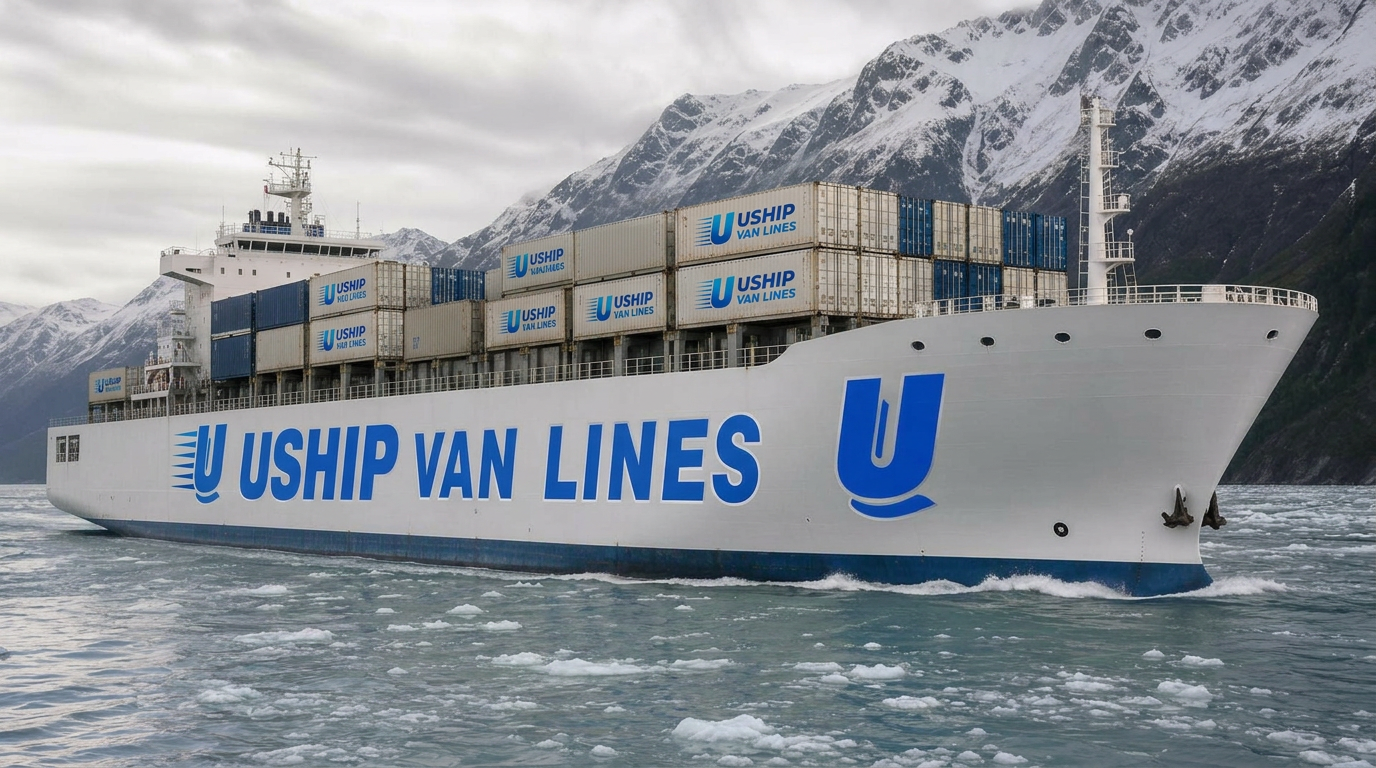
Moving from New Orleans, LA to Alaska
Moving from the Gulf Coast charm of New Orleans to America's Last Frontier is one of the most dramatic relocations you'll ever make. Whether you're heading to Anchorage for work, Fairbanks for adventure, or the Mat-Su Valley for homesteading, this cross-continental move demands specialized logistics and careful planning.
Best Alaska & Hawaii Movers, powered by UShip Van Lines, handles the complex barge shipping, overland transportation, and last-mile delivery that makes Alaska moves uniquely challenging. Ready to start your journey north? Request your free, no-obligation quote today.
Route overview
The New Orleans to Alaska Moving Route
Your household goods travel approximately 3,800 miles from New Orleans to Anchorage, combining overland trucking with ocean barge transport. Your belongings first move by truck from New Orleans across the southern states to the Pacific Northwest—typically to Tacoma, Washington. There, your shipment transfers to a barge bound for the Port of Anchorage, navigating the Inside Passage and Gulf of Alaska.
This isn't a simple highway move. Alaska lacks direct road connections to the Lower 48, making barge service the primary method for household goods shipments. If you're moving to destinations beyond Anchorage—Fairbanks, Kenai Peninsula, Homer, or bush communities—your items complete an additional overland or air freight leg once they reach Alaska.
The route requires coordination between trucking companies, port facilities, barge schedules, and Alaska-based delivery services. Weather, sailing schedules, and seasonal port operations all influence your timeline, making professional Alaska moving expertise essential.
How the moving process works
How Your New Orleans to Alaska Move Works
-
Initial survey and quote: A moving specialist assesses your inventory—typically via video walk-through—and provides a detailed estimate based on volume, special items (vehicles, boats, ATVs), and your destination within Alaska. You'll receive a clear breakdown of trucking, barge, and last-mile delivery costs.
-
Pre-move preparation: You'll receive Alaska-specific guidance on what items are prohibited or restricted (certain plants, flammable materials, perishables). If shipping a vehicle separately, you'll complete additional paperwork. Many customers reduce volume by selling bulky furniture unsuited to Alaska living, lowering overall costs.
-
Packing and New Orleans pickup: Professional crews pack and load your belongings into a dedicated container or as part of a consolidated shipment. Your items are inventoried, sealed, and prepared for the long journey. Pickup scheduling coordinates with barge sailing dates, typically requiring 2–3 weeks lead time.
-
Overland transport to Tacoma: Your container travels approximately 2,400 miles by truck from New Orleans to the Port of Tacoma. This leg takes 5–7 days under normal conditions, with your shipment stored at the port facility until the next scheduled barge departure.
-
Barge transit to Anchorage: Ocean vessels depart Tacoma weekly or bi-weekly depending on season, sailing north through the Inside Passage and across the Gulf of Alaska. Transit time runs 7–10 days to reach the Port of Anchorage, where cargo undergoes customs clearance and offloading.
-
Alaska delivery: Once cleared at the port, your container moves to a local warehouse or proceeds directly to last-mile delivery. Anchorage-area deliveries typically happen within 3–5 days of port arrival. Fairbanks, Mat-Su, Kenai, and other destinations add 2–7 days depending on distance and road conditions.
-
Unpacking and settlement: Crews deliver and unload your belongings at your Alaska home. Full-service moves include unpacking and debris removal. You inspect items against your inventory sheet and complete final paperwork, officially ending your transcontinental move.
Estimated moving costs
What New Orleans to Alaska Moves Cost
A typical 2–3 bedroom household moving from New Orleans to Anchorage costs $8,500–$14,500 for full-service transportation. Studio or 1-bedroom moves run $5,000–$7,500, while 4+ bedroom homes with extensive inventory can reach $16,000–$22,000 or more.
Your final cost depends on several key factors:
Volume and weight: Alaska moves price primarily by cubic footage or container space. A 2-bedroom apartment averages 800–1,200 cubic feet; a 3-bedroom house runs 1,200–2,000 cubic feet. Consolidated shipping (sharing container space) costs less than exclusive-use containers.
Distance within Alaska: Anchorage delivery represents the base rate. Fairbanks adds $800–$1,500. Kenai Peninsula destinations add $600–$1,200. Remote communities requiring air freight or winter ice road delivery add significantly more.
Seasonal timing: Summer moves (May–September) command premium pricing due to high demand and optimal barge schedules. Winter moves offer potential savings but face weather delays and limited sailing frequency.
Vehicle shipping: Transporting a car, truck, or SUV to Alaska adds $1,800–$3,200 to your total, depending on vehicle size and whether it travels by barge or auto transport service.
Packing services: Professional packing for a 3-bedroom home adds $1,200–$2,500. Fragile-only packing runs $400–$800. DIY packing using provided materials can reduce costs but increases your prep time.
Storage: If your Alaska housing isn't ready when your shipment arrives, Anchorage storage costs $150–$300 per month for a typical household's worth of goods.
These are representative ranges based on industry standards—not guaranteed quotes. Every move is unique. Request a detailed estimate to understand your specific costs.
Estimated transit times
How Long New Orleans to Alaska Takes
Door-to-door transit from New Orleans to Anchorage typically requires 3–5 weeks from pickup to delivery. This breaks down into distinct phases:
New Orleans to Tacoma (5–7 days): Overland trucking across the southern and western United States. Your container travels I-10 to California, then north to Washington, covering roughly 2,400 miles.
Port staging (3–10 days): Your shipment waits at the Port of Tacoma for the next scheduled barge departure. Summer sailings operate weekly; winter schedules may be bi-weekly, affecting staging time.
Barge transit (7–10 days): Ocean voyage from Tacoma through the Inside Passage, past Juneau and the Gulf of Alaska, to the Port of Anchorage. Weather and sea conditions influence exact timing.
Port clearance and processing (2–4 days): Offloading, customs clearance, and transfer to local delivery warehouse in Anchorage.
Last-mile delivery (1–7 days): Anchorage metro deliveries happen quickly—often within 24–48 hours of clearance. Fairbanks adds 2–4 days. Mat-Su Valley, Kenai Peninsula, and more remote destinations add up to a week.
Winter moves (October–March) face potential delays from snowstorms, reduced barge frequency, and difficult road conditions in Alaska. Budget an extra week during these months. Summer moves (June–August) benefit from frequent sailings and optimal weather but face higher demand and scheduling pressure.
Express options do not exist for Alaska barge shipping—this is the standard timeline. Plan your housing, travel, and transition around this realistic schedule.
Regional logistics
Alaska-Specific Moving Logistics
Port of Anchorage operations: Alaska's primary freight port handles thousands of containers monthly. Your shipment clears U.S. Customs here (yes, despite Alaska being a state, there are agricultural inspections). Port congestion occasionally delays offloading by 1–2 days during peak summer. Your moving company tracks your container and coordinates warehouse transfer.
Vehicle shipping: Most customers ship one vehicle alongside household goods. Cars travel either in your household container (if space permits) or via dedicated auto barge service. Vehicles must be cleaned (no mud, no excess personal items inside) and have less than ¼ tank of fuel for barge transport. Allow $1,800–$3,200 for vehicle shipping from the Pacific Northwest to Alaska. If driving the Alaska Highway yourself, plan 7–10 days from the Lower 48 and prepare your vehicle for remote, rugged conditions.
Restricted and prohibited items: Alaska regulations prohibit importing certain plants, soil, and untreated wood products due to invasive species concerns. Fresh produce, perishables, and flammable materials cannot travel by barge. Firearms are legal but require proper declaration and locked storage during transport. Your moving specialist provides a complete prohibited-items list during planning.
Last-mile challenges: Anchorage, Fairbanks, and Mat-Su Valley have straightforward delivery access. Kenai Peninsula, Homer, Valdez, and smaller communities require additional trucking over two-lane highways—sometimes impassable in winter storms. Bush communities (Nome, Bethel, Kotzebue, etc.) require air freight from Anchorage, dramatically increasing costs ($2–$5 per pound). Discuss your exact Alaska address with your moving coordinator; not all locations are accessible year-round.
Insurance and valuation: Standard moving insurance provides 60 cents per pound per item—inadequate for valuable belongings. Purchase full replacement value coverage (typically 1–2% of declared shipment value). Ocean barge transit introduces additional risk from rough seas; proper packing and containerization are critical. Best Alaska & Hawaii Movers offers comprehensive coverage options.
Timing and booking: Alaska moves require more lead time than Lower 48 relocations. Book 6–8 weeks ahead for summer moves, 4–5 weeks minimum for off-season. Last-minute moves face limited barge availability and possible missed sailing windows, delaying your shipment by 1–2 weeks.
Seasonal considerations
Best Times to Move from New Orleans to Alaska
Summer (May–August): Peak moving season offers maximum barge frequency—weekly or even twice-weekly sailings from Tacoma. Weather is optimal for both ocean transit and Alaska road delivery. The Gulf of Alaska is calmest, reducing cargo shift risk. However, expect premium pricing, tight scheduling, and pressure on Alaska-side delivery capacity. Book 6–8 weeks ahead. This is the ideal window for families with school-age children and those new to Alaska winters.
Early Fall (September–October): A sweet spot combining good weather, slightly reduced demand, and still-frequent barge service. Prices drop 10–15% compared to summer peaks. Road conditions in Alaska remain excellent, and delivery crews are readily available. The Inside Passage can see increased rain, but transit remains reliable. Book 4–6 weeks in advance.
Winter (November–March): Off-peak season brings significant cost savings—sometimes 20–30% below summer rates. Barge schedules reduce to bi-weekly or less frequent. Gulf of Alaska weather introduces potential delays; rough seas occasionally push sailings back 2–5 days. Alaska road delivery faces snow, ice, and short daylight hours, complicating last-mile logistics. If you have flexibility and Alaska winter experience, these savings are substantial. Not recommended for first-time Alaska residents.
Spring (April): Transitional month with improving weather and ramping barge schedules. Pricing sits between winter lows and summer peaks. Ice breakup can briefly complicate rural Alaska deliveries. A good compromise season—book 5–6 weeks ahead.
New Orleans experiences hurricane season June–November. If you're moving during this window, build flexibility into your pickup dates. Your moving company should monitor Gulf Coast weather and adjust schedules if storms threaten.
Why choose Best Alaska & Hawaii Movers
Why Choose Best Alaska & Hawaii Movers
-
Alaska-specialized expertise: We focus exclusively on Alaska and Hawaii relocations, understanding barge logistics, port operations, and last-mile challenges that general movers can't match. Our team navigates Tacoma–Anchorage routes year-round.
-
Powered by UShip Van Lines infrastructure: Best Alaska & Hawaii Movers leverages UShip Van Lines' nationwide network, combining boutique Alaska expertise with enterprise-level logistics coordination and customer support.
-
Transparent, detailed pricing: You receive itemized quotes breaking down trucking, barge, last-mile delivery, and optional services. No hidden port fees or surprise charges—just honest Alaska moving costs.
-
End-to-end coordination: One point of contact manages your entire move from New Orleans pickup through Alaska delivery. We coordinate trucking companies, port facilities, barge schedules, and Alaska delivery crews, so you don't juggle multiple vendors.
-
Flexible service levels: Choose full-service packing and white-glove delivery, or select consolidated shipping and DIY packing to control costs. We tailor service levels to your budget and timeline, not a one-size-fits-all package.