
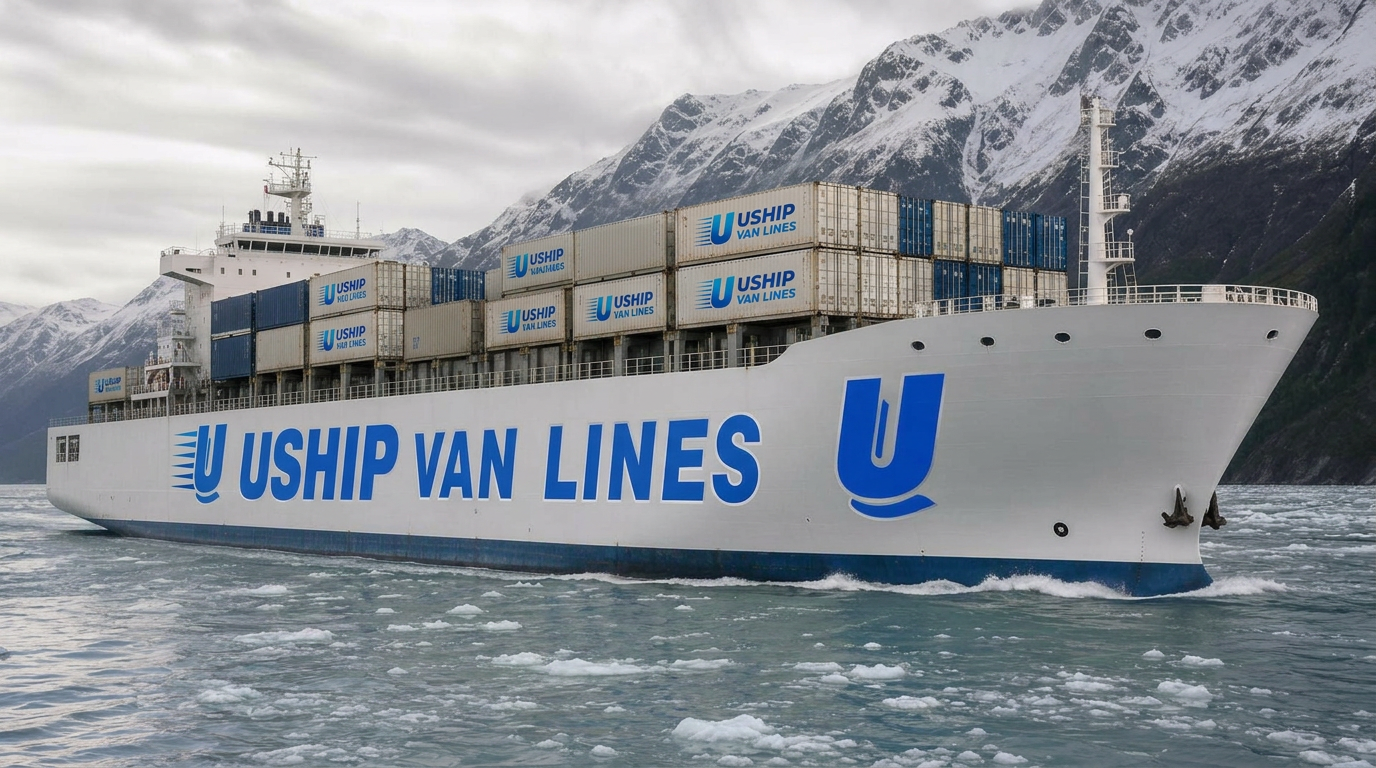
Moving from Mesa, AZ to Alaska
Moving from Mesa's sun-soaked desert to Alaska's wilderness is one of the most dramatic relocations in North America. Whether you're headed to Anchorage for career opportunities, Fairbanks for frontier living, or the Mat-Su Valley for homesteading, this cross-continental move requires specialized logistics that few carriers understand.
Best Alaska & Hawaii Movers, powered by UShip Van Lines, coordinates the entire journey—overland transport from Mesa to Tacoma, ocean barge to Alaska ports, and last-mile delivery to your new home. Ready to start? Request your free Alaska moving quote and speak with a coordinator who knows this route.
Route overview
The Mesa to Alaska Moving Route
Your household goods travel approximately 2,800–3,200 miles depending on your final Alaska destination. The journey begins with overland transport from Mesa through the Pacific Northwest to the Port of Tacoma, Washington—the primary consolidation point for Alaska-bound freight. From Tacoma, items are loaded onto ocean barges operated by carriers like Totem Ocean Trailer Express or Alaska Marine Lines, sailing north through the Inside Passage to Alaska's port network.
Most Mesa to Alaska moves terminate in Anchorage (the distribution hub), though direct service extends to Whittier, Seward, Kodiak, and seasonal ports. Fairbanks, Mat-Su communities like Wasilla and Palmer, and Kenai Peninsula destinations receive goods via ground transport after port arrival. Bush communities and remote areas require additional coordination with air freight or winter ice road logistics.
This route demands precise timing. Barge schedules run weekly during peak season (May–September) but reduce frequency in winter. Overland segments face weather delays in northern mountain passes, and Alaska port operations pause during severe storms. Planning 6–8 weeks ahead is standard for summer moves; winter relocations need 10–12 weeks minimum.
How the moving process works
How Your Mesa to Alaska Move Works: Step-by-Step
-
Initial Survey and Quote (Week 1) — A Best Alaska & Hawaii Movers coordinator conducts a virtual or in-home survey of your Mesa residence, cataloging items and identifying Alaska-restricted goods (plants, certain foods, hazardous materials). You receive a detailed quote covering overland transport, barge freight, port handling, and Alaska delivery.
-
Booking and Barge Reservation (Weeks 2–3) — Once you confirm, we reserve your barge space with Tacoma-Alaska carriers. Summer sailings book 4–6 weeks out; winter slots offer more flexibility but fewer departure dates. We coordinate your overland pickup date to align with barge schedules, ensuring minimal warehouse time in Tacoma.
-
Mesa Pickup and Overland Transport (Weeks 4–5) — Professional movers pack and load your belongings in Mesa, securing items for the 1,400-mile journey to Tacoma. Transit takes 3–5 days depending on route and weather. Goods arrive at our Tacoma consolidation warehouse where they're inspected, inventoried, and prepared for maritime shipping.
-
Barge Loading and Ocean Transit (Weeks 5–7) — Your shipment is loaded into secure containers or onto flatbed trailers aboard the Alaska barge. Ocean transit from Tacoma to Anchorage takes 5–7 days; Whittier and Seward routes are similar. Kodiak and Southeast Alaska ports may add 1–3 days. You receive tracking updates as the vessel progresses north.
-
Alaska Port Arrival and Customs Clearance (Week 7) — Upon arrival at the Alaska port, goods are offloaded and processed. While Alaska is part of the U.S. and requires no customs for domestic moves, port security inspections and documentation verification add 1–2 days before release.
-
Last-Mile Delivery to Your Alaska Home (Week 8) — If you're in Anchorage proper, delivery occurs directly from the port. Fairbanks destinations add 350 miles (1 day); Mat-Su Valley and Kenai Peninsula locations add 40–150 miles. Remote communities may require specialized carriers or seasonal access coordination. Our team schedules delivery windows and confirms access logistics (driveways, narrow roads, winter conditions).
-
Unpacking and Claims Period (Weeks 8–10) — Movers deliver and place items in your new Alaska home. You inspect for damage within 24 hours and document any issues. Best Alaska & Hawaii Movers provides claims support for the first 90 days, coordinating with insurance carriers as needed.
Estimated moving costs
What Does a Mesa to Alaska Move Cost?
A typical 2-bedroom move (approximately 5,000–7,000 lbs) from Mesa to Anchorage ranges from $6,800 to $11,500, while 3-bedroom homes (8,000–12,000 lbs) cost $10,200 to $17,800. These estimates include overland transport, barge freight, standard insurance, and delivery within the Anchorage bowl. Final pricing depends on actual weight, service level, season, and destination accessibility.
Key cost drivers for this route:
- Weight and volume — Alaska barge rates price by the pound or cubic foot; a fully furnished 3BR home may exceed 12,000 lbs
- Distance beyond Anchorage — Fairbanks adds $1,200–$2,000; Kenai Peninsula communities add $600–$1,200; Mat-Su Valley adds $400–$800
- Seasonal demand — May through August sees 20–30% higher rates due to peak moving season; September and April offer better value
- Packing services — Full-service packing adds $800–$2,500 depending on home size and fragile item quantity
- Vehicle shipping — Cars and trucks ship separately on roll-on/roll-off barges; expect $1,800–$3,200 per vehicle Tacoma to Anchorage
- Storage — If your Alaska housing isn't ready, Anchorage storage costs $150–$300/month for a 10×15 unit; Tacoma storage adds similar rates
- Access challenges — Remote areas, winter-only ice road access, or air freight to bush communities significantly increase costs; coordinate early for quotes
Best Alaska & Hawaii Movers provides binding estimates after a detailed inventory. We never quote guaranteed flat rates without assessing your specific shipment, but our pricing remains transparent with no hidden fuel surcharges or port fees tacked on later. Request a customized quote to see exactly what your Mesa to Alaska move will cost.
Estimated transit times
How Long Does Moving from Mesa to Alaska Take?
Plan for 6 to 8 weeks door-to-door from Mesa to most Alaska destinations during peak season (May–September). Winter moves extend to 8 to 12 weeks due to reduced barge frequency and weather delays. Here's the typical breakdown:
- Mesa pickup to Tacoma warehouse: 3–5 days (1,400 miles overland)
- Tacoma consolidation and barge loading: 3–7 days (varies by sailing schedule)
- Ocean transit Tacoma to Anchorage: 5–7 days (calm seas; winter storms add 1–3 days)
- Port offload and clearance: 1–2 days
- Last-mile to final destination: Same day (Anchorage) to 2 days (Fairbanks, Kenai)
Remote communities face additional variables. Kodiak Island adds 2–3 days of ocean travel. Southeast Alaska towns like Juneau and Ketchikan use different barge routes with similar timeframes. Bush destinations without year-round road access require air freight coordination, often adding 1–2 weeks to arrange.
Weather is the wildcard. Late-season storms (October–November) can delay barges 3–5 days waiting for safe passage through the Gulf of Alaska. Mountain passes between Tacoma and Alaska (especially the Alaska-Canada Highway segments for overland alternatives) close during severe winter storms. Summer is the most predictable window, with 90%+ on-time performance.
Regional logistics
Alaska-Specific Moving Logistics from Mesa
Barge Ports and Destinations: Your goods will sail from Tacoma to one of Alaska's deepwater ports. Anchorage (via the Port of Anchorage) handles the majority of freight and offers the best last-mile connectivity. Whittier serves as an alternative with direct rail access to Anchorage. Seward, Kodiak, and Southeast Alaska ports (Juneau, Ketchikan, Sitka) serve specific regions. Discuss your final destination with your coordinator to optimize port selection.
Vehicle Shipping: Cars, trucks, and RVs ship separately on roll-on/roll-off (RoRo) barges. Vehicles must be clean (Alaska agriculture inspections are strict), contain no personal items, and have less than a quarter tank of fuel. Expect 2–3 weeks Tacoma to Anchorage. Coordinate timing so your vehicle arrives before or shortly after your household goods—you'll need transportation in Alaska. Motorcycles and ATVs ship in crates or on pallets.
Restricted and Prohibited Items: Alaska bans certain agricultural products (live plants, soil, untreated wood), fireworks, and hazmat. Opened food containers may be inspected or discarded. Firearms are legal but must be declared and packed per federal regulations. Coordinate with your moving team to ensure compliance—violations delay shipments and incur fines.
Housing Considerations: Many Alaska properties lack basements and have smaller square footage than comparable Mesa homes. Downsize before moving to reduce costs. Anchorage apartments often have narrow stairwells; Fairbanks homes may sit on permafrost-sensitive foundations. Discuss access logistics (parking for large trucks, stair carries, elevator reservations) with your coordinator.
Winter Deliveries: If you're moving in winter, ensure your Alaska driveway and walkways are cleared. Movers can't safely deliver if snow/ice blocks access. Remote properties may require snowmachine or ATV assistance for final placement. Budget extra time and coordinate with local services.
Documentation: You'll need a government-issued ID and proof of Alaska residence (lease, purchase agreement, utility setup). While Alaska is domestic, port security requires documentation matching your shipment paperwork. Keep digital and physical copies accessible.
Seasonal considerations
Best Times to Move from Mesa to Alaska
Summer (May–August): Peak moving season offers weekly barge departures, optimal weather, and the easiest Alaska deliveries. Road conditions are excellent, and daylight extends late into the evening for flexible delivery windows. Downside: higher costs (20–30% premium) and tight barge space—book 6–8 weeks ahead. Ideal if you have school-age children or need to start a job by a specific date.
Fall (September–October): The sweet spot for cost-conscious movers. Barge rates drop 15–25%, and schedules remain fairly frequent (every 7–10 days). Early fall weather is stable, though late October introduces storm risk in the Gulf of Alaska. Book 4–6 weeks out. Perfect for retirees or remote workers with flexible timelines.
Winter (November–March): The most challenging and economical window. Barge sailings reduce to every 10–14 days or longer; some routes pause entirely. Ocean transits extend due to storms, and Alaska deliveries face snow, ice, and limited daylight. Costs drop 25–35% from peak. Only recommended if you're storing in Anchorage until spring or have urgent work relocation. Book 10–12 weeks ahead to secure limited slots.
Spring (April–early May): Transition period with increasing barge frequency and moderate pricing. Weather improves but remains unpredictable—late snowstorms in Alaska, spring runoff affecting access roads. A good compromise if you missed fall's window. Book 5–7 weeks out.
For Mesa residents, consider your Arizona lease end date and Alaska housing availability. Many Alaska rentals turn over in May/June, aligning with peak season. If you can time a late April departure from Mesa, you'll catch lower spring rates while arriving in Alaska during May's improving weather.
Why choose Best Alaska & Hawaii Movers
Why Best Alaska & Hawaii Movers for Your Mesa to Alaska Move?
-
Alaska route specialists — We coordinate Mesa to Alaska moves year-round, managing every leg from desert pickup to last-mile delivery in Anchorage, Fairbanks, Mat-Su, Kenai, and beyond. Our team understands barge schedules, port logistics, and Alaska's unique delivery challenges.
-
Transparent, binding quotes — No hidden port fees, fuel surcharges, or surprise charges. After a detailed inventory, you receive a binding estimate covering the entire journey. If actual weight is less, you pay less; if more, we discuss options before proceeding.
-
Single point of contact — Powered by UShip Van Lines, we assign one dedicated coordinator who manages your Mesa pickup, Tacoma consolidation, barge booking, and Alaska delivery. No handoffs between multiple companies means fewer miscommunications and faster issue resolution.
-
Full-service or flexible options — Choose full-service packing and unpacking, or save money with a hybrid approach (we pack fragiles; you handle clothing and linens). We accommodate partial loads, vehicle shipping, and storage at Tacoma or Anchorage if your timing requires flexibility.
-
Insurance and claims support — Standard coverage included; additional valuation protection available. If damage occurs, we coordinate directly with carriers and insurers, advocating for fair settlements without leaving you to navigate paperwork alone.