
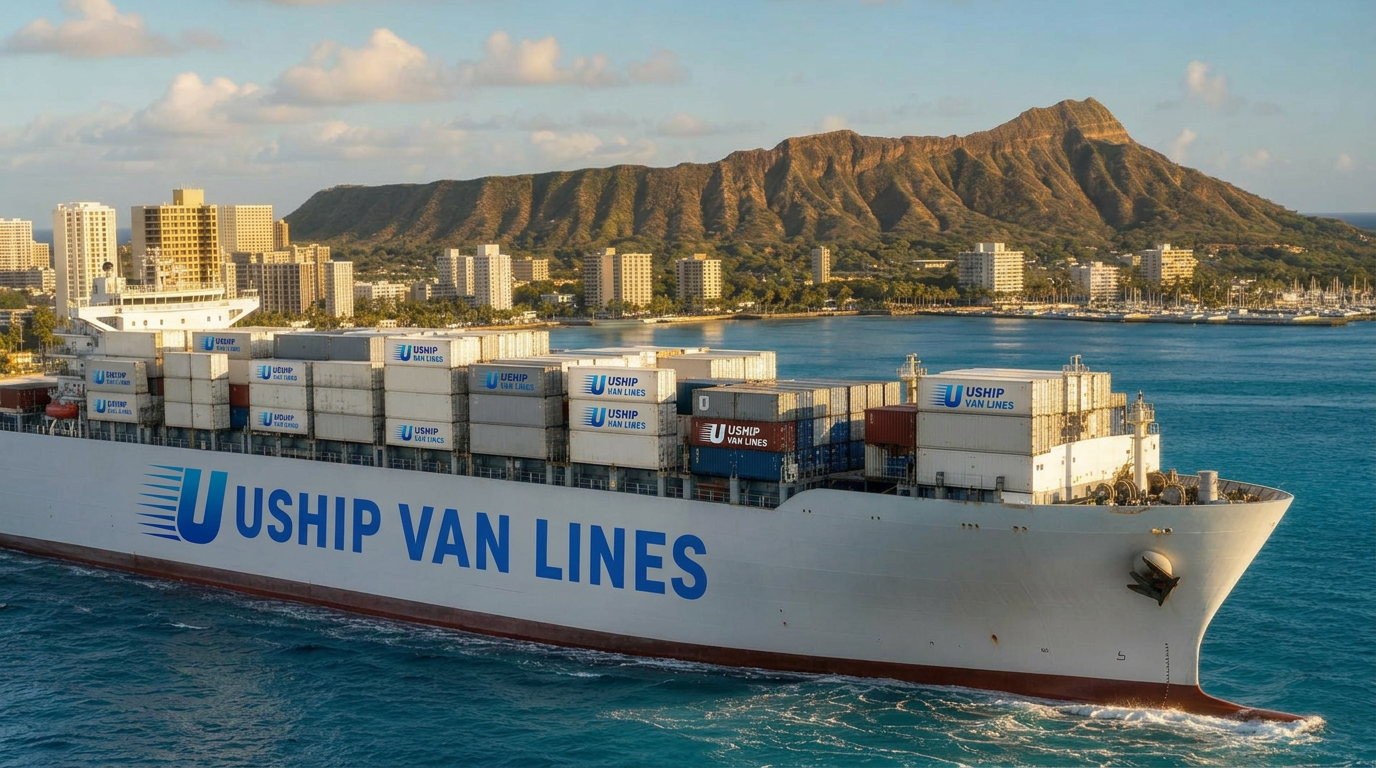
Moving from Hawaii to St Cloud, MN
Moving from the tropical shores of Hawaii to the Minnesota heartland of St Cloud requires careful orchestration of ocean freight and overland transport. This 4,400-mile journey combines port logistics, containerized shipping across the Pacific, and final delivery through the upper Midwest—a move demanding specialized expertise that general carriers rarely possess.
Best Alaska & Hawaii Movers, powered by UShip Van Lines, coordinates every phase of your Hawaii-to-St Cloud relocation. From Honolulu, Maui, Kauai, or the Big Island through Long Beach or Oakland terminals to your new Minnesota home, we manage the complexity so you don't have to. Request your free quote today and speak with specialists who understand both island departures and Minnesota winters.
Route overview
Hawaii to St Cloud: A Two-Ocean, Two-Climate Journey
Your household goods begin their journey at one of Hawaii's major ports—typically Honolulu Harbor on Oahu, Kahului Harbor on Maui, Nawiliwili Harbor on Kauai, or Hilo/Kona on the Big Island. Matson Navigation and Pasha Hawaii operate the primary container services, sailing approximately 2,500 nautical miles to mainland West Coast ports in Long Beach or Oakland. This ocean leg typically takes 5–7 days of sailing time plus port processing.
Once your container clears U.S. Customs (a formality for domestic moves but still required documentation), your goods transfer to overland carriers for the 1,900-mile journey from California to St Cloud. This route crosses the Sierra Nevada, traverses the Great Basin and Rocky Mountain corridors through Nevada and Wyoming, then pushes east through South Dakota before entering Minnesota. The dramatic climate transition—from sea-level tropical humidity to continental winters with sub-zero temperatures—makes proper packing and climate-controlled options worth serious consideration.
St Cloud sits along the Mississippi River in central Minnesota, roughly 65 miles northwest of Minneapolis-St Paul. Your delivery will navigate I-94 or Highway 10, and timing considerations shift dramatically by season. Summer moves enjoy straightforward logistics; winter arrivals between November and March require coordination around snowstorms, road closures, and sub-freezing conditions that can delay final delivery and complicate unloading.
How the moving process works
How Your Hawaii to St Cloud Move Works: Step by Step
1. Free Consultation & Survey Your move begins with a detailed inventory assessment. Our coordinators evaluate your household volume, identify items requiring special handling (electronics sensitive to humidity changes, tropical plants that won't survive Minnesota winters, vehicles needing separate shipping), and determine whether you need a 20-foot or 40-foot container. We provide a binding quote that covers ocean freight, mainland transport, and St Cloud delivery.
2. Island Pickup & Container Loading Our Hawaii team schedules pickup at your residence on Oahu, Maui, Kauai, or the Big Island. Professional crews pack your container using marine-grade techniques—moisture barriers, climate-appropriate padding, and strategic weight distribution for ocean transit. If you're on a neighbor island, goods may consolidate through Honolulu for the mainland sailing, adding 1–3 days but often reducing overall cost.
3. Port Processing & Ocean Freight Your sealed container moves to the departure port and loads aboard Matson or Pasha vessels. The ocean crossing to Long Beach or Oakland takes 5–7 sailing days. Matson operates frequent schedules; Pasha offers competitive rates with slightly less frequency. Both carriers provide tracking, though real-time updates become more granular once containers reach the mainland.
4. Mainland Customs & Port Drayage Although Hawaii-to-mainland moves are domestic, containers still undergo Customs Agriculture inspection to prevent invasive species transport. This clearance typically processes within 24–48 hours. Your container then moves to a rail terminal or direct-loading facility for the cross-country segment.
5. Transcontinental Transport Overland carriers move your container eastward via I-80 or I-90 corridors, often utilizing intermodal rail for the longest segments before switching to dedicated truck for Minnesota delivery. This leg spans 1,900 miles and takes 5–9 days depending on rail schedules, weather, and final routing through Minneapolis distribution hubs.
6. St Cloud Delivery & Unpacking Our Minnesota delivery team contacts you 24–48 hours prior to schedule your arrival window. Crews offload your container, place furniture, and remove packing debris. Winter deliveries require clear driveways and walkways; summer moves benefit from longer daylight and flexible scheduling. Final inspection ensures nothing was damaged during the two-climate transition.
7. Post-Move Support We follow up within one week to address any concerns, process insurance claims if needed, and ensure your St Cloud home setup meets expectations. Our reputation depends on successful arrivals, not just successful departures.
Estimated moving costs
What Does a Hawaii to St Cloud Move Cost?
Budget $6,800–$12,500 for a typical 2–3 bedroom household moving from Hawaii to St Cloud, MN. This wide range reflects container size, service level, seasonal demand, and origin island logistics.
Key Cost Drivers:
- Container size: A 20-foot container (roughly 1,100 cubic feet, suitable for 1–2 bedrooms) costs $5,200–$7,800 all-in; a 40-foot container (2,200+ cubic feet, handling 3–4 bedrooms) runs $8,900–$12,500.
- Origin island: Oahu pickups cost least due to direct Matson/Pasha sailings from Honolulu. Maui, Kauai, and Big Island moves add $400–$900 for inter-island barge or consolidation fees.
- Packing services: Professional full-pack services add $800–$1,600 but protect fragile items during the ocean crossing and dramatic humidity/temperature shift.
- Vehicle shipping: Cars ship separately via roll-on/roll-off carriers (Matson, Pasha auto division). Add $1,200–$1,600 per vehicle Hawaii-to-West Coast, then $900–$1,300 West Coast-to-Minnesota.
- Storage: If your St Cloud home isn't ready, mainland storage near Oakland or Long Beach costs $150–$280/month; Minnesota climate-controlled storage runs $180–$320/month.
- Insurance: Basic carrier liability covers $0.60/lb; full-value protection typically adds $250–$450 but provides replacement-cost coverage for high-value items sensitive to the climate transition.
- Seasonal premiums: May–September peak moving season adds 12–18% due to higher West Coast port congestion and mainland demand. Winter moves (November–February) may offer discounts but carry weather-delay risk.
These estimates assume standard household goods and residential delivery with ground-floor access. Multi-story buildings without elevators, long-carry fees (over 75 feet from truck to door), or specialized items (pianos, safes, hot tubs) incur additional charges. Request a detailed quote for your specific inventory and St Cloud delivery address—we never surprise you with hidden fees.
Estimated transit times
How Long Does Hawaii to St Cloud Take?
Plan for 18–28 days door-to-door from your Hawaii residence to your St Cloud home. This timeline breaks down across distinct segments:
Island Pickup to Port (1–3 days): Oahu pickups move directly to Honolulu Harbor within 24 hours. Neighbor island pickups on Maui, Kauai, or the Big Island require inter-island barge or truck-to-Honolulu consolidation, adding 1–3 days before the mainland sailing.
Ocean Transit (5–7 days): Matson and Pasha maintain regular sailing schedules, typically 2–3 departures weekly. The Pacific crossing from Honolulu to Long Beach or Oakland spans 5–7 days of actual sailing time. Your departure date depends on container loading schedules and the next available vessel.
Port Processing & Customs (2–4 days): Mainland arrival triggers USDA Agriculture inspection and port drayage to rail or truck terminals. While technically a domestic move, all Hawaii containers undergo this clearance to prevent pest/plant introduction. Processing typically completes within 48 hours but can extend to 96 hours during peak import seasons (Asia-Pacific cargo surges in late summer/early fall).
Cross-Country Transport (7–12 days): The 1,900-mile journey from California to St Cloud utilizes intermodal rail for efficiency, then switches to truck for final Minnesota delivery. Rail transit takes 5–8 days; truck-only routes complete in 4–6 days but cost more. Weather plays a significant role November–March when mountain passes and Great Plains blizzards can delay shipments 1–3 days.
Final Delivery Scheduling (1–2 days): Our Minnesota team contacts you 24–48 hours before delivery to confirm your St Cloud address readiness and schedule a 4-hour arrival window.
Expedited Options: Need faster service? Dedicated truck transport (bypassing rail) can reduce the mainland segment to 5–7 days but adds $1,400–$2,200 to your cost. Total express service might achieve 14–18 days door-to-door, though ocean sailing time remains fixed at 5–7 days with no shortcuts available.
Regional logistics
Hawaii-Specific Moving Logistics You Must Know
Port Infrastructure & Container Options Honolulu Harbor on Oahu serves as the primary departure point, offering the most frequent Matson and Pasha sailings. Kahului Harbor (Maui), Nawiliwili Harbor (Kauai), and Hilo/Kona (Big Island) support direct container loading but with less frequent schedules. Most neighbor island moves consolidate through Honolulu for cost efficiency, though direct sailings can save 2–3 days if your timing aligns with departure schedules. You'll choose between 20-foot containers (sufficient for 1–2 bedroom apartments, up to 10,000 lbs) or 40-foot containers (handling 3–4 bedroom homes, up to 22,000 lbs). Shared container service (your goods share space with other shipments) costs less but requires flexible pickup/delivery dates and adds 3–7 days to total transit.
Vehicle Shipping Coordination Cars ship separately from household goods via Matson and Pasha roll-on/roll-off (RoRo) auto services. Vehicles must be operable, under 1/4 tank fuel, and cleared of all personal items except floor mats and car seats. Hawaii-to-West Coast auto transport takes 7–10 days; West Coast-to-Minnesota adds another 7–12 days. Total vehicle transit (18–22 days) usually parallels your household goods timeline but requires separate coordination. Many families choose to ship one vehicle and fly, then purchase a second car in Minnesota—research St Cloud's used car market and Minnesota winter vehicle requirements (block heaters, all-weather tires) before deciding.
Prohibited & Restricted Items USDA Agriculture inspection prohibits all soil, most live plants, fresh produce, and untreated wood items from leaving Hawaii. Common surprises: potted plants (even houseplants), gardening tools with soil residue, outdoor furniture with embedded dirt, and wooden items without manufacturer certification. Propane tanks, gasoline-powered equipment with fuel, and ammunition face strict restrictions. Prescription medications require original labeled containers; firearms need ATF documentation for interstate transport. Our pre-move consultation identifies problematic items early, avoiding port delays or confiscation.
Climate Transition Packing Your belongings travel from 75–85°F tropical humidity to Minnesota's continental extremes (sub-zero winters, 85°F+ summer humidity). Electronics, leather furniture, musical instruments, and wood antiques require climate-appropriate packing: moisture barriers for the ocean crossing, then insulation against Minnesota's temperature swings. Professional packing services add cost but dramatically reduce damage risk for sensitive items making this dramatic environmental transition.
St Cloud Delivery Considerations St Cloud's residential streets accommodate standard 53-foot semi-trailers, but winter snow accumulation, narrow older-neighborhood lanes, and multi-story walk-ups may require shuttle trucks for final delivery. Confirm your St Cloud address accessibility during your quote consultation. Properties along the Mississippi River (popular St Cloud neighborhoods) sometimes have weight restrictions on older bridge access roads—our Minnesota delivery team will verify routing in advance. Apartment buildings may require certificate of insurance and move-in reservations; coordinate these 2–3 weeks before your delivery window.
Seasonal considerations
Best Times to Move from Hawaii to St Cloud
Winter (December–February): St Cloud's harsh winters create the most challenging delivery conditions. January temperatures average 8°F with lows often below zero; February brings heavy snowfall averaging 12–15 inches. Road closures along I-94 and Highway 10 can delay final delivery by 2–4 days. However, winter represents off-peak moving season, offering 12–18% cost savings and greater scheduling flexibility. If you choose a winter move, ensure your new St Cloud home has cleared driveways, heated interior (to prevent moisture damage during unloading), and flexible delivery dates. Ocean freight from Hawaii proceeds normally—winter storms rarely impact Pacific crossings on this latitude.
Spring (March–May): The sweet spot for Hawaii-to-Minnesota moves. March sees warming trends (though snow remains possible); April and May offer mild temperatures (45–65°F), minimal precipitation, and excellent road conditions. Spring also precedes peak moving season, meaning lower rates than summer but better weather than winter. Book 6–8 weeks ahead as demand increases through May. Hawaii departure conditions remain ideal year-round, but spring arrivals in St Cloud avoid both winter hazards and summer heat/humidity that can affect climate-sensitive items during unloading.
Summer (June–August): Peak moving season brings maximum demand, 15–20% higher costs, and tighter scheduling windows. However, St Cloud summers (70–82°F averages) provide perfect unloading conditions with long daylight hours. The tradeoff: West Coast ports in Long Beach and Oakland experience severe congestion June–September due to Asia-Pacific import surges, potentially adding 2–4 days to your port processing time. Hurricane season (June–November) affects Hawaii, though direct hits on populated islands remain rare; tropical storms may delay departures by 1–3 days if they disrupt port operations. Book summer moves 10–12 weeks ahead to secure preferred dates.
Fall (September–November): September and October mirror spring advantages—moderate Minnesota weather (50–70°F), lower demand than summer, and reasonable pricing. November transitions to winter conditions; Thanksgiving week moves should be avoided due to both holiday logistics and early snowfall risk. Hawaii's hurricane season technically extends through November, though September represents the statistical peak. Fall moves balance good weather against increasing winter risk—ideal if you can target September or early October delivery windows.
Why choose Best Alaska & Hawaii Movers
Why Choose Best Alaska & Hawaii Movers for Your St Cloud Relocation
-
Specialized Hawaii-Mainland Expertise: We focus exclusively on Alaska and Hawaii long-distance moves, meaning we navigate Matson/Pasha schedules, USDA Agriculture requirements, and inter-island logistics daily—not as occasional exceptions but as our core competency.
-
Single-Source Coordination: One contract, one point of contact from your Hawaii residence through St Cloud delivery. We manage ocean carriers, mainland trucking, customs clearance, and final placement—you never coordinate between multiple companies or decipher conflicting timelines.
-
Transparent Pricing, Zero Surprises: Our binding quotes include ocean freight, mainland transport, standard insurance, and residential delivery. No hidden port fees, no surprise fuel surcharges, no last-minute accessorial charges. If it's not in your quote, you don't pay it.
-
Powered by UShip Van Lines Infrastructure: Best Alaska & Hawaii Movers leverages UShip Van Lines' nationwide carrier network for your mainland segment, ensuring vetted, insured trucking through the Rockies and Great Plains into Minnesota. You get boutique Hawaii specialization backed by enterprise-scale mainland logistics.
-
Climate-Transition Protection: We understand both tropical marine environments and Minnesota continental extremes. Our packing protocols, container loading strategies, and insurance recommendations specifically address the environmental stresses your belongings face crossing 4,400 miles and two climate zones.