
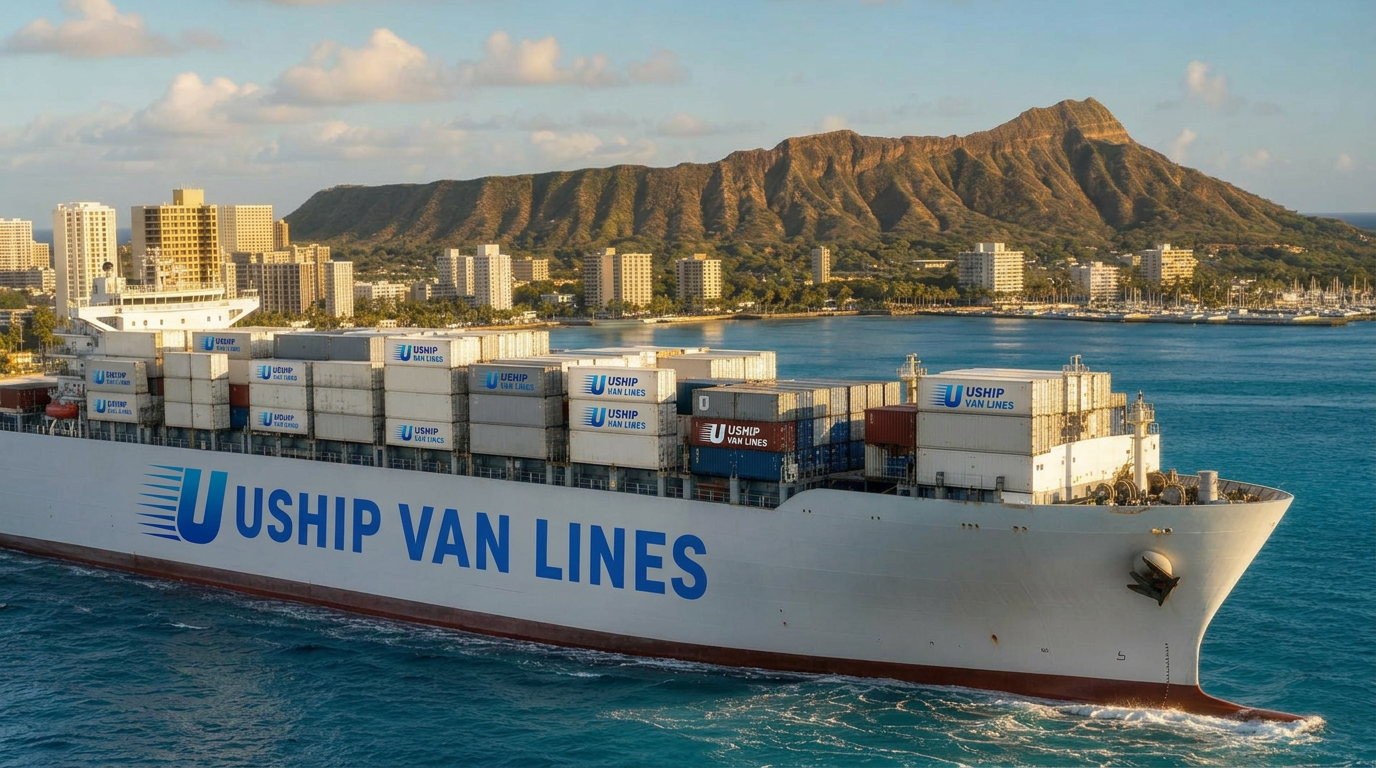
Moving from Hawaii to Virginia
Relocating from the Hawaiian Islands to Virginia means coordinating ocean freight from the Pacific to a cross-country mainland journey ending on the East Coast. Whether you're leaving Oahu, Maui, the Big Island, or Kauai for the beaches of Virginia Beach, the history of Richmond, or Northern Virginia's suburbs, this move requires careful planning across multiple transportation modes.
Best Alaska & Hawaii Movers, powered by UShip Van Lines, specializes in Hawaii-to-mainland relocations with transparent pricing and dedicated coordination from port pickup through final delivery. Request your free quote today to start planning your island-to-East Coast transition.
Route overview
Understanding the Hawaii to Virginia Moving Route
Moving from Hawaii to Virginia spans approximately 4,800 miles and involves ocean container shipping from Hawaiian ports to the West Coast (typically Long Beach or Oakland), followed by cross-country overland trucking to your Virginia destination. This multi-modal route requires coordination between ocean carriers like Matson or Pasha and mainland transportation networks.
The journey crosses the entire continental United States after clearing customs and ports in California, traveling through the Southwest, Midwest or Southern routes depending on season and logistics, before reaching Virginia's diverse regions from Tidewater to the Shenandoah Valley. Transit time varies significantly based on ocean sailing schedules, port processing, and the nearly 3,000-mile overland segment.
This route is particularly popular among military families (Joint Base Pearl Harbor-Hickam to Naval Station Norfolk), retirees seeking lower cost of living, and professionals relocating to Virginia's growing tech corridor or federal employment hubs in Northern Virginia.
How the moving process works
How Your Hawaii to Virginia Move Works: Step by Step
-
Initial consultation and survey – We assess your inventory (including any vehicles, surfboards, or oversized items), discuss timing preferences, and provide a detailed quote covering ocean freight, mainland transport, and any storage needs.
-
Pre-move preparation and restricted items review – Hawaii has strict agricultural inspection requirements on departure; certain plants, soil, and food items cannot be shipped. We provide a comprehensive checklist and help you understand what can and cannot move.
-
Packing and loading in Hawaii – Professional crews pack your household goods into your container (20-foot or 40-foot), properly securing items for ocean transit. Inter-island pickups from Maui, Kauai, or Big Island require barge transport to Honolulu first.
-
Ocean freight to mainland port – Your container travels via Matson or Pasha from Honolulu to Long Beach or Oakland (typically 5–7 days sailing time), then clears customs and undergoes agricultural inspection at the port.
-
Cross-country trucking – After port clearance, your container is either kept intact for direct delivery or transferred to over-the-road trucks for the 2,700–3,000 mile journey to Virginia, traveling I-40, I-80, or southern routes depending on season.
-
Final delivery and unloading – Your shipment arrives at your Virginia address where crews unload, place furniture, and remove packing materials, completing your coast-to-coast relocation.
-
Post-delivery support – We follow up to ensure everything arrived as expected and address any claims or concerns promptly with our dedicated customer service team.
Estimated moving costs
What Does a Hawaii to Virginia Move Cost?
For a typical 2–3 bedroom household (approximately 5,000–8,000 pounds), expect to invest $8,500–$16,000 for a full-service Hawaii to Virginia move. This wide range reflects variables specific to this route's complexity.
Key cost drivers include:
- Container size and volume – 20-foot containers (up to ~10,000 lbs) versus 40-foot containers for larger homes; shared container space (consolidation) versus exclusive use
- Origin island – Oahu pickups cost less than Maui, Kauai, or Big Island moves that require inter-island barge fees ($800–$1,500 additional)
- Ocean freight rates – Seasonal demand fluctuations, fuel surcharges, and carrier availability on Hawaii-West Coast routes
- Mainland distance – The 2,700+ mile overland segment from California ports to Virginia represents significant trucking costs
- Packing services – Full professional packing ($1,200–$2,500) versus partial packing versus self-pack options
- Vehicle shipping – Cars shipped separately via RORO (roll-on/roll-off) carriers add $1,400–$2,200 per vehicle
- Storage needs – If your Virginia home isn't ready, warehouse storage runs $150–$400 per month
- Timing and urgency – Peak summer season (June–August) and last-minute bookings command premium rates
We never publish guaranteed prices online because every move's unique factors—exact addresses, inventory details, service level, and timing—significantly impact final costs. Request a detailed quote for accurate pricing tailored to your specific situation.
Estimated transit times
How Long Does Hawaii to Virginia Moving Take?
Door-to-door transit time for Hawaii to Virginia moves typically ranges 3–6 weeks, broken down across distinct transportation legs:
Ocean transit (5–9 days): Matson and Pasha operate weekly sailings from Honolulu to Long Beach/Oakland, with the actual voyage taking 5–7 days. Add 1–2 days for inter-island barge if you're on Maui, Kauai, or Big Island.
Port processing and customs (3–7 days): After arrival at the mainland port, containers undergo agricultural inspection, customs clearance (for returning residents), and port drayage—a process that can take 3 days during normal periods or up to a week during congestion.
Cross-country trucking (7–12 days): The 2,700–3,000 mile overland journey from California to Virginia typically takes 7–10 days for direct transport, though shared truck loads or route optimization may extend this to 12 days.
Scheduling and coordination buffer (3–7 days): Building in flexibility for pickup windows, delivery appointments, and potential weather or logistical delays is essential for realistic planning.
Expedited service can compress timelines to 3–4 weeks but comes with premium pricing (20–40% higher). Most customers find the standard 4–5 week timeline offers the best balance of cost and convenience. We provide tracking updates at each major milestone so you're never left wondering where your belongings are.
Regional logistics
Hawaii-Specific Moving Logistics to Virginia
Port operations: Most Hawaii moves originate from Honolulu's port facilities. If you're on a neighbor island, your container travels by inter-island barge (Young Brothers) to Oahu first, adding 3–7 days and $800–$1,500 to costs. Matson and Pasha dominate Hawaii-mainland ocean freight, with weekly sailings to Long Beach and Oakland.
Agricultural inspection requirements: Hawaii's Department of Agriculture inspects outbound shipments to prevent invasive species spread. Prohibited items include soil, plants in soil, certain seeds, and fresh produce. Mainland USDA inspects inbound containers from Hawaii at California ports. We provide detailed restricted-items lists and help you prepare.
Vehicle shipping: Cars cannot share containers with household goods due to regulations. Separate RORO (roll-on/roll-off) car carriers operate Hawaii-mainland routes ($1,400–$2,200 per vehicle, 2–3 weeks transit). Matson and Pasha both offer vehicle shipping. Alternative: sell in Hawaii, buy in Virginia to avoid shipping costs and take advantage of Virginia's lower vehicle prices.
Military moves: If you're military with PCS orders, your move may be covered under government contracts with different timelines and processes. We work with both military-contracted moves and personally procured moves (PPM/DITY) where service members arrange their own transport for potential reimbursement.
Insurance and liability: Ocean transit requires marine cargo insurance beyond standard moving coverage. We offer comprehensive protection including total loss, partial damage, and general average (rare but important maritime coverage). Confirm your coverage includes the full replacement value, not depreciated value.
Storage options: If your Virginia home isn't ready or you're house-hunting after arrival, we offer warehouse storage at mainland facilities (usually California or Virginia) with monthly rates of $150–$400 depending on volume. Climate-controlled storage is available for sensitive items.
Last-mile delivery considerations: Virginia destinations range from dense Northern Virginia suburbs (narrow streets, HOA requirements, parking permits) to rural properties in the Shenandoah Valley or Southwest Virginia (long driveways, access limitations). Confirm delivery access requirements—large trucks may need shuttle services for final delivery in restricted areas.
Seasonal considerations
Best Times to Move from Hawaii to Virginia
Summer (June–August): Peak moving season coincides with school breaks and military PCS (Permanent Change of Station) cycles. Expect 15–25% higher rates and book 8–10 weeks ahead. Ocean carriers run at capacity, and mainland trucking faces delays. Benefit: Best weather on both ends, easiest settling-in period for families.
Fall (September–November): Shoulder season offers better availability and pricing (10–15% below summer peaks). Hurricane season officially ends November 30 in Hawaii, though major storms are rare. Virginia's mild fall weather makes this an ideal moving window. Book 6–8 weeks in advance.
Winter (December–February): Lowest rates of the year (potentially 20–30% below peak), but cross-country trucking faces winter weather risks—snow storms can delay I-80 or I-70 routes through the Rockies and Midwest. Ocean schedules remain consistent. Hawaii weather is actually ideal (drier season). Best for flexible schedules with weather contingency plans.
Spring (March–May): Rates begin climbing as summer approaches. Virginia's spring is beautiful but rainy; Hawaii enters its drier season. Good availability with moderate pricing. The spring PCS cycle (military moves) starts in May, tightening capacity. Book 6–8 weeks ahead.
Hurricane and weather notes: Hawaii's hurricane season (June–November) rarely disrupts shipping, but tropical storms can delay port operations 1–3 days. Virginia faces hurricane risk (August–October) on the coast, and winter ice storms inland. Year-round, the cross-country segment's biggest risk is winter mountain passes and Midwest blizzards (November–March).
Why choose Best Alaska & Hawaii Movers
Why Choose Best Alaska & Hawaii Movers for Your Hawaii to Virginia Move
-
Specialized Hawaii-mainland expertise – We focus exclusively on Alaska and Hawaii routes, understanding the unique logistics, regulations, and carrier relationships that mainland-only movers can't match.
-
Transparent, itemized pricing – No hidden fees or surprise charges; you receive detailed breakdowns of ocean freight, mainland transport, packing, and any additional services upfront.
-
End-to-end coordination powered by UShip Van Lines – One point of contact manages your entire multi-modal move from island pickup through Virginia delivery, eliminating the confusion of coordinating separate ocean and land carriers yourself.
-
Real-time tracking and communication – Receive updates at each milestone—pickup, port departure, mainland arrival, cross-country transit, and delivery scheduling—so you always know your shipment's status.
-
Flexible service options – Choose full-service packing and white-glove delivery, or cost-saving partial services like container loading assistance while you pack yourself; we customize to your budget and needs.