
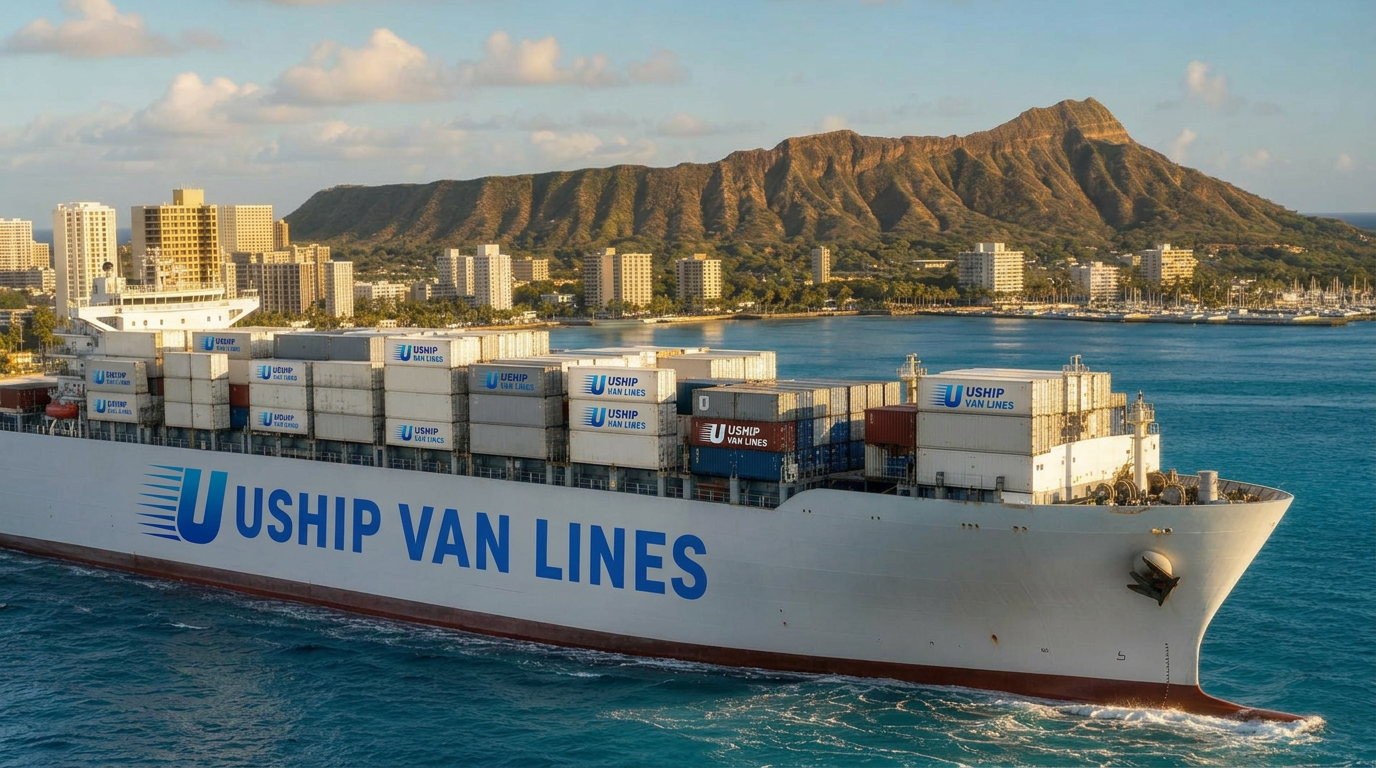
Moving from Hawaii to Salt Lake City, UT
Relocating from Hawaii to Salt Lake City, UT means trading island living for mountain vistas and four distinct seasons. This cross-Pacific move requires ocean container shipping from Honolulu, Maui, Kauai, or the Big Island to the mainland, followed by overland transport to Utah's capital nestled against the Wasatch Range.
Whether you're leaving Oahu's urban energy or Maui's resort lifestyle for Salt Lake's outdoor recreation and lower cost of living, Best Alaska & Hawaii Movers (powered by UShip Van Lines) coordinates every leg—from Hawaii port pickup through final delivery to your Utah doorstep. Request your free moving quote to see transparent pricing tailored to your inventory and timeline.
Route overview
Understanding the Hawaii to Salt Lake City Moving Route
Your belongings travel approximately 2,800 nautical miles by ocean container from Hawaii ports (Honolulu, Kahului, Hilo, or Nawiliwili) to West Coast terminals in Long Beach or Oakland, California. From there, ground carriers transport your shipment roughly 750–850 road miles inland to Salt Lake City, crossing California, Nevada, and into Utah's Salt Lake Valley at 4,226 feet elevation.
This route combines two distinct logistics phases: maritime shipping governed by ocean carrier schedules (typically Matson Navigation or Pasha Hawaii) and interstate trucking through mountain passes that can experience weather delays during winter months. Most Hawaii-origin moves consolidate at Honolulu before mainland departure, though direct sailings from neighbor islands occasionally reduce handling steps.
Salt Lake City's accessible highway network (I-15, I-80, I-215) and central Mountain West location simplify final delivery, though narrow streets in historic neighborhoods like The Avenues or Capitol Hill may require smaller shuttle trucks for the last mile. Expect smoother logistics than remote Utah destinations, with multiple carrier options serving this major metropolitan area of 1.2 million residents.
How the moving process works
How Your Hawaii to Salt Lake City Move Works: Step-by-Step
-
Free quote and planning consultation – Share your inventory list, moving dates, and origin island. We assess container size needs (20-ft, 40-ft, or shared space), coordinate pickup logistics, and provide transparent pricing for the entire door-to-door journey.
-
Hawaii pickup and container loading – Professional crews pack and load your belongings at your Hawaii residence, whether a Honolulu high-rise, Kailua single-family home, or Maui condo. Items are secured for ocean transit and trucked to the departure port (Honolulu Harbor for Oahu; Kahului, Hilo, or Nawiliwili for neighbor islands).
-
Ocean container shipping to the mainland – Your sealed container sails to Long Beach or Oakland (7–14 days depending on carrier schedule and port congestion). Containers clear U.S. Customs—usually straightforward for domestic household goods with proper documentation.
-
Mainland port unloading and transfer – Once the ship docks, containers are offloaded, cleared through terminal inspections, and transferred to interstate trucking carriers. This port dwell time adds 2–5 days depending on terminal efficiency and chassis availability.
-
Overland transport to Salt Lake City – Your container or transferred goods travel by truck through California, Nevada, and into Utah via I-80 or I-15 corridors. Drivers navigate Donner Pass (California) or other mountain routes, which may experience winter closures or chain requirements.
-
Final delivery and unpacking – The truck arrives at your Salt Lake City address—whether downtown apartments near Temple Square, suburban homes in Sandy or Draper, or Foothill neighborhoods. Crews unload, place furniture, and remove packing materials, completing your cross-Pacific move.
-
Post-move support and claims – Inspect your shipment promptly and document any transit damage for insurance claims. Our team remains available to resolve issues and ensure you're settled into your new Utah home.
Estimated moving costs
What Does a Hawaii to Salt Lake City Move Cost?
Expect to invest $5,800–$11,500 for a typical 2–3 bedroom household moving from Hawaii to Salt Lake City, UT. Studio or one-bedroom moves may run $3,500–$6,200, while larger 4-bedroom homes with full garages can exceed $13,000–$18,000. These ranges reflect door-to-door service including ocean container shipping and overland transport.
Key cost drivers for this route:
- Container size and exclusivity – Shared container space (consolidated shipments) costs less than dedicated 20-ft ($4,000–$6,500) or 40-ft ($7,500–$10,000) containers. Exclusive containers offer faster transit and reduced handling.
- Origin island and port access – Neighbor island moves (Maui, Kauai, Big Island) add $800–$1,800 for inter-island barge or container transfer to Honolulu before mainland sailing.
- Packing and crating services – Professional full-pack service adds $1,200–$2,800; partial packing (fragile items, kitchens) runs $400–$900. Custom crating for art, antiques, or large mirrors costs $150–$400 per piece.
- Vehicle shipping – Cars, trucks, or motorcycles ship separately via roll-on/roll-off vessels (Matson or Pasha auto services), typically $1,100–$1,600 Honolulu to Long Beach, plus $600–$900 transport to Salt Lake City.
- Storage and timing flexibility – Peak summer moves (May–August) command premium pricing. Flexible scheduling or short-term storage at mainland terminals can reduce costs by 15–25%.
- Insurance coverage – Basic carrier liability covers $0.60/lb; full-value protection costs 1–3% of declared shipment value and is strongly recommended for ocean moves.
Request a detailed quote to see pricing based on your exact inventory, service level, and preferred timeline. We never require payment until you approve the itemized estimate.
Estimated transit times
How Long Does a Hawaii to Salt Lake City Move Take?
Plan for 18–35 days door-to-door from your Hawaii residence to your Salt Lake City home. This timeline encompasses all phases: local pickup, port processing, ocean sailing, mainland transfer, and overland delivery.
Transit breakdown by leg:
- Hawaii pickup to port departure: 2–7 days for container loading, trucking to port, and terminal processing (longer for neighbor islands requiring inter-island transfer to Honolulu).
- Ocean sailing to California: 7–14 days depending on carrier schedule, weather, and whether your shipment sails direct or makes intermediate port calls.
- Mainland port dwell and transfer: 3–6 days for container unloading, customs clearance (if any inspection required), and transfer to overland carriers at Long Beach or Oakland terminals.
- Overland trucking to Salt Lake City: 3–5 days under normal conditions; winter weather through Sierra Nevada or Nevada high desert can add 1–3 days if chain controls or road closures occur.
- Final delivery window: Schedule typically offers 2–3 day delivery window; exact date confirmed 24–48 hours in advance.
Expedited options consolidating fewer shipments or using dedicated containers can compress timelines to 14–21 days, though this increases costs by 20–35%. Off-peak moves (September–April, excluding holidays) often enjoy faster processing than summer peak season.
For time-sensitive relocations, consider shipping essential items separately via air freight (3–5 days but $8–$15/lb) while your main household goods travel by sea.
Regional logistics
Hawaii-Specific Logistics for Your Salt Lake City Move
Port operations and documentation: Shipments from Oahu load at Honolulu Harbor (Sand Island terminal); neighbor islands use Kahului Harbor (Maui), Hilo Harbor or Kawaihae (Big Island), or Nawiliwili Harbor (Kauai). Domestic moves don't require customs declarations, but carriers need detailed inventory lists for cargo manifests and insurance. Matson and Pasha dominate Hawaii shipping; sailing frequency is weekly from Honolulu, less frequent from neighbor islands.
Inter-island transfers: If you're moving from Maui, Kauai, or the Big Island, your container typically barges to Honolulu for consolidation before mainland sailing. This adds 3–7 days and $800–$1,800 to your timeline and cost. Some consolidated shipments transfer cargo rather than moving the entire container, requiring additional handling—ask about container integrity and seal protocols.
Vehicle shipping: Cars and trucks ship separately via Matson or Pasha vehicle services. Vehicles must be clean (USDA agriculture inspection), contain less than ¼ tank fuel, and carry no personal items in the cabin. Ship from Honolulu to Long Beach ($1,100–$1,400), then overland to Salt Lake City ($600–$900). Total vehicle transit: 14–21 days. Utah requires emissions testing for vehicles 6+ years old in Salt Lake and Davis Counties.
Prohibited and restricted items: Ocean carriers prohibit hazardous materials (propane tanks, paint, aerosols, ammunition), perishable foods, and plants without USDA permits. Hawaii has strict outbound agriculture rules; declare all soil-contact items (potted plants, garden tools, outdoor furniture). Frozen or refrigerated foods require special reefer containers at significant cost—most households donate or consume these before moving.
Military and government moves: Active-duty military relocations follow separate Joint Travel Regulations (JTR) with government-contracted carriers. We coordinate civilian moves and can refer you to military-specific providers if needed. Military members receive weight allowances and standardized pricing through Defense Personal Property System (DPS).
Last-mile delivery in Salt Lake City: Most addresses enjoy standard truck access via wide residential streets and highway proximity. Historic neighborhoods (The Avenues, Capitol Hill, Sugar House older sections) may have narrow streets, mature trees, or steep grades requiring smaller shuttle trucks—coordinate street parking permits if needed. High-rise apartments downtown require freight elevator reservations booked 3–7 days ahead. Foothill homes at higher elevations (above 5,000 feet) remain accessible year-round but confirm winter driveway conditions.
Seasonal considerations
Best Times to Move from Hawaii to Salt Lake City
Summer (June–August): Peak moving season for both Hawaii departures and Salt Lake City arrivals. Expect highest pricing (20–30% premiums), longer booking lead times (8–12 weeks recommended), and port congestion at California terminals. Weather is ideal for mountain highway transport, though Utah heat can reach 95–100°F. Book early and confirm delivery windows well in advance.
Fall (September–November): Excellent moving window with moderate pricing and reliable weather. Ocean carriers maintain frequent schedules, and overland routes through Nevada and Utah remain clear. Avoid Thanksgiving week when carrier capacity tightens. Salt Lake City's mild fall weather (50–70°F) makes this ideal for settling in before winter.
Winter (December–February): Lowest pricing (15–25% below peak) and greatest scheduling flexibility, but weather introduces risks. Pacific storms can delay sailings 1–3 days. Donner Pass and other Sierra crossings require chain controls; I-80 through Wyoming (alternate route) experiences frequent closures. Salt Lake City receives 50–60 inches of snow annually, concentrated November–March. Budget extra transit time and ensure carriers have winter contingency plans.
Spring (March–May): Balanced season with moderate pricing and improving weather. Early spring (March–April) still carries snow risk through mountain passes; late spring (May) sees booking volumes increase as summer peak approaches. Hurricane season officially begins June 1 but rarely affects shipping until late summer. Spring is optimal for avoiding both winter weather delays and summer price spikes.
Hurricane season note: Pacific hurricane season runs June–November, peaking August–October. While direct Hawaii impacts are rare (5–10 year intervals), storms can delay port operations 3–7 days. Carriers typically suspend sailings 48–72 hours before storm arrival, with resumption dependent on port inspections and backlog clearance.
Why choose Best Alaska & Hawaii Movers
Why Choose Best Alaska & Hawaii Movers for Your Salt Lake City Relocation
-
Hawaii specialists, not generalists – We focus exclusively on Alaska and Hawaii long-distance moves, understanding the unique ocean shipping logistics, port requirements, and inter-island coordination that mainland-only movers struggle with. Powered by UShip Van Lines' carrier network, we manage every mile from your island home to Salt Lake City's doorstep.
-
Transparent pricing, zero surprises – Request a free quote and receive itemized pricing covering ocean container, port fees, overland transport, and delivery. No hidden fuel surcharges, port congestion fees, or last-minute add-ons. You approve costs before we book a single service.
-
End-to-end coordination – One point of contact manages your entire multi-leg journey: Hawaii pickup, port loading, ocean carrier booking, mainland transfer, overland dispatch, and Salt Lake City delivery. You won't juggle separate vendors for each phase or navigate carrier disputes when delays occur.
-
Flexible service levels – Choose full-service packing and white-glove handling, or save costs with partial packing and self-prep options. We offer shared container space for smaller moves, dedicated containers for faster transit, and storage solutions if your Salt Lake City home isn't ready.
-
Real-time tracking and support – Receive shipment updates at each milestone: port departure, sailing progress, mainland arrival, and truck dispatch. Our team remains available via phone and email throughout your move, answering questions and resolving issues promptly.
-
Claims support and accountability – Comprehensive insurance options protect your belongings during ocean transit and overland transport. If damage occurs, we guide you through documentation and claims processes, advocating on your behalf with carriers and insurers.