
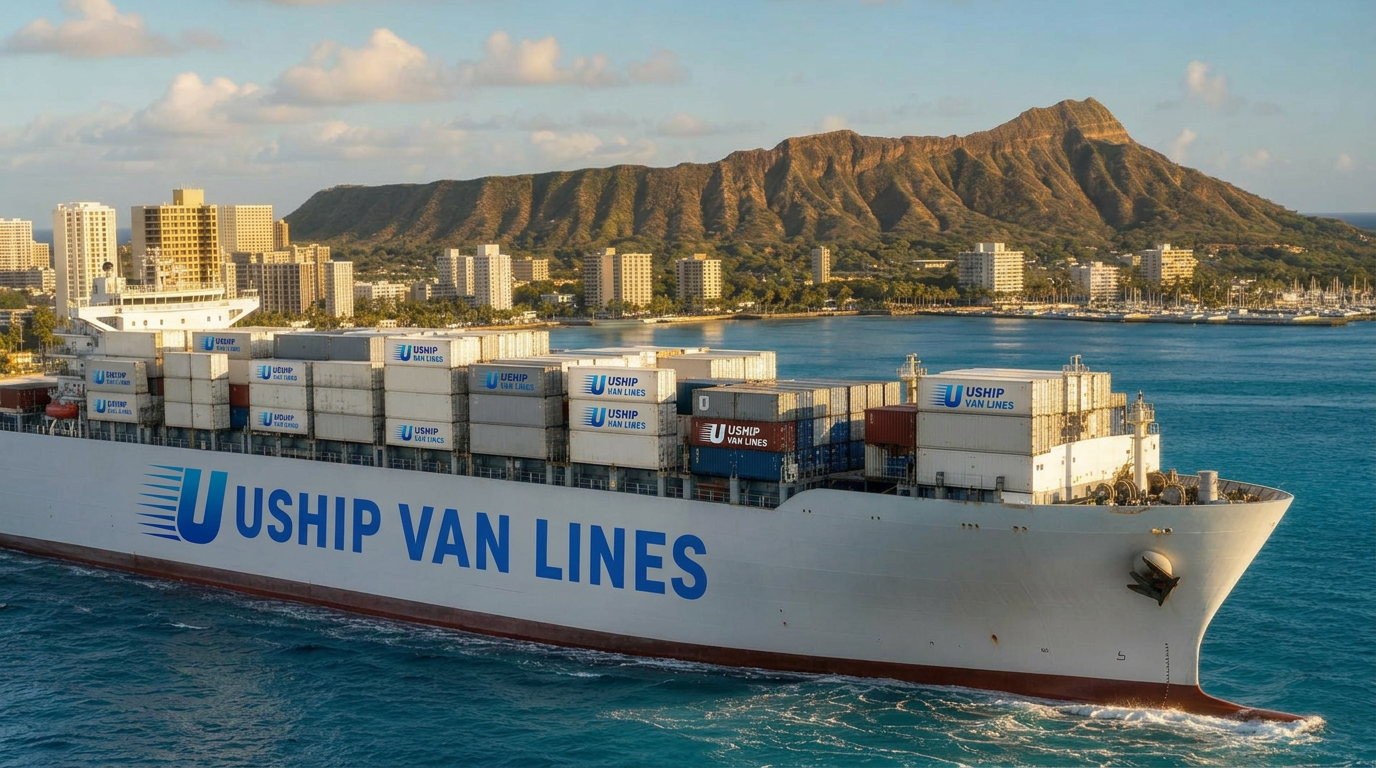
Moving from Hawaii to Akron, OH
Relocating from the Hawaiian islands to Akron, Ohio means trading Pacific beaches for Midwestern seasons and rust-belt charm. Whether you're leaving Oahu, Maui, Kauai, or the Big Island for Northeast Ohio's affordable living and four-season climate, your move requires specialized ocean shipping coordination that most mainland movers simply don't handle.
Best Alaska & Hawaii Movers, powered by UShip Van Lines, manages every phase of your Hawaii-to-Akron move—from your island home through ocean container transport to final delivery in Summit County. Request a free quote today to see how we turn complex multi-modal logistics into a seamless relocation experience.
Route overview
Moving from the Pacific to Northeast Ohio
The Hawaii-to-Akron route spans roughly 4,700 miles and requires three distinct transportation phases: local pickup on your Hawaiian island, ocean freight from Honolulu to a West Coast port (typically Long Beach or Oakland), and overland trucking across the continental United States to Akron. If you're moving from a neighbor island like Maui, Kauai, or the Big Island, your belongings first travel via inter-island barge to Oahu before the transpacific leg.
Akron sits in Summit County between Cleveland and Canton, offering a lower cost of living than Hawaii, distinct seasonal changes, and proximity to Great Lakes recreation. The city's rubber industry heritage has evolved into healthcare, polymer research, and advanced manufacturing sectors. Most Hawaii transplants appreciate the dramatically reduced housing costs, though adjusting to snow, humidity swings, and overcast winter days takes time.
This route presents unique logistics: Hawaii's agricultural inspection requirements, ocean container consolidation schedules (typically weekly departures), cross-country trucking coordination, and timing considerations around both Pacific hurricane season and Midwest winter weather. Professional movers familiar with both island and mainland regulations make the difference between a smooth transition and costly delays.
How the moving process works
How Your Hawaii-to-Akron Move Works
-
Free in-home or virtual survey: A moving coordinator assesses your inventory via video call or in-person visit on your island, noting any items requiring special handling, disassembly, or that cannot ship to the mainland (certain plants, soil, fresh foods).
-
Ocean container booking: Your shipment is scheduled on Matson or Pasha vessels sailing weekly from Honolulu to Long Beach or Oakland. If you're on a neighbor island, we coordinate the inter-island barge transport to Oahu first, adding 3–7 days.
-
Professional packing and loading: Crews pack your household using ocean-grade materials—reinforced boxes, moisture barriers, and secure crating for furniture and fragile items that will withstand both sea voyage and 2,000+ mile overland haul.
-
USDA and customs clearance: Your shipment undergoes agricultural inspection in Hawaii before export and again upon mainland arrival. Prohibited items include soil, certain plants, fresh produce, and some wooden items—your coordinator provides a complete restricted-items list.
-
Transpacific ocean transit: Your container sails 5–7 days to California, where it's unloaded, cleared through port authorities, and transferred to our mainland partner's secure warehouse.
-
Cross-country trucking: A dedicated semi-trailer carries your shipment from California across Nevada, Utah, Wyoming or Colorado, Nebraska, Iowa, and into Ohio—approximately 2,200 miles taking 4–7 days depending on route and weather.
-
Final delivery in Akron: Our Akron-area delivery team unloads at your new residence, places furniture, and removes all packing materials, completing your door-to-door island-to-Midwest relocation.
Estimated moving costs
What a Hawaii-to-Akron Move Costs
A typical 2-bedroom apartment or small home move from Hawaii to Akron generally ranges $6,800–$11,500, while a 3-bedroom house with full household goods runs $10,000–$17,000. These figures reflect ocean container shipping, mainland trucking, and standard packing services but are not guaranteed quotes—your actual cost depends on precise inventory, packing level, island of origin, and seasonal demand.
Key cost drivers include:
- Container size and exclusivity: Shared container space (consolidation) costs less than a dedicated 20-ft or 40-ft container; full containers range $8,000–$14,000 just for ocean freight
- Island of origin: Oahu shipments are most economical; Maui, Kauai, and Big Island moves add $800–$2,200 for inter-island barge to Honolulu
- Packing services: Full professional packing adds $1,200–$3,500; partial packing (fragiles and kitchen only) runs $600–$1,400
- Vehicle shipping: Cars ship separately via roll-on/roll-off vessel; expect $1,100–$1,600 Honolulu to California, plus $800–$1,300 California to Akron
- Storage: If your Akron home isn't ready, mainland storage near the California port costs $150–$400/month; Ohio-side storage is often less expensive
- Seasonal surcharges: Summer (May–August) and holiday periods may carry 10–20% premiums due to peak demand and limited container space
- Insurance: Full-value protection typically adds 1.5–3% of declared shipment value; basic released-value coverage (60¢/lb) is included but offers minimal protection
Always request itemized written estimates from at least two Hawaii specialists. Beware quotes that seem unusually low—they often exclude key services or reflect only the ocean leg, not the complete door-to-door move.
Estimated transit times
How Long Your Move Takes
Door-to-door transit from Hawaii to Akron typically requires 18–32 days under normal conditions, broken down as follows:
- Neighbor island to Oahu (if applicable): 3–7 days for barge transport and Honolulu warehouse handling
- Honolulu to West Coast port: 5–7 days ocean sailing, plus 2–4 days port unloading and customs/agricultural clearance
- California warehouse to Akron: 6–10 days for cross-country trucking, including load consolidation and route scheduling
- Delivery window coordination: 2–3 days flexibility for final delivery appointment
Factors that extend timelines:
- Sailing schedules: Matson and Pasha sail weekly, but missing a sailing adds 7 days; holiday weeks may have reduced schedules
- Port congestion: Long Beach and Oakland occasionally experience 3–7 day delays during peak import seasons (typically late summer and pre-holiday)
- Weather: Pacific storms (June–November hurricane season) can delay sailings; winter blizzards across the Rockies or Midwest may pause trucking 1–3 days
- Agricultural holds: If inspectors flag your shipment for detailed examination, clearance can extend 2–5 business days
- Delivery accessibility: Akron's older neighborhoods sometimes have narrow streets or low-clearance bridges requiring shuttle trucks, adding a day
For time-sensitive moves—job start dates, school enrollment, lease expirations—build in a 5–7 day buffer beyond the estimated delivery range and arrange temporary accommodations or extended hotel stays in Akron.
Regional logistics
Hawaii-Specific Moving Logistics
Port and shipping details: Most Hawaii household goods ship through Matson Navigation or Pasha Hawaii vessels departing Honolulu's Sand Island terminal. If you're on Maui, Kauai, or the Big Island, Young Brothers barges transport containers to Oahu first. Sailings to California typically depart Fridays or Saturdays, arriving the following Thursday through Sunday. Your mover coordinates container delivery to the port 48–72 hours before sailing.
Agricultural inspection and restricted items: The USDA and Hawaii Department of Agriculture inspect all shipments leaving the islands. You cannot ship: potted plants with soil, fresh fruits and vegetables, certain seeds, live plants restricted on the mainland, wooden items with bark, and any agricultural products. Most houseplants can travel if bare-rooted and inspected. Inspectors may open boxes, so proper labeling is critical. Expect your mover to provide a comprehensive prohibited-items list during the survey.
Vehicle shipping: Cars, motorcycles, and boats ship separately on specialized auto carriers (Matson, Pasha, or Horizon). Vehicles must be clean (no soil in wheel wells or undercarriage), no more than ¼ tank of fuel, and contain no personal items. Honolulu to California runs $1,100–$1,600; California to Akron adds $800–$1,300. Total vehicle transit is 14–21 days. Some customers drive their car cross-country after it arrives in California to save on the second leg.
Condo and military moves: High-rise condos in Honolulu, Waikiki, and neighbor-island resorts often require certificate of insurance, elevator reservations, and building-specific move windows. Military members receive counseling through their transportation office; some DITY (Do-It-Yourself) moves qualify for partial reimbursement when using commercial movers. Always verify building requirements 4–6 weeks before your move date.
Last-mile delivery in Akron: Akron's mix of historic neighborhoods (Highland Square, Goodyear Heights) and suburban developments (Fairlawn, Bath Township) means varying delivery conditions. Older tree-lined streets may require smaller shuttle trucks. Most movers schedule delivery windows rather than guaranteed dates; maintain phone contact as your shipment crosses into Ohio for real-time updates.
Seasonal considerations
Best Times to Move from Hawaii to Akron
Winter (December–February): Lower moving rates and greater container availability as fewer people relocate from Hawaii. However, Midwest blizzards and ice storms can delay the final Ohio delivery leg by 2–5 days. Akron averages 50+ inches of snow annually, so plan for potential weather holds. If your delivery window falls in January or February, maintain flexibility.
Spring (March–May): Excellent shoulder season with moderate demand and improving Midwest weather. March can still see snow in Ohio, but April and May offer reliable road conditions. Ocean sailing schedules run consistently. Book 6–8 weeks ahead for best rates and crew availability.
Summer (June–August): Peak moving season with highest demand and premium pricing—expect 15–25% surcharges. Container space books quickly, especially for July and August sailings coinciding with school-year transitions. Pacific hurricane season begins in June; while storms rarely disrupt sailings, they can cause 3–7 day delays. Akron's summer weather is warm and humid, making delivery more comfortable than winter. Reserve 8–12 weeks in advance.
Fall (September–November): Early fall (September–October) remains busy with good weather both in Hawaii and Ohio. Late November through Thanksgiving sees declining demand and better rates. Hurricane season officially ends November 30, reducing ocean delay risks. Ohio's autumn is pleasant for moving, though late November can bring early snow. Book 6–10 weeks ahead.
Optimal strategy: Schedule your move for April–May or late September–October to balance favorable weather, reasonable rates, and reliable transit times across all three phases of your relocation.
Why choose Best Alaska & Hawaii Movers
Why Best Alaska & Hawaii Movers for Your Island-to-Akron Relocation
-
Specialized island expertise: Unlike general moving brokers, we focus exclusively on Alaska and Hawaii relocations, managing ocean shipping, agricultural compliance, and multi-modal logistics that mainland-only movers mishandle or avoid entirely.
-
Single-source accountability: One coordinator manages your entire move from island pickup through Akron delivery—no handoffs to unknown subcontractors, no confusion over who's responsible when issues arise.
-
Transparent pricing and realistic timelines: We provide itemized estimates detailing ocean freight, mainland trucking, packing, and accessorial charges, plus honest transit windows that account for sailing schedules, port operations, and cross-country trucking realities.
-
Powered by UShip Van Lines' mainland network: Our partnership with UShip Van Lines ensures professional mainland trucking, secure warehousing, and experienced Ohio-area delivery teams who understand Akron's neighborhoods and building requirements.
-
Proactive communication: Track your shipment through ocean transit and receive updates as it clears customs, departs California, and approaches Ohio—you're never left wondering where your household is on this 4,700-mile journey.