
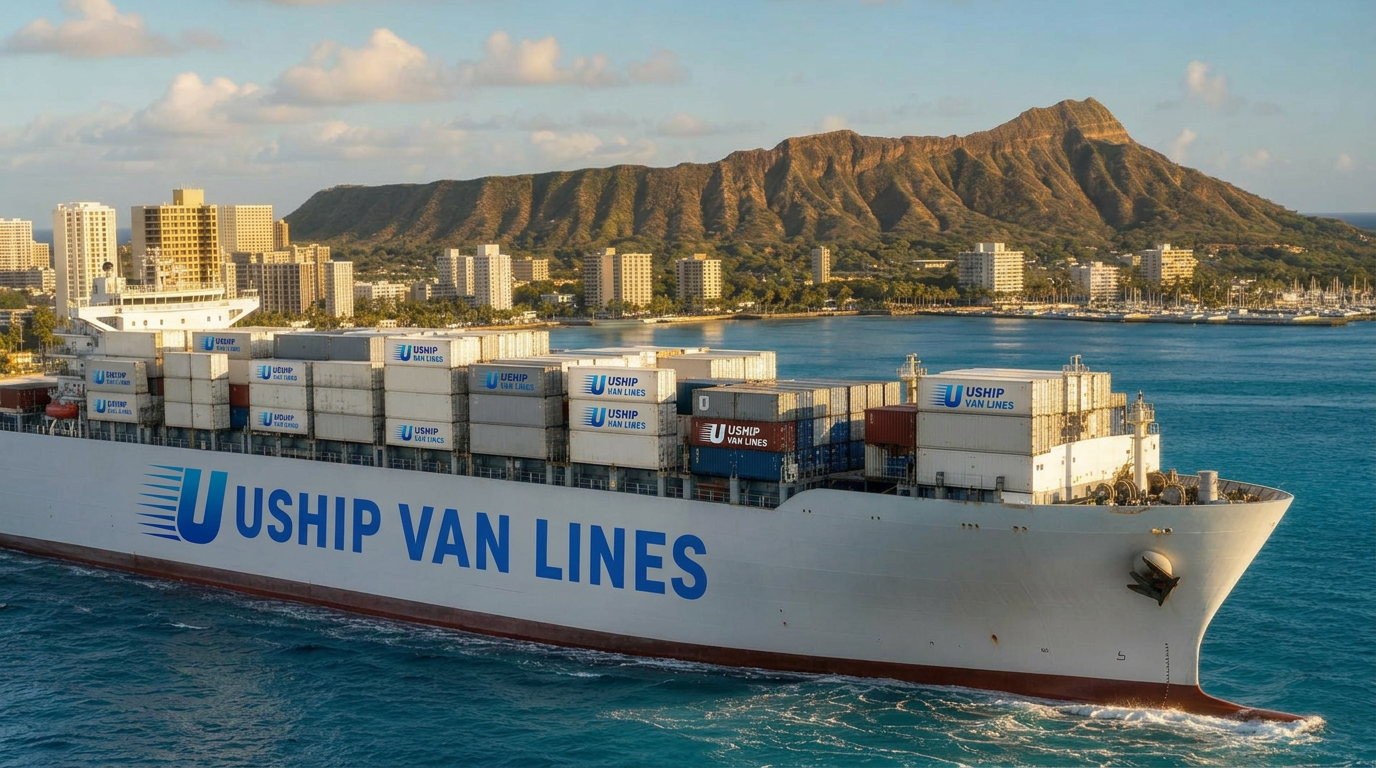
Moving from Hawaii to Minnesota
Relocating from the Hawaiian Islands to Minnesota means coordinating ocean freight, mainland transport, and a dramatic climate shift. Whether you're leaving Oahu, Maui, the Big Island, or Kauai for Minneapolis, St. Paul, or Minnesota's lake country, your move requires specialized logistics that account for port schedules, container consolidation, and cross-country delivery.
Best Alaska & Hawaii Movers, powered by UShip Van Lines, simplifies this complex journey with end-to-end coordination from your island home to your Minnesota doorstep. Ready to start planning? Request a free moving quote and connect with specialists who understand Hawaii-to-mainland moves.
Route overview
Moving from Hawaii to Minnesota: Route & Logistics Overview
Your household goods travel by ocean container from Hawaii ports (Honolulu, Kahului, Hilo, or Nawiliwili) to West Coast mainland terminals in Long Beach or Oakland—typically via Matson Navigation or Pasha Hawaii. From there, your shipment transfers to over-the-road trucking for the 1,800–2,000-mile journey across the western states, Great Plains, and into Minnesota.
This route crosses dramatic climate zones, from tropical humidity to continental extremes. Minnesota's harsh winters demand careful timing: most movers prefer spring through fall arrivals to avoid blizzard delays and frozen ground complications. The entire journey combines ocean shipping schedules (weekly sailings), port processing (2–5 days), and cross-country trucking (5–7 days), creating a multi-week timeline that requires advance planning.
Minnesota destinations range from the Twin Cities metro (Minneapolis–St. Paul) to Duluth, Rochester, Bloomington, and rural lake communities. Final-mile delivery to Minnesota addresses presents few challenges compared to Alaska routes, but winter weather can still impact delivery schedules between November and March.
How the moving process works
How Your Hawaii-to-Minnesota Move Works: Step-by-Step
-
Free quote and planning consultation – Share your inventory, island origin, Minnesota destination, and preferred timeline. Specialists assess container size (20 ft. or 40 ft. shared/dedicated), route options, and provide a detailed cost estimate with no obligation.
-
Schedule pickup and container loading – Professional movers arrive at your Hawaii residence, pack and load your belongings into a shipping container. If you're on a neighbor island (Maui, Kauai, Big Island), goods barge to Honolulu for mainland container consolidation.
-
Ocean transit to West Coast – Your container sails from Hawaii to Long Beach or Oakland (typically 5–7 days at sea). Matson and Pasha run weekly schedules; departure dates determine your overall timeline.
-
Port clearance and customs processing – At the mainland terminal, containers clear customs (if applicable), undergo USDA agricultural inspection if needed, and transfer to trucking carriers. This port dwell averages 2–5 business days.
-
Cross-country trucking to Minnesota – Your shipment travels via Interstate 80/90 corridor through Nevada, Wyoming, South Dakota, and into Minnesota. Dedicated loads move faster (5–7 days); consolidated shipments may take 7–10 days depending on other deliveries.
-
Final delivery and unloading – Movers deliver to your Minnesota address, unload your container, and place items in designated rooms. Inspect for any transit damage and document immediately for insurance claims.
-
Vehicle shipping (if applicable) – Cars ship separately via RORO (roll-on/roll-off) vessels from Hawaii to mainland auto terminals, then overland to Minnesota. This adds 2–4 weeks to your vehicle's arrival compared to household goods.
Estimated moving costs
What Does Moving from Hawaii to Minnesota Cost?
For a typical 2–3 bedroom household (approximately 7,000–10,000 lbs.), expect total moving costs between $6,800 and $12,500 depending on volume, services, and timing. Studio or 1-bedroom moves may range $4,200–$6,500, while 4+ bedroom homes can exceed $14,000–$18,000.
Key cost drivers include:
- Container type and space – Shared 20 ft. container (partial load) costs less than dedicated 40 ft. container; your cubic footage determines pricing
- Island origin – Neighbor island pickups (Maui, Kauai, Big Island) add $400–$900 for inter-island barge to Honolulu consolidation point
- Packing services – Professional packing runs $800–$2,200 for full service; DIY packing saves money but requires proper materials for ocean transit
- Mainland distance – Minnesota sits 1,800+ miles from West Coast ports; fuel surcharges and cross-country mileage impact trucking costs
- Seasonal demand – Peak summer months (June–August) see higher rates as families move before school starts; winter rates may offer modest savings
- Insurance coverage – Basic carrier liability covers $0.60/lb.; full-value protection costs 1–3% of declared inventory value but provides comprehensive coverage
- Storage needs – If your Minnesota home isn't ready, warehouse storage runs $150–$400/month depending on volume
These are estimates based on typical moves. Your exact cost depends on precise inventory, services selected, and current fuel/shipping rates. Request a detailed quote for accurate pricing—no hidden fees, no surprises.
Estimated transit times
How Long Does Moving from Hawaii to Minnesota Take?
Door-to-door transit from Hawaii to Minnesota typically requires 18–28 days, depending on sailing schedules, port processing speed, and trucking logistics. Here's the realistic breakdown:
Island pickup to Honolulu port: 1–3 days (same-day for Oahu; 2–3 days if barging from neighbor islands)
Ocean transit to Long Beach/Oakland: 5–7 days at sea (weekly Matson/Pasha sailings)
Port clearance and trucking transfer: 2–5 business days (customs, agricultural inspection, container devanning if consolidated)
Cross-country trucking to Minnesota: 5–10 days (5–7 for dedicated loads; 7–10 for consolidated shipments with multiple stops)
Final delivery window: 1–2 days (movers coordinate delivery appointment within agreed window)
Total elapsed time: 3–4 weeks on average, with expedited service possible (but expensive) and budget options extending to 5–6 weeks.
Sailing schedules dictate much of your timeline. Missing a Friday Matson departure means waiting until the following week, adding 7+ days. Port congestion during peak season (summer, pre-holiday) can delay clearance. Winter weather in Minnesota may pause final delivery during severe blizzards, though this is rare.
Vehicles shipped via RORO take longer—typically 3–5 weeks total, as auto carriers run separate schedules and routes. Plan accordingly if you need your car immediately upon Minnesota arrival.
Regional logistics
Hawaii-to-Minnesota Moving Logistics: Ports, Paperwork & Special Considerations
Hawaii ports and shipping: Honolulu is the primary consolidation port for all neighbor islands. Maui, Kauai, and Big Island shipments typically barge to Oahu before loading onto Matson or Pasha vessels bound for Long Beach/Oakland. Inter-island transfers add 1–3 days and $400–$900 to costs. Oahu residents enjoy direct loading and slightly faster timelines.
Mainland ports: Most Hawaii shipments land at Long Beach (Matson's primary terminal) or Oakland (Pasha and Matson). From there, containers transfer to trucking networks serving the Midwest. Consolidated loads may devan at the port and reload onto over-the-road trailers; dedicated containers remain sealed until Minnesota delivery.
Agricultural inspections: USDA inspects shipments from Hawaii for invasive species, soil, and restricted plants. This rarely delays household goods but requires cooperation. Avoid packing plants, fresh foods, wooden items with bark, or soil. Vehicles undergo separate inspections focused on undercarriage cleaning.
Vehicle shipping: Cars, trucks, and motorcycles ship separately via RORO vessels (Matson, Pasha). Vehicles must be operable, have less than ¼ tank fuel, and contain no personal items (small amount in trunk allowed). Cost runs $1,200–$1,800 per vehicle Hawaii to mainland, plus $600–$1,000 for overland transport to Minnesota. Total transit: 3–5 weeks.
Paperwork requirements: U.S. domestic moves require minimal documentation—primarily inventory lists and delivery authorization. No customs forms needed (Hawaii to mainland is domestic transit). Keep copies of your bill of lading, insurance certificates, and inventory sheets accessible.
Storage options: If your Minnesota home isn't ready, most movers offer warehouse storage at mainland ports or in Minnesota. Monthly rates run $150–$400 depending on volume. Climate-controlled storage recommended for electronics, wood furniture, and temperature-sensitive items.
Last-mile delivery in Minnesota: Unlike Alaska, Minnesota has excellent highway infrastructure year-round (with winter exceptions). Movers can typically deliver to any address, including rural lake properties, though long private driveways in winter may require 4WD trucks or smaller shuttles.
Seasonal considerations
Best Time to Move from Hawaii to Minnesota: Seasonal Planning
Spring (March–May): Ideal moving window. Hawaii weather remains pleasant, and you avoid Minnesota's worst winter. Port congestion is moderate. Rates begin climbing in May as summer demand approaches. Book 6–8 weeks ahead.
Summer (June–August): Peak moving season. Families relocate before school starts, driving up demand and prices (10–20% premiums common). Hawaii experiences calmer seas and consistent trade winds. Expect longer lead times for container space—book 8–12 weeks in advance. Minnesota destinations are snow-free and accessible.
Fall (September–November): Excellent shoulder season. Rates drop after Labor Day. Hurricane season (June–November) peaks in August–September but rarely impacts Hawaii shipping lanes compared to Gulf/Atlantic routes. Early November moves risk winter arrival in Minnesota; coordinate delivery before Thanksgiving if possible.
Winter (December–February): Lowest demand and best pricing (15–25% below summer rates). Ocean transit remains reliable year-round from Hawaii. The challenge is Minnesota delivery: blizzards, icy roads, and frozen ground complicate unloading. Movers may require flexibility on delivery dates. If moving in winter, consider warehouse storage at mainland port until spring delivery.
Hurricane season note: While Hawaii sits in the Central Pacific hurricane zone, direct strikes are rare (1–2 per decade). Port closures occasionally occur but typically delay shipments by only 1–3 days. Matson and Pasha have robust contingency plans.
Minnesota winter arrival: If you must deliver December–March, ensure movers have experience with cold-weather logistics, confirm equipment can access your property in snow, and budget for potential delays.
Why choose Best Alaska & Hawaii Movers
Why Choose Best Alaska & Hawaii Movers for Your Hawaii-to-Minnesota Move
-
Specialized Hawaii-mainland expertise – We coordinate ocean freight, port logistics, and cross-country trucking daily, eliminating the confusion of managing multiple carriers yourself.
-
Transparent, all-inclusive pricing – Your quote covers island pickup, ocean container, mainland port fees, trucking to Minnesota, and delivery. No surprise charges, no hidden fuel surcharges added later.
-
Single-point accountability – One team manages your entire move from Honolulu (or neighbor islands) to Minneapolis. You get one contact, one timeline, one bill—not a fragmented chain of subcontractors.
-
Powered by UShip Van Lines' nationwide network – Access to vetted carriers, real-time tracking, and logistics technology that keeps your shipment visible throughout the journey.
-
Flexible scheduling and storage – We adapt to your timeline, offer warehouse storage if needed, and coordinate delivery windows that match your Minnesota arrival plans.
-
Comprehensive insurance options – Beyond basic carrier liability, we offer full-value protection and work directly with claims adjusters if transit damage occurs (rare but possible on multi-week journeys).