
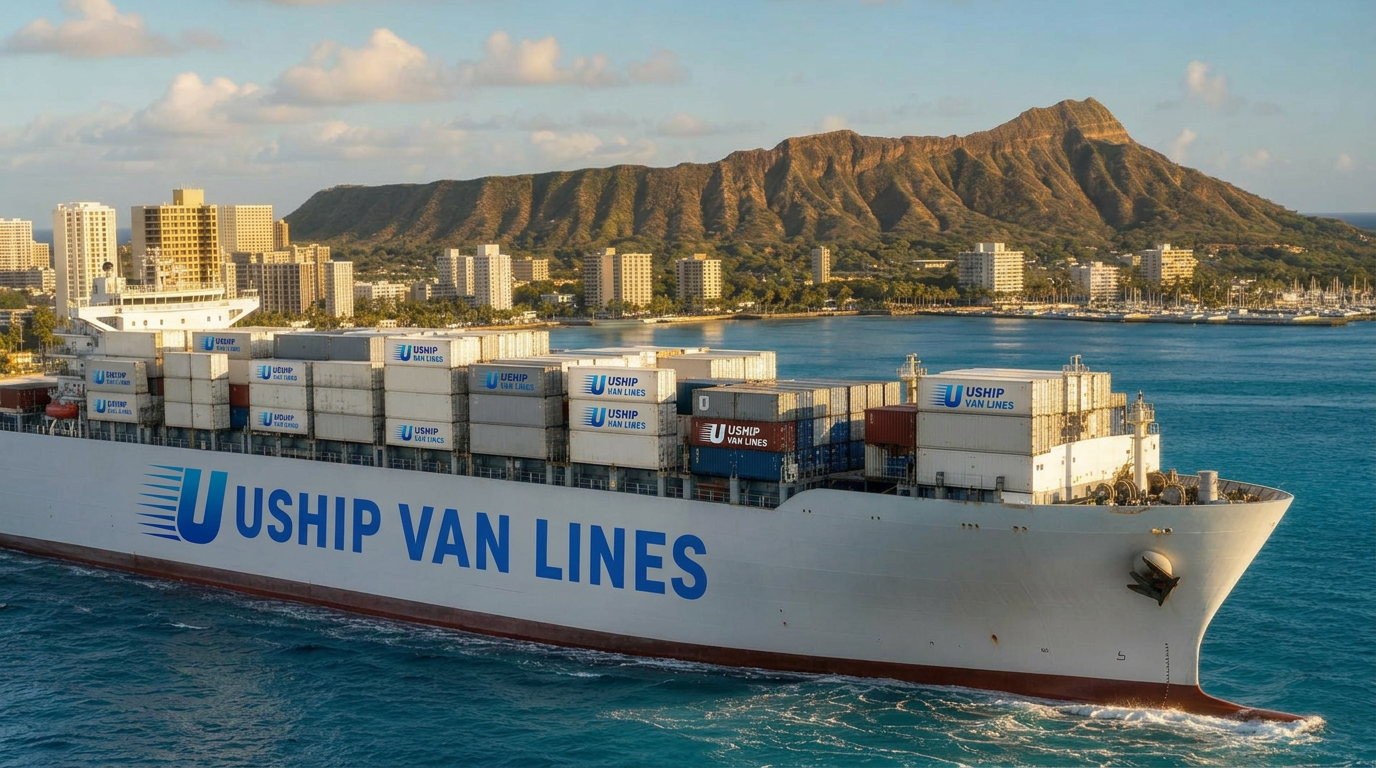
Moving from Hawaii to Wisconsin
Relocating from Hawaii to Wisconsin means trading tropical beaches for Great Lakes charm, but the logistics are more complex than a typical mainland move. Your household goods will travel by ocean container from Hawaiian ports to the West Coast, then overland across the country to Wisconsin—a journey that requires careful coordination and realistic planning.
Whether you're moving from Oahu to Milwaukee, Maui to Madison, or Kauai to Green Bay, understanding the unique challenges of Hawaii-to-Midwest moves helps you budget accurately and avoid surprises. Request a free quote today to start planning your island-to-Wisconsin relocation with experienced professionals who understand both ocean shipping and cross-country logistics.
Route overview
Understanding the Hawaii to Wisconsin Moving Route
Moving from Hawaii to Wisconsin involves a multi-modal journey spanning approximately 4,200 miles. Your belongings will first be containerized and shipped via Matson or Pasha Lines from Hawaiian ports (Honolulu, Kahului, Nawiliwili, or Hilo) to West Coast terminals in Long Beach or Oakland, California. After clearing customs and port processing, your container is transferred to a truck or rail service for the 2,000+ mile overland journey across the western plains and into Wisconsin.
This route requires coordination between ocean carriers, port facilities, and ground transportation networks. The Pacific crossing alone takes 5–7 days of sailing time, followed by 3–5 days of port processing and drayage, then another 5–7 days for cross-country trucking to Wisconsin cities like Milwaukee, Madison, Green Bay, or Kenosha. Total door-to-door transit typically ranges from 3–5 weeks depending on scheduling, weather, and whether you're moving from a neighbor island that requires an additional barge leg.
Wisconsin's seasonal weather adds another layer of complexity. Winter moves (December–March) may encounter delays due to snowstorms, icy roads, and limited truck availability in the upper Midwest, while summer and fall generally offer more predictable delivery windows and better road conditions for the final delivery leg.
How the moving process works
Step-by-Step: How Your Hawaii to Wisconsin Move Works
-
Initial Survey and Quote – A moving consultant assesses your inventory (typically via video survey), discusses your timeline, and provides a detailed estimate covering ocean freight, port fees, ground transportation, and any storage needs. Book 6–10 weeks ahead for optimal scheduling, especially during peak summer months.
-
Pre-Ship Preparation and Packing – Professional packers arrive at your Hawaii home to pack and inventory your belongings. Hawaii USDA restrictions mean plants and certain foods cannot travel; perishables, propane tanks, and hazardous materials are also prohibited. If shipping a vehicle separately, coordinate auto transport with ocean carriers.
-
Containerization and Port Delivery – Your household goods are loaded into a 20' or 40' ocean container (or consolidated in a shared container for smaller moves). The container is transported to your departure port—Honolulu Harbor for Oahu residents, or barged from neighbor islands to Honolulu for trans-Pacific shipping.
-
Ocean Transit to West Coast – Matson or Pasha Lines sails your container from Hawaii to Long Beach or Oakland, a voyage of 5–7 days. Upon arrival, the container clears customs, undergoes agricultural inspection, and is processed through the port terminal—adding 3–5 business days.
-
Cross-Country Ground Transport – Your container is loaded onto a truck chassis (or rail car for some routes) for the journey across California, Nevada, Utah, Wyoming, Nebraska, and Iowa into Wisconsin. This leg typically takes 5–7 days of transit time, though weather and seasonal demand can extend it.
-
Final Delivery and Unloading – The truck arrives at your Wisconsin address, where professional movers unload your container, place furniture, and remove packing materials. Inspect for any transit damage and note it on the delivery receipt for insurance claims.
-
Post-Move Settling – Update your driver's license, vehicle registration, and voter registration with Wisconsin DMV. Wisconsin requires vehicle registration within 30 days of establishing residency. Connect utilities, explore your new community, and adjust to four-season living after island life.
Estimated moving costs
What Does a Hawaii to Wisconsin Move Cost?
A typical 2–3 bedroom household moving from Hawaii to Wisconsin costs $7,500–$14,000 for full-service door-to-door moving. Studio or 1-bedroom moves may range $4,500–$7,500, while larger 4-bedroom homes can exceed $16,000–$22,000. These estimates include professional packing, ocean container shipping, port fees, cross-country ground transport, and basic liability coverage.
Key cost drivers include:
- Volume and weight – Ocean freight is priced by container size (20' vs 40') or cubic footage for consolidated shipments; more belongings mean higher costs
- Origin island – Neighbor island moves (Maui, Kauai, Big Island) add $800–$1,500 for inter-island barge service to Honolulu before trans-Pacific shipping
- Packing services – Full professional packing adds $1,200–$2,500; partial packing or self-packing reduces labor costs but increases risk of damage claims
- Distance within Wisconsin – Delivery to Milwaukee or Madison costs less than remote northern Wisconsin locations due to truck routing and fuel
- Seasonal timing – Peak summer season (June–August) and end-of-month dates command premium pricing; winter moves may offer lower base rates but risk weather delays
- Insurance level – Basic carrier liability covers $0.60/lb; full-value replacement protection adds 1–3% of declared value but provides comprehensive coverage
- Storage needs – If your Wisconsin home isn't ready, mainland storage costs $150–$400/month depending on climate control and duration
Never guaranteed: These ranges reflect typical market pricing but vary by specific inventory, service level, and current shipping rates. Request a binding estimate based on a detailed inventory survey for accurate budgeting. Additional services like vehicle shipping ($1,200–$1,800), crating for fragile items, or specialty handling increase total costs.
Estimated transit times
How Long Does Hawaii to Wisconsin Moving Take?
Door-to-door transit from Hawaii to Wisconsin typically requires 21–35 days (3–5 weeks), though the timeline varies based on origin island, sailing schedules, port processing efficiency, and ground transport routing.
Breakdown by leg:
- Packing and port delivery (Hawaii): 1–3 days from your home to containerization and delivery to the departure port
- Inter-island barge (neighbor islands only): 3–5 days if moving from Maui, Kauai, or Big Island to Honolulu Harbor for trans-Pacific loading
- Ocean sailing to California: 5–7 days for the 2,400-mile Pacific crossing to Long Beach or Oakland
- Port processing and customs: 3–5 business days for unloading, agricultural inspection, and drayage to ground carrier
- Cross-country ground transport: 5–7 days for trucking from California through the interior West and Midwest to Wisconsin
- Final delivery scheduling: 1–3 days to coordinate delivery appointment and unload at your Wisconsin address
Factors affecting timeline:
- Sailing frequency (weekly departures from Honolulu versus bi-weekly from neighbor islands)
- Port congestion in Long Beach/Oakland, especially during peak import seasons
- Weather delays—tropical storms in Hawaii (June–November) or winter blizzards in Wisconsin/Great Plains (December–March)
- Ground carrier availability and routing efficiency through multiple time zones
- Holiday periods when shipping operations slow or pause
Plan for the upper end of the timeline (4–5 weeks) when booking your move, especially if coordinating with housing closings or lease dates. Building buffer time prevents costly hotel stays or rushed decisions if transit extends beyond the minimum estimate.
Regional logistics
Hawaii-Wisconsin Moving Logistics You Need to Know
Port operations: Hawaiian ports (Honolulu, Kahului, Nawiliwili, Hilo) handle containerized household goods through Matson and Pasha Lines, the two primary carriers serving Hawaii. Mainland terminals in Long Beach (Pier T) and Oakland (Matson terminal) process arriving containers through agricultural inspection and customs before ground release. Port strikes, equipment shortages, or chassis availability issues can add 2–5 days to mainland processing.
Container options: Exclusive-use 20' containers (typically sufficient for 2–3 bedroom homes) or 40' containers (4+ bedrooms) offer the most security and control. Consolidated/shared containers reduce costs for smaller moves but require flexible timing as the carrier fills the container. Consolidation adds 3–7 days to transit but can save $1,500–$3,000 compared to exclusive use.
Agricultural restrictions: USDA regulations prohibit soil, plants, fresh fruits, vegetables, and certain seeds from leaving Hawaii. Inspect all belongings carefully—potted plants, gardening supplies with soil residue, and food items must stay behind. Violations can result in fines, disposal, or entire container fumigation at your expense.
Vehicle shipping: Cars ship separately via Matson or Pasha auto transport, costing $1,200–$1,800 from Hawaii to California, plus $600–$900 for California-to-Wisconsin overland transport if needed. Alternatively, ship your vehicle all the way through specialized carriers for $1,800–$2,500 total. Drain vehicles to ¼ tank or less, remove personal items, and ensure registration is current. Wisconsin requires vehicle inspection and registration within 30 days of establishing residency.
Last-mile delivery in Wisconsin: Large trucks navigate Milwaukee, Madison, and Green Bay easily, but rural Wisconsin addresses or winter road conditions may require smaller delivery vehicles or shuttle fees. Confirm your Wisconsin property is accessible for a 53' tractor-trailer or discuss shuttle arrangements (typically $300–$800) for narrow roads, low bridges, or steep driveways common in Wisconsin's hill country.
Storage options: If your Wisconsin home isn't ready upon arrival, mainland storage facilities in California or Wisconsin hold your container at $150–$400/month. Climate-controlled storage (recommended for Wisconsin winters) costs more but protects furniture, electronics, and sensitive items from extreme cold and humidity swings.
Insurance and claims: Carriers provide basic liability ($0.60/lb), but this rarely covers replacement cost. Purchase full-value protection (1–3% of declared value) for comprehensive coverage. Document high-value items with photos, keep serial numbers, and note any pre-existing damage. File claims within the carrier's specified period (typically 9 months) with supporting documentation.
Seasonal considerations
Best Times to Move from Hawaii to Wisconsin
Summer (June–August): Peak moving season for Hawaii-to-mainland relocations, driven by school schedules and favorable weather. Ocean carriers run full capacity, and ground trucking across the western states enjoys dry roads and predictable conditions. Wisconsin summers offer pleasant weather for moving-in, but expect premium pricing (10–20% higher), limited container availability, and 8–12 week booking lead times. Hurricane season begins in June but peaks August–October.
Fall (September–November): Ideal shoulder season balancing good weather with lower demand. September–October still sees tropical storm potential in Hawaii, but by November sailing conditions stabilize. Wisconsin fall weather remains mild through October, though November can bring early snow. Pricing moderates from summer peaks, and carrier availability improves. Book 6–8 weeks ahead for September moves, 4–6 weeks for October–November.
Winter (December–February): Off-peak season with the lowest base rates (15–25% below summer), but weather risks increase significantly. Hawaii winter brings heavy rain and occasional storm-related port delays, while Wisconsin experiences harsh winters with snow, ice storms, and subzero temperatures that can delay final delivery. Cross-country trucking through Wyoming, Nebraska, and Iowa faces winter road closures and reduced driver availability. If you must move in winter, build extra buffer time (5–6 weeks) and confirm your moving company's experience with cold-weather deliveries. Holiday weeks (Christmas, New Year's) see reduced shipping operations.
Spring (March–May): Excellent window combining moderate pricing with improving weather. Hawaii's rainy season tapers by April, and Wisconsin thaws into spring—though March can still bring late-season snowstorms. Booking demand increases through May as families prepare for summer moves, so reserve 6–8 weeks out for May relocations. Spring offers the best balance of cost, weather, and scheduling flexibility.
Hurricane season note: The Central Pacific hurricane season runs June 1–November 30, peaking August–October. While direct hits on Hawaiian Islands are rare, tropical storms can delay port operations and sailing schedules by 3–7 days. Monitor forecasts closely if moving during peak storm months and communicate with your moving company about contingency plans.
Why choose Best Alaska & Hawaii Movers
Why Choose Best Alaska & Hawaii Movers for Your Hawaii to Wisconsin Move
-
Specialized Hawaii Expertise – We focus exclusively on Hawaii and Alaska relocations, understanding the unique logistics of ocean shipping, port coordination, and island-to-mainland moves that generalist carriers often mishandle
-
Transparent Pricing, No Surprises – Receive detailed, itemized estimates covering every leg of your journey—ocean freight, port fees, ground transport, and insurance—with clear explanations of what drives costs and how to optimize your budget
-
End-to-End Coordination – One point of contact manages your entire move from Hawaiian ports through West Coast terminals to your Wisconsin doorstep, eliminating the confusion of coordinating multiple carriers yourself
-
Powered by UShip Van Lines Network – Access vetted, licensed carriers nationwide through UShip's platform, combining local Hawaii expertise with reliable mainland trucking and Wisconsin delivery professionals
-
Flexible Service Levels – Choose full-service packing and white-glove delivery, or opt for cost-saving hybrid approaches like self-packing with professional loading—we tailor services to your timeline and budget
-
Realistic Timelines and Proactive Communication – We provide honest transit estimates based on actual sailing schedules and ground routing, with regular updates throughout your move so you're never left wondering where your belongings are