
Moving from Duluth, MN to Alaska
Moving from Duluth, MN to Alaska transforms a North Shore lifestyle into a true frontier adventure. This 2,000+ mile relocation requires specialized logistics combining long-haul trucking through the Upper Midwest and Pacific Northwest with Alaska Marine Highway barge service or commercial freight barges departing from Tacoma, Washington.
Whether you're relocating to Anchorage for career opportunities, heading to the Mat-Su Valley for homesteading, or joining the Fairbanks community, your household goods will travel a unique multi-modal route designed specifically for Alaska-bound shipments. Ready to start planning? Request a detailed quote tailored to your specific inventory and destination.
Route overview
Understanding the Duluth to Alaska Moving Route
Your belongings depart Duluth aboard a long-haul truck heading west through Minnesota, North Dakota, Montana, and Idaho before reaching Washington State. In the Seattle-Tacoma area, your shipment transfers to a consolidation facility where household goods are staged, inventoried, and loaded into weatherproof containers for ocean barge transport. Most Alaska-bound freight departs from the Port of Tacoma, where commercial barges handle the majority of northbound household goods.
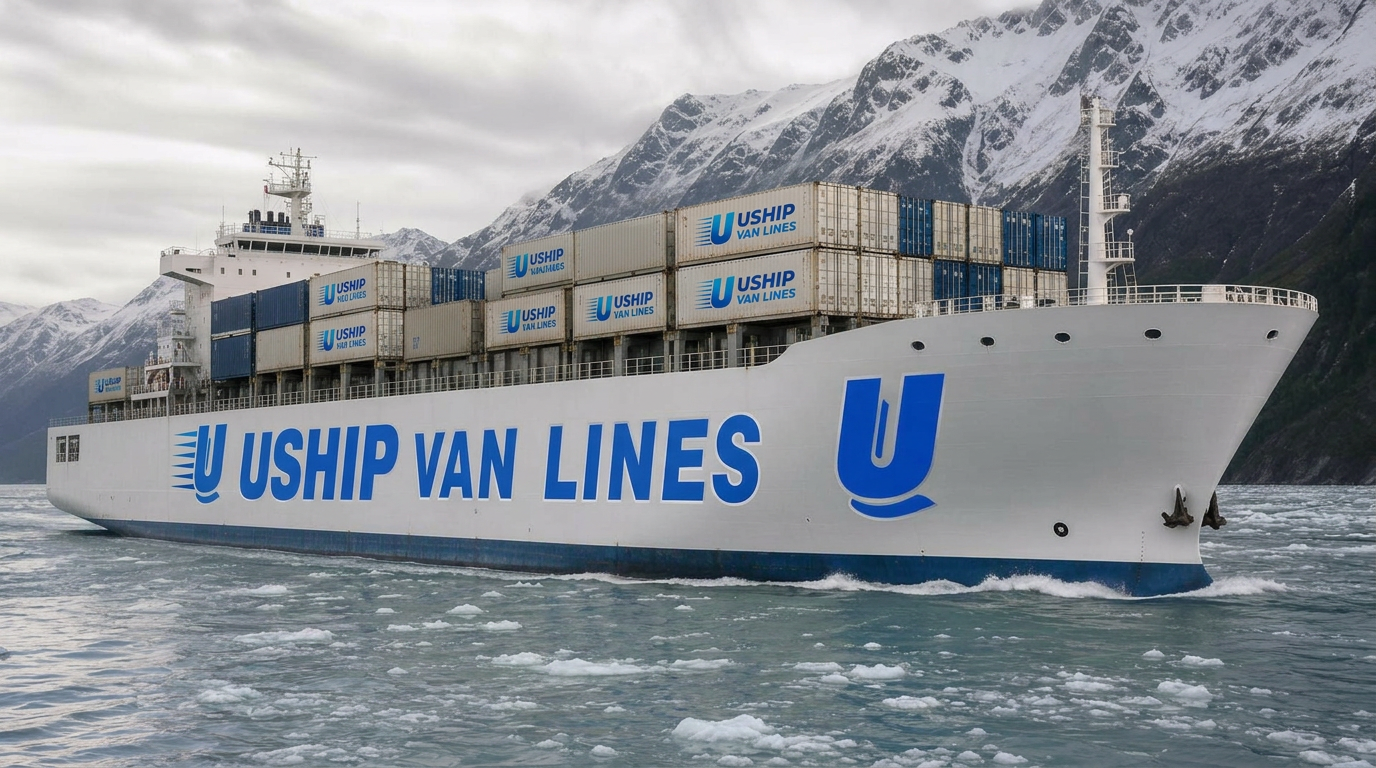
The barge voyage covers approximately 1,400 nautical miles through the Inside Passage or Gulf of Alaska routes, typically arriving at the Port of Anchorage. From Anchorage, your shipment moves to its final destination—whether that's a downtown apartment, a Fairbanks base, a Wasilla property in the Mat-Su Borough, or even a bush community requiring additional air or water transport. The entire journey combines three distinct logistics phases: continental trucking, ocean barge transit, and Alaska last-mile delivery.
This route serves the vast majority of Alaska's population centers along the road system. Approximately 90% of Alaska residents live in areas accessible by the limited road network, making Anchorage the primary distribution hub. Shipments to off-road communities (accessible only by plane or boat) require additional coordination and typically incur supplemental charges for bush delivery services.
How the moving process works
How Your Duluth to Alaska Move Works: Step-by-Step
-
Initial Survey & Quote – A moving coordinator conducts a virtual or in-home inventory assessment of your Duluth residence, noting furniture dimensions, specialty items (firearms, artwork, musical instruments), and any vehicle shipments. You'll receive a detailed estimate breaking down trucking, barge fees, and Alaska delivery costs.
-
Booking & Scheduling – Once you accept the quote, your coordinator reserves truck capacity and secures barge space. Alaska barge schedules operate on fixed weekly or bi-weekly sailings, so booking 6-8 weeks ahead during summer peak season is essential. Winter moves offer more flexibility but may face weather delays.
-
Packing & Loading in Duluth – Professional movers arrive at your Duluth home to pack (if you've selected full-service packing) and load your belongings. Everything goes into the truck using furniture pads, shrink wrap, and load bars to prevent shifting during the 1,800-mile drive to Tacoma.
-
Cross-Country Transport to Tacoma – Your shipment travels I-94 west through Fargo and Billings, then I-90 through Missoula and Spokane before reaching the Tacoma consolidation warehouse. Transit time: typically 5-7 days depending on weather and driver hours-of-service regulations.
-
Containerization & Barge Loading – At the Tacoma facility, your household goods are loaded into 20-foot or 40-foot weatherproof shipping containers (often shared with other Alaska-bound shipments for cost efficiency). Containers are sealed, documented, and transferred to the Port of Tacoma for loading onto the next available Alaska barge.
-
Ocean Barge Transit – The barge sails north through protected Inside Passage waters or open Gulf of Alaska routes (depending on carrier and season), arriving at Anchorage's Port typically 7-10 days after departure. Weather, tides, and port congestion can affect exact arrival times.
-
Alaska Delivery & Unloading – Once cleared through the port, your container is transported to the final destination. Anchorage-area deliveries often occur within 1-2 days of port arrival. Fairbanks (358 miles north), Mat-Su communities, and Kenai Peninsula locations require additional trucking time. Bush destinations need flight or barge connections arranged separately.
Estimated moving costs
What Does a Duluth to Alaska Move Cost?
For a typical 2-3 bedroom household (approximately 7,000-10,000 pounds), expect total moving costs between $8,500 and $16,000 for door-to-door service from Duluth to major Alaska destinations. Studio or 1-bedroom apartments (3,000-5,000 pounds) generally range $4,500-$8,000, while larger 4+ bedroom homes can exceed $20,000.
Primary cost drivers include:
- Distance and weight – You're charged by hundredweight (CWT) for the combined truck and barge segments. Heavier shipments and additional cubic footage increase costs proportionally.
- Barge fees – Ocean freight to Alaska adds significant expense compared to continental moves. Barge rates fluctuate based on fuel costs, seasonal demand, and container availability.
- Alaska delivery zone – Anchorage delivery costs less than Fairbanks (additional 358-mile haul) or Kenai Peninsula communities. Bush Alaska destinations requiring air charter or separate barge service add $2,000-$10,000+ depending on remoteness.
- Packing services – Professional packing for a 3-bedroom home adds $1,200-$2,500. Fragile item crating (artwork, mirrors, glass) costs extra.
- Vehicle shipping – Adding a car or truck to the barge runs $1,500-$3,500 depending on vehicle size. Boats, ATVs, and snowmachines are common add-ons for Alaska relocations.
- Seasonal timing – Summer (May-September) sees 40-60% higher demand and premium pricing. Off-season winter moves (October-April) offer better rates but potential weather delays.
- Storage – If your Alaska housing isn't ready, temporary storage in Anchorage costs $150-$400/month for a typical household.
Remember, these are realistic market ranges, not guaranteed quotes. Your actual cost depends on precise inventory, services selected, current fuel surcharges, and your specific origin/destination addresses. Request a binding estimate for accurate budgeting—no obligation, and it locks in your price against market fluctuations.
Estimated transit times
How Long Does Duluth to Alaska Moving Take?
Plan for 3-4 weeks door-to-door for most Duluth to Alaska relocations, though timelines vary based on logistics coordination and seasonal factors.
Timeline breakdown by segment:
- Duluth to Tacoma trucking: 5-7 days for the 1,800-mile overland haul, including mandatory driver rest periods and potential weather delays crossing mountain passes in Montana or the Cascades.
- Tacoma staging and containerization: 2-5 days while your shipment is unloaded, inventoried, consolidated with other Alaska-bound freight, and loaded into ocean containers. This window extends during peak summer months when warehouses handle higher volumes.
- Barge sailing to Anchorage: 7-10 days of ocean transit. Inside Passage routes (more protected, longer) versus Gulf of Alaska routes (more direct, weather-dependent) affect timing. Port congestion in Anchorage can add 1-2 days before offloading.
- Alaska ground delivery: 1-3 days from port clearance to your door in Anchorage; add 1-2 additional days for Fairbanks, Wasilla, Palmer, or Kenai Peninsula destinations.
Expedited options are extremely limited for Alaska moves due to fixed barge schedules. Unlike continental relocations where dedicated trucks offer faster service, Alaska logistics operate on a consolidation model tied to weekly or bi-weekly sailings. Booking early ensures you catch the next available barge rather than waiting for the subsequent sailing.
Winter moves (November-March) may see slightly longer transit due to Pacific storms affecting barge schedules and mountain pass road conditions between Duluth and Tacoma. Summer moves face tighter scheduling because everyone wants June-August delivery, so book 8-10 weeks ahead during peak season.
Regional logistics
Alaska-Specific Moving Logistics from Duluth
Understanding Alaska's Unique Geography
Alaska has only 5,000 miles of paved roads serving about 20% of the state's land area. The primary road system connects Anchorage, the Mat-Su Valley (Wasilla/Palmer), Fairbanks, the Kenai Peninsula, and a few smaller communities. Everything else—hundreds of villages and towns—is accessible only by airplane or boat. Your Duluth moving company needs Alaska expertise to navigate this reality.
Port Operations & Container Handling
The Port of Anchorage handles the vast majority of Alaska-bound household goods. Your container is offloaded by port authority equipment, cleared through receiving, and released to your moving company's local Alaska agent for final delivery. During summer peak, port congestion can add 2-3 days to the timeline. Some carriers also utilize the Port of Whittier (60 miles south of Anchorage) for certain barge routes, requiring additional ground transport to Anchorage.
Vehicle Shipping Considerations
Most Duluth-to-Alaska movers ship at least one vehicle on the same barge. Your car, truck, or SUV is driven onto the barge at Tacoma (you'll deliver it to the port or have it transported there) and driven off in Anchorage. Vehicles must be nearly empty (less than 1/4 tank of fuel, no personal items except a spare tire and floor mats) per maritime regulations. If you're shipping a boat, ATV, snowmachine, or trailer alongside household goods, coordinate with your moving company—these are common Alaska shipments that can share container or deck space.
Required Documentation
Alaska moves require standard household goods bills of lading plus vehicle titles if shipping cars. There are no customs forms (Alaska is a U.S. state), but you'll need proof of insurance coverage during transit. If you're moving firearms—common for Alaska relocations given hunting culture—ensure they're properly declared and packed according to federal regulations for interstate transport. Your moving company handles the logistics documentation; you're responsible for personal paperwork like driver's license transfers and vehicle registration once you arrive.
Bush Alaska & Off-Road Delivery
If your final destination is off the road system (communities like Bethel, Kotzebue, Nome, Barrow, Dillingham, or hundreds of smaller villages), your shipment stops in Anchorage for transfer to bush freight services. Small aircraft can handle a few hundred pounds; larger shipments require scheduled cargo flights or seasonal barge service to rural ports. Bush delivery can add $2,000-$10,000+ depending on distance and accessibility. Coordinate this segment carefully—many bush communities have limited receiving facilities and short delivery windows.
Alaska Last-Mile Delivery Details
For road-accessible destinations, your moving crew will contact you 24-48 hours before delivery to confirm your receiving address and schedule. Many Alaska properties have gravel driveways, require 4x4 access during shoulder seasons (spring breakup, fall freeze), or sit on lots where large trucks can't turn around. Communicate property access details clearly. If your new home isn't ready, short-term storage in Anchorage is widely available and often necessary given the fixed barge schedules—you can't delay the sailing, so storage bridges the gap until your housing is available.
Seasonal considerations
Best Time to Move from Duluth to Alaska: Seasonal Planning
Summer (May-September): Peak Season
The overwhelming majority of Alaska moves occur during the midnight sun months. Advantages include stable weather for trucking across the northern tier states, more frequent barge sailings (often weekly), and easier settling-in when Alaska isn't frozen. Schools start in August, so July-early August sees maximum demand from families. Expect premium pricing (20-40% higher than winter), tight truck availability, and the need to book 8-12 weeks in advance. If you have flexibility, late May or September offers slightly better rates while maintaining good weather.
Fall (October-November): Shoulder Season
Autumn brings lower demand and better pricing—often 15-25% below summer peaks. Barge schedules reduce to every 10-14 days rather than weekly, so coordination timing becomes more critical. Weather remains generally favorable, though late October brings increasing storm risk in the Gulf of Alaska. This window works well for retirees, remote workers, or anyone without school-age children dictating a summer timeline.
Winter (December-March): Off-Season
Winter offers the lowest rates of the year, sometimes 30-40% below July pricing, but comes with legitimate challenges. Barge sailings may reduce to bi-weekly or even monthly during the darkest months. Pacific storms can delay sailings by days. The Duluth-to-Tacoma truck drive crosses multiple mountain ranges where winter weather creates chain requirements and occasional road closures. However, if you're moving to Alaska for winter work (oil fields, ski resorts, research stations) or can tolerate uncertainty, the cost savings are substantial. Book with flexible delivery windows and patience for weather delays.
Spring (April-early May): Transition Period
As barge schedules ramp up for summer and Alaska thaws, April-May represents a sweet spot for value-conscious movers. Rates haven't hit summer peaks yet, sailings increase in frequency, and weather improves both at sea and on mountain highways. This timing works beautifully if you can arrive in Alaska before the tourist crush but after the deepest winter darkness.
Why choose Best Alaska & Hawaii Movers
Why Choose Best Alaska & Hawaii Movers for Your Duluth to Alaska Relocation
-
Alaska Logistics Expertise – Powered by UShip Van Lines' specialized non-contiguous freight network, we coordinate the complex multi-modal journey from your Duluth door to your Alaska destination, whether that's an Anchorage apartment or a Fairbanks home. We understand barge schedules, port operations, and Alaska last-mile delivery challenges that generic long-distance movers simply can't navigate.
-
Transparent Pricing, No Hidden Fees – Your quote breaks down trucking, barge, and delivery costs clearly. We explain weight-based pricing, seasonal factors, and optional services (packing, vehicle shipping, storage) upfront, so you can budget accurately without surprise charges on delivery day.
-
Flexible Scheduling Around Barge Sailings – We coordinate your packing and pickup in Duluth to align with confirmed barge departures from Tacoma, maximizing efficiency and minimizing storage time. Our logistics team monitors sailing schedules and weather patterns to keep you informed throughout the process.
-
Comprehensive Service Options – From full-service packing and crating to self-pack coordination, vehicle shipping, temporary storage, and specialty item handling (firearms, artwork, wine collections, pianos), we tailor services to your specific needs. Moving to Alaska often means relocating outdoor equipment, tools, and recreational gear—we handle it all.
-
Dedicated Move Coordination – Your assigned move coordinator stays with you from initial quote through final Alaska delivery, providing a single point of contact who understands your timeline, inventory, and concerns. You're not handed off between departments or left wondering where your belongings are on a 3-4 week journey.
-
Real Customer Support – Questions about what you can ship? Need to add items to your inventory? Wondering about insurance coverage? Our team provides actual answers from people who understand Alaska moving logistics, not scripted responses from a generic call center.