
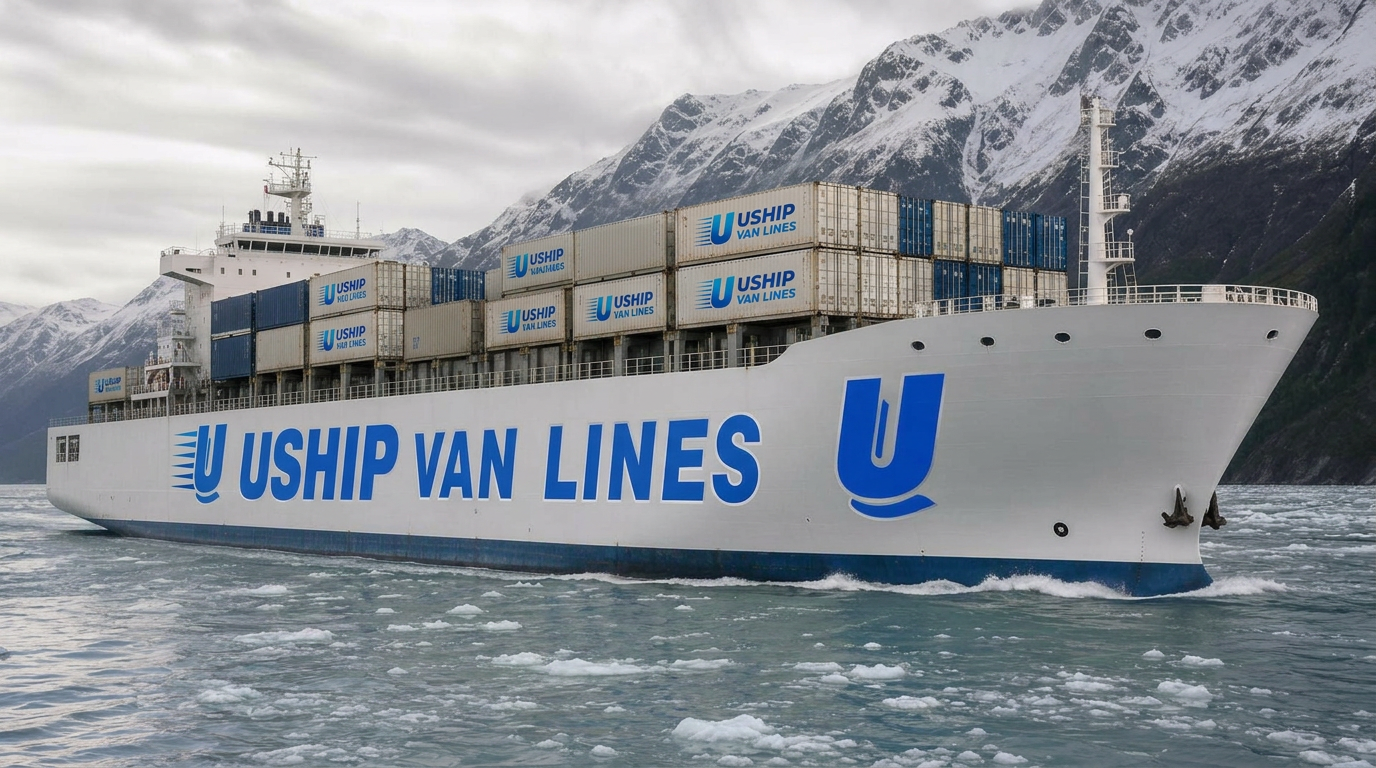
Moving from Yonkers, NY to Alaska
Relocating from Yonkers to Alaska means trading the Hudson River waterfront for glacier-fed rivers, swapping Westchester suburbs for wilderness access, and preparing for a move that spans nearly 4,000 miles. This isn't a standard interstate haul—your household goods will travel by truck to the Pacific Northwest, transfer to a barge bound for Anchorage or other Alaska ports, then complete the final leg to your new home in Anchorage, Fairbanks, the Mat-Su Valley, Kenai Peninsula, or even remote bush communities.
Best Alaska & Hawaii Movers, powered by UShip Van Lines, specializes in this complex route. We coordinate every handoff—from pickup in Yonkers through Tacoma consolidation, ocean barge transit, Alaska port clearance, and last-mile delivery across the Last Frontier. Ready to start planning your cross-continental move? Request a detailed quote tailored to your timeline and destination.
Route overview
Your Yonkers to Alaska Moving Route
Your belongings will begin their journey from your Yonkers residence—whether you're leaving a co-op near Getty Square, a single-family home in Crestwood, or an apartment in Nodine Hill. The first leg is a traditional over-the-road move across the continental U.S., typically following I-80 or I-90 west through Pennsylvania, Ohio, the Great Plains, and the Rockies to the Pacific Northwest.
In Tacoma or Seattle, Washington, your shipment transfers to a container facility where household goods are consolidated and loaded onto Totem Ocean Trailer Express (TOTE) or Alaska Marine Lines barges. These vessels depart weekly during peak season (May–September) and less frequently in winter, sailing north through the Inside Passage to the Port of Anchorage, Port of Whittier, or specialized ports for Fairbanks-bound freight via the Alaska Railroad.
Once your container clears customs and port handling in Alaska, a local carrier completes delivery to your final address. If you're moving to Anchorage or the Mat-Su Valley, this is straightforward highway transport. Fairbanks deliveries may involve coordination with rail schedules. Remote destinations in the Kenai Peninsula, Southeast Alaska, or bush villages require additional planning for seasonal road access, barge lightering, or even air freight for the final miles. Total door-to-door transit typically ranges 14–28 days depending on consolidation timing, barge schedules, and your Alaska destination.
How the moving process works
How Your Yonkers to Alaska Move Works: Step-by-Step
-
Free In-Home or Virtual Survey: A moving specialist assesses your inventory in Yonkers, noting any oversized items (pianos, exercise equipment, hot tubs) and providing a binding or not-to-exceed estimate based on weight and services. This is when you'll discuss Alaska-specific needs like vehicle shipping, storage, or partial loads.
-
Packing and Pickup in Yonkers: Professional movers arrive at your Yonkers home, pack belongings using materials rated for multi-leg transport and ocean barge conditions, load the truck, and provide a detailed inventory with condition notes. Expect pickup coordination around parking permits if you're in a denser neighborhood near the Saw Mill River Parkway or downtown.
-
Cross-Country Transport to Tacoma Consolidation Hub: Your shipment travels 2,800+ miles west to the Pacific Northwest, typically taking 5–7 days. The truck delivers to a Tacoma or Seattle warehouse where your goods are transferred into 20-foot or 40-foot ocean-ready containers, often consolidated with other Alaska-bound shipments to optimize costs.
-
Barge Sailing to Alaska Ports: TOTE or Alaska Marine Lines barges depart Tacoma weekly (summer) or biweekly (winter), sailing 1,400 nautical miles north to Anchorage (Port of Anchorage or Whittier). Transit time is approximately 4–6 days. Fairbanks-bound freight may route through Whittier for rail transfer or use specialized port services.
-
Alaska Port Processing and Clearance: Upon arrival, your container is offloaded, inspected by USDA for prohibited agricultural products (no fresh soil, certain plants, untreated wood), and cleared for release. This takes 1–3 business days depending on port congestion and inspection results.
-
Last-Mile Delivery Across Alaska: A regional Alaska carrier picks up your container and completes delivery to your home in Anchorage, Eagle River, Wasilla, Palmer, Fairbanks, Kenai, Soldotna, or other accessible locations. For remote areas, additional logistics—seasonal barge to island communities, bush plane cargo for villages without road systems—are coordinated in advance.
-
Unpacking, Assembly, and Final Walkthrough: Movers unload, place furniture in rooms, reassemble items disassembled for transport, and review the inventory sheet with you to document any transit damage. You'll sign off on delivery completion, triggering the final payment and starting any claims windows if needed.
Estimated moving costs
What Does It Cost to Move from Yonkers to Alaska?
A typical 2–3 bedroom household (6,000–10,000 lbs) moving from Yonkers, NY to Anchorage or Mat-Su Valley generally costs $7,500–$13,500 for full-service door-to-door transport. Smaller 1-bedroom moves or partial loads may range $4,500–$7,000, while larger 4+ bedroom homes can reach $15,000–$22,000 or more.
Key Cost Drivers:
- Weight and Volume: Alaska moves are priced primarily by weight due to barge freight charges. A 10,000-lb shipment costs significantly more than 6,000 lbs. Reducing weight by selling heavy furniture, donating books, or leaving items in storage saves money.
- Packing Services: Full-pack service (movers pack everything) adds $1,200–$2,500 depending on home size and specialty items. Partial packing (fragile-only) or self-packing using provided materials reduces costs.
- Vehicle Shipping: Adding a car or truck to your move runs $1,800–$3,200 for Tacoma-to-Anchorage vehicle barge service. Motorcycles, ATVs, and boats can also ship, with pricing by size and weight.
- Seasonal Timing: Summer peak season (May–August) sees higher rates due to demand and optimal barge schedules. Off-season moves (October–March) may offer 10–20% discounts but face longer consolidation waits and weather-related delays.
- Final Destination in Alaska: Anchorage and Mat-Su deliveries are straightforward. Fairbanks adds rail coordination costs. Remote Kenai Peninsula, Southeast Alaska (Juneau, Ketchikan), or bush villages require specialized last-mile logistics—barge lightering, air freight, seasonal ice-road transport—that can add $500–$3,000+.
- Storage: If your Alaska housing isn't ready, warehouse storage in Tacoma (holding for next barge) or Anchorage costs $150–$400/month for typical household volumes.
We never guarantee prices without a formal survey. Costs vary by actual weight, services selected, and current fuel/barge rates. Request a detailed, binding estimate to lock in your price and avoid surprises.
Estimated transit times
How Long Does the Move Take?
Door-to-door transit from Yonkers, NY to Alaska typically takes 14–28 days, though this varies significantly based on timing, consolidation, and your final Alaska location.
Timeline Breakdown:
- Pickup to Tacoma Warehouse (5–7 days): Over-the-road trucking across the continental U.S. Direct loads move faster; consolidated shipments may add 1–3 days for routing.
- Tacoma Consolidation and Container Loading (2–7 days): Your goods are transferred into ocean containers. During peak summer season, containers fill quickly and depart on the next scheduled barge. In off-season, you may wait up to two weeks for sufficient volume to justify a sailing.
- Barge Sailing Tacoma to Anchorage/Whittier (4–6 days): The ocean leg is consistent—roughly 1,400 nautical miles at barge speeds. TOTE runs weekly summer schedules; Alaska Marine Lines operates year-round with reduced winter frequency.
- Alaska Port Processing (1–3 days): Offloading, USDA inspection, customs clearance (if applicable for returning residents), and release to the Alaska carrier. Winter weather or holiday backlogs can extend this.
- Last-Mile Delivery in Alaska (1–5 days): Anchorage/Mat-Su deliveries happen within 1–2 days of clearance. Fairbanks adds 2–3 days for rail or highway coordination. Remote areas depend on seasonal barge schedules (weekly to monthly), weather windows, or charter logistics.
Fastest-case scenario (summer, direct Anchorage delivery, perfect timing): 14–16 days. Typical scenario: 18–24 days. Winter or remote delivery: 25–35+ days. Always plan for flexibility—Alaska logistics are weather- and season-dependent.
Regional logistics
Alaska-Specific Moving Logistics from Yonkers
Port and Routing: Your shipment will almost certainly route through the Port of Tacoma, consolidating at a facility operated by or partnered with Alaska Marine Lines or TOTE. Goods destined for Anchorage/Mat-Su typically arrive at the Port of Anchorage; Whittier serves as an alternative for rail-to-Fairbanks freight. Southeast Alaska destinations (Juneau, Sitka, Ketchikan) use different barge lines and ports—confirm routing if you're moving there.
Vehicle Shipping: Cars, trucks, motorcycles, and recreational vehicles ship separately via roll-on/roll-off (RoRo) vehicle barges from Tacoma to Anchorage. Vehicles must be nearly empty (under ¼ tank fuel, no personal belongings except factory-installed items and one spare tire). Coordinate pickup/delivery timing with your household goods to avoid arriving in Alaska without transportation. Typical cost: $1,800–$3,200 per standard vehicle.
Customs and Agricultural Inspections: Alaska is part of the U.S., so no international customs. However, USDA enforces strict agricultural rules to protect Alaska's ecosystems. Prohibited items include houseplants with soil, fresh fruits/vegetables, untreated firewood, and certain seeds. Inspections occur at the port; non-compliant items are confiscated without compensation. Pack plants bare-root or use artificial soil if allowed, and consume or donate perishables before your move.
Remote and Off-Road Destinations: Moving to rural Alaska—Kenai Peninsula villages, Kodiak Island, Aleutian communities, Southeast Alaska islands, or Interior bush locations—requires additional logistics. Seasonal barge service may run monthly or less. Air cargo (bush planes) handles final delivery for locations without road/marine access, charged by weight (expensive—$0.50–$1.50/lb). Discuss your exact destination during the survey; specialized carriers coordinate these complex routes year-round.
Storage Options: If your Alaska home isn't ready or you're awaiting military base housing assignment, warehouse storage is available in Tacoma (pre-barge) or Anchorage (post-arrival). Tacoma storage holds your shipment for the next barge; Anchorage storage offers climate-controlled or standard warehouse space. Costs: $150–$400/month for typical household volumes.
Packing for Multi-Leg Transport: Alaska moves endure more handling than typical interstate moves (truck → warehouse → container → barge → warehouse → truck). Use professional packing or heavy-duty materials. Fragile items need double-boxing. Electronics and artwork benefit from custom crating. Mattresses and upholstered furniture get shrink-wrapped and padded to prevent moisture/mildew during barge transit.
Seasonal considerations
Best Time to Move from Yonkers to Alaska
Spring (April–May): Shoulder season with increasing barge frequency as summer schedules ramp up. Rates begin climbing but remain below peak. Alaska weather improves, though late-season snowstorms can still impact road access to Fairbanks or remote areas. Good balance of cost and reliability if you can time pickup for late April/early May arrival.
Summer (June–August): Peak moving season. Weekly barge sailings, fastest consolidation times, most reliable weather, and full road access across Alaska (including seasonal routes like the Denali Highway or remote village barge deliveries). Highest rates—expect 15–25% premiums over winter. Book 6–8 weeks in advance to secure your preferred dates. Ideal if you have school-age children (summer break) or need guaranteed delivery windows.
Fall (September–October): Excellent value. Barge schedules remain strong through mid-September, then taper in October. Rates drop 10–15% as demand falls. Alaska weather is generally stable (crisp, dry) but snow can arrive by mid-October in Fairbanks and the Interior. Plan for delivery before late October to avoid early-winter complications.
Winter (November–March): Lowest rates—discounts of 20–30% are common—but longest timelines and highest weather risk. Barge sailings reduce to biweekly or monthly. Road conditions in Alaska can delay last-mile delivery (icy highways, avalanche closures on the Seward Highway). Remote areas may be inaccessible until spring breakup. Best for flexible timelines, budget-conscious moves, or if you're storing until your Alaska home is ready. Expect 25–35 day transit windows and build in buffer time.
Why choose Best Alaska & Hawaii Movers
Why Choose Best Alaska & Hawaii Movers for Your Yonkers to Alaska Move
-
Alaska Specialists, Not Generalists: We focus exclusively on moves to and from Alaska and Hawaii, coordinating barge logistics, port clearances, and last-mile delivery across challenging terrain. You're not an afterthought—you're our core business.
-
Transparent, All-Inclusive Estimates: Our quotes include pickup in Yonkers, cross-country transport, Tacoma consolidation, barge freight, Alaska port handling, and delivery to your door. No hidden barge fees, no surprise fuel surcharges, no