
Moving from Alexandria, VA to Alaska
Relocating from Alexandria, Virginia to Alaska is one of the most logistically complex long-distance moves in North America. Your household goods will travel over 3,500 miles—first across the continental U.S. to the Pacific Northwest, then aboard a commercial barge to Anchorage, and finally to your door anywhere in the Last Frontier. Best Alaska & Hawaii Movers, powered by UShip Van Lines, specializes in this exact corridor, coordinating every leg from Old Town loading docks to remote Alaska communities.
Whether you're moving for military assignment at Joint Base Elmendorf-Richardson, taking a federal position, or seeking Alaska's frontier lifestyle, you need a carrier who understands Tacoma port protocols, Alaska Marine Lines schedules, and last-mile delivery across permafrost and tundra. Request your free detailed quote now to lock in availability and transparent pricing for your Northern migration.
Route overview
Alexandria, VA to Alaska: A True Cross-Continental Journey
Alexandria sits in the dense Northern Virginia corridor, just minutes from Washington, D.C., where narrow colonial streets and tight parking create unique pickup challenges. Your move begins with careful navigation through Old Town's historic district or modern high-rises in Carlyle and Potomac Yard, loading into a 53-foot tractor-trailer bound for the West Coast. The truck hauls your shipment 2,800+ miles to the Port of Tacoma, Washington—the primary barge gateway to Alaska.
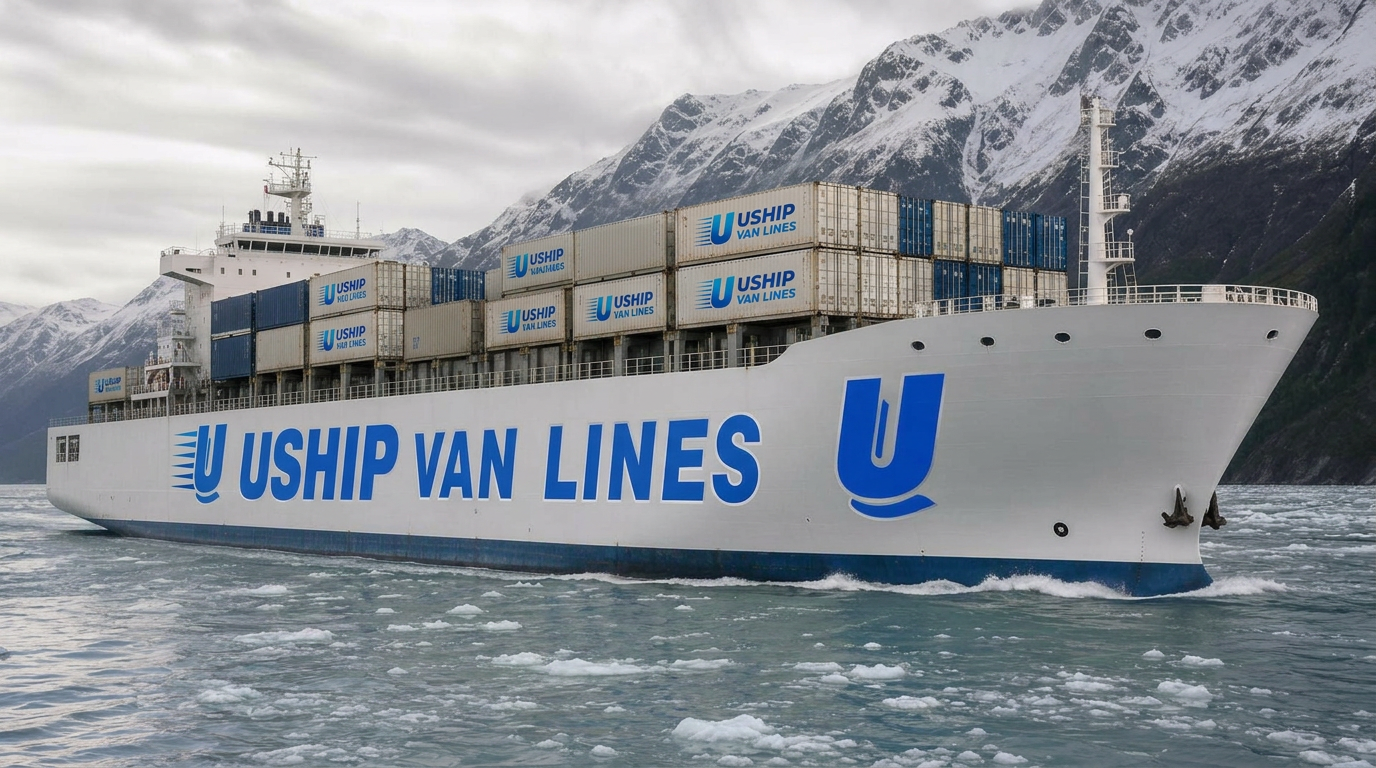
At Tacoma, longshoremen transfer your containerized goods onto commercial barges operated by carriers like Alaska Marine Lines or Lynden Transport. These vessels sail north through the Inside Passage, a 1,400-nautical-mile route threading between coastal islands, crossing the Gulf of Alaska, and docking at the Port of Anchorage roughly 5–7 days later. From Anchorage, local Alaska teams execute final delivery—whether that's a short hop to South Anchorage neighborhoods, a 360-mile overland run to Fairbanks on the Parks Highway, or a bush-plane relay to remote villages.
This multi-modal move requires expert coordination: booking barge slots weeks in advance, customs-style inventory documentation, timing around winter port closures, and managing handoffs between long-haul truckers, marine stevedores, and Alaska-based drivers. It's why choosing a carrier with deep Alaska logistics experience matters far more than the lowest quote.
How the moving process works
How Your Alexandria to Alaska Move Works: Step-by-Step
-
Free Virtual or In-Home Survey (3–4 Weeks Before Move)
A Best Alaska & Hawaii Movers coordinator conducts a detailed inventory via video walkthrough or on-site visit in Alexandria. We note tight-access items (pianos, gun safes), measure furniture for containerization, and identify Alaska-restricted goods (plants, certain foods, flammable liquids). You receive a binding-not-to-exceed estimate and barge sailing schedule. -
Professional Packing & Loading in Alexandria (Move Day)
Our crew arrives at your Virginia home with Alaska-grade packing materials—reinforced cartons, foam padding, shrink-wrap for marine transit. We disassemble beds and tables, protect electronics against humidity, and label every box with both origin and destination addresses. The truck departs for a cross-country haul, typically routing I-66 → I-70 → I-84 or I-80 to reach Washington State. -
Overland Transit to Port of Tacoma (3–5 Days)
Your driver crosses the Great Plains and Rockies, arriving at our Tacoma transfer warehouse. Here, goods are palletized or loaded into 20-foot or 40-foot shipping containers, secured with load bars, and staged for barge pickup. We file Alaska-required manifests and ensure your container meets marine shipping standards. -
Barge Sailing Tacoma → Anchorage (5–7 Days at Sea)
Your container boards a commercial barge on a published sailing schedule (usually 1–2 sailings per week year-round, more in summer). The vessel navigates the protected Inside Passage, then crosses open Gulf of Alaska waters. Barges dock at the Port of Anchorage, where Alaska stevedores offload containers to our local warehouse. -
Alaska Customs-Style Inspection & Clearance (1–2 Days)
While not international customs, Alaska terminals conduct agricultural and hazardous-material inspections. We handle all paperwork, ensure compliance, and clear your shipment for inland release. -
Final Delivery Anywhere in Alaska (1–3 Days)
Our Alaska-based drivers load your goods onto trucks equipped for northern conditions—heated trailers in winter, all-terrain capability for gravel roads. We deliver to Anchorage metro, Mat-Su Valley (Wasilla, Palmer), Kenai Peninsula, Fairbanks, or even bush destinations requiring barge/plane relay. Our team unloads, reassembles furniture, and removes packing debris. -
Post-Delivery Support
We follow up within 48 hours to ensure satisfaction, address any damage claims (rare but covered by valuation coverage), and provide Alaska settling-in resources.
Estimated moving costs
What Does Moving from Alexandria to Alaska Cost?
For a typical 2-bedroom apartment (approximately 5,000–7,000 lbs), expect total costs between $6,800 and $10,500, depending on exact mileage to your Alaska destination, barge timing, and service level. A 3-bedroom house (8,000–12,000 lbs) typically ranges $11,000–$17,500. These figures include overland trucking to Tacoma, marine barge freight, port handling, Alaska delivery, and basic valuation coverage.
Key cost drivers for this route:
- Distance to final Alaska destination: Anchorage deliveries are least expensive; Fairbanks adds $1,200–$2,000 for the 360-mile overland segment; bush or island communities requiring air/barge relay can add $3,000–$8,000.
- Barge slot and timing: Summer peak season (May–September) sees higher demand and faster schedules; winter sailings (November–March) may cost 10–15% less but face weather delays.
- Volume and weight: Alaska barge freight is priced per cubic foot and weight; dense items (books, tools) cost more than bulky-but-light furniture.
- Packing services: Full professional packing in Alexandria adds $1,200–$2,500 but is highly recommended for the marine leg to prevent moisture and vibration damage.
- Vehicle shipping: If you're shipping a car or truck alongside household goods, expect $2,200–$3,500 Tacoma-to-Anchorage via the same barge.
- Storage: Tacoma or Anchorage warehouse storage runs $150–$300/month if you need to delay delivery while house-hunting.
We never guarantee exact prices without a detailed survey—Alexandria's parking permits, building COI requirements, and Alaska's remote-delivery variables require custom quotes. Request your free estimate to receive a transparent, line-item breakdown with no hidden fees.
Estimated transit times
How Long Does Alexandria to Alaska Take?
Door-to-door transit typically requires 14–21 days from Alexandria loading to final Alaska delivery, though seasonal and logistical factors create variability.
Breakdown by leg:
- Alexandria to Tacoma overland: 3–5 days for the 2,800-mile cross-country haul, depending on weather and team-driver availability.
- Tacoma port staging: 1–3 days for container loading, documentation, and waiting for next available barge sailing.
- Barge transit Tacoma → Anchorage: 5–7 days at sea via the Inside Passage and Gulf of Alaska. Sailings depart 1–2 times weekly in winter, up to 3–4 times weekly in summer.
- Anchorage port clearance: 1–2 days for offloading, inspection, and warehouse processing.
- Final Alaska delivery: Same-day for Anchorage metro; 1–2 days for Fairbanks or Kenai Peninsula; 3–7 days for bush relay requiring small plane or coastal barge.
Plan for 3 full weeks to be safe, especially November–March when Gulf storms can delay barges 2–4 days. Summer moves (June–August) enjoy the fastest, most reliable schedules. If you have a firm Alaska start date (military report date, lease beginning), book 6–8 weeks in advance to secure optimal barge slots and avoid rushed overland legs that risk delays.
Regional logistics
Alaska-Specific Logistics: What Makes This Move Unique
Port of Anchorage and Marine Freight
Nearly all Alexandria-to-Alaska household moves route through the Port of Anchorage (some Fairbanks freight uses Whittier, 60 miles south). Your goods travel in weather-sealed shipping containers aboard commercial barges—the same vessels that carry Alaska's groceries, vehicles, and Amazon packages. These aren't cruise ships; they're working cargo vessels on fixed schedules. Missing a sailing means waiting 3–7 days for the next departure.
Alaska-Restricted and Prohibited Items
Alaska enforces strict agricultural and environmental rules. Prohibited: live plants (with rare exceptions for certain houseplants if inspected), firewood, soil, fresh produce, and invasive species. Restricted but allowed with documentation: firearms (legal in Alaska but require proper declaration), ammunition (must be in original packaging, separate from guns), and propane tanks (must be purged and certified). We guide you through Alaska Department of Natural Resources requirements during your survey.
Vehicle Shipping Alongside Household Goods
Most Alexandria-to-Alaska movers ship at least one vehicle. Cars/trucks travel on the same barge as your household container, loaded via roll-on/roll-off (RoRo) or inside enclosed containers. Cost: $2,200–$3,500 Tacoma-to-Anchorage. Vehicles must be clean (Alaska inspects for invasive species), ¼ tank of gas maximum, and personal items removed. If you're driving the Alaska Highway instead, budget 7–10 days and $1,500+ in gas, lodging, and vehicle wear from Virginia.
Last-Mile Delivery Challenges
Alaska's road network is limited: Anchorage, Fairbanks, and the Mat-Su Valley are connected by paved highways, but many communities are off-road. Bush deliveries (Bethel, Kotzebue, Nome, Aleutian Islands) require barge-to-barge transfer or bush-plane relay, adding significant cost and time. Winter ice roads open seasonal access to some Interior villages. If you're moving to a remote site, discuss logistics during your survey—we coordinate with Alaska bush carriers and air freight partners.
Parking and Building Access in Alexandria
Old Town Alexandria's narrow streets, resident-only parking zones, and historic-building restrictions require advance planning. We secure city moving permits, coordinate with condo/apartment management for elevator reservations and certificate-of-insurance (COI) filings, and use smaller shuttle trucks when 53-footers can't access your street. Notify your building 2–3 weeks ahead to avoid last-minute access denials.
Storage Options (Tacoma and Anchorage)
If your Alaska housing isn't ready, we offer climate-controlled warehouse storage at either end. Tacoma storage ($150–$250/month) holds goods before barge sailing; Anchorage storage ($200–$300/month) keeps your shipment secure while you house-hunt or wait for base housing assignment. Both facilities are monitored 24/7 and included in your valuation coverage.
Seasonal considerations
Alaska Seasonal Moving: What Alexandria Families Need to Know
Spring (April–May): Breakup Season
Alaska's "breakup"—when winter ice melts—turns many roads to mud. Barge schedules ramp up after winter slowdowns, but Fairbanks and Interior deliveries may face soft-road delays. Book early for Memorial Day weekend moves; this is when military PCS season begins, filling barge capacity. Alexandria departure weather is pleasant, making packing easier.
Summer (June–August): Peak Season
The busiest and most expensive period. Barge sailings are frequent (3–4/week), transit is fastest, and Alaska roads are fully accessible—even to remote areas like Denali or the Kenai. Expect 15–20% higher costs and book 8+ weeks ahead. Alexandria's heat and humidity require climate-controlled truck storage if packing early. This is ideal for families with school-age children targeting a summer arrival.
Fall (September–October): Shoulder Season Sweet Spot
Costs drop 10–15%, barge frequency remains strong (2–3 sailings/week), and Alaska weather is still mild. Early snow can hit Interior Alaska by late October, but major highways remain open. Alexandria's autumn is comfortable for packing, and you'll avoid summer's competition for moving trucks and barge slots. Excellent value window.
Winter (November–March): Budget Option with Trade-Offs
Lowest rates of the year—sometimes 20% below summer peaks—but slowest, most unpredictable transit. Gulf of Alaska storms can delay barges 3–7 days. Some bush and island destinations become inaccessible until spring. Fairbanks deliveries face –30°F temperatures, requiring heated trucks and careful handling of electronics/liquids. If your timeline is flexible and you're moving to Anchorage/Wasilla, winter offers significant savings. Book by early November to avoid holiday slowdowns.
Year-round tip: Barge schedules publish 6–8 weeks out. Lock your slot as soon as your Alexandria moving date is firm, especially for summer or military PCS cycles.
Why choose Best Alaska & Hawaii Movers
Why Best Alaska & Hawaii Movers for Your Alexandria-to-Alaska Move
-
Alaska Logistics Experts Since Day One: Unlike general long-distance carriers who subcontract Alaska moves, we specialize exclusively in Alaska and Hawaii routes. Our team knows Tacoma port operations, Alaska Marine Lines schedules, and the difference between delivering to Eagle River vs. Eagle (a 500-mile distinction). We've moved hundreds of Virginia families north and understand both ends of this corridor.
-
Transparent, All-Inclusive Pricing: Your quote includes overland trucking, barge freight, port fees, Alaska delivery, and basic valuation—no surprise fuel surcharges or "port handling fees" added later. We explain every line item during your survey and provide written, binding-not-to-exceed estimates that protect you from cost creep.
-
Full-Service Packing for Marine Transit: Alaska barge moves demand specialized packing—moisture barriers for electronics, reinforced cartons for the marine leg, furniture shrink-wrapping against Gulf humidity. Our Virginia crews train specifically for Alaska standards, reducing damage rates far below industry averages.
-
White-Glove Care for Military, Federal & Corporate Relocations: We're experienced with Defense Personal Property System (DPP) military moves, GSA federal relocations, and corporate transfers to Alaska's oil, mining, and tech sectors. We handle all documentation, coordinate with transportation offices, and meet strict delivery windows.
-
Powered by UShip Van Lines' National Network: Our partnership with UShip Van Lines gives you access to vetted carriers, real-time tracking, and claims support backed by a trusted logistics platform—combining local Alaska expertise with enterprise-grade reliability.
-
One Team, Origin to Destination: You'll have a dedicated move coordinator from your Alexandria survey through final Anchorage delivery, ensuring accountability and eliminating the communication gaps common with multi-vendor moves.