
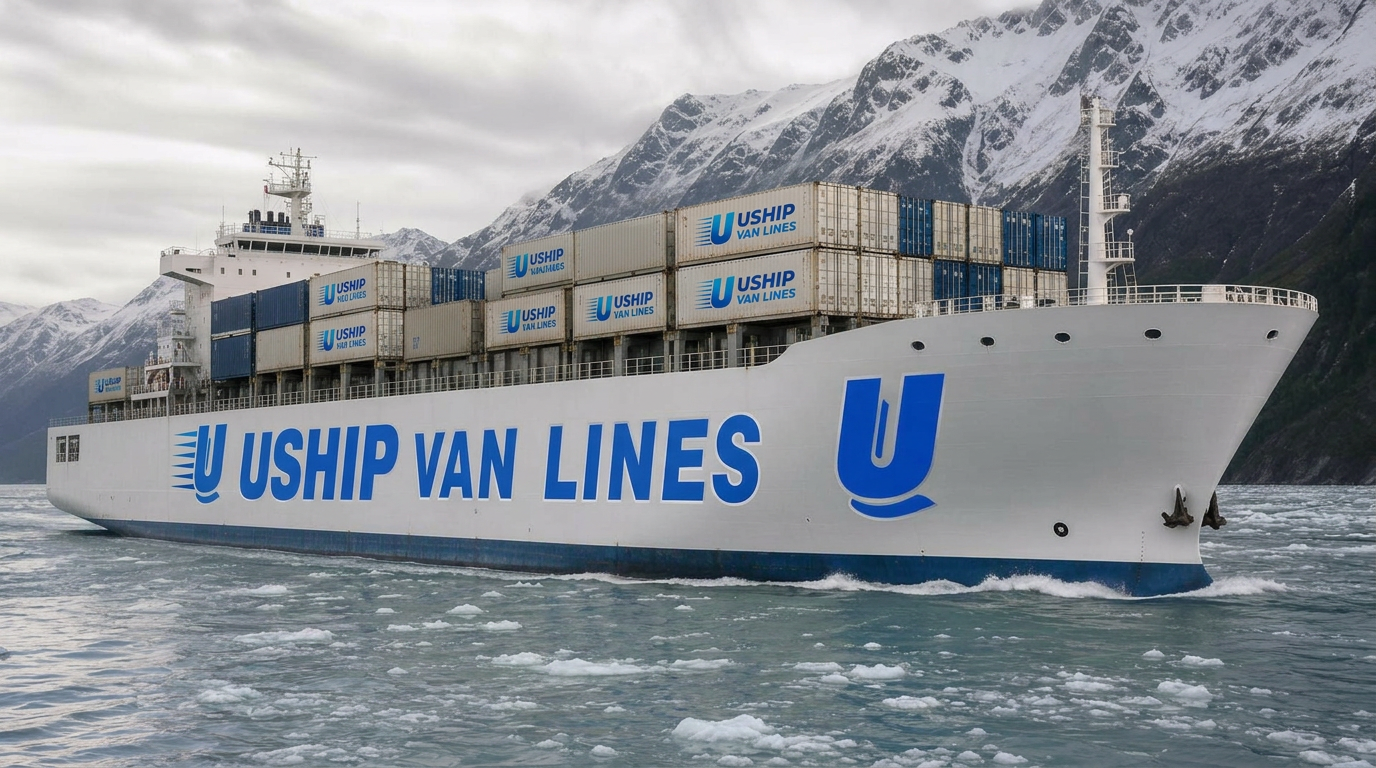
Moving from Alaska to Tucson, AZ
Relocating from Alaska to Tucson means trading midnight sun and ice for desert heat and year-round sunshine—but the logistics of getting your household 2,900+ miles south require careful planning. Your move begins with barge transit from Alaska to the Port of Tacoma, followed by over-the-road trucking through the Pacific Northwest and down to southern Arizona.
Best Alaska & Hawaii Movers, powered by UShip Van Lines, coordinates every leg of this unique journey—from pickup in Anchorage, Fairbanks, Mat-Su, or Kenai through barge scheduling, port handling, and final delivery to your Tucson doorstep. Ready to start planning? Request your free, no-obligation quote and speak with an Alaska moving specialist today.
Route overview
Alaska to Tucson: A Multi-Modal Moving Route
Moving from Alaska to Tucson, AZ is one of the more complex domestic relocations due to Alaska's geographic isolation. There are no continuous roads connecting most Alaskan communities to the Lower 48, so household goods travel by oceangoing barge from ports like Anchorage, Whittier, or Seward to Tacoma, Washington. From there, your shipment is loaded onto a long-haul truck for the 1,450-mile drive through Oregon, California, and into Arizona's Sonoran Desert.
Tucson sits at 2,400 feet elevation in southern Arizona, just 60 miles north of the Mexican border. The climate shift is dramatic: you'll leave behind subarctic winters and summers with 20+ hours of daylight for a desert climate with scorching summers (regularly exceeding 100°F) and mild, pleasant winters. This climate difference affects both your packing strategy and your move timeline—summer barge schedules are busier, but desert heat can stress temperature-sensitive items during the final delivery leg.
Whether you're moving from Anchorage's urban center, the Mat-Su Valley's suburban communities, military housing at Joint Base Elmendorf-Richardson, or more remote areas like Kenai or Fairbanks, Best Alaska & Hawaii Movers tailors the logistics to your specific origin point and household size.
How the moving process works
How Your Alaska-to-Tucson Move Works: Step by Step
-
Free consultation and inventory assessment — We evaluate your household size, special items (vehicles, boats, ATVs), origin location in Alaska, and preferred timeline to build a customized moving plan and quote.
-
Scheduling and barge booking — We reserve space on the next available barge sailing from your nearest Alaska port (Anchorage, Whittier, or Seward) to Tacoma. Barge schedules vary by season; summer sailings are more frequent, while winter may require longer lead times.
-
Packing and local pickup in Alaska — Professional movers arrive at your Alaska home, pack your belongings (if you've selected full-service packing), load everything into a secure container or truck, and transport it to the departure port.
-
Barge transit to Tacoma — Your shipment sails approximately 1,700 nautical miles to the Port of Tacoma. Ocean transit typically takes 5–9 days depending on weather, route, and port call schedules.
-
Port offloading and truck transfer — Once the barge docks in Tacoma, your container is offloaded, cleared through port logistics, and transferred to a long-haul truck for the road portion of your move.
-
Over-the-road transit to Tucson — The truck departs Tacoma and travels I-5 south through Oregon, into California, then east on I-10 through the desert to Tucson—approximately 1,450 miles that typically takes 2–4 days depending on driver schedules and weather.
-
Final delivery and setup — Your belongings arrive at your new Tucson address. Movers unload, place furniture in designated rooms, and remove packing debris, completing your Alaska-to-Arizona journey.
Estimated moving costs
What Does an Alaska-to-Tucson Move Cost?
A typical 2–3 bedroom household moving from Alaska to Tucson generally costs between $6,800 and $12,500, depending on shipment weight, service level, origin/destination specifics, and seasonal demand. This estimate includes barge freight, port handling, over-the-road trucking, basic liability coverage, and standard delivery.
Key cost drivers for this route:
- Volume and weight — Alaska moves are priced primarily by cubic feet and total weight. A studio apartment might fill 400–600 cubic feet; a 3-bedroom home can easily reach 1,200–1,800 cubic feet or more.
- Origin location — Pickups in Anchorage or Mat-Su are more cost-effective than remote areas like Kenai, Homer, or Fairbanks, which require additional last-mile trucking to the port.
- Barge schedule and season — Peak summer moving season (May–September) sees higher demand and tighter barge capacity. Off-season winter moves may offer modest savings but face longer scheduling windows.
- Packing services — Professional packing for a full household adds $800–$2,200 but ensures fragile items and electronics are protected for the multi-leg journey.
- Vehicle shipping — Many Alaskans ship a vehicle alongside household goods. Adding a car or truck to your barge shipment typically adds $1,200–$2,800.
- Storage — If your Tucson home isn't ready, short-term storage in Tacoma or Tucson costs $150–$400/month depending on volume.
We never guarantee prices without a detailed inventory. Every Alaska move is unique, and costs fluctuate with fuel prices, barge carrier rates, and seasonal demand. Request a personalized quote to get an accurate estimate based on your specific situation.
Estimated transit times
How Long Does an Alaska-to-Tucson Move Take?
Door-to-door transit from Alaska to Tucson typically takes 14–28 days, though timelines vary based on barge schedules, port processing, weather, and your specific origin and destination.
Breakdown by leg:
- Alaska pickup to port delivery: 1–3 days (same-day in Anchorage; up to 3 days from Fairbanks, Kenai, or remote areas)
- Barge transit Anchorage/Whittier to Tacoma: 5–9 days on the water, depending on weather and route
- Port offload and truck transfer in Tacoma: 2–5 days for container retrieval, customs (if applicable), and truck loading
- Over-the-road Tacoma to Tucson: 2–4 days via I-5 and I-10
- Final delivery window: Typically scheduled within a 1–3 day window upon arrival in Tucson
Factors that affect timing:
- Barge frequency — Summer sailings may depart weekly; winter schedules can be bi-weekly or monthly, adding waiting time.
- Weather delays — Gulf of Alaska storms, winter snow in the Cascades or Sierra Nevada, and summer monsoons in Arizona can all cause delays.
- Port congestion — Tacoma is a busy commercial port; peak shipping seasons may slow offloading.
- Booking lead time — Last-minute moves (booked less than 3 weeks out) may miss the next available barge and add 1–2 weeks.
For time-sensitive relocations (job starts, school enrollment, lease dates), we recommend booking 4–6 weeks in advance and building buffer time into your plans.
Regional logistics
Alaska-Specific Moving Logistics: What You Need to Know
Ports and barge operations
Most Alaska household goods move through the Port of Anchorage, though shipments from the Kenai Peninsula may use Seward or Whittier. Barge carriers like Totem Ocean Trailer Express (TOTE) and Alaska Marine Lines handle containerized freight to Tacoma. Your belongings are loaded into weatherproof containers at the Alaska port, secured for ocean transit, and offloaded in Tacoma for truck transfer. Unlike air freight, barge shipping is cost-effective for full households but requires advance scheduling.
Vehicle shipping alongside household goods
Many Alaska movers ship a vehicle on the same barge as their household goods. Cars and trucks are driven into secure vehicle compartments or onto roll-on/roll-off (RoRo) vessel decks. Vehicles must be clean (Alaska agriculture inspection), have less than a quarter tank of fuel, and contain no personal items. Best Alaska & Hawaii Movers coordinates combined shipments, saving you the hassle of booking separate auto transport.
Last-mile logistics in Alaska
If you live outside Anchorage—in Mat-Su communities like Wasilla or Palmer, Kenai Peninsula towns, or Fairbanks—your shipment requires additional trucking to reach the port. We arrange pickup from your door and transport to the departure port, factoring this distance into your quote and timeline. Remote or off-road-system locations may require specialized arrangements.
Customs, permits, and paperwork
Alaska-to-Lower 48 moves are domestic shipments and don't require customs clearance (unlike Hawaii moves involving Jones Act documentation). However, you'll need to complete carrier paperwork, inventory lists, and valuation declarations. We handle the logistics and guide you through required documentation.
Delivery in Tucson
Tucson is accessible via I-10 and has straightforward truck access to most neighborhoods, from central areas near the University of Arizona to suburban developments in Oro Valley, Marana, and Sahuarita. Large trucks can navigate most streets, though some gated communities or narrow desert roads may require shuttle trucks for final delivery. We'll confirm access requirements during your consultation.
Seasonal considerations
When to Move from Alaska to Tucson: Seasonal Insights
Summer (May–September): Peak season, best weather, highest demand
Summer is the busiest moving season for Alaska relocations. Barge schedules are most frequent, weather is mildest, and Alaska's brief warm season makes packing and loading easier. However, demand is high—book early to secure space. Tucson's brutal summer heat (June–August regularly exceeds 105°F) means deliveries may occur in extreme temperatures; ensure temperature-sensitive items are packed appropriately.
Fall (October–November): Moderate demand, transitional weather
Early fall offers a sweet spot: barge schedules are still reasonably frequent, Alaska's early snowfall hasn't yet complicated pickups, and Tucson's weather begins cooling into the pleasant 70s–80s. This is an excellent window for cost-conscious movers who can avoid peak summer premiums. Book by late September to ensure availability before winter schedule reductions.
Winter (December–March): Off-peak, limited barge frequency, weather risks
Winter moves from Alaska face the longest timelines due to reduced barge sailings (sometimes monthly rather than weekly). Severe winter weather in Alaska, snow in the Pacific Northwest, and occasional winter storms in northern Arizona can cause delays. However, demand is lower, and pricing may be more competitive. Tucson's winter weather (60s–70s, sunny) is ideal for moving, making this a good choice if you have flexibility and plan well ahead.
Spring (April–May): Shoulder season, increasing schedules
Late spring sees barge schedules ramping back up as Alaska thaws and the summer moving season approaches. Weather is improving in both Alaska and along the truck route. Tucson's spring (March–May) offers perfect moving weather before the intense heat arrives. This is a strategic window for those who want better availability than winter without peak summer prices.
Why choose Best Alaska & Hawaii Movers
Why Choose Best Alaska & Hawaii Movers for Your Alaska-to-Tucson Relocation
-
Alaska-specific expertise — We specialize in the unique logistics of Alaska moves, from barge scheduling and port handling to last-mile coordination in remote areas. This isn't a typical interstate move, and we know every step.
-
Transparent, all-inclusive pricing — Our quotes cover barge freight, port fees, over-the-road trucking, and delivery. No surprise charges, no hidden fees. You'll know what you're paying and what's included before you commit.
-
Powered by UShip Van Lines' network — We leverage UShip Van Lines' vetted carrier network and technology platform to match your shipment with reliable, experienced movers who understand Alaska's challenges.
-
Flexible service options — Whether you need full-service packing, vehicle shipping, short-term storage, or self-pack with professional loading, we tailor services to your budget and timeline.
-
Responsive support from quote to delivery — You'll have a dedicated move coordinator who tracks your shipment through every leg, answers questions, and keeps you informed. We're here when you need us, from first call to final box.