
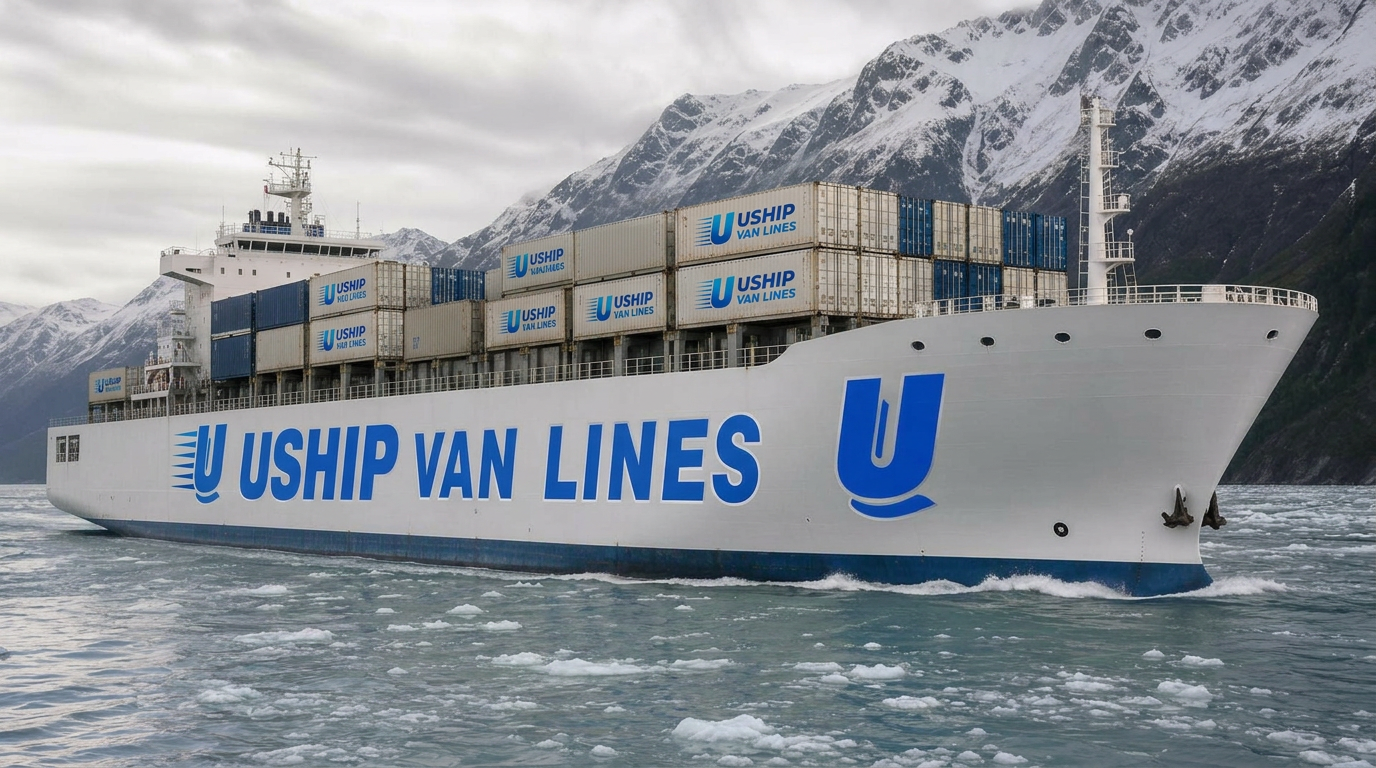
Moving from Alaska to San Francisco, CA
Relocating from Alaska to San Francisco means coordinating a complex multi-modal journey that combines marine freight, overland trucking, and careful planning around weather and seasonal barge schedules. Whether you're leaving Anchorage, Fairbanks, the Mat-Su Valley, Kenai Peninsula, or a remote bush community, your household goods will travel by truck to an Alaska port, sail to the Port of Tacoma or Seattle, then continue overland through the Pacific Northwest and down California's I-5 corridor into the Bay Area.
Best Alaska & Hawaii Movers, powered by UShip Van Lines, specializes in these multi-stage Alaska relocations, managing every handoff—from pickup in Alaska through barge loading, marine transit, West Coast unloading, and final delivery to your San Francisco neighborhood. Request your free, no-obligation quote today to get accurate pricing and a timeline tailored to your specific route and move date.
Route overview
Alaska to San Francisco: Understanding Your Route
The Alaska-to-San Francisco corridor is one of the most logistically complex residential moving routes in North America. Your belongings will be trucked to the Port of Anchorage, Whittier, or occasionally Seward, then loaded onto a southbound barge operated by carriers like Lynden Transport or TOTE Maritime. The marine leg sails to Tacoma or Seattle—typically a 3–5 day voyage depending on weather and routing—where containers are offloaded and transferred to long-haul trucks.
From the Puget Sound, your shipment travels approximately 800 miles south through Washington, Oregon, and Northern California on Interstate 5, then crosses the Bay Bridge or follows US-101 into San Francisco proper. The entire journey covers roughly 2,500 miles when you include both marine and overland segments, with total door-to-door transit normally ranging from 10 to 21 days depending on barge schedules, port dwell time, and final delivery logistics.
San Francisco's steep hills, narrow streets, parking restrictions, and permit requirements add a final-mile complexity that experienced Alaska movers anticipate and plan for, ensuring smooth delivery even in dense neighborhoods like Russian Hill, Nob Hill, the Mission, or Sunset District.
How the moving process works
How Your Alaska to San Francisco Move Works: Step-by-Step
-
Initial Survey and Quote: A moving consultant assesses your inventory—either virtually or in-person if you're in a major Alaska hub—providing a detailed estimate based on cubic footage, weight, special items (vehicles, boats, ATVs), and your preferred service level (consolidated vs. dedicated container).
-
Packing and Preparation: Professional movers arrive at your Alaska residence to pack, wrap, and crate your belongings, paying special attention to fragile items, electronics, and high-value goods that will endure both ocean transit and highway transport. You'll receive a detailed inventory list.
-
Pickup and Alaska Trucking: Your shipment is loaded onto a truck and driven to the designated Alaska port—typically Anchorage for most Mat-Su, Kenai, and Interior routes. If you're in remote areas like Bethel, Kotzebue, or Southeast bush communities, a barge-to-barge connection or bush flight may be required first.
-
Barge Loading and Marine Transit: Your container is loaded aboard a southbound Alaska Marine Highway or commercial freight barge. The vessel departs on a published schedule (typically weekly or bi-weekly) and sails 3–5 days to Tacoma or Seattle, transiting through the Inside Passage or open Gulf of Alaska waters.
-
Port Offload and Overland Transfer: Once docked in Washington, your container is offloaded, cleared through any necessary inspections, and transferred to a long-haul truck. This port dwell and transfer process typically takes 1–3 business days.
-
Long-Haul Trucking to San Francisco: Your shipment travels south on I-5 and connecting highways, a journey of approximately 800–850 miles that takes 2–3 days of driving time, sometimes longer if coordinating with other Bay Area deliveries.
-
Final Delivery and Unload: The moving crew contacts you 24–48 hours before arrival, secures any necessary San Francisco parking permits or building reservations, then delivers and unloads your belongings at your new residence, completing a final walkthrough and inventory check with you on-site.
Every step is tracked and coordinated by Best Alaska & Hawaii Movers, so you have visibility and support from Anchorage to the Golden Gate.
Estimated moving costs
What Does an Alaska to San Francisco Move Cost?
For a typical 2–3 bedroom household (approximately 7,000–12,000 pounds or 800–1,200 cubic feet), expect total moving costs between $6,500 and $14,000. Larger homes, vehicles, or expedited timelines can push costs higher, while smaller studio or 1-bedroom moves in shared containers may start around $4,000–$5,500.
Key cost drivers include:
- Volume and weight: Charged per cubic foot or per hundred pounds (CWT); marine freight is often priced by container space.
- Barge schedule and routing: Peak summer sailings (May–September) command premium rates; shoulder and winter months may offer discounts but fewer sailing options.
- Packing services: Full-service packing typically adds $800–$2,200 depending on home size and fragility of contents.
- Vehicle shipping: Cars, trucks, and ATVs add $1,200–$2,800 per vehicle for roll-on/roll-off barge service.
- Special handling: Pianos, gun safes, artwork, hot tubs, and other oversized/high-value items incur crating and handling fees.
- Access and final-mile: San Francisco's challenging streets may require shuttle trucks or additional labor, adding $300–$800.
- Insurance and valuation: Basic carrier liability is included; full-value replacement coverage costs approximately 1–2% of declared value.
- Storage: If your San Francisco residence isn't ready, warehousing in the Bay Area runs $75–$200/month for a typical household.
We never guarantee prices without a formal survey. Request a detailed quote to receive a binding or binding-not-to-exceed estimate based on your exact inventory and service needs.
Estimated transit times
How Long Does the Alaska to San Francisco Move Take?
Door-to-door transit typically ranges from 10 to 21 days, though 14–16 days is the average for most Anchorage and Mat-Su Valley moves during the busy summer season.
Breakdown by leg:
- Alaska pickup to port delivery: 1–2 days for Anchorage, Wasilla, Palmer, Kenai, Soldotna; 2–4 days for Fairbanks and Interior; up to 7 days for remote bush locations requiring feeder barge or air freight.
- Port dwell and barge loading: 1–3 days, depending on sailing schedule and container availability.
- Marine transit (Alaska to Tacoma/Seattle): 3–5 days on the water; weather, sea state, and routing (Inside Passage vs. open ocean) affect timing.
- Port offload and truck transfer: 1–3 days for customs (if applicable), container stripping, and truck dispatch.
- Overland to San Francisco: 2–3 days driving time, occasionally longer if coordinating multi-stop Bay Area deliveries.
- Final delivery window: Typically scheduled within a 2–3 day window; you'll receive 24–48 hours advance notice.
Winter and off-season moves may take 18–25 days due to reduced barge frequencies, weather delays, and longer port processing times. Early booking (60–90 days ahead) helps secure optimal sailing dates and tighter delivery windows.
Regional logistics
Alaska-Specific Logistics for Your San Francisco Move
Ports and routing: Most Alaska household goods route through the Port of Anchorage or Whittier for southbound barge service. Fairbanks and Interior moves truck to Anchorage (6–8 hours). Southeast Alaska (Juneau, Ketchikan, Sitka) may use Bellingham, WA, as a departure point via Alaska Marine Highway System. Bush communities often require bush plane or feeder barge to a hub port before southbound sailing.
Vehicle shipping: If you're bringing a car, truck, or ATV, roll-on/roll-off (RoRo) barge service is the most cost-effective option. Vehicles must be nearly empty (no household goods inside), operable for loading, and properly documented. Enclosed container service is available for high-value or classic vehicles at premium cost.
Documentation and customs: Alaska-to-Lower 48 moves are domestic and require no customs clearance. However, accurate inventory lists, vehicle titles, and proof of ownership for high-value items are essential. If you have firearms, ensure proper documentation and notify your moving coordinator; some carriers have specific requirements.
Partial loads and consolidation: Full 20-foot or 40-foot container moves offer faster transit and fewer touchpoints, but cost more. Consolidated (shared) shipments are economical for smaller households but may add 3–7 days to your timeline as the carrier coordinates other pickups and deliveries.
Packing for marine transit: Marine freight subjects your belongings to salt air, humidity, temperature swings, and vibration. Professional movers use moisture barriers, extra padding, and sealed crating for wood furniture, electronics, and fragile items. DIY packing is discouraged for Alaska-to-California moves unless you're experienced.
Last-mile in San Francisco: Narrow streets, hills, parking restrictions, and residential permit zones require advance planning. Your moving team will coordinate with building management, secure parking permits, and use shuttle trucks if a full semi cannot access your street. Factor in an extra 1–2 hours for urban final delivery.
Seasonal considerations
Best Time to Move from Alaska to San Francisco
Summer (May–September): Peak moving season with weekly or bi-weekly barge sailings, faster port turnarounds, and the most reliable weather. Roads in Alaska are fully accessible, and San Francisco's mild summer climate makes delivery easy. Expect premium pricing—book 8–12 weeks ahead to secure space and competitive rates.
Fall (October–November): Shoulder season offers moderate pricing and still-frequent sailings. Alaska weather becomes unpredictable; early snows can affect Interior and remote pickups. San Francisco's rainy season begins in late October, but delivery logistics remain straightforward. A good balance of cost and convenience.
Winter (December–March): Off-peak period with reduced barge schedules (often every 10–14 days) and potential weather delays. Gulf of Alaska storms, icy roads in Alaska, and holiday closures can extend timelines by 5–10 days. Pricing is often 15–25% lower, making it attractive for flexible, budget-conscious moves. Remote Alaska locations may be inaccessible until spring thaw.
Spring (April–early May): Transition season as barge operators ramp up for summer. Schedules increase, pricing moderates, and Alaska's breakup season can create road challenges in rural areas. San Francisco weather is excellent. A sweet spot for cost-conscious movers who can handle minor weather uncertainty.
Pro tip: If your move date is flexible, targeting late April, early May, or late September often delivers the best combination of price, schedule frequency, and weather reliability.
Why choose Best Alaska & Hawaii Movers
Why Choose Best Alaska & Hawaii Movers for Your Alaska to San Francisco Relocation
-
Alaska-specific expertise: We understand barge schedules, port logistics, weather windows, and the unique challenges of moving from remote Alaska locations to major West Coast cities—experience that generic long-distance movers simply don't have.
-
Single-source accountability: Powered by UShip Van Lines, we manage every leg of your move—Alaska pickup, barge coordination, port transfers, overland trucking, and San Francisco final delivery—so you have one point of contact and one team responsible for your shipment from start to finish.
-
Transparent, detailed quotes: We provide clear, itemized estimates with no hidden fees, and offer binding-not-to-exceed options so you know your maximum cost upfront, even if actual weight or volume comes in lower than estimated.
-
Flexible scheduling and storage: We work around barge timetables, your closing dates, and San Francisco lease timelines, and offer secure short-term and long-term storage in the Bay Area if your new home isn't ready when your shipment arrives.
-
Full-service or flexible options: Choose full-service packing, loading, and unpacking for a hands-off experience, or opt for partial packing and self-pack options to control costs while still benefiting from our marine freight and logistics expertise.