
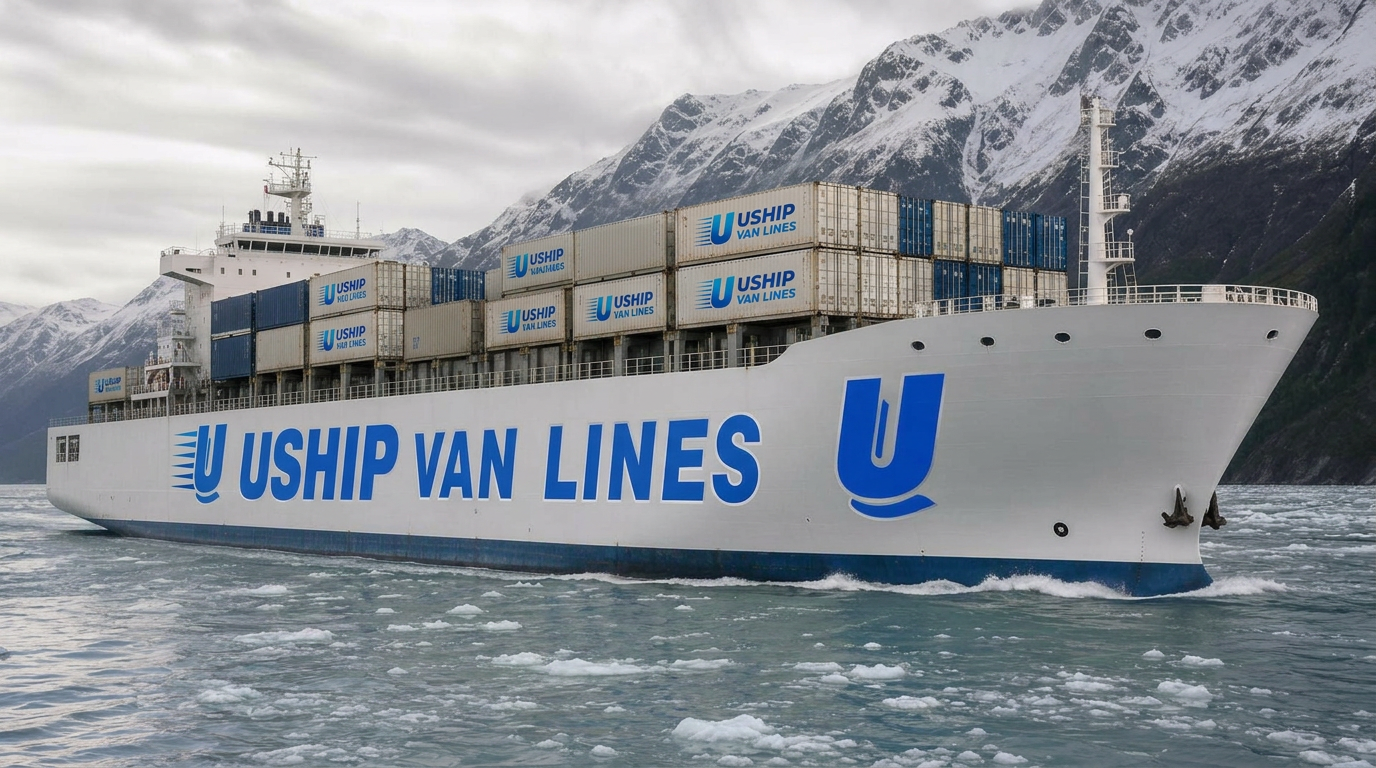
Moving from Alaska to San Antonio, TX
Relocating from Alaska to San Antonio means trading glaciers and midnight sun for Hill Country charm and year-round Tex-Mex. This route combines Alaska barge logistics with cross-country overland transport, typically spanning 4,500+ miles and crossing multiple climate zones. Whether you're leaving Anchorage, Fairbanks, or the Mat-Su Valley, your household goods will travel by barge from Alaska to the Port of Tacoma, then overland through the Pacific Northwest, Mountain West, and into central Texas.
Best Alaska & Hawaii Movers coordinates every leg—from last-mile pickup in remote Alaska communities to final delivery in San Antonio's historic neighborhoods or northern suburbs. Ready to start planning? Request a free, no-obligation quote tailored to your inventory, timeline, and specific origin point in the Last Frontier.
Route overview
Alaska to San Antonio: A Multi-Modal Route
This move requires seamless coordination between marine and ground transport. Your belongings are consolidated at your Alaska residence, trucked to the Port of Anchorage (or other regional ports for Southeast Alaska), then loaded onto commercial barges operated by carriers like Lynden Transport or Alaska Marine Lines. The barge sails to the Port of Tacoma, Washington—a journey of 1,500+ nautical miles that takes 5–7 days depending on weather and sailing schedules.
Once your shipment clears Tacoma, it transfers to a long-haul moving truck for the 2,400-mile overland journey to San Antonio. The route typically follows I-5 south through Washington and Oregon, then I-84 and I-80 east through Idaho and Wyoming, dropping south via I-25 through Colorado and New Mexico before cutting east on I-10 into Texas. Total road transit adds another 4–6 days, making this one of the longest domestic moving corridors in the continental United States.
San Antonio's sprawling metro area—from Stone Oak and Alamo Heights to the Medical Center and Southside—means precise scheduling for final delivery. Narrow historic streets downtown and gated communities in the northern suburbs require advance planning for large moving trucks. Your move coordinator will confirm delivery windows, building restrictions, and any HOA requirements well before your shipment arrives.
How the moving process works
How Your Alaska-to-San Antonio Move Works
-
Initial Survey and Inventory: A virtual or in-person walkthrough catalogs your household goods, noting high-value items, vehicles, and any freight requiring special handling. This determines your container size (20' vs. 40') and overall volume.
-
Alaska Pickup and Consolidation: Professional movers load your belongings at your Alaska residence—whether that's a downtown Anchorage condo, a Fairbanks cabin, or a Mat-Su Valley home. For remote or off-road-system communities, last-mile logistics may involve smaller trucks or cargo planes to reach the nearest port.
-
Port Processing and Barge Loading: Your container is delivered to the Port of Anchorage (or Whittier, Kodiak, or Southeast Alaska ports) and manifested onto the next available barge sailing to Tacoma. Cargo is secured and weatherproofed for the Gulf of Alaska crossing.
-
Marine Transit to Tacoma: The barge voyage takes 5–7 days. Sailings run year-round but are more frequent April–October. Winter schedules may add 1–3 days due to reduced frequency and weather delays.
-
Tacoma Offload and Truck Transfer: Your container is offloaded at the Port of Tacoma, cleared through customs (if applicable for certain goods), and transferred to a long-haul semi-truck operated by UShip Van Lines or a vetted partner carrier.
-
Overland Transit to San Antonio: The truck departs Tacoma for the 2,400-mile journey, typically routed via I-84, I-80, I-25, and I-10. Transit takes 4–6 days depending on weather, mandatory rest stops, and whether your shipment is exclusive or part of a consolidated load.
-
San Antonio Delivery and Unload: Your move coordinator confirms delivery windows 48–72 hours out. The truck arrives at your San Antonio address, unloads your inventory, and crews can provide unpacking services if requested. Final walkthroughs ensure nothing is missing or damaged.
Estimated moving costs
What Does an Alaska-to-San Antonio Move Cost?
For a typical 2–3 bedroom household (8,000–12,000 lbs), expect total costs between $8,500 and $14,000. Studio or 1-bedroom moves may start around $5,500–$7,000, while 4+ bedroom homes with full garages can exceed $18,000. These figures include barge freight, overland trucking, basic insurance, and standard packing materials—but never represent guaranteed quotes.
Key cost drivers include:
- Volume and weight: Alaska barge rates are charged per cubic foot or by container size (20' vs. 40'). Overland pricing adds per-pound and mileage fees.
- Packing services: Full-service packing adds $800–$2,200. DIY packing with professional loading reduces labor costs.
- Vehicle shipping: Cars, trucks, and ATVs ship separately via roll-on/roll-off (RoRo) barge service, typically $1,800–$3,200 per vehicle Anchorage to Tacoma, plus $900–$1,400 Tacoma to San Antonio.
- Seasonality: Peak summer demand (May–August) can increase rates 15–25%. Off-season winter moves (November–March) offer better pricing but longer transit windows.
- Storage: If your San Antonio home isn't ready, warehouse storage in Tacoma or Texas costs $150–$400/month depending on volume.
- Insurance and valuation: Standard coverage is 60¢/lb/article. Full-value protection costs 1–2% of declared inventory value but covers replacement cost.
Request a detailed quote with your exact origin ZIP (or community name for off-road-system locations), destination address, and inventory list for the most accurate estimate.
Estimated transit times
How Long Does the Move Take?
Door-to-door transit from Alaska to San Antonio typically requires 14–21 days, broken down as follows:
- Alaska pickup to port delivery: 1–3 days, depending on distance from Anchorage or Fairbanks to the departure port. Remote communities (Kenai Peninsula, Interior, Southeast) may add 2–5 days for last-mile coordination.
- Barge sailing Anchorage/Whittier to Tacoma: 5–7 days. Winter weather or dock congestion can extend this to 8–10 days.
- Port offload and truck loading in Tacoma: 1–2 days for container processing and transfer to overland carrier.
- Overland transit Tacoma to San Antonio: 4–6 days. Consolidated loads or adverse weather (Rocky Mountain winter storms, ice in New Mexico/West Texas) can add 1–3 days.
- San Antonio delivery window: Final delivery is typically scheduled within a 2–3 day window. High-demand summer months may require flexibility.
Total elapsed time: Plan for 3 weeks from your Alaska pickup date to San Antonio delivery. Off-season or rush moves may be faster; remote origins or winter storms may extend timelines to 25+ days. Your move coordinator provides real-time tracking and updates throughout.
Regional logistics
Alaska-Specific Moving Logistics
Port Access and Scheduling: The Port of Anchorage handles the majority of Alaska household goods exports, with sailings to Tacoma, Seattle, and West Coast ports. Whittier serves as an alternative for Prince William Sound access. Southeast Alaska communities (Juneau, Ketchikan, Sitka) use Alaska Marine Highway feeder service or direct barge from regional ports. Confirm your barge sailing date at booking—schedules are published 4–6 weeks in advance and fill quickly in summer.
Vehicle Shipping: Cars and trucks ship via RoRo barge service, typically on the same vessel as your household goods container. Vehicles must be clean (Alaska agriculture inspection), under 1/4 tank fuel, and free of personal items. Anchorage to Tacoma takes 5–7 days; Tacoma to San Antonio adds 7–10 days via open or enclosed auto transport. Total vehicle cost: $2,700–$4,600 door-to-door.
Customs and Documentation: Alaska-to-Lower 48 moves are domestic and require no customs clearance. However, certain restricted items (firearms, hunting trophies, plant material) need documentation. Your moving company will provide a detailed prohibited/restricted items list and help coordinate any ATF or USDA paperwork.
Last-Mile Challenges: Off-road-system Alaska communities (bush villages, remote homesteads) require air cargo or seasonal ice road access to reach the nearest port. This adds $0.75–$2.00/lb in last-mile freight costs and 3–7 days to your timeline. Coordinate closely with your move planner if you're outside the Anchorage-Fairbanks-Mat-Su road network.
Storage Options: If your barge arrives in Tacoma before your San Antonio home is ready, short-term warehousing is available at the port or in-transit storage facilities. Costs run $150–$300/month for a 1–2 bedroom load. Long-term storage (60+ days) in San Antonio costs $200–$500/month depending on climate control needs.
Seasonal considerations
When to Move: Alaska Barge Schedules and Texas Weather
Spring (March–May): Barge schedules ramp up in April as Gulf of Alaska conditions improve. Early May offers better pricing than peak summer, and San Antonio weather is mild (70s–80s) before brutal summer heat. Ice breakup in Interior Alaska can delay road access to some communities.
Summer (June–August): Peak moving season. Most frequent barge sailings (often 2–3/week from major ports) and fastest overland transit. Expect premium pricing—15–25% higher than off-season. San Antonio temperatures soar to 95–100°F; schedule delivery for early morning if possible. Book 6–8 weeks in advance.
Fall (September–November): Excellent shoulder season. Barge frequency remains strong through October, then tapers in November. Overland routes through the Rockies and High Plains face early snow risk after mid-October. San Antonio fall is pleasant (60s–80s) with lower humidity. Pricing drops 10–15% after Labor Day.
Winter (December–February): Lowest rates but longest timelines. Barge schedules reduce to 1–2 sailings/week, and Gulf of Alaska storms can delay departures. I-80 and I-25 face frequent closures for blizzards in Wyoming and Colorado. San Antonio winters are mild (40s–60s), but occasional freezes complicate delivery scheduling. Best for flexible timelines and budget-conscious moves; allow 25–30 days door-to-door.
Why choose Best Alaska & Hawaii Movers
Why Best Alaska & Hawaii Movers?
- Alaska Expertise: We coordinate barge logistics, port scheduling, and last-mile pickups across Anchorage, Fairbanks, Mat-Su, Kenai, and remote communities—no move is too complex or too far.
- Seamless Multi-Modal Coordination: Our partnership with UShip Van Lines ensures your shipment transitions smoothly from barge to truck, with real-time tracking and proactive communication at every handoff.
- Transparent Pricing: Detailed quotes break down barge fees, overland mileage, packing, insurance, and any ancillary costs—no hidden charges or surprise fees at delivery.
- Flexible Scheduling: We work around barge sailing calendars, Texas delivery constraints, and your personal timeline, offering storage solutions when needed.
- Comprehensive Insurance Options: From basic carrier liability to full-value replacement coverage, we tailor protection to your inventory's value and your peace of mind.