
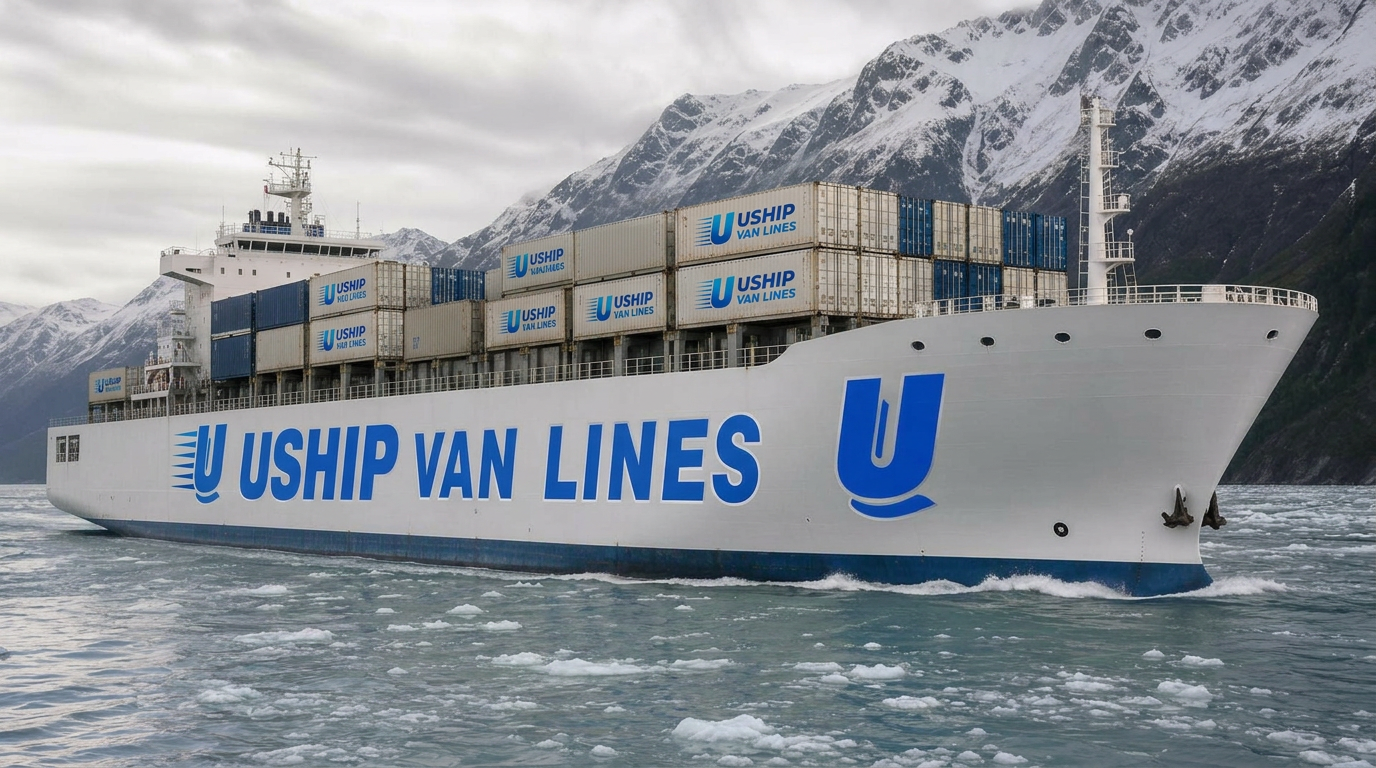
Moving from Alaska to Pharr, TX
Moving from Alaska to Pharr, Texas—the southernmost city in the Rio Grande Valley—requires careful coordination of marine shipping, long-haul overland transport, and customs documentation. Whether you're relocating from Anchorage, Fairbanks, or the Mat-Su Valley, this 4,000+ mile journey combines barge service from Alaska ports to the Lower 48 with ground transport across the Continental U.S. to Pharr's subtropical border region.
Best Alaska & Hawaii Movers, powered by UShip Van Lines, specializes in Alaska-origin long-distance moves. We handle every leg—from last-mile pickup in remote Alaska communities to barge coordination through Tacoma or Seattle, then final overland delivery to Pharr. Ready to plan your move? Request a free, no-obligation quote today and speak with a logistics specialist who understands Alaska shipping.
Route overview
Understanding the Alaska to Pharr, TX Route
This transcontinental move spans approximately 4,200 road miles and crosses multiple climate zones—from subarctic Alaska through the Pacific Northwest, the Mountain West, and finally into South Texas. Your household goods travel by barge from Alaska ports (Anchorage, Whittier, or Southeast Alaska terminals) to Tacoma or Seattle, then transfer to a long-haul truck for the journey through Washington, Oregon, Idaho, Utah, Arizona, New Mexico, and into the Rio Grande Valley.
Pharr sits in Hidalgo County, immediately adjacent to the U.S.-Mexico border and less than 10 miles from Reynosa, Tamaulipas. The city's subtropical climate, booming logistics industry, and growing population make it a popular destination for Alaskans seeking year-round warmth and economic opportunity. Unlike major Texas metros, Pharr's border-town geography means delivery routing typically follows I-10 or I-35 corridors before connecting to US-281 or US-83 south to the Valley.
Because Pharr is located in the extreme southern tip of Texas, expect longer transit times than moves to Dallas, Houston, or San Antonio. The final leg requires careful scheduling to avoid border-area traffic delays, and moving companies should confirm street access for larger trucks in residential neighborhoods near the international crossing.
How the moving process works
How Your Alaska to Pharr Move Works: Step-by-Step
-
Alaska pickup and consolidation. Our team schedules pickup from your home in Anchorage, Fairbanks, Wasilla, Kenai Peninsula, or other Alaska communities. Goods are inventoried, packed if needed, and transported to the nearest Alaska port (typically Anchorage or Whittier). Remote pickups may require barging to a hub port first.
-
Marine freight to the Pacific Northwest. Your shipment loads onto a container barge or RORO vessel bound for Tacoma or Seattle. Alaska Marine Lines, TOTE, and other carriers serve this route weekly during peak season. Voyage time is 4–7 days depending on route and weather.
-
Port clearance and container transfer. Once the barge docks, your container clears U.S. Customs (if applicable), undergoes inspection, and transfers to a trucking terminal. This intermodal handoff typically takes 2–3 business days.
-
Long-haul overland transport. A dedicated or consolidated truck departs Tacoma/Seattle for Pharr. The route follows I-5 south, connects to I-10 or I-40 east, then I-10 or I-35 south into Texas. Drivers route through El Paso or San Antonio before heading to the Rio Grande Valley via US-281 or I-2.
-
Final delivery in Pharr. Your driver contacts you 24–48 hours before arrival to confirm delivery window. Unload occurs at your new Pharr address. Verify all items against the inventory list before signing the bill of lading.
-
Vehicle transport (if applicable). If you're shipping a car or truck, it can ride the same barge in a RORO slot or separate container. Vehicle transport adds 5–10 days to delivery due to separate routing and DMV paperwork at destination.
-
Post-move support. Report any damage within 9 months for insurance claims. Our customer service team remains available for questions about unpacking, debris removal, or storage if your Pharr home isn't ready.
Estimated moving costs
What Does an Alaska to Pharr Move Cost?
A typical 2–3 bedroom household (8,000–12,000 lbs.) moving from Alaska to Pharr generally costs $8,500–$14,000 for full-service door-to-door transport. Studio or 1-bedroom moves (3,000–5,000 lbs.) may range $4,500–$7,500, while larger 4-bedroom homes (15,000+ lbs.) can exceed $16,000–$22,000.
Key cost drivers include:
- Marine freight volume. Barge charges are calculated by container size (20' or 40') or cubic footage. Heavier, bulkier shipments cost more.
- Distance and fuel. The 3,500+ mile overland leg from Tacoma to Pharr incurs substantial fuel and driver time costs, especially with current diesel prices.
- Alaska pickup logistics. Remote or off-road-system communities (bush Alaska, Kenai backcountry, Southeast islands) require float-plane, smaller barge, or ATV shuttle, adding $1,000–$3,000.
- Seasonality. Peak summer moves (May–September) command premium rates due to high Alaska barge demand. Off-season (October–April) may save 15–25%, but winter weather risks increase.
- Packing and crating. Professional packing for fragile items, artwork, or specialty goods adds $800–$2,500. Alaska-specific challenges (mold, moisture, extreme cold) often justify pro packing.
- Vehicle shipping. Adding a car or truck to the same barge costs $1,800–$3,200 Anchorage to Tacoma, plus $1,200–$1,800 Tacoma to Pharr.
- Insurance and valuation. Full-value protection (replacement cost) adds 1–2% of declared shipment value. Basic liability (60¢/lb.) is included but offers minimal coverage.
Important: These figures are estimates based on industry averages. Your actual cost depends on inventory weight, service level, and current market conditions. Best Alaska & Hawaii Movers provides binding or binding-not-to-exceed quotes after a virtual or in-home survey. We never guarantee prices without a detailed assessment.
Estimated transit times
How Long Does an Alaska to Pharr Move Take?
Plan for 18–30 days door-to-door under normal conditions. This timeline breaks down as follows:
- Alaska pickup to port consolidation: 1–3 days (longer for remote areas).
- Barge transit Anchorage/Whittier to Tacoma/Seattle: 4–7 days on the water.
- Port clearance and container transfer: 2–3 days.
- Overland truck Tacoma to Pharr: 7–10 days, accounting for driver hours-of-service limits and potential delays.
- Delivery scheduling buffer: 1–3 days for final appointment coordination.
Variables that extend transit:
- Weather disruptions. Winter storms in the Gulf of Alaska, North Pacific, or Mountain West can delay barges or close mountain passes (Snoqualmie, Donner, Raton).
- Barge schedule gaps. Off-season sailings may run biweekly instead of weekly, adding 7–14 days wait time.
- Consolidation delays. If your shipment shares a container or truck, the carrier waits for a full load, adding 3–7 days.
- Customs or inspection holds. Random agricultural inspections or paperwork issues at Tacoma can add 1–2 days.
- Border-area traffic. Pharr's proximity to international crossings means truck routing must account for CBP checkpoints and occasional I-2/US-281 congestion.
Expedited options: Dedicated truck service (no consolidation) and priority barge booking can trim transit to 14–18 days, but costs increase 30–50%. Discuss fast-track logistics with your move coordinator if timing is critical.
Regional logistics
Alaska-Specific Moving Logistics: What You Need to Know
Ports and barge terminals. Most Alaska household moves ship from the Port of Anchorage (ANC), Whittier (closer for Seward Highway residents), or Southeast Alaska ports (Juneau, Ketchikan for RORO service). If you live in Fairbanks, goods truck to Anchorage for barge loading. Bush communities (Bethel, Kotzebue, Nome) require lightering or air cargo to Anchorage first.
Customs and documentation. Alaska-to-Lower-48 moves are domestic, so formal customs clearance isn't required. However, USDA inspections at West Coast ports check for prohibited plant material (firewood, soil, certain produce). Ensure you don't pack restricted items. Your mover handles bills of lading and port paperwork.
Vehicle shipping integration. If you drive the AlCan Highway yourself, you'll traverse 1,400 miles of Canadian territory (passport required, proper insurance, no firearms). Many Alaskans prefer to barge vehicles alongside household goods. Cars ride RORO or in shared containers. Coordinate DMV registration—Texas requires safety inspection and registration within 30 days of establishing residency.
Weight and cubic footage limits. Barges charge by container size (20' ≈ 1,100 cu.ft., 40' ≈ 2,400 cu.ft.) or by weight for loose freight. Overweight containers incur surcharges. Work with your estimator to right-size your load and avoid surprise fees.
Pharr delivery access. Pharr's older residential neighborhoods near downtown have narrow streets and low-hanging utility lines. Semi-trucks may require shuttle service (smaller truck for final delivery). Confirm street access and HOA rules before your delivery date.
Storage options. If your Pharr home isn't ready, we offer short-term storage in climate-controlled Tacoma or Texas facilities. Alaska goods are already acclimated to extreme temps, but Pharr's humidity (60–80% in summer) means climate control protects wood, electronics, and fabrics during storage.
Packing for moisture and temperature swings. Alaska's cold, dry climate contrasts sharply with Pharr's subtropical heat and humidity. Use silica gel packets for electronics, wrap wooden furniture to prevent warping, and avoid packing perishables. Mattresses and upholstered items should be plastic-wrapped to prevent mold during barge transit.
Seasonal considerations
Best Time to Move from Alaska to Pharr: Seasonal Insights
Summer (May–September): Peak season, maximum barge frequency. Alaska barge lines run weekly sailings, and overland trucking is reliable. However, demand spikes—book 6–8 weeks ahead. Pharr's summer heat (95–105°F) means unloading in early morning is advisable. Cost premiums apply.
Fall (October–November): Shoulder season, moderate pricing. Barge schedules reduce to biweekly by mid-October. Weather in the North Pacific becomes less predictable, but overland routes through the Southwest remain clear. Pharr's fall is warm and pleasant (70–85°F). This window offers cost savings of 10–20%.
Winter (December–March): Off-peak, significant savings but weather risks. Barge sailings may drop to monthly in deep winter. Gulf of Alaska storms, ice in Alaska ports, and snowstorms in the Cascades, Rockies, and Southwest (rare but impactful) can delay shipments by 1–2 weeks. Pharr winters are mild (50–70°F), making delivery conditions ideal. Expect 20–30% cost reductions, but build extra time into your schedule.
Spring (April–early May): Transition period, unpredictable. Barge schedules ramp back up, but Alaska breakup season brings mud, road closures, and port congestion. Overland routes in the Rockies may still see late-season snow. Pharr's spring is warm and dry. Pricing begins to climb toward summer peaks. Book early to secure space.
Pro tip: If you have flexibility, target late September or early October for the best balance of cost, schedule reliability, and weather. Avoid holiday windows (Thanksgiving, Christmas) when trucking capacity tightens nationwide.
Why choose Best Alaska & Hawaii Movers
Why Choose Best Alaska & Hawaii Movers for Your Alaska to Pharr Relocation
-
Alaska logistics expertise. We specialize in Alaska-origin moves, with deep knowledge of barge schedules, Alaska port operations, and last-mile pickup in remote communities. Our team has coordinated moves from Barrow to Ketchikan—and everywhere in between.
-
Single-source accountability. Powered by UShip Van Lines, we manage every leg of your move: Alaska pickup, barge booking, port coordination, overland trucking to Pharr, and final delivery. One point of contact, one bill, no finger-pointing between carriers.
-
Transparent, binding quotes. After a thorough virtual or in-home survey, we provide a binding or binding-not-to-exceed quote. No hidden fees for barge handling, port storage, or long-carry charges—everything is disclosed upfront.
-
Flexible scheduling and storage. We accommodate Alaska's seasonal constraints and Pharr's unique logistics. Need to delay delivery because your Texas home isn't ready? We offer secure storage in Tacoma or Texas at competitive rates.
-
Comprehensive insurance options. From basic liability to full-value replacement coverage, we tailor protection to your needs. Our claims team is responsive and fair, with a track record of resolving issues quickly.
-
Real-time shipment tracking. Receive updates at every milestone—pickup, barge loading, port arrival, truck dispatch, and delivery window. Our customer portal and SMS alerts keep you informed across all 4,000+ miles.