
Moving from Alaska to Norwich, CT
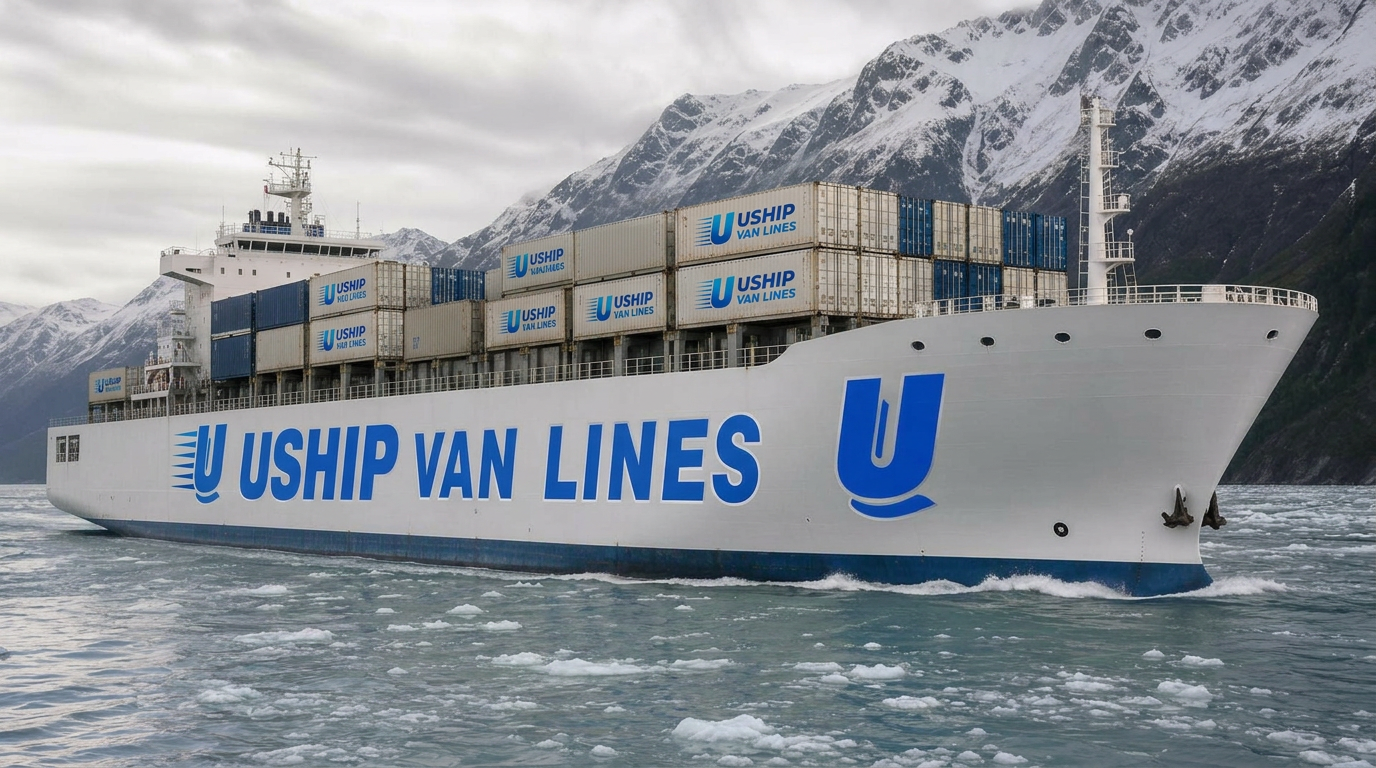
Moving from Alaska to Norwich, CT combines the logistical complexity of cross-continental freight with the unique challenge of barge transport from America's Last Frontier. Whether you're leaving Anchorage, Fairbanks, the Mat-Su Valley, or a more remote Alaskan community, your belongings will travel by truck to the Port of Anchorage, barge to Tacoma, and overland roughly 3,000 miles to southeastern Connecticut's historic Thames River region.
Best Alaska & Hawaii Movers, powered by UShip Van Lines, specializes in this exact route—coordinating marine transport, customs paperwork, and seamless handoffs so your household arrives intact in Norwich. Ready to start planning? Request your free, no-obligation moving quote and speak with a specialist who understands Alaska's unique logistics.
Route overview
Alaska to Norwich, CT: The Route
Norwich sits in New London County, Connecticut, midway between Hartford and the Rhode Island border along the Thames River. It's a smaller city with deep colonial roots, accessible via I-395 and CT Route 2. Your Alaska-origin shipment will travel approximately 3,500–3,800 total miles depending on your Alaska pickup point—starting with local pickup in Alaska, barge transit to the Port of Tacoma, and a cross-country truck haul through the Mountain West, Great Plains, Midwest, and into New England.
Unlike direct interstate moves, this route requires intermodal coordination: Alaska Marine Lines or TOTE Maritime barges sail weekly from Anchorage to Tacoma (roughly 5–7 days at sea), followed by port offload, customs clearance, and a 7–10 day over-the-road leg to Connecticut. The final delivery into Norwich typically involves 26-foot or smaller trucks to navigate the city's historic neighborhoods and narrower residential streets.
Expect total door-to-door transit of 18–28 days under normal conditions, with weather, barge schedules, and port congestion being the primary variables. This is not a quick move, but it is a well-established freight lane managed daily by experienced Alaska specialists.
How the moving process works
How Your Alaska-to-Norwich Move Works
-
Pre-Move Survey & Quote: A Best Alaska & Hawaii Movers coordinator conducts a virtual or in-home walkthrough to inventory your belongings, assess access at both ends, and provide a detailed written estimate covering barge fees, linehaul, labor, and insurance.
-
Alaska Pickup & Containerization: Professional movers load your household into a 20-foot or 40-foot marine container at your Alaska residence. Items are inventoried, padded, and secured for the barge voyage. If you're in a remote bush community, add 1–3 days for truck or barge transport to Anchorage.
-
Barge Transit to Tacoma: Your sealed container boards an Alaska Marine Lines or TOTE vessel in Anchorage, sailing south through the Inside Passage and Gulf of Alaska. Transit takes 5–7 days; containers remain sealed and climate-protected throughout.
-
Port Offload & Customs Clearance: At the Port of Tacoma, your container is offloaded, inspected by USDA (if applicable), and customs paperwork is processed. This typically requires 1–2 business days, though agricultural inspections can add time if you've packed plants or untreated wood.
-
Cross-Country Truck Haul: Once cleared, your container is loaded onto a flatbed or transferred to a moving van for the overland leg. The driver follows I-90 east through Washington, Idaho, Montana, South Dakota, and Wisconsin, then I-80/I-90 through Illinois, Indiana, Ohio, Pennsylvania, New York, and into Connecticut via I-84 or I-91.
-
Final Delivery in Norwich: Your shipment arrives in Norwich, where movers unload, unpack (if requested), and place furniture. Notify your building or HOA in advance if parking permits or elevator reservations are required.
-
Post-Move Follow-Up: Inspect all items against your inventory sheet, document any damage immediately, and file claims within the carrier's window (typically 9 months for loss, 120 days for damage).
Estimated moving costs
What Does an Alaska-to-Norwich Move Cost?
For a typical 2–3 bedroom household (8,000–12,000 lbs), expect to invest $6,800–$11,500 for full-service door-to-door moving. Studio or 1-bedroom loads may run $4,200–$6,000, while 4+ bedroom homes can exceed $13,000–$18,000.
Key cost drivers include:
- Barge freight: Marine container rates from Anchorage to Tacoma fluctuate seasonally; summer peak (May–September) commands premiums of 15–25% over winter sailings.
- Weight and volume: Overland truck charges are typically calculated per hundredweight (CWT) or cubic foot. Heavy items like pianos, safes, and workshop equipment add surcharges.
- Access and labor: Multi-story walk-ups, long carries, or unpaved driveways in Alaska increase pickup labor. In Norwich, narrow colonial-era streets or historic district parking restrictions may require shuttle trucks.
- Packing services: Professional packing of a 3-bedroom home adds $800–$1,800; fragile-only packing runs $300–$600.
- Insurance: Basic released-value coverage (60¢/lb) is included; full-value replacement protection costs roughly 1–2% of declared shipment value.
- Storage: If your Norwich residence isn't ready, warehouse storage near Tacoma or in Connecticut runs $150–$400/month for a typical household.
- Vehicle shipping: Transporting a car on the same barge adds $1,200–$2,200; motorcycles or ATVs cost $600–$1,000.
These are industry-standard ranges, not guaranteed quotes. Every move is priced individually based on actual weight, services, and timing. Request a binding or binding-not-to-exceed estimate to lock your rate.
Estimated transit times
How Long Does Alaska to Norwich Take?
Plan for 18–28 days door-to-door under typical conditions:
- Alaska pickup to port: 1 day (Anchorage metro); 2–4 days for Fairbanks, Mat-Su, Kenai, or bush locations requiring feeder barge or truck.
- Barge sailing: 5–7 days Anchorage to Tacoma (weekly sailings; confirm schedule with your coordinator).
- Port offload & clearance: 1–2 business days (USDA inspections for restricted items can add 1–3 days).
- Overland truck haul: 7–10 days Tacoma to Norwich, depending on load consolidation and driver hours-of-service. Dedicated service shortens this to 5–7 days at higher cost.
- Delivery window: Carriers typically provide a 2–3 day delivery window; expect a 24-hour advance call.
Delays to anticipate:
- Winter weather: November–March storms in Alaska, the Rockies, or the Northeast can postpone barge sailings or slow truck transit by 2–5 days.
- Peak-season congestion: May–August barge space books solid; late reservations may push your sailing by one week.
- Port strikes or equipment shortages: Tacoma longshore labor disputes or chassis shortages have historically delayed offloads by 3–7 days.
Book 6–8 weeks ahead for summer moves, 4–6 weeks for off-peak, to secure your preferred dates and avoid rush fees.
Regional logistics
Alaska-Specific Logistics: What You Must Know
Port of Anchorage Operations: Most Alaska barge freight departs from the Port of Anchorage's containerized terminals. Cutoff for container delivery is typically 3–5 days before vessel sailing; your moving company coordinates this, but late pickups can cause you to miss a sailing and wait another week.
Marine Container Types: Standard 20-foot containers hold roughly 1,200–1,500 cubic feet (a small 1–2 bedroom apartment); 40-foot containers hold 2,400–3,000 cubic feet (a 3–4 bedroom home). Shared/consolidated loads are possible if your volume is under 1,000 cubic feet, but dedicated containers offer more security and fewer handoffs.
USDA and Customs: Alaska is part of the U.S., so there are no international customs duties. However, the USDA inspects shipments for invasive species, untreated wood, soil, and certain plants. Prohibited items include houseplants, fresh produce, firewood, and uncleaned gardening tools. Movers will provide a compliance checklist; non-compliance can trigger container detention and fumigation fees ($300–$800).
Vehicle Transport: Shipping a car on the same barge is economical and convenient. Vehicles must be clean (no mud, minimal personal items), operable (or declared inoperable with a surcharge), and have less than ¼ tank of fuel. Alaska Marine Lines and TOTE both offer roll-on/roll-off (RoRo) auto service. Drive-away services (hiring a driver to road-trip your car) are rare for this distance and generally cost more than barge shipping.
Last-Mile Access in Alaska: If you're in Fairbanks, Wasilla, or Kenai, add 1–2 days for truck pickup to Anchorage. Bush communities (Bethel, Nome, Kodiak, Southeast Alaska) require feeder barge or air freight to connect with the main Anchorage sailing—plan an extra 5–10 days and higher costs.
Connecticut Delivery Considerations: Norwich's historic downtown and older neighborhoods have narrow streets, low-hanging trees, and limited truck parking. Confirm your mover will use a truck appropriately sized for your street (26-foot box trucks are standard for residential). If you live in a condo or apartment complex, reserve elevators and loading zones 2–3 weeks in advance and provide your moving company with building contact info and access codes.
Seasonal considerations
Best Time to Move from Alaska to Connecticut
Spring (April–May): Barge schedules ramp up as winter sea ice recedes. Rates remain moderate, and you'll avoid summer peak pricing. Breakup season in Alaska can make rural roads challenging; coordinate pickup timing with your mover. Connecticut weather is pleasant for unloading.
Summer (June–August): Peak moving season. Barge space and truck capacity are tight; book 8+ weeks ahead. Expect 15–25% higher rates but the most frequent sailing schedules and fastest transit. Ideal if you have school-age children or a fixed job start date. Connecticut summers are warm and humid—plan delivery timing to avoid extreme heat if you have temperature-sensitive items.
Fall (September–October): Excellent shoulder season. Rates drop 10–20% after Labor Day, and capacity opens up. Barge sailings continue through October; truck drivers face fewer weather delays. Early snow in Alaska's Interior (Fairbanks, Delta Junction) can arrive by late September, so schedule pickup before mid-October if you're in a high-elevation or remote area.
Winter (November–March): Lowest rates of the year—discounts of 20–30% are common. However, barge schedules reduce to biweekly or less, and winter storms in Alaska and the Lower 48 introduce transit delays. Pack extra essentials in your car or checked luggage, as delivery windows stretch. If you're flexible and cost-conscious, winter moves offer the best value. Avoid holiday weeks (Thanksgiving, Christmas, New Year's) when port operations slow.
Bottom line: For the best balance of price, reliability, and speed, target late April–May or September–early October.
Why choose Best Alaska & Hawaii Movers
Why Choose Best Alaska & Hawaii Movers for Your Alaska-to-Norwich Move
- Alaska & Hawaii Specialists: Unlike general long-distance movers, we operate this route daily. We have standing contracts with Alaska Marine Lines and TOTE, priority offload slots in Tacoma, and dedicated truck partners who know the I-90 corridor inside and out.
- Transparent, Binding Estimates: You'll receive a detailed written quote breaking down barge fees, linehaul, labor, packing, and insurance—no hidden fuel surcharges or surprise port fees at delivery.
- Single-Source Accountability: One coordinator manages your entire move from Alaska pickup through Connecticut delivery. You won't be handed off between a local crew, a barge broker, and a truck dispatcher—we control the full chain of custody.
- Full-Value Insurance Options: We offer multiple coverage tiers, including full-replacement-value protection underwritten by licensed marine and moving insurers. Your belongings are covered on the barge, in port, and over the road.
- Flexible Scheduling & Storage: Need to move out of your Alaska home before your Norwich residence is ready? We offer short- and long-term storage in climate-controlled warehouses near Tacoma and in Connecticut, with transparent monthly rates and easy release when you're ready.
- Proven Track Record: Powered by UShip Van Lines, we've coordinated thousands of Alaska moves since our founding, earning repeat business and referrals from military families, retirees, and remote workers relocating to the Lower 48.