
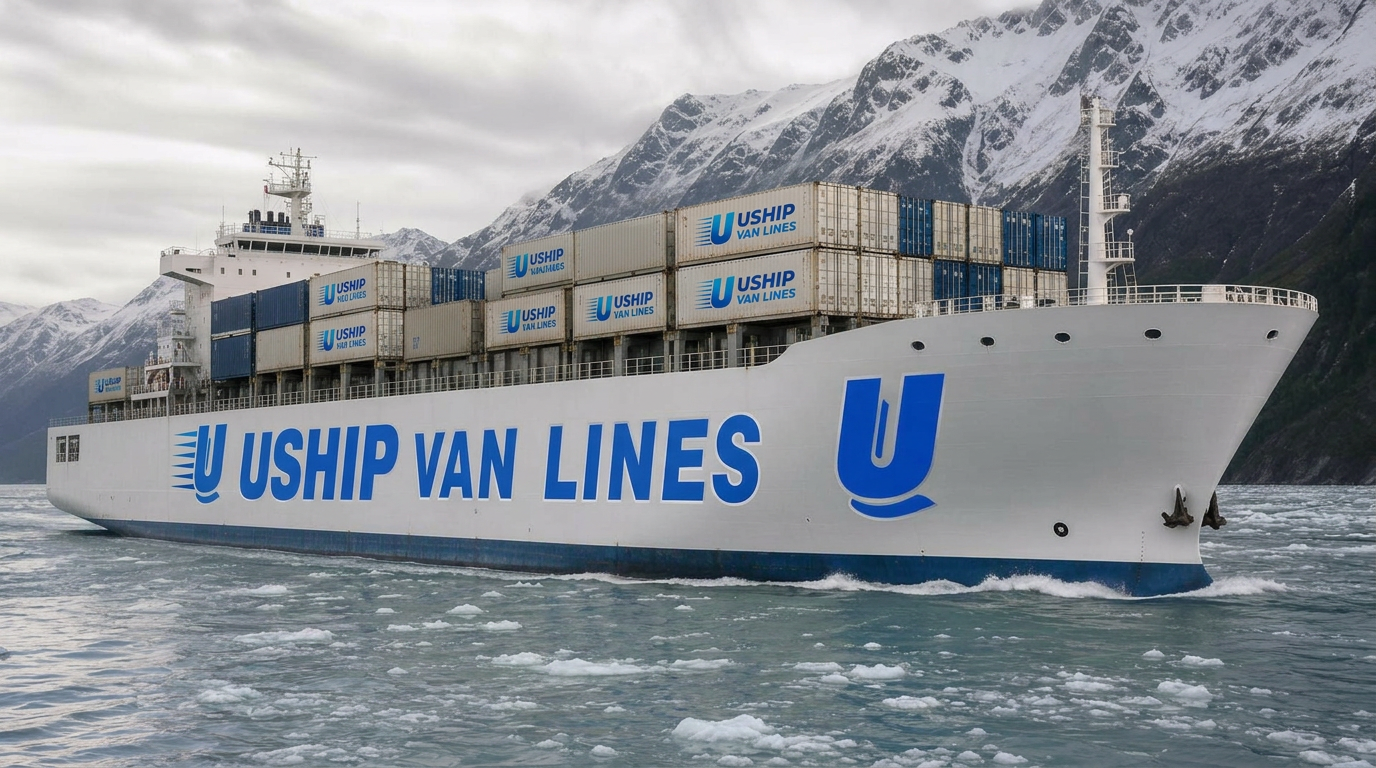
Moving from Alaska to Chandler, AZ
Relocating from Alaska to Chandler, Arizona, means coordinating a complex multi-modal move that spans more than 2,800 miles. Whether you're leaving Anchorage, Fairbanks, the Mat-Su Valley, or the Kenai Peninsula, your household goods will travel by barge to the Port of Tacoma, then overland through the Pacific Northwest and Southwest corridors to Arizona's fast-growing East Valley tech hub.
Best Alaska & Hawaii Movers, powered by UShip Van Lines, specializes in seamless Alaska-to-Lower-48 relocations. Our vetted carrier network handles barge logistics, customs paperwork, vehicle shipping, and final delivery to your Chandler doorstep. Request your free quote today and compare competitive rates tailored to your inventory and timeline.
Route overview
Alaska to Chandler, AZ Route Overview
The Alaska-to-Chandler move breaks into three distinct legs. First, your belongings are loaded into a shipping container or consolidated freight at your Alaska origin—whether that's a Mat-Su suburban home, a downtown Anchorage apartment, or a remote Kenai property requiring bush-route pickup. That container travels by truck to the Port of Anchorage or Whittier, then boards a southbound barge to Tacoma, Washington—a voyage that typically takes 5–7 days depending on weather and the carrier's sailing schedule.
Once the barge docks in Tacoma, your container clears customs (Alaska is a U.S. state, but Hawaii and Alaska shipments still go through maritime documentation), then transfers to an over-the-road semi-trailer. The overland leg covers approximately 1,450 miles southbound through Oregon, into California along I-5, then eastward across I-10 or I-8 into the Phoenix metropolitan area. That highway stretch usually takes 2–3 days of active transit, not counting terminal holds or transfer windows.
Chandler sits in the Southeast Valley, just off the Loop 101 and Loop 202 freeways, making final delivery straightforward for long-haul carriers. Your driver will coordinate a delivery appointment, navigate Chandler's master-planned communities or industrial-access neighborhoods, and unload directly into your new residence. Total door-to-door transit averages 10–18 days, with seasonal and scheduling variables that we'll detail below.
How the moving process works
Step-by-Step Moving Process: Alaska to Chandler, AZ
-
Request a detailed quote and inventory survey. Contact Best Alaska & Hawaii Movers for a free, no-obligation estimate. We'll ask about your home size (studio to 4+ BR), special items (vehicles, boats, ATVs), and preferred moving dates. Alaska moves require more lead time than Lower-48 relocations—book 4–8 weeks ahead for summer peak, 6–10 weeks for off-season flexibility.
-
Choose your shipping method: full container (FCL) or less-than-container-load (LCL). A 20-foot container fits a typical 2–3 bedroom household; a 40-foot container accommodates 3–5 bedrooms or includes a vehicle. If you're moving a smaller apartment or condo, LCL consolidates your goods with other shipments to reduce costs, though transit times may be slightly longer.
-
Schedule your Alaska pickup and pack/load. Our Alaska partner crews are experienced with stairwell carries, winter weather precautions, and remote-access properties. Professional packing services are highly recommended—barge shipments face rougher handling than overland moves. All fragile items should be crated or double-boxed; electronics and artwork benefit from custom padding.
-
Barge leg: Anchorage/Whittier to Tacoma. Your container is trucked to the port, loaded onto the next available sailing, and voyages south. You'll receive a bill of lading and tracking number. Sailing schedules are weekly in summer, less frequent in winter. Weather delays—storms in the Gulf of Alaska—can add 1–3 days.
-
Tacoma port transfer and customs clearance. Once docked, the container clears maritime documentation (usually 1–2 business days) and transfers to a bonded warehouse or directly onto an overland trailer. This is the most common delay point; plan for 2–4 days of terminal dwell time.
-
Overland transit to Chandler. Your container rides a semi-trailer down the West Coast, across Southern California, and into Arizona. Drivers follow Hours of Service regulations, so expect 2–3 days of highway time plus potential overnight stops. Real-time GPS tracking is standard.
-
Final delivery and unload in Chandler. Your delivery crew will confirm a 2–4 hour window, navigate to your new address (whether that's a single-family home in Ocotillo, a townhome near Chandler Fashion Center, or an apartment complex off Alma School Road), and unload all items. Inspect for damage immediately and note any issues on the delivery receipt.
Pro tip: Ship your vehicle separately if you need it sooner—auto transport via the Alaska Highway or roll-on/roll-off barge can sometimes arrive a few days ahead of household goods.
Estimated moving costs
Cost Estimate: Alaska to Chandler, AZ
A full-service move from Alaska to Chandler typically ranges $6,500–$14,000 for a 2–3 bedroom household, depending on volume, services, and season. Studio or 1-bedroom apartment moves can start around $4,000–$5,500 for LCL consolidation. Larger homes (4+ BR) or those including vehicle shipping can exceed $16,000–$20,000.
Key cost drivers include:
- Distance and mode: The 2,800+ mile journey combines barge and overland freight, each billed separately. Barge costs are per container or per cubic foot for LCL; overland is per mile and per hundredweight.
- Container type and exclusivity: A dedicated 20-foot container costs more than shared LCL space but offers faster transit and less handling. A 40-foot container (or high-cube variant) costs 40–60% more than a 20-foot.
- Season and fuel surcharges: Summer (May–September) is peak Alaska moving season; expect 15–25% premiums. Winter sailings are less frequent but may offer lower base rates. Fuel surcharges fluctuate with diesel prices.
- Packing and specialty services: Professional full-pack services add $800–$2,200. Crating for artwork, pianos, or glass costs $150–$600 per item. Vehicle shipping (car, truck, or ATV) adds $1,200–$2,500 depending on size and whether it rides in your container or ships separately.
- Remote Alaska pickup: Homes outside Anchorage, Fairbanks, or the main road system incur shuttle fees. Mat-Su Valley, Eagle River, and Kenai Peninsula addresses may add $200–$800; true bush locations requiring barge or air freight pre-positioning can add $1,500+.
- Insurance and valuation: Basic carrier liability is 60 cents per pound per article. Full-value replacement insurance (recommended for Alaska moves) costs 1–2% of declared shipment value.
Important: These are industry averages, not guaranteed quotes. Your final price depends on a detailed inventory and current market conditions. Best Alaska & Hawaii Movers provides transparent, itemized estimates—request yours free today.
Estimated transit times
Transit Time: Alaska to Chandler, AZ
Door-to-door delivery from Alaska to Chandler typically takes 10–18 days, broken down as follows:
- Alaska pickup to port (Day 0–2): Local crew loads your container, then trucks it to the Port of Anchorage, Whittier, or occasionally Seward. Same-day port drop-off is possible in Anchorage; remote areas may require 1–2 days of overland haul.
- Port dwell and sailing schedule (Day 1–3): Containers await the next scheduled barge departure. Weekly sailings in summer mean minimal wait; bi-weekly or monthly winter schedules can add 7–14 days.
- Barge voyage to Tacoma (Day 5–7): The marine leg averages 5–7 days in calm seas. Fall and winter storms in the Gulf of Alaska can extend this to 8–10 days. Carriers prioritize safety over speed.
- Tacoma customs and transfer (Day 2–4): Port unloading, documentation review, and trailer transfer usually take 2–3 business days. Busy summer port congestion can stretch this to 4–5 days.
- Overland transit Tacoma to Chandler (Day 2–3): A direct semi-trailer haul covers 1,450 miles in 2–3 days, including mandatory driver rest breaks. No intermediate terminals if you book exclusive container service.
- Delivery appointment and unload (Day 1): Final delivery windows are typically 8 AM–6 PM. Crews call 24 hours ahead to confirm. Unload takes 2–4 hours depending on home size and stair access.
Expedited service: For an additional fee, some carriers offer priority barge boarding and direct overland routing, shaving 3–5 days off the total window. This is rarely necessary unless coordinating a job start date or school enrollment.
Delays to anticipate: Weather is the #1 variable. Late-fall and winter storms can postpone barge departures or slow highway travel through mountain passes. Holiday weekends (Memorial Day, Independence Day, Labor Day) add 1–2 days due to reduced port and warehouse staffing. Always build 3–5 days of buffer into your Chandler move-in date.
Regional logistics
Alaska-Specific Logistics and Considerations
Port and barge operations: Most Alaska household goods ship via the Port of Anchorage or Whittier. Anchorage is the primary hub, with regular container service to Tacoma and Seattle. Whittier serves as an alternative, especially for South-Central Alaska origins. Ports in Seward or Kodiak handle specialty freight but are less common for household moves. Your mover coordinates all port scheduling, drayage (truck-to-dock transport), and marine bills of lading. You don't need to visit the port yourself.
Vehicle shipping options: If you're bringing a car, truck, or ATV, you have two choices. First, roll it into your 40-foot container alongside household goods—cost-effective but means your vehicle arrives with your furniture (10–18 days). Second, ship it separately via roll-on/roll-off (RORO) barge or drive it down the Alaska Highway. RORO to Tacoma takes 7–10 days and costs $1,200–$1,800 per vehicle. Driving the Alaska Highway (2,200 miles Anchorage to Seattle) takes 4–6 days and incurs fuel, lodging, and wear—budget $800–$1,500 in expenses plus your time. Many clients fly to Chandler and have their vehicle shipped.
Customs and documentation: Even though Alaska is a U.S. state, maritime shipments go through Customs and Border Protection agricultural and documentation checks upon arrival in Tacoma. This is routine—your mover handles the paperwork. Ensure all items are clearly labeled and itemized on your inventory list. Prohibited items include firearms (must ship separately via FFL dealers), hazardous materials (propane, paint, aerosols), and certain plants or soil. Arizona is strict about invasive species; declare any outdoor equipment, potted plants, or firewood.
Remote and bush Alaska pickups: If you live off the main road network—on an island, in a fly-in community, or a remote Kenai Peninsula location—your move requires additional coordination. Small bush communities (e.g., Bethel, Dillingham, Nome) may need pre-positioning via small barge or air freight to a road-accessible hub like Anchorage or Fairbanks. This adds $1,000–$3,000+ in shuttle costs and 3–7 days of transit time. Discuss logistics early with your move coordinator.
Insurance and claims: Alaska moves face rougher handling due to barge loading, ocean swells, and long transit. Purchase full-value replacement insurance (not just basic carrier liability). Document pre-existing damage with photos before packing. File any damage claims within 24 hours of delivery while the crew is still on-site. Best Alaska & Hawaii Movers partners with reputable insurers who understand Alaska-specific risks.
Storage options: If your Chandler home isn't ready or you need to stage items, we offer short- and long-term storage in climate-controlled Tacoma warehouses or Arizona facilities. Storage-in-transit (SIT) costs $100–$300/month for a typical household. Items remain in your sealed container for security.
Seasonal considerations
Seasonal Considerations for Alaska to Chandler Moves
Summer (May–September): Peak Alaska moving season coincides with the midnight sun, dry weather, and school breaks. Barge sailings are most frequent (weekly or twice-weekly), and road conditions are ideal. Expect premium pricing—demand from military PCS moves, university relocations, and seasonal workers drives rates up 15–25%. Book 6–8 weeks ahead. Chandler's receiving end is scorching (110°F+ in July/August), so plan midday unloads with hydration breaks for crews.
Fall (October–November): Shoulder season offers a sweet spot: lower rates (10–15% below summer peak), reliable weather in early fall, and less competition for barge space. By late October, Gulf of Alaska storms increase, and barge schedules thin to bi-weekly. Highway conditions are still good, though early snows can hit mountain passes in the Yukon and British Columbia if your route involves the Alaska Highway for vehicle transport. Chandler weather is pleasant—ideal for settling in.
Winter (December–March): Off-peak pricing is the lowest of the year, sometimes 20–30% below summer. However, barge sailings become monthly in deep winter, and weather delays are common—expect 7–14 extra days for storms, ice, and reduced port operations. Alaska pickups face challenges: icy driveways, limited daylight (4–6 hours in Anchorage in December), and frozen ground that complicates heavy-item moves. If you're flexible and can tolerate uncertainty, winter moves save money. Chandler's mild winter is a non-issue for delivery.
Spring (April–May): Transition period as Alaska thaws and barge schedules ramp up. Early April can still see winter weather in Alaska; by May, conditions normalize. Rates begin climbing toward summer peaks in late May. This is a good window for budget-conscious movers who want near-summer reliability without full peak pricing. Chandler spring weather is perfect—70s and 80s, low humidity.
Pro tip: Avoid moving during Alaska's "breakup" season (late March to early April) when roads turn to mud and rural access becomes difficult. Also avoid Chandler's monsoon season (late July–early September) for delivery if possible—afternoon thunderstorms can delay truck access and make unloading uncomfortable.
Why choose Best Alaska & Hawaii Movers
Why Choose Best Alaska & Hawaii Movers (Powered by UShip Van Lines)
-
Alaska-specialized expertise: We focus exclusively on Alaska and Hawaii relocations, so we understand the barge schedules, port logistics, weather variables, and paperwork that general moving companies miss. Our carrier network includes Alaska-based crews and Tacoma port specialists who handle your shipment as a routine, not a one-off experiment.
-
Transparent pricing and no hidden fees: Request a free quote and receive an itemized estimate covering barge, overland, fuel surcharges, and optional services. We explain every line item. No surprise fees at delivery. Compare multiple carrier bids through our platform to find the best value for your budget.
-
End-to-end coordination: You get a single point of contact from quote to delivery. We manage the Alaska pickup crew, barge booking, Tacoma transfer, overland carrier, and Chandler delivery team. You don't juggle multiple vendors or track down lost containers—we do that.
-
Real-time tracking and proactive communication: Monitor your shipment's progress online. We send alerts when your container boards the barge, clears Tacoma, departs for Arizona, and is out for final delivery. If weather or port congestion causes delays, we notify you immediately and adjust plans.
-
Vetted, licensed carriers: Every partner in our network is FMCSA-licensed, insured, and rated for long-haul interstate and marine moves. UShip Van Lines performs background checks and monitors performance. We don't broker to the lowest bidder—we match you with reliable professionals.
-
Customer support 7 days a week: Alaska moves span time zones and weekends. Our support team is available by phone, email, and chat to answer questions, update delivery windows, and resolve issues in real time.