
Moving from Alaska to Florida
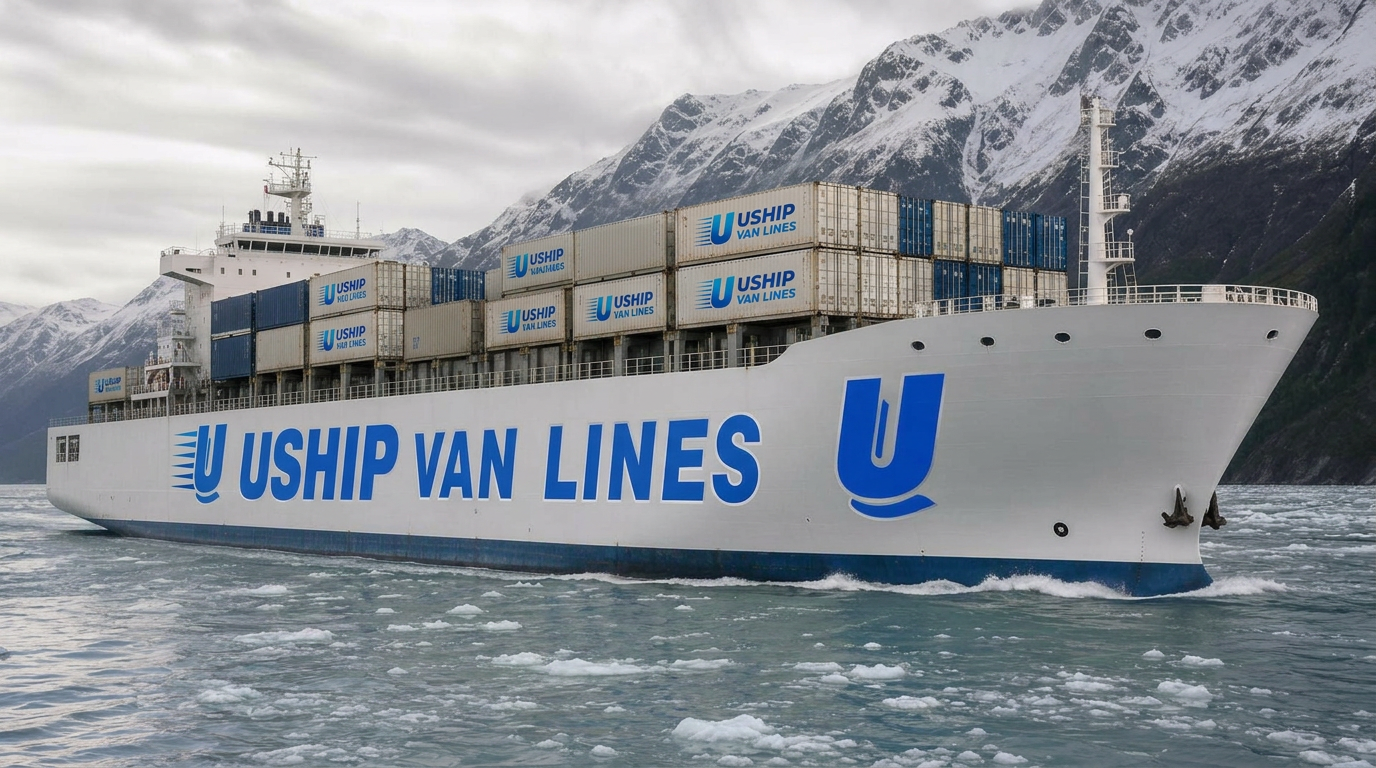
Relocating from the Last Frontier to the Sunshine State is one of the most logistically complex domestic moves you can make. Whether you're leaving Anchorage, Fairbanks, or the Mat-Su Valley for Miami, Tampa, or Jacksonville, your belongings will travel by truck, barge, and truck again—crossing nearly 4,000 miles and two oceans' worth of logistics.
Best Alaska & Hawaii Movers, powered by UShip Van Lines, specializes in Alaska-to-Lower 48 moves with transparent pricing and experienced coordination. Request your free quote today to compare vetted carriers who understand Alaska's unique shipping requirements.
Route overview
Route Overview: Alaska to Florida
Moving from Alaska to Florida requires multi-modal shipping. Your household goods are trucked from your Alaska home to the Port of Anchorage (or Whittier/Seward for some carriers), loaded onto a northbound barge to Tacoma or Seattle, then transferred to over-the-road trucks for the 3,000+ mile journey across the continental U.S. to Florida. This route crosses eight to ten states depending on your final destination—from the Pacific Northwest through the Southwest or Great Plains, then across the Deep South to Florida's Gulf or Atlantic coast.
Florida's major metro areas—Miami-Dade, Tampa-St. Petersburg, Orlando, and Jacksonville—are well-served by interstate highways, making final delivery straightforward once your shipment reaches the Lower 48. However, the Alaska leg introduces unique variables: barge schedules run weekly (not daily), weather can delay sailings, and last-mile service in Alaska's road system depends on seasonal conditions. Successful moves require carriers experienced in Alaska Marine Highway logistics, containerized shipping, and coordinating handoffs between barge terminals and long-haul trucking partners.
How the moving process works
How the Alaska-to-Florida Moving Process Works
-
Initial Survey and Inventory (Week 1–2): Schedule a virtual or in-home survey with your moving coordinator. For Alaska moves, accurate cubic footage matters—barge space is sold by the linear foot of container or trailer, and overages are costly. Identify items that cannot ship (hazardous materials, propane, ammunition) and decide whether to ship vehicles separately or in the same container.
-
Packing and Pickup in Alaska (Days 1–3): Professional movers pack and load your belongings into a 20-foot or 40-foot shipping container or dedicated moving trailer at your Alaska residence. In Anchorage or Mat-Su, pickups are straightforward year-round. For Fairbanks, Kenai Peninsula, or bush communities, schedule extra days for positioning and potential weather delays.
-
Transport to Alaska Port (Days 3–5): Your container is trucked to the Port of Anchorage (most common), Whittier, or Seward. It's staged in the port's container yard and documented for barge loading. Expect 1–3 days of terminal dwell time depending on the sailing schedule.
-
Barge Transit to Tacoma/Seattle (Days 6–12): Containers sail south on Alaska Marine Highway System-compatible commercial barges (Totem Ocean Trailer Express, Lynden, or similar carriers). Southbound sailings typically take 5–7 days from Anchorage to Tacoma. Winter weather or Coast Guard inspections can add 1–2 days.
-
Offloading and Truck Transfer (Days 13–15): In Tacoma or Seattle, your container is offloaded, inspected, and transferred to a long-haul trucking carrier. This handoff typically requires 1–3 days for paperwork, customs clearance (if applicable for certain goods), and truck scheduling.
-
Cross-Country Trucking (Days 16–23): Over-the-road carriers haul your shipment approximately 3,200 miles from the Pacific Northwest to Florida. Southern routes (via I-40 or I-10) take 5–7 driving days. Northern routes (via I-90/I-80 then south) add 1–2 days but may be preferable in winter to avoid Rockies snowstorms.
-
Final Delivery in Florida (Days 24–28): Your driver contacts you 24–48 hours before arrival. Delivery in major metro areas (Miami, Tampa, Orlando, Jacksonville) is typically seamless. For rural Florida locations or gated communities, confirm truck access and parking in advance. Movers unload, place items in rooms, and you inspect for damage before signing the bill of lading.
Estimated moving costs
Cost to Move from Alaska to Florida
A typical 2-bedroom apartment or small home (approximately 5,000–7,000 lbs, or about 800–1,000 cubic feet) costs $6,500–$10,500 for a full-service move from Alaska to Florida. A 3-bedroom home (10,000–12,000 lbs) typically ranges $11,000–$16,500. Larger homes (4+ bedrooms, 14,000+ lbs) can exceed $18,000.
Key cost drivers for this route:
- Barge shipping fees: Charged per linear foot of container or trailer. A 20-foot container runs $2,500–$4,000; a 40-foot container $4,500–$7,000. Rates fluctuate seasonally (higher April–September).
- Alaska last-mile pickup: Anchorage/Wasilla pickups are standard. Fairbanks, Kenai, or remote road-system towns add $400–$1,200 due to positioning costs.
- Cross-country trucking: The 3,200-mile haul from Tacoma to Florida adds $3,000–$5,500 depending on fuel surcharges and routing.
- Packing services: Professional packing in Alaska runs $800–$2,000 for a 2–3 bedroom home. Fragile-only packing is $300–$600.
- Vehicle shipping: Adding a car or truck costs $1,800–$2,800 if shipped in the same container (space permitting) or $2,200–$3,500 if shipped separately via roll-on/roll-off barge.
- Storage: If you need temporary storage in Tacoma (common during schedule mismatches), expect $150–$350/month for a household's worth of goods.
- Insurance: Full-value protection costs 1–2% of declared value; mandatory for high-value shipments.
These are estimates only. Every move is unique. Get personalized quotes from multiple carriers to compare services, insurance options, and timing. Best Alaska & Hawaii Movers connects you with vetted partners experienced in Alaska logistics—request your free comparison quote today.
Estimated transit times
How Long Does It Take to Move from Alaska to Florida?
Door-to-door transit typically takes 24–35 days for a full-service move from Alaska to Florida. This timeline includes pickup, barge sailing, terminal transfers, and cross-country trucking.
Breakdown by leg:
- Alaska pickup and port delivery: 2–5 days (longer for Fairbanks or Kenai; faster for Anchorage).
- Barge sailing Anchorage to Tacoma: 5–7 days for southbound transit. Winter storms or mechanical issues can add 1–3 days.
- Tacoma terminal transfer: 2–4 days for offloading, customs clearance, and truck dispatch.
- Tacoma to Florida trucking: 6–9 days driving time, depending on route and weather. Southern routes via I-10 are faster; northern routes via I-90/I-80 add time but avoid mountain passes in winter.
- Final delivery scheduling: 1–3 days for appointment coordination.
Expedited options (barge priority loading + dedicated trucking) can reduce total time to 18–24 days but cost 25–40% more. Summer moves (May–September) are faster due to frequent barge sailings and favorable weather but book quickly. Winter moves (November–March) may face weather delays in Alaska or the Rockies, adding 3–7 days.
For the most accurate timeline, discuss your desired pickup and delivery dates with your moving coordinator. Booking 6–8 weeks in advance gives you the best selection of sailing dates and trucking capacity.
Regional logistics
Alaska-to-Florida Moving Logistics You Need to Know
Port and Barge Operations: Most Alaska-to-Lower 48 moves use the Port of Anchorage, which handles the majority of containerized freight. Smaller ports (Whittier, Seward) serve specific carriers and seasonal routes. Your moving company will specify which port and which barge line (Totem Ocean Trailer Express and Lynden are the largest). Barge space is reserved weeks in advance—late bookings may face delays or premium charges.
Containerization and Shared Loads: Full-service movers use 20-foot or 40-foot intermodal containers. Smaller moves (studio to 2-bedroom) often share container space with other shipments to reduce cost, which is why transit time includes consolidation and deconsolidation. Exclusive-use containers are available for large homes or time-sensitive moves but cost 30–50% more.
Vehicle Shipping: You can ship one vehicle inside the same container as your household goods if cubic footage allows (typically only for smaller moves). Otherwise, vehicles ship separately via roll-on/roll-off barge (car drives onto the barge deck, drives off in Tacoma). Ensure fluids are at safe levels, alarms are disabled, and only 1/4 tank of gas remains. Personal items cannot be left inside the vehicle.
Restricted and Prohibited Items: Alaska barge carriers prohibit hazardous materials (paint, propane, gasoline, aerosols, ammunition), perishables, and plants subject to agricultural inspection. Firearms must be declared and packed per ATF regulations. If you're bringing hunting trophies or wildlife mounts, confirm CITES compliance for interstate transport.
Paperwork and Documentation: You'll complete a detailed inventory (high-value items photographed), bill of lading, and insurance declaration. For customs or agricultural inspections (rare for domestic moves but possible for certain Alaskan goods), your carrier handles documentation. Keep copies of all forms and your moving contract.
Last-Mile Challenges in Alaska: Anchorage, Wasilla, and Eagle River have paved road access year-round. Fairbanks, Kenai, Soldotna, and Palmer are accessible but may require weather contingencies in winter. Bush communities or off-road-system locations require separate air freight or seasonal barge arrangements—discuss with your coordinator if your origin is remote.
Florida Delivery Considerations: Most of Florida is flat and accessible, but narrow streets in historic districts (St. Augustine, Key West), gated communities with truck restrictions, and condo buildings with freight elevator reservations require advance coordination. Confirm delivery access, parking permits, and any HOA rules before your driver arrives.
Seasonal considerations
Best Time to Move from Alaska to Florida
Spring (April–May): Barge schedules increase frequency as ice clears from Alaska ports. Trucking routes across the Lower 48 are snow-free but rain is common in the Pacific Northwest. Rates begin climbing toward summer peaks. Book early—this is popular for families moving before the school year ends. Alaska thaw can create muddy conditions on unpaved driveways.
Summer (June–August): Peak moving season for Alaska. Barge sailings are most frequent (often twice weekly from Anchorage), and weather is ideal for both Alaska pickups and cross-country trucking. Expect the highest rates—often 20–30% above off-season. Book 8–10 weeks ahead. Florida deliveries face summer heat and afternoon thunderstorms; ensure climate-sensitive items (electronics, artwork) are properly packed.
Fall (September–October): Excellent balance of cost and logistics. Barge schedules remain frequent through September, then taper in October. Rates drop 10–20% after Labor Day. Weather is stable in Alaska and across the Lower 48. Hurricane season in Florida (June–November) peaks in September—track forecasts if your delivery window coincides with storm activity.
Winter (November–March): Lowest rates (20–35% below summer) but most logistical risk. Barge sailings decrease to weekly or bi-weekly; winter storms can delay Alaska pickups and Tacoma offloading. Trucking across the Rockies, Great Plains, or northern routes faces snow and ice. Southern routes (I-10 through Arizona, New Mexico, Texas) are safer but longer. If you're flexible on timing and want savings, winter works—just build in extra buffer days. Alaska's interior (Fairbanks, Mat-Su backcountry) may require postponing pickup during extreme cold snaps (below -30°F).
Why choose Best Alaska & Hawaii Movers
Why Choose Best Alaska & Hawaii Movers for Your Alaska-to-Florida Move
-
Alaska Logistics Expertise: We specialize in the complex barge-to-truck-to-truck coordination required for Alaska moves. Our partner network includes carriers with proven Port of Anchorage relationships, barge line accounts, and experience navigating Alaska's seasonal and weather variables.
-
Transparent, Competitive Pricing: Powered by UShip Van Lines, we connect you with multiple vetted carriers so you can compare quotes, services, and timelines side-by-side. No hidden fees, no surprise barge surcharges—just clear, itemized estimates.
-
End-to-End Coordination: From your initial survey through final delivery in Florida, a dedicated moving coordinator tracks your shipment across every leg—Alaska pickup, barge sailing, Tacoma transfer, cross-country trucking, and Florida delivery. You'll receive proactive updates and have a single point of contact.
-
Insurance and Accountability: All partner carriers are federally registered, insured, and experienced in long-distance, multi-modal moves. We offer full-value protection options and handle claims processing if damage occurs.
-
Flexible Scheduling and Storage: Need to move out of your Alaska home before your Florida residence is ready? We arrange short-term or long-term storage in climate-controlled Tacoma or Florida facilities, with easy redelivery when you're ready.