
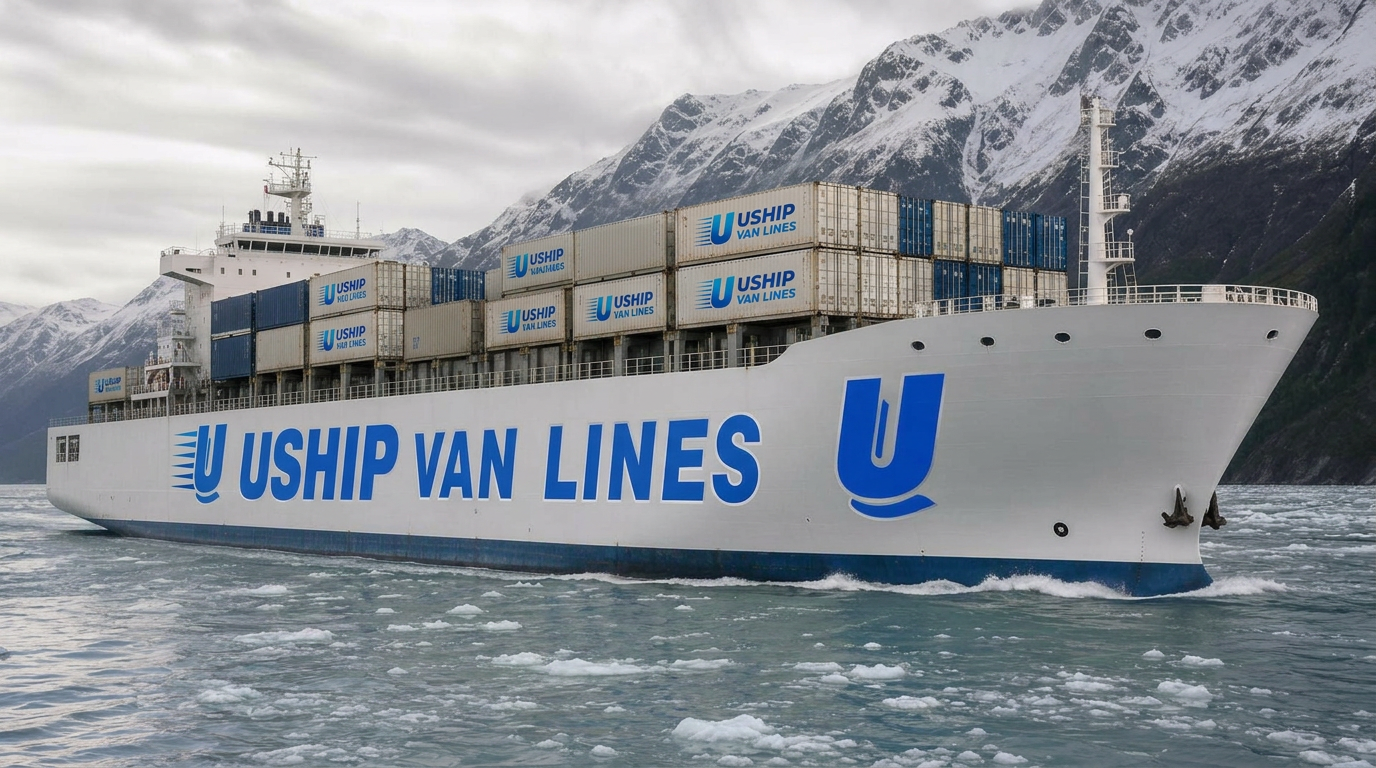
Moving from Alaska to Columbus, OH
Relocating from Alaska to Columbus, Ohio means trading the Last Frontier for the Buckeye State's thriving economy, four-season climate, and Midwest affordability. Whether you're leaving Anchorage, Fairbanks, or the Mat-Su Valley for Columbus's growing tech sector, renowned healthcare institutions, or vibrant neighborhoods, this move spans roughly 3,300 miles and requires careful coordination of barge shipping, overland transport, and final delivery.
Best Alaska & Hawaii Movers, powered by UShip Van Lines, specializes in Alaska-to-Lower 48 relocations. We handle every step—from initial pickup in Alaska through Port of Tacoma barge transit and cross-country delivery to Columbus. Ready to plan your move? Request your free, no-obligation quote and speak with a logistics specialist who understands Alaska's unique shipping requirements.
Route overview
Alaska to Columbus: A Two-Phase Journey Across Continents
Moving from Alaska to Columbus, Ohio involves a unique two-phase logistics process. Your household goods first travel by truck from your Alaska residence to the Port of Anchorage (or occasionally Whittier for certain regions). From there, items are loaded into shipping containers and transported via barge to the Port of Tacoma, Washington—a voyage that typically takes 5–7 days depending on weather and sailing schedules. Once your container clears Tacoma, it's loaded onto long-haul trucks for the 2,300-mile overland journey through the Mountain West, Great Plains, and into central Ohio.
Columbus sits at the intersection of major interstate corridors (I-70 and I-71), making final delivery straightforward once your shipment reaches the Midwest. Unlike coastal routes with multiple port options, Alaska moves require precise timing around barge sailings—typically 1–2 sailings per week during peak season, fewer in winter. The entire door-to-door process averages 14–21 days, though winter weather or holiday periods can extend timelines.
This route serves all major Alaska population centers: Anchorage, Fairbanks (via additional trucking), the Mat-Su Valley (Wasilla, Palmer), the Kenai Peninsula, and with advance planning, even remote bush communities requiring freight forwarding. Columbus's central Ohio location means your delivery doesn't face the mountain pass challenges of western routes, though Midwest weather during winter months requires monitoring.
How the moving process works
How Your Alaska-to-Columbus Move Works: Step by Step
-
Initial Consultation & Survey – Contact Best Alaska & Hawaii Movers for a detailed inventory assessment. For Alaska moves, we'll discuss access to your property, any items restricted from barge transport (hazardous materials, perishables), and your preferred timeline. Virtual surveys work well, though in-home assessments are available in Anchorage and Fairbanks.
-
Barge Schedule Coordination – We reserve space on an upcoming Tacoma-Alaska barge sailing based on your move date. Spring through fall offers 1–2 weekly sailings; winter schedules are more limited. Your coordinator will provide a shipping window and coordinate Alaska pickup to align with container loading deadlines.
-
Alaska Pickup & Port Delivery – Professional movers arrive at your Alaska home, pack and load your belongings, and transport everything to the Port of Anchorage (or Whittier). Items are loaded into 20-foot or 40-foot shipping containers—your goods may share container space for partial loads or occupy an exclusive container for full-household moves.
-
Barge Transit to Tacoma – Your container sails from Alaska to the Port of Tacoma, Washington (5–7 days). We track your shipment and notify you when it clears customs and port inspections. This leg is weather-dependent; winter crossings can face delays from Gulf of Alaska storms.
-
Cross-Country Overland Transport – Once unloaded in Tacoma, your container is transferred to a long-haul truck for the 2,300-mile journey across Washington, Idaho, Montana/Wyoming, Nebraska, Iowa, and into Ohio. Transit time is typically 5–7 days, with real-time GPS tracking available.
-
Columbus Delivery & Unloading – Our delivery team contacts you 24–48 hours before arrival to schedule a delivery window. Upon arrival in Columbus, movers unload, place items in designated rooms, and reassemble any furniture disassembled for transport. You inspect and sign off on delivery.
-
Post-Move Support – We follow up to ensure satisfaction and address any claims or concerns. Our team remains available for questions about unpacking, storage if your Columbus home isn't ready, or coordination of vehicle shipping if you're transporting cars separately.
Estimated moving costs
What Does an Alaska-to-Columbus Move Cost?
Moving a typical 2–3 bedroom household from Alaska to Columbus, Ohio generally ranges from $6,500 to $12,500, depending on volume, services, and timing. A studio or 1-bedroom apartment might cost $4,000–$6,000, while larger 4-bedroom homes with full packing services can exceed $15,000.
Key cost drivers include:
- Volume and weight – Alaska moves are priced by container space (cubic feet) or weight. A 2-bedroom home averages 500–800 cubic feet; 3-bedroom homes 900–1,400 cubic feet. Heavier items (gun safes, pianos, shop equipment) increase costs.
- Packing services – Full-service packing adds $800–$2,000 but protects belongings during the multi-leg journey and saves days of labor. Fragile items benefit significantly given barge and overland transit.
- Barge season – Summer moves (May–September) cost 10–20% more due to demand. Off-season moves (October–April) offer lower rates but face weather risks and limited sailing schedules.
- Origin/destination access – Easy access in Anchorage and standard Columbus neighborhoods minimize costs. Remote Alaska locations (Kenai Peninsula, Fairbanks requiring extra trucking) or Columbus homes with long carries, stairs, or narrow streets increase labor charges.
- Insurance and valuation – Basic coverage (60¢/pound) is included; full-value protection costs 1–2% of declared value but provides comprehensive replacement coverage for the long journey.
- Vehicle shipping – If driving the Alaska Highway isn't feasible, adding vehicle transport costs $1,800–$3,500 per car (barge to Seattle, then overland).
Best Alaska & Hawaii Movers provides transparent, binding estimates with no hidden fees. Our quotes include Alaska pickup, barge shipping, overland transport, and Columbus delivery—one flat rate covering all legs. Request your personalized quote to receive an accurate cost assessment based on your specific inventory and timeline.
Estimated transit times
How Long Does Alaska-to-Columbus Shipping Take?
Door-to-door transit from Alaska to Columbus typically requires 14–21 days, broken down by leg:
- Alaska pickup to Port of Anchorage: 1–2 days (same-day for Anchorage residents; 1–2 days for Fairbanks, Mat-Su, or Kenai areas)
- Port staging and container loading: 1–3 days (waiting for barge departure)
- Barge transit to Tacoma: 5–7 days (weather-dependent; winter crossings can add 1–2 days)
- Tacoma port clearance and truck loading: 1–2 days (customs, inspections, transfer to truck)
- Overland Tacoma to Columbus: 5–7 days (2,300 miles; real-time tracking provided)
- Delivery scheduling and unloading: 1 day (coordinated arrival window)
Total: 14–22 days under normal conditions. Winter moves (November–March) should budget 18–25 days due to reduced barge frequency, potential Gulf of Alaska weather delays, and mountain pass conditions in the Rockies. Peak summer moves (June–August) stay on the shorter end due to frequent sailings and optimal weather.
For time-sensitive moves, we recommend booking 6–8 weeks in advance to secure preferred barge dates. Last-minute bookings may wait for the next available sailing, adding 3–7 days. Best Alaska & Hawaii Movers provides detailed timelines with milestone tracking so you know exactly where your shipment is throughout the journey.
Regional logistics
Alaska-Specific Moving Logistics You Need to Know
Barge Ports and Access: Most Alaska shipments route through the Port of Anchorage, which handles the majority of Alaska-bound and outbound freight. Whittier serves as an alternative for certain Kenai Peninsula and Prince William Sound origins. Fairbanks and Interior Alaska require overland trucking to Anchorage (adding 1–2 days and $400–$800). Remote communities may need freight forwarding to the nearest road-accessible hub.
Container Types: Household goods travel in 20-foot or 40-foot steel shipping containers. Partial loads (under 1,000 cubic feet) typically share container space with other shipments to optimize costs—your items are clearly marked and separated. Full loads receive exclusive containers with your goods sealed from origin to destination.
Restricted Items: Barges prohibit hazardous materials (propane tanks, ammunition, gasoline, paint, cleaning chemicals), perishables, and plants regulated by USDA. Firearms are allowed but must be declared and unloaded. Alaska residents often have outdoor equipment (ATVs, snowmobiles, hunting gear)—most are transportable if properly drained of fuel.
Vehicle Shipping: If you're not driving the Alaska Highway, we coordinate vehicle transport via barge to Seattle or Tacoma, then overland to Columbus. Cars, trucks, and SUVs cost $1,800–$3,500. Motorcycles and ATVs run $800–$1,500. Vehicles must be clean (to pass agriculture inspection) and nearly empty (max 1/4 tank fuel, minimal personal items).
Paperwork and Documentation: Alaska-to-Lower 48 moves require freight bills of lading, inventory lists, and occasionally customs forms (for international residents). Best Alaska & Hawaii Movers handles all documentation—you simply review and sign. Columbus requires no special delivery permits for residential moves.
Storage Options: If your Columbus home isn't ready upon arrival, we offer short-term storage in climate-controlled Columbus-area facilities. Your container can be held intact or unloaded into secure warehouse space. Storage costs $150–$300/month depending on volume.
Last-Mile Delivery in Columbus: Columbus's well-maintained roads and grid layout make delivery straightforward. Most neighborhoods (German Village, Short North, Clintonville, Dublin, New Albany) have excellent truck access. High-rise apartments downtown may require elevator reservations and building COIs (certificates of insurance)—we coordinate these details in advance.
Seasonal considerations
When to Schedule Your Alaska-to-Columbus Move
Spring (April–May): Barge schedules ramp up as Gulf of Alaska ice clears. Weather is improving but unpredictable—late snowstorms can delay Alaska pickups. Rates are moderate, and capacity is good. Ideal for those relocating before Columbus's summer season.
Summer (June–August): Peak season for Alaska moves. Barges sail 1–2 times weekly, offering maximum flexibility. Weather is optimal for both barge crossings and mountain driving. However, demand drives prices 15–20% higher, and booking 8+ weeks ahead is essential. Perfect for families moving before the school year, as Columbus's housing market is most active.
Fall (September–October): Excellent value window. Rates drop post-Labor Day, barge schedules remain frequent through October, and weather is still favorable. Early October moves avoid Alaska's first snows and arrive in Columbus during beautiful autumn weather. High recommendation for cost-conscious movers with flexibility.
Winter (November–March): Off-peak pricing (10–25% below summer) but comes with trade-offs. Barge sailings reduce to 1–2 per month by mid-winter. Gulf of Alaska storms can delay crossings by several days. Alaska roads require winter driving precautions, and mountain passes (Snoqualmie, Donner) on overland routes can close temporarily. Columbus winters are milder than Alaska, but Midwest ice storms occasionally delay final delivery. Best for those with flexible timelines who prioritize savings.
No matter the season, Best Alaska & Hawaii Movers monitors weather and adjusts schedules proactively. We'll recommend optimal booking windows based on your specific move dates and budget.
Why choose Best Alaska & Hawaii Movers
Why Best Alaska & Hawaii Movers for Your Alaska-to-Columbus Relocation
-
Alaska-Specific Expertise – We specialize exclusively in Alaska and Hawaii moves, understanding barge schedules, port logistics, and Alaska's unique geography. Our team has coordinated thousands of Last Frontier relocations and knows how to navigate every challenge.
-
Single-Source Accountability – One point of contact manages your entire move from Alaska pickup through Columbus delivery. No handoffs between multiple carriers—we own the customer experience across all legs.
-
Transparent, Binding Quotes – Our estimates include every cost: Alaska pickup, barge freight, overland transport, and Columbus delivery. No surprise fees or hidden charges. You'll know your exact cost upfront.
-
Real-Time Shipment Tracking – Monitor your household goods via GPS and milestone updates. You'll receive notifications when your container loads in Alaska, departs Tacoma, crosses into Ohio, and approaches Columbus.
-
Comprehensive Insurance Options – Choose coverage that matches your needs, from basic liability to full replacement value. Given the multi-leg journey, proper insurance provides peace of mind.
-
Powered by UShip Van Lines – Our partnership with UShip Van Lines combines Alaska/Hawaii specialization with nationwide logistics infrastructure, ensuring reliable service from the Last Frontier to the Midwest and beyond.