
Moving from Staunton, VA to Alaska
Moving from Staunton's Shenandoah Valley to Alaska is one of the longest domestic relocations possible, requiring seamless coordination between overland trucking, ocean barge transport, and Alaska last-mile delivery. Whether you're relocating to Anchorage for career opportunities, Fairbanks for seasonal work, or the Mat-Su Valley for lifestyle, this 4,000+ mile journey demands experienced logistics planning.
Best Alaska & Hawaii Movers, powered by UShip Van Lines, specializes in this complex route—handling your belongings from pickup in Staunton through barge transit via Tacoma and final delivery across Alaska's road system. Request your customized quote today to start planning your move with confidence.
Route overview
Your Moving Route from Staunton to Alaska
Your household goods begin their journey with pickup in Staunton, traveling approximately 2,800 miles overland to the Port of Tacoma, Washington—the primary consolidation hub for Alaska-bound freight. This cross-country leg typically follows I-81 north through Virginia, then westward via I-80 or I-90 through the Midwest and mountain states before reaching the Pacific Northwest.
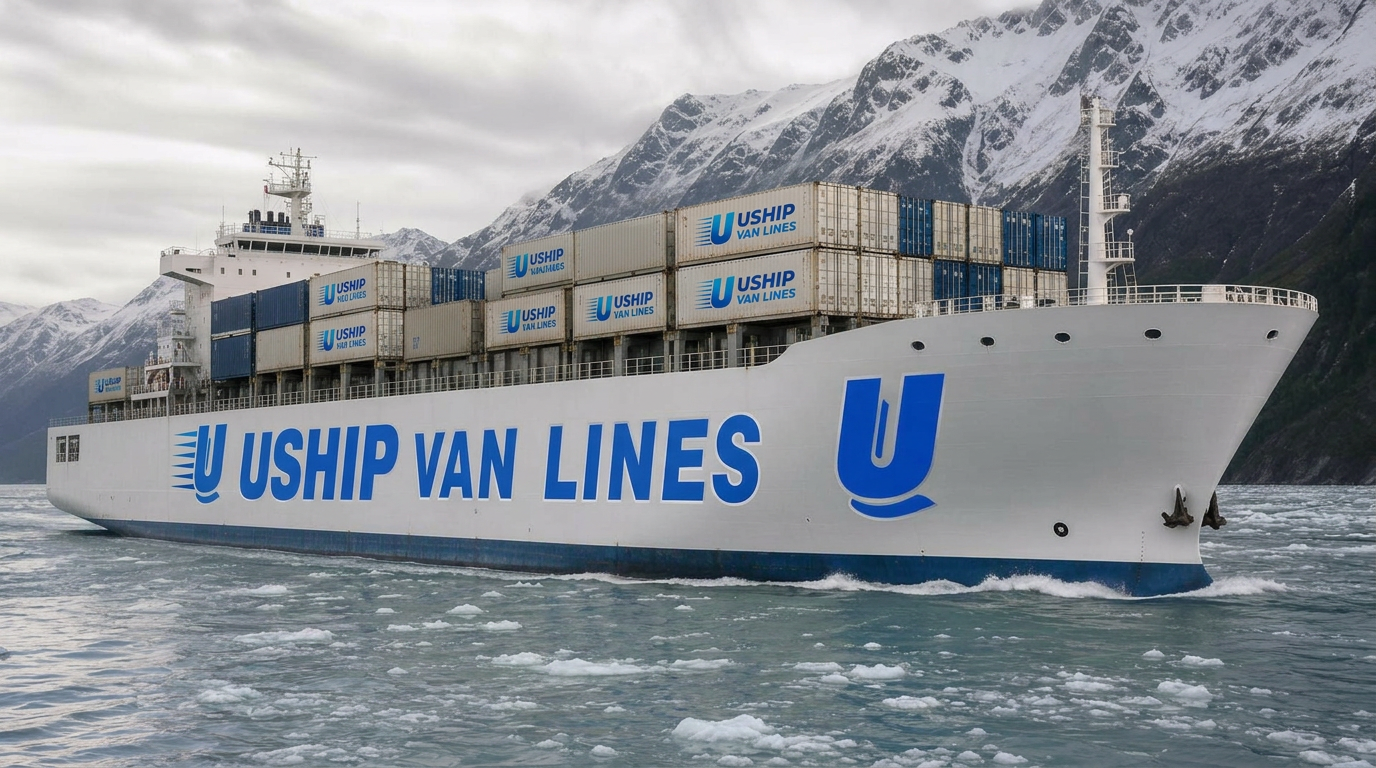
From Tacoma, your shipment boards a northbound barge operated by Alaska Marine Lines, Lynden Transport, or similar carriers, crossing the Gulf of Alaska to the Port of Anchorage (approximately 1,400 nautical miles). Once cleared through the port, your goods transfer to Alaska-based trucks for final delivery to Anchorage metro areas, Fairbanks via the Parks Highway, Mat-Su communities like Wasilla and Palmer, Kenai Peninsula locations, or other road-accessible destinations.
This multi-modal route requires coordination across three distinct phases: continental trucking, ocean barge scheduling, and Alaska ground delivery. Understanding each phase helps you plan timelines, prepare documentation, and set realistic expectations for this extraordinary relocation.
How the moving process works
How Your Staunton to Alaska Move Works
-
Free Consultation & Quote: Contact Best Alaska & Hawaii Movers for a detailed inventory assessment. We'll discuss your destination (Anchorage vs. Fairbanks vs. smaller communities), timeline preferences, and any special items like vehicles, firearms, or outdoor equipment that require Alaska-specific handling.
-
Pre-Move Planning & Documentation: Receive your customized moving plan with barge sailing dates, estimated delivery windows, and required paperwork (Alaska doesn't require state residency permits, but firearms and certain items need declaration). We'll coordinate pickup timing to align with optimal barge schedules from Tacoma.
-
Staunton Pickup & Loading: Professional crews arrive at your Staunton residence, carefully loading your household goods into a long-haul moving truck. Items are inventoried, padded, and secured for the cross-country journey to Washington state.
-
Overland Transit to Tacoma: Your shipment travels 2,800 miles westward to our Tacoma consolidation facility, typically arriving within 5–7 days. Here, your goods are transferred into marine-rated containers or secured on barge-ready pallets.
-
Barge Loading & Ocean Transit: Your containerized shipment boards a northbound barge (sailings typically run 2–4 times weekly during peak season, less frequently in winter). The ocean voyage to Anchorage takes 3–5 days depending on weather and routing.
-
Port of Anchorage Processing: After arrival, your shipment clears port handling (typically 1–2 business days) and transfers to Alaska-based delivery trucks. If you're moving to Anchorage itself, delivery may occur within days; Fairbanks and remote destinations require additional ground transit.
-
Final Alaska Delivery & Unpacking: Our Alaska partner network delivers to your new address, whether in urban Anchorage, interior Fairbanks (350 miles north), or smaller communities. Crews unload, place items in designated rooms, and remove packing materials, completing your door-to-door service.
Estimated moving costs
What to Budget for Your Staunton to Alaska Move
Moving a typical 2–3 bedroom household from Staunton, VA to Alaska generally ranges from $8,500 to $16,000, with most families paying $10,500–$13,500 for full-service door-to-door transport. This significant range reflects distance, shipment weight, barge scheduling, and final destination within Alaska.
Key cost factors include:
- Shipment volume and weight: A 1,200 cubic foot load (typical 2BR apartment) costs substantially less than 2,500 cubic feet (large 3BR home with garage items). Alaska barge rates are weight-sensitive.
- Destination within Alaska: Anchorage delivery is most economical; Fairbanks adds $1,200–$2,000 for the 350-mile Parks Highway haul; Kenai Peninsula or bush-accessible areas incur additional last-mile costs.
- Seasonal timing: Summer peak season (May–September) commands premium rates as barge space fills quickly with seasonal workers and tourists. Winter moves (October–April) may offer 15–25% savings but face weather-related scheduling uncertainty.
- Packing services: Professional packing adds $800–$2,200 depending on home size. Alaska-bound shipments benefit from extra padding for ocean transit vibration and potential weather exposure.
- Vehicle shipping: Adding a car to your barge shipment typically costs $1,800–$2,800 Staunton to Anchorage (vehicle must be driven to Tacoma or shipped separately to the port).
- Storage: If barge timing doesn't align with your move-out date, short-term Tacoma storage runs $150–$300 monthly; Alaska-side storage costs similarly.
Best Alaska & Hawaii Movers provides transparent, itemized quotes with no hidden fees—request your personalized estimate to understand exactly what your specific move will cost.
Estimated transit times
Timeline: How Long Does Staunton to Alaska Take?
Door-to-door transit from Staunton to Alaska typically requires 18–28 days, though timelines vary significantly based on barge schedules, weather, and final destination. Understanding each phase helps you plan housing transitions and temporary accommodations.
Transit breakdown by leg:
- Staunton to Tacoma overland: 5–7 days for the 2,800-mile cross-country haul, allowing for driver rest requirements and potential weather delays in mountain passes.
- Tacoma port processing: 1–3 days for containerization, documentation, and barge loading (timing depends on how closely your arrival aligns with the next sailing).
- Ocean barge transit: 3–5 days Tacoma to Anchorage under normal conditions; winter storms can add 1–2 days. Barges sail 2–4 times weekly in summer, 1–2 times weekly in winter.
- Anchorage port clearance: 1–2 business days for offloading, customs-style agricultural inspection (Alaska requires documentation for plants, soil, certain foods), and transfer to ground carriers.
- Final Alaska delivery: Same-day to 5 days depending on destination—Anchorage metro can receive goods within 24 hours of port clearance; Fairbanks requires 1–2 additional days for the northbound haul; Kenai Peninsula or off-highway locations add more time.
Planning tip: Book 4–6 weeks ahead during peak season (June–August) to secure preferred barge sailings. Winter moves allow shorter booking windows but require flexibility for weather-related delays. Always arrange temporary housing or extended hotel stays with buffer time beyond the estimated delivery window.
Regional logistics
Alaska Moving Logistics You Need to Know
Barge ports and routing: All Staunton to Alaska shipments consolidate through the Port of Tacoma, Washington, which handles 90%+ of southbound Alaska freight. Your goods travel via established barge lines (primarily Alaska Marine Lines and Lynden Transport) to the Port of Anchorage, Alaska's primary marine terminal. From Anchorage, road-based delivery reaches most populated areas; fly-in communities require air freight (dramatically more expensive and typically arranged separately).
What you can and cannot ship: Alaska allows most household goods, but restrictions apply: firearms must be declared and properly packed (Alaska is gun-friendly but requires documentation); marijuana is legal in Alaska but cannot cross state or maritime boundaries; fresh plants require USDA/Alaska agricultural inspection; propane tanks, ammunition, and hazardous chemicals follow strict maritime rules. Best Alaska & Hawaii Movers provides detailed prohibited-items lists during booking.
Vehicle shipping considerations: Most customers moving to Alaska ship one vehicle via the same barge as household goods. You'll drive your car to Tacoma (or arrange separate transport) where it's loaded onto the barge. Vehicles must be clean (Alaska inspects for invasive species), contain no personal items, and have less than ¼ tank fuel. Motorcycles, ATVs, and boats can also ship via barge—popular given Alaska's outdoor lifestyle.
Documentation requirements: Alaska doesn't require special moving permits, but you'll need standard inventory lists for insurance purposes and agricultural declaration forms (Alaska protects against invasive species). If shipping firearms, you'll complete federal and carrier-specific paperwork. Best Alaska & Hawaii Movers handles most documentation coordination, but you'll need to provide accurate inventories.
Last-mile delivery limitations: Alaska's road system connects Anchorage, Fairbanks, Mat-Su Valley, Kenai Peninsula, and a few smaller communities—about 60% of Alaska's population. Communities like Juneau (state capital), Ketchikan, Sitka, Kodiak, and hundreds of bush villages have no road access and require air or separate marine freight (not included in standard barge moves). Confirm your destination is road-accessible or discuss alternative arrangements.
Storage options: If you need to vacate your Staunton home before optimal barge timing, we offer storage in Tacoma (near the port) or Anchorage (after barge arrival). Alaska storage is particularly useful if your housing isn't ready—common for military families awaiting base housing or workers in temporary quarters. Facilities are climate-controlled where available, though Alaska's dry cold is less problematic for stored goods than humid climates.
Seasonal considerations
Best Times to Move from Staunton to Alaska
Summer (May–September): Peak moving season offers maximum barge frequency, reliable weather, and easiest Alaska delivery—roads are clear, daylight extends to 20+ hours in June, and settling into new communities is simplest when schools and services operate normally. However, expect premium pricing, advance booking requirements (4–6 weeks minimum), and tight barge space. Ideal for families with school-age children starting in fall or professionals beginning jobs in June/July.
Fall (September–October): Shoulder season provides moderate pricing with still-reliable weather. Barge schedules begin reducing frequency after Labor Day, but sailings remain consistent through October. Alaska roads are generally clear, though early snows can hit interior regions by mid-October. Good value for retirees or flexible remote workers avoiding summer premiums.
Winter (November–March): Off-season moves offer the lowest rates (15–25% below summer) and easiest booking availability, but winter weather significantly impacts timelines. Tacoma-Anchorage barges sail 1–2 times weekly; North Pacific storms can delay sailings or extend crossing times. Alaska ground delivery faces snow, ice, and extreme cold (Fairbanks reaches -40°F). Best for experienced cold-weather residents or those with flexible timelines and sturdy winter housing already secured.
Spring (April–early May): Transition season sees increasing barge frequency and warming Alaska weather (though breakup mud season can complicate rural deliveries). Pricing begins climbing toward summer peaks by late April. Good compromise for those needing post-winter timing but wanting to avoid full summer costs. Note that Staunton spring weather is mild, but mountain passes between Virginia and Washington may still experience late-season snow.
Alaska-specific timing: Coordinate your move with housing availability—Anchorage and Fairbanks rental markets tighten May–August when seasonal workers arrive. Winter renters often find better deals but fewer listings.
Why choose Best Alaska & Hawaii Movers
Why Best Alaska & Hawaii Movers for Your Staunton to Alaska Move
-
Alaska specialists, not generalists: While national van lines treat Alaska as an afterthought, we focus exclusively on Alaska and Hawaii logistics—we know the barge schedules, understand port processing, maintain Alaska delivery partnerships, and handle the unique documentation and regulations that surprise general movers.
-
True door-to-door coordination: You get a single point of contact managing all three phases—Staunton pickup, Tacoma barge logistics, and Alaska final delivery. No handoffs to disconnected contractors; we orchestrate the entire journey and keep you informed at every transition.
-
Transparent pricing and realistic timelines: Alaska moving is complex and some companies lowball estimates then add fees or cite