
Moving from Paterson, NJ to Alaska
Relocating from Paterson, New Jersey to America's Last Frontier represents one of the most dramatic lifestyle changes possible—from the dense urban corridors of the Garden State to the vast wilderness and frontier communities of Alaska. This 3,800+ mile journey requires specialized logistics, including cross-country trucking to the Pacific Northwest and barge transport across the Gulf of Alaska, making it essential to work with movers who understand the unique complexities of Alaska-bound shipments.
Best Alaska & Hawaii Movers, powered by UShip Van Lines, coordinates every phase of your Paterson-to-Alaska relocation. Whether you're heading to Anchorage for career opportunities, retiring to the Kenai Peninsula, or starting fresh in Fairbanks, we handle the overland haul, port consolidation in Tacoma, ocean barge transit, and final delivery across Alaska's road system. Ready to start planning your northern adventure? Request your free, no-obligation quote today.
Route overview
The Paterson to Alaska Moving Route
Your household goods begin their journey on I-80 West from Paterson, traveling across Pennsylvania, Ohio, and the Great Plains states before reaching the Pacific Northwest. Professional movers transport your belongings approximately 2,900 miles overland to the Port of Tacoma, Washington—the primary consolidation hub for Alaska-bound freight. This cross-country segment typically takes 5–7 days depending on routing and weather conditions.
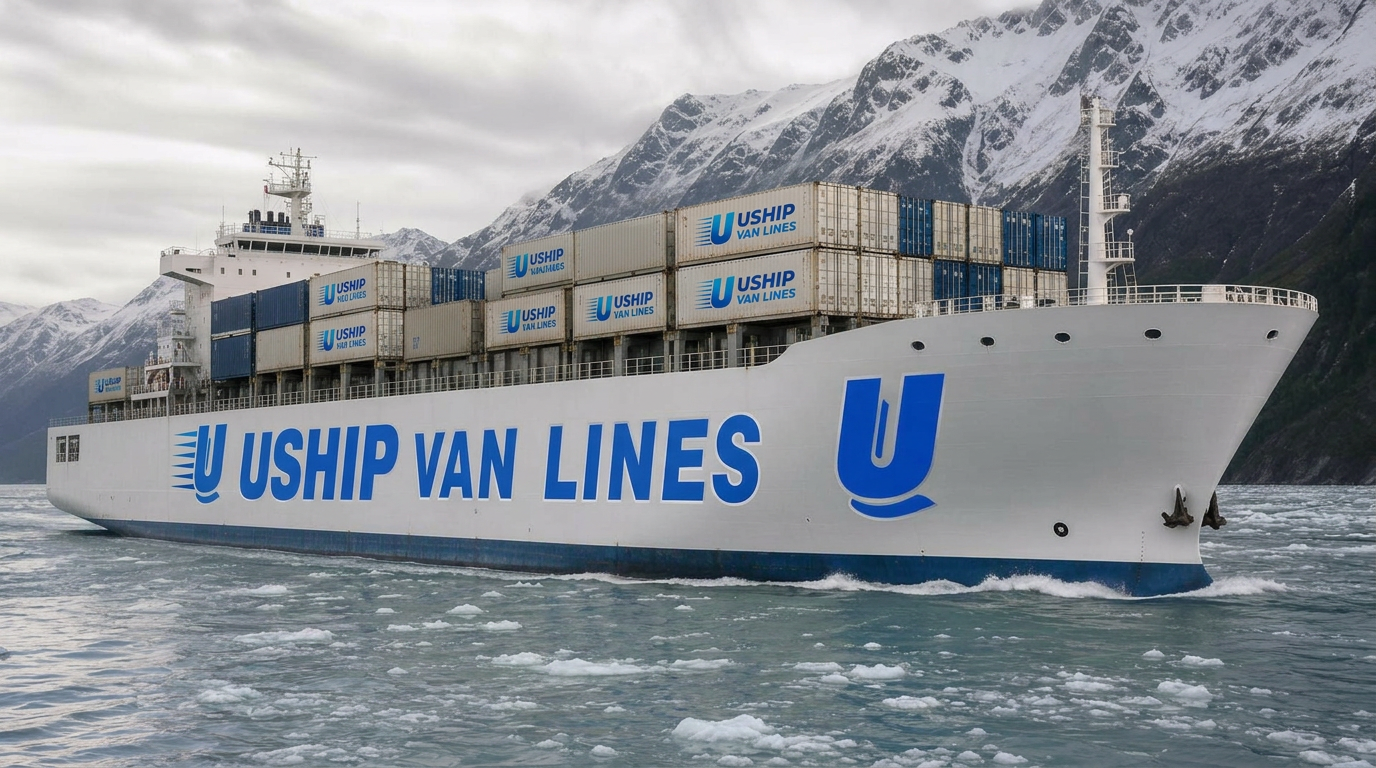
From Tacoma, your shipment boards a dedicated Alaska barge operated by carriers like TOTE Maritime or Alaska Marine Lines. These purpose-built vessels make the 1,400-nautical-mile voyage through the Inside Passage and across the Gulf of Alaska to the Port of Anchorage. Barge sailings run on fixed weekly or bi-weekly schedules year-round, with the ocean crossing taking 3–4 days under normal conditions.
Upon arrival at the Port of Anchorage, your goods clear customs and port processing before final delivery. If you're moving to Anchorage or the Mat-Su Valley (Wasilla, Palmer), last-mile delivery adds 1–2 days. Destinations like Fairbanks, Kenai, or Soldotna require additional trucking on the Parks Highway or Sterling Highway, extending delivery by 2–4 days. Remote or off-road-system communities may require air freight or winter ice-road delivery, which significantly impacts both cost and timeline.
How the moving process works
How Your Paterson to Alaska Move Works
-
Initial Consultation & Inventory Assessment – Your move coordinator conducts a detailed virtual or in-home survey of your Paterson residence, documenting furniture, appliances, boxes, and any special-handling items. This inventory determines cubic footage, weight class, and whether a full container or shared consolidation makes the most sense for your shipment size and budget.
-
Pre-Move Planning & Scheduling – We coordinate your packing date, pickup window in Paterson, and align it with barge sailing schedules from Tacoma. Alaska-bound moves require advance booking—typically 3–6 weeks lead time during summer peak season (May–September) and 2–4 weeks in winter. We also provide guidance on what items cannot be shipped (hazardous materials, propane tanks, certain plants) and vehicle shipping options if you're transporting cars separately.
-
Professional Packing & Loading in Paterson – Trained crews arrive at your New Jersey home with Alaska-specific packing materials—reinforced boxes, moisture barriers, and extra padding to protect against the extended transit and marine environment. Furniture is disassembled, wrapped, and inventoried. Everything is loaded onto a 53-foot semi-trailer for the cross-country haul to Tacoma.
-
Overland Transport to Port of Tacoma – Your shipment travels I-80 West through the Midwest and mountain states, with the truck making the approximately 2,900-mile journey in 5–7 days. Upon arrival in Tacoma, your goods are transferred to a secure warehouse facility where they're consolidated with other Alaska-bound shipments, containerized if necessary, and staged for barge loading.
-
Ocean Barge Transit to Alaska – Your containerized or palletized goods board the next scheduled Alaska barge. The vessel navigates Puget Sound, travels north through the protected waters of the Inside Passage, then crosses the open Gulf of Alaska to reach Anchorage. This ocean leg takes 3–4 days, though weather delays (especially October–March) can extend transit by 1–3 days.
-
Port Processing & Customs Clearance – At the Port of Anchorage, containers are offloaded and moved to the freight terminal. Your shipment undergoes inspection, documentation review, and customs clearance (even though Alaska is a U.S. state, agricultural inspections apply). This port processing typically takes 1–2 business days.
-
Final Delivery Across Alaska – A local Alaska trucking partner loads your goods for the last leg. Anchorage-area deliveries happen quickly—often within 24–48 hours of port clearance. Fairbanks requires a 6-hour drive north on the Parks Highway. Kenai Peninsula destinations (Soldotna, Kenai, Homer) involve a 2.5–4 hour drive south on the Seward and Sterling Highways. Remote communities may require air cargo, barge, or seasonal ice-road delivery with extended timelines and additional cost.
Estimated moving costs
What Does a Paterson to Alaska Move Cost?
A typical 2-bedroom household (approximately 7,000–9,000 pounds or 800–1,000 cubic feet) moving from Paterson, NJ to Anchorage generally costs $6,500–$10,500. A larger 3-bedroom home (10,000–14,000 pounds or 1,200–1,600 cubic feet) typically ranges $9,500–$15,000. These estimates include professional packing, overland trucking to Tacoma, ocean barge freight, port handling, and delivery within the Anchorage metro area.
Several factors significantly impact your final cost. Distance from Anchorage is the biggest variable—Fairbanks delivery adds $800–$1,500, Kenai Peninsula destinations add $600–$1,200, and remote bush communities can add $2,000–$5,000+ for air freight or specialty delivery. Seasonal timing matters: summer peak season (May–September) commands premium rates due to high demand and limited barge space, while winter moves (October–April) often see 10–20% discounts despite potential weather delays. Packing services add $800–$2,000 depending on the scope—full-service packing costs more but ensures proper protection for the long journey and marine environment.
Vehicle shipping runs separately if you're transporting cars. Open-transport auto carriers from Paterson to Alaska typically cost $2,200–$3,800 per vehicle (also via Tacoma barge), while enclosed transport for luxury or classic cars runs $3,500–$5,500. Storage needs add cost if your Alaska housing isn't ready when your shipment arrives—Anchorage warehouse storage runs $150–$300 per month for a typical household. Insurance coverage beyond the standard 60-cents-per-pound carrier liability costs approximately 1–2% of your declared value, which we strongly recommend for high-value electronics, antiques, or collectibles making this long journey.
We never quote guaranteed prices without a detailed inventory review. Every move is unique, and accurate pricing requires understanding your specific volume, destination, timing, and service needs. Request a free quote to receive a detailed, transparent estimate tailored to your Paterson-to-Alaska relocation.
Estimated transit times
How Long Does the Move Take?
Door-to-door transit from Paterson, NJ to Anchorage typically takes 14–21 days under normal conditions. This breaks down into three distinct phases: overland trucking from your Paterson home to the Port of Tacoma (5–7 days), ocean barge crossing from Tacoma to Anchorage (3–4 days), and port processing plus final delivery (2–3 days). Add another 1–2 days at each end for packing/loading and unpacking/unloading.
Delivery to Fairbanks extends the timeline to 16–23 days total, adding 2–3 days for the 358-mile northbound haul on the Parks Highway. Kenai Peninsula destinations like Soldotna or Homer take 15–22 days, with the additional southern routing adding 1–2 days. Mat-Su Valley communities (Wasilla, Palmer) fall within the Anchorage timeline since they're only 40–50 miles north via the Glenn Highway.
Seasonal weather significantly impacts these estimates. Summer moves (May–September) generally hit the faster end of the range thanks to clear roads, calm seas, and predictable barge schedules. Winter relocations (October–April) can extend by 3–7 days due to mountain pass closures on I-80 or I-90, rough seas in the Gulf of Alaska causing barge delays, and ice-road-only access to certain remote communities. Thanksgiving, Christmas, and New Year's periods add 2–5 days due to reduced schedules and holiday closures.
Booking lead time doesn't affect transit duration but is critical for scheduling. Summer peak season requires 4–6 weeks advance notice to secure barge space and coordinate crews. Winter off-season allows 2–3 weeks' notice. Last-minute bookings (under 2 weeks) may incur rush fees of $500–$1,500 and could miss optimal barge sailings, extending your overall timeline by 1–2 weeks while waiting for the next scheduled departure from Tacoma.
Regional logistics
Alaska-Specific Moving Logistics
Port Operations & Barge Schedules – The Port of Tacoma serves as the primary gateway for Alaska household goods shipments. Your belongings are consolidated in Tacoma-area warehouses operated by barge line partners (TOTE Maritime, Alaska Marine Lines, or similar carriers). Barge sailings to Anchorage run on published schedules—weekly during peak season, every 7–14 days in winter. Your move coordinator tracks vessel departures and books your shipment on the appropriate sailing based on your preferred delivery window. Once aboard, the barge navigates 1,400 nautical miles through the Inside Passage and across the Gulf of Alaska, typically arriving at the Port of Anchorage 3–4 days later.
Vehicle Shipping Considerations – If you're transporting vehicles separately from household goods, they follow the same Tacoma-to-Anchorage barge route but on specialized auto carriers. Cars must be nearly empty (quarter-tank fuel or less, no personal items beyond floor mats and spare tire) to meet maritime regulations. Vehicle shipping typically costs $2,200–$3,800 per car and takes 10–14 days dock-to-dock. Some families choose to drive the Alaska-Canada Highway (ALCAN)—a scenic but demanding 2,400-mile route from the Lower 48 through British Columbia and Yukon Territory to Alaska, requiring 7–10 days of driving, customs crossings, and winter-readiness if traveling October–April.
Restricted & Prohibited Items – Alaska-bound shipments face agricultural inspections to protect the state's ecosystems. Prohibited items include soil, certain plants (houseplants often don't survive anyway in Alaska's climate), fresh fruits and vegetables, and untreated wood or firewood. Hazardous materials are banned from barges—no propane tanks, gasoline, oil-based paints, aerosols, bleach, or ammunition. Drain fuel from lawnmowers, snowblowers, and generators. Empty and clean refrigerators/freezers. Firearms must be declared and properly packed; Alaska is firearm-friendly, but maritime regulations require disclosure and secure storage during transit.
Last-Mile Delivery Challenges – Alaska's road system is limited. The primary highway network connects Anchorage, Mat-Su Valley, Fairbanks (via Parks Highway), and the Kenai Peninsula (via Seward/Sterling Highways). Communities like Juneau (the state capital), Sitka, Ketchikan, and Kodiak are not connected by road—they require separate barge or air cargo delivery from Anchorage, adding $1,500–$5,000+ and 7–21 days. Bush communities (Nome, Bethel, Kotzebue, Barrow/Utqiaġvik) require air freight exclusively, costing $3,000–$10,000+ depending on volume and destination. Some remote locations are accessible only seasonally via winter ice roads or summer barge—coordinate carefully with your move coordinator if relocating outside the road system.
Storage & Timing Flexibility – Alaska's housing market and rental availability can be unpredictable, especially in Anchorage and Fairbanks. If your residence isn't ready when your shipment arrives, secure warehouse storage is available in Anchorage starting at $150–$300 per month for typical household volumes. This is common for military PCS moves, seasonal workers, or buyers waiting for home closings. We recommend building 1–2 weeks of buffer into your timeline to avoid rushed unloading or expensive last-minute storage. Conversely, if you need items stored in Tacoma before barge departure (perhaps you're driving the ALCAN and want belongings to arrive after you do), short-term Tacoma warehousing is available at similar rates.
Seasonal considerations
Best Times to Move from Paterson to Alaska
Summer (May–September) is peak moving season for Alaska-bound relocations. Barge schedules run most frequently (often weekly sailings), roads are clear across the continental U.S. and Alaska, and last-mile delivery to remote communities is most reliable. Anchorage experiences 18–22 hours of daylight in June and July, making unloading easier. However, demand is highest—expect premium pricing, longer booking lead times (4–6 weeks), and potential barge space constraints in July and August when families relocate before the school year. Weather is most predictable, with calm seas in the Gulf of Alaska and minimal risk of storm delays.
Fall (October–November) offers a transition window with moderate pricing and availability. Barge schedules begin reducing frequency to bi-weekly or every-10-days as winter approaches. Early October still provides reasonable weather across the northern tier states and Alaskan waters, but by mid-November, snowstorms in the Rockies and early ice conditions on Alaska highways become factors. This is an excellent window for cost-conscious movers willing to accept slightly higher weather risk. Rates drop 10–15% compared to summer peak.
Winter (December–March) presents the most challenging conditions but offers significant cost savings—often 15–25% below summer rates. Overland trucking across I-80 or I-90 faces mountain pass closures, chain requirements, and severe weather delays. Gulf of Alaska seas are roughest November through February, occasionally delaying barges by 1–3 days. However, barge sailings continue year-round (Alaska depends on ocean freight for necessities), so moves are absolutely possible. Fairbanks and Interior Alaska destinations experience -20°F to -40°F temperatures, requiring special considerations for temperature-sensitive items like houseplants (which won't survive), electronics, and liquids. Some remote communities become accessible only via ice roads or air freight during this period.
Spring (April–early May) marks the shoulder season with improving conditions and rising demand. Barge schedules increase toward summer frequency, weather moderates across the northern routes, and Alaskan communities thaw and become more accessible. Pricing sits between winter discounts and summer premiums—a sweet spot for value and reliability. April is particularly good for avoiding both winter storms and summer crowds. Breakup season (when frozen ground thaws) can make some rural Alaska roads temporarily impassable in late April/early May, so confirm road conditions for remote destinations.
Why choose Best Alaska & Hawaii Movers
Why Choose Best Alaska & Hawaii Movers for Your Paterson to Alaska Relocation
-
Alaska Logistics Expertise – We specialize exclusively in moves to and from Alaska and Hawaii, giving us deep relationships with Tacoma port facilities, Alaska barge lines, and last-mile delivery partners across the state. We understand barge schedules, seasonal variables, and Alaska-specific regulations that general long-distance movers often overlook.
-
Transparent Pricing & No Hidden Fees – You'll receive a detailed written estimate breaking down overland trucking, barge freight, port handling, delivery charges, and optional services. We explain every line item and never surprise you with undisclosed fuel surcharges, long-carry fees, or "Alaska fees" that appear on moving day.
-
Comprehensive Service Coordination – From packing your Paterson home to delivering and unloading in Fairbanks or Kenai, we manage every phase. You work with a single point of contact who tracks your shipment across the country, onto the barge, and through final delivery—no handoffs to disconnected third parties who don't communicate.
-
Flexible Scheduling & Storage Options – We accommodate Alaska's unique timing challenges. Whether you need short-term storage in Tacoma while awaiting barge space, warehousing in Anchorage until your housing is ready, or expedited service to meet a job start date, we build solutions around your schedule.
-
Powered by UShip Van Lines – Our backing by UShip Van Lines provides access to a nationwide network of vetted carriers, quality assurance protocols, and customer support infrastructure. You get the specialized Alaska expertise of a focused team combined with the resources and reliability of an established logistics platform.
-
Real-Time Tracking & Communication – We provide regular updates as your shipment moves from Paterson to Tacoma, boards the barge, crosses to Alaska, and completes final delivery. You'll know your estimated delivery window and receive advance notice when the truck is en route to your new Alaska home.