
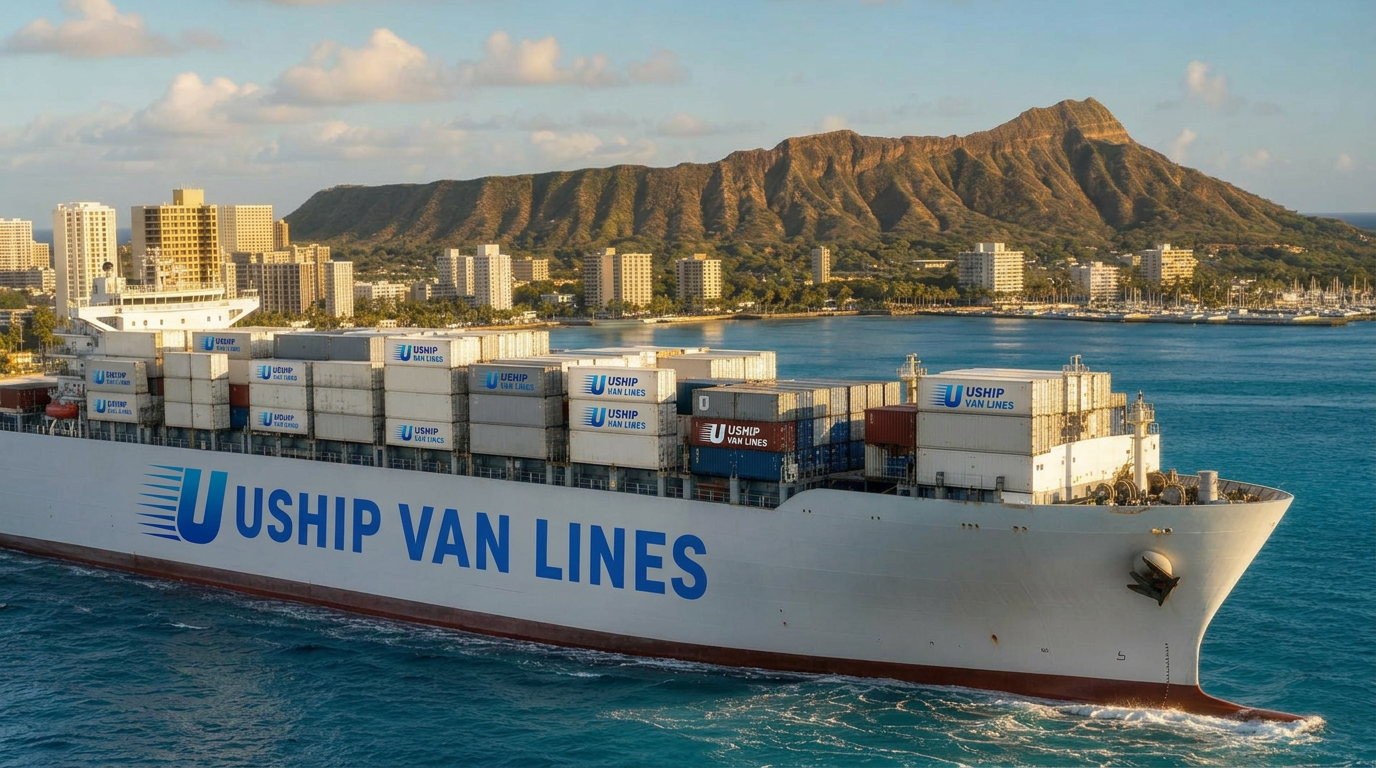
Moving from Mount Pleasant, SC to Hawaii
Moving from Mount Pleasant, South Carolina to the Hawaiian Islands is one of the most logistically complex domestic relocations you can undertake. Your belongings must travel roughly 5,000 miles across the continental U.S. and then 2,400+ miles across the Pacific Ocean via container ship. The journey typically involves ground transportation from Mount Pleasant to a West Coast consolidation point, ocean freight from California ports to Honolulu, and potentially inter-island shipping to Maui, Kauai, or the Big Island.
Best Alaska & Hawaii Movers, powered by UShip Van Lines, specializes in these transcontinental-to-transpacific moves. We coordinate every leg—from your Charleston-area home to your new island residence—handling customs paperwork, port logistics, and the unique requirements Hawaii imposes on incoming household goods. Request a free quote today to get a detailed timeline and cost breakdown tailored to your inventory and destination island.
Route overview
Route Overview: Mount Pleasant, SC to Hawaii
Your household goods depart Mount Pleasant and travel overland approximately 2,800–3,000 miles to either the Port of Long Beach or Port of Oakland in California. This leg typically takes 5–7 days by truck, depending on consolidation schedules and whether your shipment moves as a dedicated load or shares space with other Hawaii-bound cargo. At the West Coast port, your items are loaded into a 20-foot or 40-foot ocean container—the industry standard for Hawaii moves.
From California, Matson Navigation or Pasha Hawaii operates regular container ship service to Honolulu, with sailings multiple times per week. Ocean transit averages 5–7 days to Oahu. If your final destination is Maui, Kauai, or the Big Island, cargo is transshipped via inter-island barge (Young Brothers), adding 3–7 days. Total door-to-door transit from Mount Pleasant to Honolulu runs 14–21 days; to neighbor islands, expect 18–28 days depending on barge schedules and port congestion.
This route requires careful coordination with Hawaii's agricultural inspection requirements. All household goods entering Hawaii undergo mandatory inspection by the Hawaii Department of Agriculture to prevent invasive species. Clean, well-packed items clear quickly; soil-contaminated furniture, certain plants, and untreated wood may be rejected or require fumigation at your expense.
How the moving process works
How the Moving Process Works
-
In-Home or Virtual Survey: A Best Alaska & Hawaii Movers coordinator conducts a detailed inventory of your Mount Pleasant home—either in person or via video call. We assess cubic footage, identify items requiring special handling (pianos, artwork, antiques), and discuss Hawaii's restrictions on plants, soil, certain foods, and pets.
-
Packing and Loading in Mount Pleasant: Professional movers arrive at your South Carolina home, pack your belongings using ocean-rated materials (reinforced boxes, moisture barriers), and load everything into a truck. Furniture is pad-wrapped and secured for the long overland haul to California. We coordinate timing so your shipment arrives at the West Coast port in sync with the next available Matson or Pasha sailing.
-
Overland Transit to California Port: Your goods travel cross-country to Long Beach or Oakland. During this leg, the truck may consolidate with other Hawaii-bound shipments at a West Coast warehouse to maximize container efficiency and reduce your cost. Consolidation adds 2–4 days but can save $1,000–$2,000 on smaller moves.
-
Container Loading and Ocean Freight: At the port, longshoremen load your household goods into a steel ocean container. The container is secured aboard a Matson or Pasha vessel for the 5–7 day Pacific crossing to Honolulu. You receive a bill of lading and container number for tracking.
-
Hawaii Agricultural Inspection: Upon arrival in Honolulu, the container is offloaded and routed to a Hawaii Department of Agriculture inspection facility. Inspectors examine boxes for soil, seeds, insects, and prohibited items. Clean shipments clear in 1–2 days; issues trigger delays and potential fees.
-
Inter-Island Transport (if applicable): If you're moving to Maui, Kauai, Hilo, or Kona, your container is transferred to a Young Brothers barge for inter-island shipping. Barge schedules vary by island—Maui sailings are frequent (2–3 times weekly), while Kauai may be once or twice per week.
-
Final Delivery to Your Hawaii Home: A local Hawaii moving crew unloads the container, transports your goods to your new residence, and unpacks/assembles furniture as contracted. They navigate narrow island roads, limited parking, and any building restrictions (many condos have reservation systems and elevator rules). You inspect and sign off on delivery.
Estimated moving costs
What a Move from Mount Pleasant, SC to Hawaii Costs
A typical 2–3 bedroom household (approximately 1,000–1,500 cubic feet) moving from Mount Pleasant to Hawaii costs $7,500–$14,000 for full-service door-to-door transport. Smaller studio or 1-bedroom moves (under 700 cubic feet) can run $4,500–$7,000, while large 4+ bedroom homes (2,000+ cubic feet) may exceed $16,000–$22,000. These figures include ground transportation from South Carolina to California, ocean freight, Hawaii agricultural inspection, and final delivery on your destination island.
Key cost drivers:
- Distance to West Coast: Mount Pleasant sits roughly 2,800 miles from California ports. Overland trucking for this distance runs $2,000–$4,000 depending on fuel prices and whether your shipment consolidates.
- Container size and exclusivity: Sharing a container (LCL, "less than container load") saves money but adds consolidation time. A dedicated 20-foot container costs more but ships faster and reduces handling risk.
- Destination island: Honolulu delivery is least expensive. Maui, Kauai, and Big Island destinations add $800–$2,000 for inter-island barge and additional last-mile delivery.
- Packing services: Professional full-pack service adds $800–$2,500 depending on home size and fragility of contents. Self-packing (you box, we supply materials) reduces costs but shifts breakage liability.
- Seasonality: Summer months (May–September) see higher demand and marginally higher rates. Hurricane season (June–November) can cause port delays, though carriers rarely surcharge for weather risk.
- Vehicle shipping: Adding a car costs $1,400–$2,200 from the East Coast to Hawaii via roll-on/roll-off (RORO) vessel. Motorcycles run $800–$1,200.
Best Alaska & Hawaii Movers provides binding estimates after a detailed inventory. We never advertise guaranteed flat rates without seeing your specific goods—every move's cost depends on actual volume, services selected, and current fuel/port fees. Request a free quote to receive a line-item breakdown tailored to your Mount Pleasant-to-Hawaii relocation.
Estimated transit times
How Long Does It Take?
Door-to-door transit from Mount Pleasant, SC to Hawaii averages 14–28 days, broken down as follows:
- Mount Pleasant to California port (overland): 5–7 days by truck. If your shipment consolidates with other Hawaii-bound cargo at a West Coast warehouse, add 2–4 days for loading coordination.
- Port staging and container loading: 1–3 days. Containers must be loaded, sealed, and positioned for the next available Matson or Pasha sailing. Peak season or port congestion can extend this to 4–5 days.
- Ocean crossing (California to Honolulu): 5–7 days under normal sailing conditions. Weather delays are rare but possible during winter storms (December–March).
- Hawaii agricultural inspection: 1–2 days for clean shipments. If inspectors flag soil contamination or prohibited items, expect 3–5 days for resolution or fumigation.
- Inter-island barge (to Maui, Kauai, Big Island): 3–7 days depending on barge schedule and destination port. Maui (Kahului) receives frequent service; Kauai (Nawiliwili) and Hilo are less frequent.
- Final delivery: Scheduled within 1–3 days of container arrival at your island.
Fastest-case scenario: 14 days (Mount Pleasant to Honolulu, express overland, immediate sailing, no consolidation). Realistic average: 18–21 days to Oahu, 21–28 days to neighbor islands. Slowest edge cases: 30–35 days if you encounter port strikes, hurricane-related delays, or agricultural inspection issues.
We provide tracking updates at each milestone—departure from South Carolina, arrival at West Coast port, sailing date, Honolulu arrival, and final delivery appointment. Plan to live without your household goods for at least three weeks; ship or carry essential items separately.
Regional logistics
Hawaii-Specific Moving Logistics
Ports and carriers: All Hawaii-bound freight from the mainland funnels through the Port of Long Beach, Port of Oakland, or (less commonly) Port of Seattle. Matson Navigation and Pasha Hawaii are the only regular container carriers serving Hawaii; both operate large, purpose-built vessels on fixed schedules (3–4 sailings per week to Honolulu). Your goods travel in a 20-foot or 40-foot steel container, either as an exclusive shipment or consolidated with other households.
Agricultural inspection: Hawaii enforces the strictest biosecurity rules in the U.S. The Hawaii Department of Agriculture inspects 100% of incoming household goods. Prohibited items include live plants, soil, fresh fruits/vegetables, certain seeds, untreated wood, and animal products. Restricted items (outdoor furniture, gardening tools, used appliances) must be cleaned to HDOA standards. Best Alaska & Hawaii Movers provides a detailed checklist pre-move; failure to comply results in rejection, quarantine, or fumigation fees ($300–$800).
Vehicle shipping: Cars, trucks, and motorcycles ship separately via roll-on/roll-off (RORO) vessel from Long Beach, Oakland, or San Diego. Matson and Pasha both offer auto transport; transit takes 7–10 days to Honolulu. Vehicles must be cleaned (no soil in wheel wells or undercarriage) and contain less than ¼ tank of fuel. Personal items are not permitted inside vehicles during ocean transport. Cost from the East Coast: $1,400–$2,200 per car.
Neighbor island logistics: Oahu (Honolulu) has the highest-capacity port and receives direct mainland service. Maui, Kauai, and Big Island residents face an additional inter-island leg via Young Brothers barge. Barge schedules vary: Maui (Kahului) receives 2–3 sailings per week; Kauai (Nawiliwili) 1–2 per week; Hilo and Kona 1–2 per week. Barge delays are common during high surf (winter) or equipment shortages. Budget an extra week for neighbor island delivery.
Condo and HOA restrictions: Many Hawaii condos and planned communities restrict move-in hours (weekdays only, 8 AM–4 PM), require certificate of insurance from movers, and charge elevator reservation fees ($100–$300). Notify your building management 2–3 weeks before delivery to book freight elevators and loading dock access. Street parking is extremely limited in Honolulu; long-carry fees ($150–$400) apply if the truck cannot park within 75 feet of your building entrance.
Storage options: If your new Hawaii home isn't ready or you're downsizing, we offer container storage at the Honolulu port warehouse or in a climate-controlled mainland facility before shipping. Rates run $150–$300 per month depending on container size. Storage on the neighbor islands is more expensive and limited; plan accordingly.
Seasonal considerations
Best Times of Year to Move to Hawaii
Spring (March–May): Excellent window. Hurricane season hasn't started, weather is mild across the mainland and Hawaii, and shipping demand hasn't peaked. Port congestion is minimal. Matson and Pasha maintain regular schedules. Book 4–6 weeks ahead.
Summer (June–August): Peak moving season. Families relocate before the school year, military PCS orders spike, and demand for containers rises. Expect higher rates (10–15% above spring) and longer consolidation waits. Hurricane season begins June 1, though major storms rarely form before late August. Book 6–8 weeks in advance to secure your preferred dates.
Fall (September–November): Hurricane season peaks in September–October. While direct hits on Hawaii are rare, storms can delay sailings or close ports for 2–5 days. On the plus side, moving demand drops after Labor Day, rates soften, and you'll have more scheduling flexibility. Agricultural inspection can slow in fall due to increased pest activity in warm months. Book 4–6 weeks ahead; build buffer time into your arrival plans.
Winter (December–February): Off-peak season offers the lowest rates and fastest consolidation, but winter storms on the mainland can delay the overland leg from South Carolina. Pacific winter storms (Kona lows) occasionally disrupt Honolulu port operations. Holiday weeks (Thanksgiving, Christmas, New Year's) see skeleton port crews and slower processing. If you have flexibility, late January–early February is ideal: low demand, stable weather, and aggressive carrier pricing.
Military PCS considerations: Joint Base Charleston personnel moving to Pearl Harbor or Marine Corps Base Hawaii should coordinate with TMO (Transportation Management Office). Government-contracted movers follow similar routes but operate under DOD weight allowances and timelines. Best Alaska & Hawaii Movers handles both civilian and military-affiliated moves; we assist with weight certifications and DITY (do-it-yourself) move documentation.
Why choose Best Alaska & Hawaii Movers
Why Choose Best Alaska & Hawaii Movers
-
Non-contiguous specialists: We focus exclusively on Alaska and Hawaii relocations, so we know the unique challenges of ocean shipping, agricultural inspections, and island logistics. Mainland-only movers often subcontract Hawaii moves, adding cost and complexity. We own the relationship from Mount Pleasant to your Hawaii doorstep.
-
Transparent, binding estimates: After a detailed inventory, we provide a binding not-to-exceed quote that breaks down overland, ocean freight, inspection, inter-island, and delivery costs. No surprise fees at destination (barring customer-requested changes or prohibited-item rejections).
-
Matson and Pasha partnerships: We maintain direct booking relationships with both major Hawaii carriers, ensuring you get the next available sailing rather than waiting for a broker's consolidated slot. Faster sailings mean shorter transit and less time living out of suitcases.
-
Full-service packing and custom crating: Our crews use Hawaii-grade packing materials—moisture-resistant boxes, silica gel packets for electronics, and reinforced crating for heirlooms. We understand that a 10-day ocean voyage in a steel container requires more robust packing than a local move.
-
Island delivery network: We partner with licensed, insured moving companies on Oahu, Maui, Kauai, and the Big Island for final delivery. These crews know local building rules, narrow roads, and how to navigate Hawaii's unique last-mile challenges.
-
Claims support and insurance: Every move includes basic valuation coverage (60 cents per pound); we offer full-replacement-value insurance for high-value shipments. If damage occurs, our claims team works directly with underwriters to resolve quickly—no finger-pointing between mainland and island contractors.