
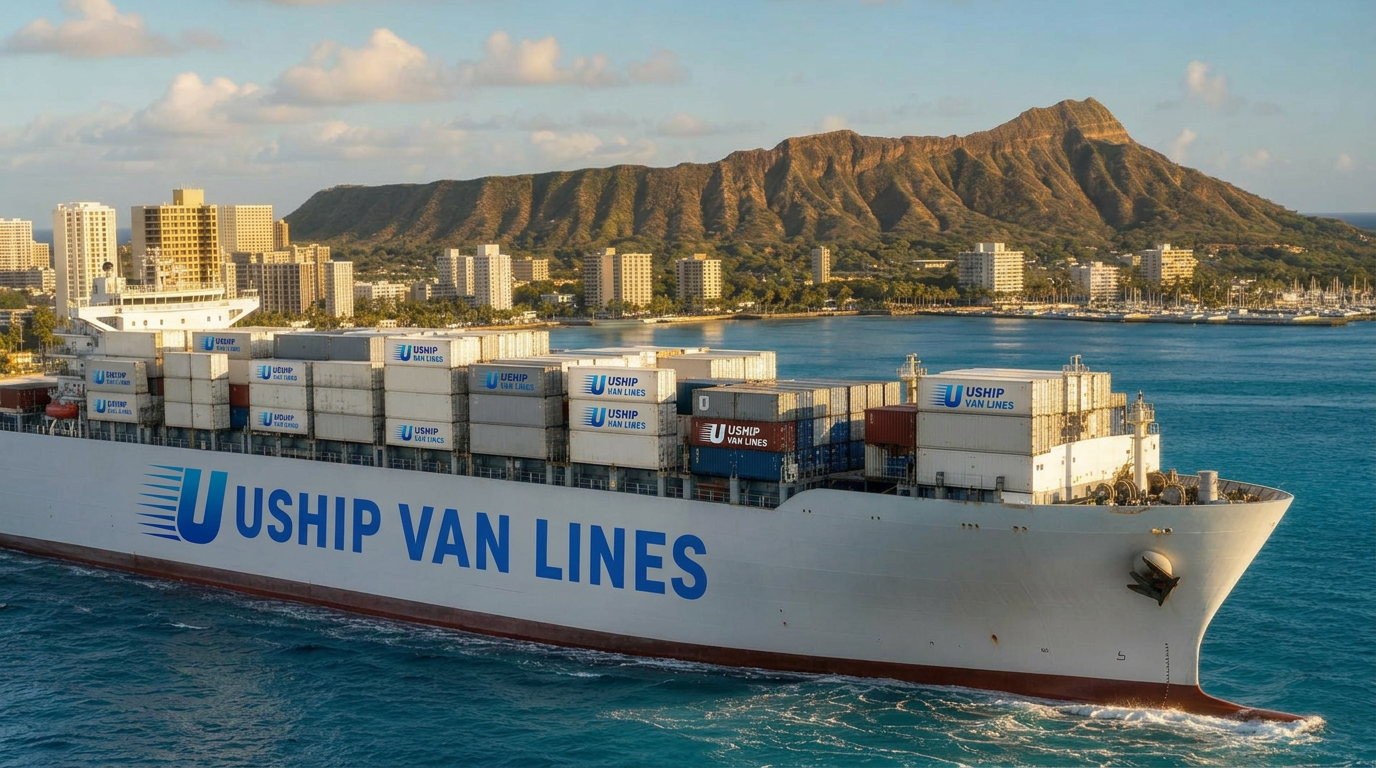
Moving from Lakewood, CO to Hawaii
Moving from Lakewood, Colorado to Hawaii transforms your landlocked life into island living—but this isn't a typical cross-country move. Your belongings will travel over 3,400 miles by truck to the West Coast, then by ocean container across the Pacific to Honolulu, Maui, Kauai, or the Big Island. The logistics involve coordination between ground transport, port scheduling, ocean shipping, and final delivery across water.
Best Alaska & Hawaii Movers, powered by UShip Van Lines, specializes in these complex mainland-to-Hawaii relocations. We handle the entire journey from your Lakewood doorstep to your new island home, managing port paperwork, container loading, and coordination with Matson or Pasha shipping lines. Request a free quote today to start planning your Pacific crossing with realistic timelines and transparent pricing.
Route overview
The Lakewood to Hawaii Moving Lane
Your move from Lakewood begins with ground transport west to Long Beach or Oakland, California—the two primary mainland ports serving Hawaii. This 1,000–1,200 mile overland leg typically takes 2–3 days. Your household goods are then loaded into 20-foot or 40-foot ocean containers at the port, consolidated with other shipments or dedicated to your move depending on volume.
Once containerized, your shipment sails 2,400+ nautical miles across the Pacific to Honolulu on Oahu, the central distribution hub for all Hawaiian islands. Matson and Pasha operate regular weekly sailings year-round, though schedules tighten during peak summer months. If you're moving to Maui, Kauai, or the Big Island, your container transfers to inter-island barge service, adding 3–7 days to total transit.
Colorado families moving to Hawaii often underestimate the planning timeline. Between booking, packing, cross-country trucking, port processing, ocean transit, customs clearance, and final delivery, you're looking at 3–5 weeks door-to-door under normal conditions. Hurricane season (June–November) and holiday peaks can extend this further, making advance planning essential.
How the moving process works
How Your Lakewood to Hawaii Move Works
-
Free Quote & Planning Consultation – We assess your inventory (typically 2–4 bedroom homes run 1,200–3,500 cubic feet), discuss your destination island, and provide a detailed cost breakdown. We'll explain container sizing, prohibited items (Hawaii bans many plants, soil, and certain woods), and realistic timelines.
-
Ground Transport to West Coast Port – Our partner carriers pick up your belongings in Lakewood and transport them to Long Beach or Oakland. This leg takes 2–4 days depending on scheduling. Your items are inventoried, padded, and secured for the long journey.
-
Container Loading & Port Processing – At the port, your household goods are loaded into ocean containers. Full-service moves include professional packing and loading; consolidated moves share container space. Port processing, customs documentation, and USDA agricultural inspections happen here—Hawaii has strict biosecurity rules.
-
Ocean Transit to Honolulu – Matson or Pasha container ships make the 5–7 day crossing from California to Honolulu. Your container remains sealed during transit. Tracking updates are available, though precise ETAs can shift with weather and port congestion.
-
Inter-Island Transfer (If Applicable) – Moves to Maui, Kauai, Big Island, or Molokai require barge transfer from Oahu. Young Brothers operates inter-island freight, adding 3–7 days. This is often the variable leg in your timeline.
-
Customs Clearance & Final Delivery – Upon arrival at your destination island, containers clear Hawaii customs (even though it's domestic, agricultural inspections apply). We coordinate final delivery to your new address, navigating narrow island roads and any access restrictions.
-
Unpacking & Debris Removal – Full-service options include unpacking, furniture placement, and carton removal. Many island homes have unique access challenges (steep driveways, narrow lanes), which our Hawaii-experienced crews handle routinely.
Estimated moving costs
What a Lakewood to Hawaii Move Costs
A typical 2–3 bedroom household (1,500–2,500 cubic feet) moving from Lakewood to Hawaii runs $6,500–$12,500 for full-service door-to-door shipping. Studio or 1-bedroom moves start around $4,200–$5,800, while larger 4-bedroom homes can reach $14,000–$18,000+. These estimates include ground transport to port, ocean container shipping, and final island delivery—but costs vary significantly based on several factors.
Key cost drivers include:
- Volume and weight – Ocean freight prices by container space and weight; Hawaii has strict weight limits due to island infrastructure
- Destination island – Oahu moves cost less than outer islands (Maui, Kauai, Big Island) due to the inter-island barge leg
- Container type – Shared/consolidated containers cost less but have longer timelines; exclusive 20' or 40' containers offer faster service at premium pricing
- Season – Peak summer months (June–August) and holiday periods command 15–25% surcharges due to demand
- Packing services – DIY packing saves $800–$1,500; professional packing protects against ocean transit damage
- Vehicle shipping – Cars ship separately via roll-on/roll-off service, adding $1,200–$1,800 per vehicle
- Storage – If your new home isn't ready, Hawaii storage runs $200–$400/month (mainland staging is often cheaper)
We never quote guaranteed prices without a detailed inventory. Request a free assessment to receive a binding estimate tailored to your specific move. Hawaii moves require agricultural declarations and may incur fumigation fees ($150–$400) if wooden furniture needs treatment.
Estimated transit times
Timeline: Lakewood to Hawaii Door-to-Door
Plan for 18–35 days total transit time from pickup in Lakewood to delivery at your Hawaii destination. This breaks down into distinct legs:
Ground Transport (2–4 days): Lakewood to Long Beach or Oakland port. Direct routing takes 2–3 days; scheduling and warehouse staging can add 1–2 days.
Port Processing (2–5 days): Container loading, agricultural inspection, customs documentation, and waiting for the next available sailing. Peak season or paperwork issues extend this phase.
Ocean Transit (5–7 days): California to Honolulu on Matson or Pasha container ships. Weather rarely delays sailings, but port congestion in Long Beach can push departure dates.
Inter-Island Barge (3–7 days, if applicable): Honolulu to Maui, Kauai, or Big Island on Young Brothers barges. This is the most variable leg—schedules run 1–2x weekly per island, and you must wait for the next available slot.
Final Delivery (1–3 days): Island customs clearance, container unloading, and delivery to your address. Remote areas or access restrictions can add time.
Fastest scenario: Direct Oahu move during off-peak can hit 18–22 days. Typical timeline: 25–30 days for outer islands. Extended: Hurricane season delays, peak summer congestion, or agricultural holds can push to 35+ days. Book 6–8 weeks before your desired delivery date to ensure smooth scheduling.
Regional logistics
Hawaii-Specific Moving Logistics
Port Operations: Your shipment routes through Long Beach (Pier H) or Oakland (Pier 50/55), the two Hawaii-serving mainland ports. Matson dominates the Hawaii trade with multiple weekly sailings; Pasha offers competitive pricing. Port dwell times vary—Long Beach often has 1–2 day longer processing due to higher overall volume.
Agricultural Restrictions: Hawaii maintains the nation's strictest biosecurity. You cannot ship soil, most live plants, certain woods (unfinished, with bark), fresh food, or seeds. The USDA inspects all containers at mainland ports. Items flagged for risk require fumigation ($150–$400) or disposal. Our team provides a detailed prohibited items list during planning—failure to declare can result in container holds and penalties.
Vehicle Shipping: Cars ship separately via Matson or Pasha roll-on/roll-off (RoRo) service from the same ports. Cost runs $1,200–$1,800 per vehicle, transit is typically faster than household goods (7–12 days total). Vehicles must be clean (exterior and interior), contain no personal items, and have less than 1/4 tank of gas. Military and classic car options available.
Inter-Island Logistics: Young Brothers operates the monopoly on inter-island freight. Schedules vary by destination: Maui receives 2–3 barges weekly, Kauai 1–2x, Big Island 2–3x (Hilo and Kona), Molokai weekly. Missing a barge slot adds 3–7 days. We coordinate timing to minimize Honolulu staging.
Delivery Challenges: Island roads often feature steep grades, narrow lanes, and weight restrictions. Many older Hawaii neighborhoods have overhead tree canopy, tight turns, and limited truck access. Large semi-trailers can't reach all addresses—sometimes requires transfer to smaller trucks, adding cost and time. Notify us of any access concerns (gated communities, private roads, elevation) during booking.
Insurance & Claims: Standard carrier liability covers $0.60/lb—inadequate for ocean moves. We recommend full-value protection at 2–3% of declared value. Hawaii's saltwater environment increases damage risk; professional packing significantly reduces claims. Document high-value items with photos and serial numbers before shipping.
Seasonal considerations
Best Times to Move from Lakewood to Hawaii
Winter/Spring (January–May): Ideal moving window. Mild weather in Colorado for packing, calm Pacific crossings, and less port congestion. Rates are 10–20% lower than peak season. Book 6–8 weeks out for best pricing and scheduling.
Summer Peak (June–August): Highest demand as families relocate between school years. Container space books up 8–12 weeks in advance. Expect 20–30% rate premiums and longer port processing times. Early hurricane season begins in June, though major storms are rare before September. Colorado summer weather is ideal for packing and loading.
Hurricane Season Peak (September–November): The Atlantic gets more attention, but Hawaii hurricane season runs June–November with peak risk in August–September. While direct hits are uncommon, tropical storms can delay sailings 3–7 days and cause port closures. Rates moderate slightly from summer highs. This is actually good weather in Lakewood (mild fall) for moving logistics.
Holiday Period (Late November–December): Thanksgiving through New Year's sees reduced sailing schedules and premium holiday rates. Port operations slow during the final two weeks of December. If you must move during holidays, book 10–12 weeks ahead and add 5–7 days to standard timelines. Lakewood winter weather can complicate loading if snow hits.
Pro tip: Shoulder seasons (April–May and September–October) offer the best balance of reasonable rates, available capacity, and manageable weather on both ends of your move.
Why choose Best Alaska & Hawaii Movers
Why Choose Best Alaska & Hawaii Movers
-
Specialized Hawaii Expertise – We focus exclusively on Alaska and Hawaii moves, not occasional add-ons to a mainland moving business. We understand Matson and Pasha schedules, Hawaii agricultural rules, and inter-island logistics that confuse general movers.
-
Single-Source Coordination – One point of contact manages your entire journey: Lakewood pickup, overland transport, port processing, ocean shipping, inter-island transfer, and final island delivery. No finger-pointing between multiple contractors.
-
Transparent Pricing & Realistic Timelines – We provide detailed, binding estimates based on actual container costs and seasonal rates. You'll never hear "we'll figure it out at delivery." Our quotes include all foreseeable fees, and we explain variables upfront.
-
Powered by UShip Van Lines Network – Our partnership with UShip Van Lines connects us to vetted, licensed carriers nationwide while maintaining our Hawaii specialization. You get big-network reliability with boutique service focus.
-
Proactive Communication – We provide tracking updates at each milestone: pickup confirmation, port arrival, sailing departure, Honolulu arrival, inter-island transfer, and delivery scheduling. You're never left wondering where your belongings are in the Pacific.
-
Hawaii Agricultural Compliance – Our team pre-screens your inventory for prohibited items, prepares proper USDA declarations, and coordinates any required inspections or treatments—preventing costly delays and container holds at ports.