
Moving from Lakewood, CO to Alaska
Relocating from Lakewood, Colorado to America's Last Frontier represents one of the most logistically complex domestic moves you can undertake. Unlike a standard interstate relocation, your household goods will travel by truck from the Front Range to the Pacific Northwest, transfer to ocean barge for the voyage to Alaska, then complete a final overland journey to your destination city—whether that's Anchorage, Fairbanks, the Mat-Su Valley, or beyond.
Best Alaska & Hawaii Movers, powered by UShip Van Lines, specializes in precisely this type of multi-modal move. We coordinate every phase from your Lakewood doorstep through barge transit and final delivery, eliminating the confusion of managing multiple carriers yourself. Ready to start planning your Alaska adventure? Request your free, no-obligation quote today and let our Alaska specialists walk you through the entire process.
Route overview
The Lakewood-to-Alaska Moving Corridor
Your belongings will begin their journey with a pickup in Lakewood—typically from one of the city's many residential neighborhoods near Belmar, Green Mountain, or Bear Creek—and travel approximately 1,250 miles northwest via I-25, I-90, and I-5 to the Port of Tacoma in Washington State. This is the primary departure point for Alaska-bound household goods shipped by sea.
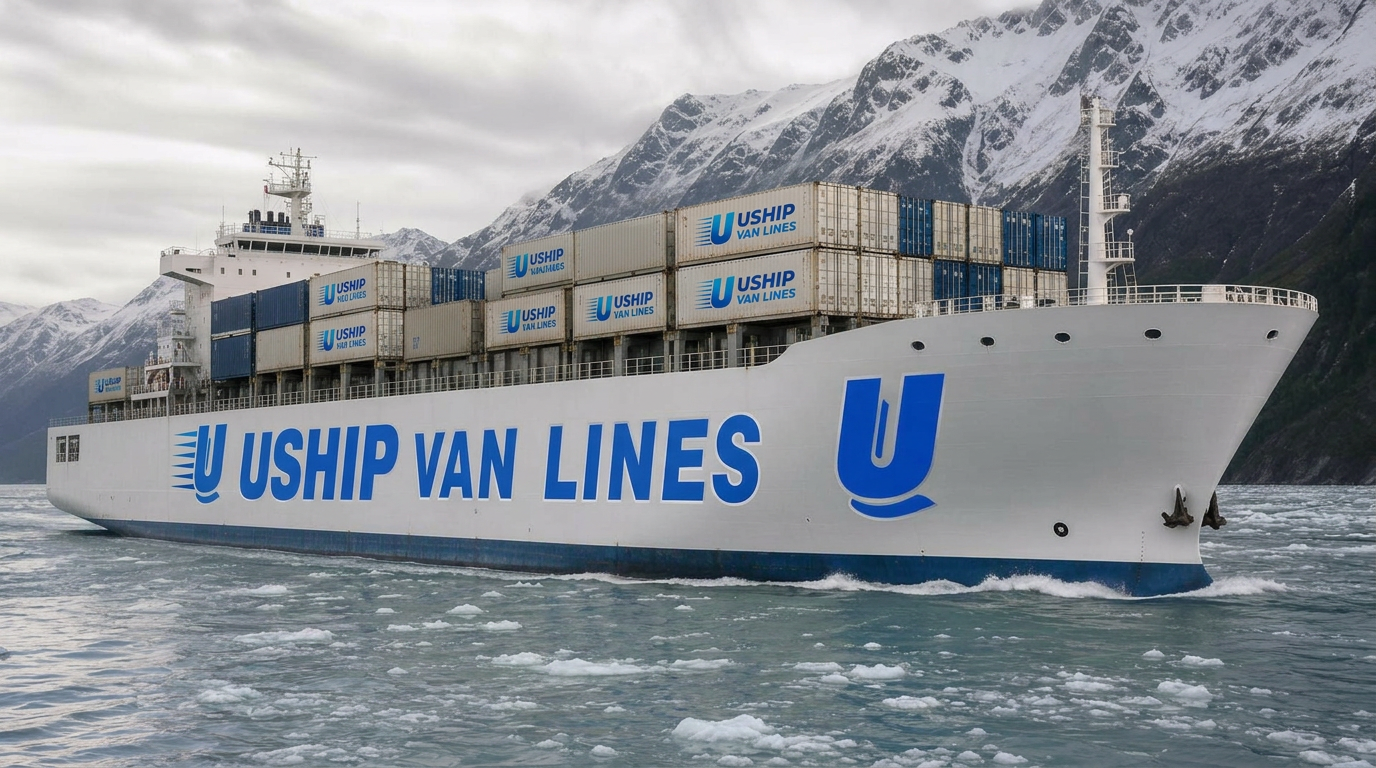
From Tacoma, your shipment boards an ocean barge operated by carriers like TOTE Maritime or Alaska Marine Lines for the roughly 1,500-nautical-mile voyage to the Port of Anchorage. Transit across the Gulf of Alaska typically takes 5–7 days depending on weather and sailing schedule. Once the barge docks in Anchorage, your goods clear customs inspection (yes, even for domestic moves—Alaska has agricultural restrictions), then continue by truck to your final destination, whether that's downtown Anchorage, Fairbanks via the Parks Highway, communities in the Matanuska-Susitna Borough, or the Kenai Peninsula.
This complex choreography requires precision timing and experienced coordination. A delay at any single point—missed barge sailing, customs hold, or weather closure—can cascade into weeks of storage fees and frustration if not managed by professionals who understand Alaska logistics inside and out.
How the moving process works
How Your Lakewood-to-Alaska Move Unfolds: Step by Step
-
Initial consultation and inventory assessment – Our Alaska moving specialists conduct a detailed virtual or in-home survey of your Lakewood residence, noting cubic footage, special items (firearms, vehicles, restricted goods), and your preferred delivery window in Alaska. We'll discuss whether you're shipping a vehicle separately or including it in the household shipment.
-
Packing and load-out in Lakewood – Professional movers arrive at your Colorado home to pack (if you've chosen full-service) and load your belongings into a dedicated truck or consolidated container. Items are inventoried, wrapped, and secured for the long journey. For Lakewood moves, we often schedule pickups during weekday windows to avoid weekend traffic on C-470 and Wadsworth Boulevard.
-
Overland transport to Port of Tacoma – Your shipment travels roughly 1,250 miles northwest, typically taking 2–3 days of driving time. The truck delivers your container to the Tacoma freight terminal where it awaits the next available barge sailing to Alaska.
-
Barge loading and ocean transit – Your container is loaded aboard a roll-on/roll-off barge or secured in a cargo hold. The sailing schedule to Anchorage typically runs once or twice weekly during peak season (May–September) and less frequently in winter. Ocean transit itself takes 5–7 days depending on sea conditions.
-
Port of Anchorage arrival and customs clearance – Upon docking, your shipment undergoes USDA and Alaska Department of Natural Resources inspection for prohibited agricultural items (certain plants, soil, seeds). This clearance usually takes 1–2 business days but can extend if documentation issues arise.
-
Last-mile delivery in Alaska – Once cleared, your goods load onto a local Alaska truck for final delivery. If you're moving to Anchorage or the Mat-Su Valley, this is a same-day or next-day process. Fairbanks deliveries add another 1–2 days via the Parks Highway (358 miles). Remote or off-road-system communities require additional arrangements, often involving bush planes or seasonal ice roads.
-
Unload, placement, and final walk-through – Movers deliver your belongings to your Alaska home, place furniture in designated rooms, and review the inventory sheet with you. We address any damage claims immediately and ensure you're completely satisfied before our crew departs.
Estimated moving costs
What Does a Lakewood-to-Alaska Move Actually Cost?
For a typical 2–3 bedroom household moving from Lakewood to Anchorage or Fairbanks, expect to invest between $6,800 and $12,500 for a full-service move. This range reflects the unique multi-modal nature of Alaska relocations, which combine overland trucking, ocean freight, port handling, and last-mile delivery in a single coordinated shipment.
Key cost drivers include:
- Shipment volume – Charges are typically calculated per cubic foot or by container size (10-foot, 20-foot, or 40-foot). A modest 2-bedroom apartment might fill 600–800 cubic feet, while a 3-bedroom house with garage items can easily reach 1,200–1,600 cubic feet.
- Barge sailing season – Peak summer sailings (June–August) command premium rates due to high demand from seasonal workers, military families, and new residents. Off-season moves (October–March) can save 15–25% but face longer transit times and weather delays.
- Packing services – DIY packing saves $800–$1,500 but increases the risk of damage during the multi-leg journey. Professional packing ensures everything survives ocean transit and rough Alaskan roads.
- Vehicle shipping – Adding a car or truck to your household shipment costs an additional $1,800–$3,200 depending on vehicle size and whether it's driven onto the barge or containerized.
- Final destination – Anchorage and Wasilla deliveries cost less than Fairbanks (which adds 700+ round-trip highway miles). Off-road-system communities like Bethel, Kodiak, or Southeast Alaska towns require additional marine or air freight, sometimes doubling the base cost.
- Accessorial services – Long carries from truck to door, stair carries, storage-in-transit in Tacoma or Anchorage, and special handling for pianos, gun safes, or artwork all add to the final invoice.
We never guarantee prices without a detailed inventory, as every household is unique. Request a free quote to receive a customized estimate based on your actual belongings and Alaska destination.
Estimated transit times
How Long Does a Lakewood-to-Alaska Move Take Door-to-Door?
Plan for a total transit time of 14–28 days from pickup in Lakewood to delivery in Alaska. This wide range reflects the variables inherent in ocean barge logistics, seasonal weather, and your final destination within the state.
Here's how the timeline typically breaks down:
- Lakewood pickup to Port of Tacoma: 2–4 days (1,250 miles of overland trucking, including potential consolidation time if you're sharing container space)
- Tacoma port staging: 2–10 days (waiting for the next available barge sailing; summer sailings are more frequent, winter less so)
- Ocean transit to Anchorage: 5–7 days (direct sailing across the Gulf of Alaska, weather permitting)
- Port clearance and customs: 1–3 days (USDA agricultural inspection and documentation processing)
- Final delivery in Alaska: 1–3 days (same-day for Anchorage; 1–2 days for Mat-Su Valley or Kenai; 2–3 days for Fairbanks)
During winter months (November–March), expect the upper end of these ranges. Severe weather can delay barge departures from Tacoma, slow ocean crossings, or temporarily close the Parks Highway to Fairbanks. Conversely, midsummer moves (June–July) often hit the faster end, with weekly sailings and minimal weather delays.
Pro tip: If you have firm move-in dates in Alaska (job start, lease beginning, school enrollment), communicate these upfront. We can often expedite certain legs or arrange storage-in-transit to ensure your belongings arrive when you need them, not weeks late.
Regional logistics
Alaska-Specific Logistics You Need to Understand
Port operations and paperwork Even though Alaska is a U.S. state, shipments via ocean barge face agricultural inspections enforced by USDA and Alaska DNR. Prohibited items include live plants, soil, certain seeds, fresh produce, and untreated firewood (invasive pest concerns). Your moving company must provide a detailed cargo manifest, and inspectors can delay or reject shipments that lack proper documentation. We handle all required paperwork as part of our service.
Vehicle shipping options Many Lakewood residents choose to ship a vehicle alongside household goods. You have two options: drive-on/drive-off (cheaper, vehicle is driven onto the barge and parked) or containerized (more expensive, vehicle is secured inside a container for added protection). Drive-on requires the vehicle to be in running condition with less than a quarter-tank of fuel (fire safety). We coordinate vehicle pickup in Lakewood and delivery in Alaska on the same timeline as your household shipment.
Last-mile challenges in Alaska If you're moving to Anchorage, Eagle River, Wasilla, or Palmer, final delivery is straightforward—all are on the road system with paved access. Fairbanks requires a 6–8 hour drive north on the Parks Highway, which is maintained year-round but subject to winter closures. Off-road-system destinations (Juneau, Ketchikan, Sitka, Kodiak, Nome, Barrow, or bush villages) require additional marine or air freight. For example, Juneau-bound shipments re-load onto a smaller barge in Anchorage for the trip to Southeast Alaska, adding 5–7 days and $1,500–$3,000 to your cost.
Storage options If your Alaska housing isn't ready when your shipment arrives, we offer storage-in-transit at secure warehouses in Anchorage. Monthly rates run $150–$300 per 500 cubic feet. Climate control is available but rarely necessary—Anchorage warehouses are typically heated in winter. Short-term storage (under 30 days) is often included in your quote; longer stays incur additional monthly fees.
Insurance and valuation Standard carrier liability covers $0.60 per pound, which severely undervalues electronics, furniture, and appliances. We strongly recommend full-value protection insurance, which costs roughly 1–2% of your shipment's declared value but covers repair, replacement, or cash settlement for damaged items. Given the multi-leg journey and ocean transit, the extra protection offers crucial peace of mind.
Seasonal considerations
Timing Your Lakewood-to-Alaska Move: Seasonal Strategy
Summer (May–September): Peak Season This is Alaska moving season. Barge sailings run weekly or twice-weekly, transit times are most predictable, and weather rarely disrupts schedules. However, demand is highest—military PCS moves, oil worker rotations, and new residents all compete for container space. Book 6–8 weeks in advance and expect premium pricing. The upside: your belongings arrive quickly, roads are dry, and delivery crews can access even remote properties without snow or ice challenges.
Fall (October–November): Shoulder Season Barge frequency begins tapering as Alaska's construction and tourism seasons wind down. You'll find better pricing (10–20% below summer peaks) and less competition for space. Early October moves usually proceed smoothly, but by late November, winter weather introduces variables: early snowstorms in the Alaska Range can delay Fairbanks deliveries, and rough Gulf of Alaska seas occasionally postpone barge departures. Still, this is an excellent window for budget-conscious movers who have flexibility.
Winter (December–March): Off-Season The cheapest time to move to Alaska, but also the most unpredictable. Barge sailings may run only once or twice monthly, and severe weather can delay ships by days. The Parks Highway to Fairbanks faces periodic closures for avalanche control or whiteout conditions. That said, if you're already in Alaska awaiting your household goods and can tolerate a 3–4 week window, the cost savings are substantial. Many military families and retirees choose winter moves to avoid summer chaos.
Spring (April–May): Transition Period As breakup season hits Alaska (snow melt, road deterioration), moving activity accelerates. Barge schedules ramp up toward summer frequency, but weather is still unpredictable—April can bring blizzards or 50-degree sunshine within the same week. Pricing sits between winter lows and summer peaks. If you're flexible and don't mind potential short delays, spring offers a nice balance of cost and reliability.
Why choose Best Alaska & Hawaii Movers
Why Lakewood Families Trust Best Alaska & Hawaii Movers
-
Single-source accountability for the entire journey – You won't juggle separate contracts with a Colorado moving company, a freight forwarder, a barge line, and an Alaska delivery crew. We coordinate all legs under one bill of lading, one point of contact, and one customer service team that tracks your shipment from Lakewood doorstep to Alaska delivery.
-
Alaska specialists, not generalist brokers – Our operations team lives and works in Alaska. We know which barge lines run the most reliable schedules, which Anchorage warehouses offer the best storage security, and how to navigate USDA inspections without delays. This expertise translates directly into faster transit times and fewer surprises.
-
Powered by UShip Van Lines' technology platform – Real-time shipment tracking, digital inventory management, and transparent pricing through UShip's logistics network. You'll receive updates at every milestone—loaded in Lakewood, arrived in Tacoma, barge departed, cleared customs, out for delivery in Alaska.
-
Flexible service tiers for every budget – Whether you need white-glove full-service packing and unpacking or a budget-friendly containerized self-pack option, we build a solution that fits your timeline and wallet. No cookie-cutter packages—every quote reflects your actual needs.
-
Proven track record with Colorado-to-Alaska relocations – We've moved hundreds of families from the Front Range to Alaska, including military families from Buckley Space Force Base, oil industry workers, and retirees seeking adventure. We understand Colorado's altitude-related packing considerations (thinner air = different box weights) and Alaska's unique delivery challenges.