
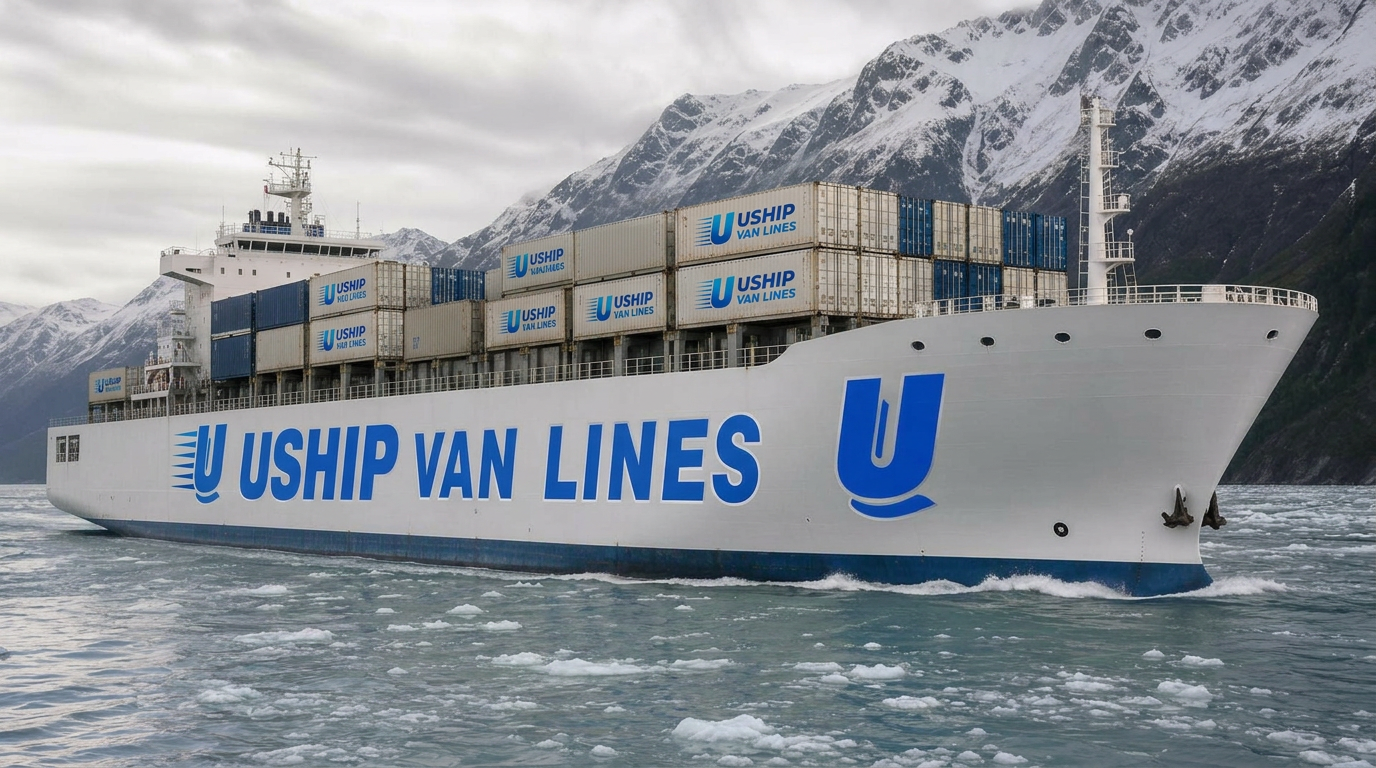
Moving from Irvine, CA to Alaska
Moving from Irvine, CA to Alaska represents one of the most complex domestic relocations you can undertake, combining cross-country trucking with maritime transport and last-mile delivery across challenging terrain. Your household goods will travel approximately 2,400 miles by truck to a West Coast port—typically Tacoma, Washington—then sail 1,500+ nautical miles to Alaska's ports before final delivery to your destination.
Best Alaska & Hawaii Movers, powered by UShip Van Lines, specializes in this exact corridor. We coordinate every leg of your journey—from pickup in Orange County through barge scheduling, customs clearance, and final delivery whether you're headed to Anchorage, Fairbanks, the Mat-Su Valley, or remote communities. Ready to simplify your Alaska move? Request your free, no-obligation quote today to see how we make this challenging route manageable.
Route overview
Understanding the Irvine to Alaska Moving Corridor
The Irvine to Alaska moving route requires precise coordination across multiple transportation modes. Your belongings begin in Southern California's temperate Mediterranean climate and end in environments ranging from Anchorage's subarctic winters to Southeast Alaska's maritime weather patterns. Most shipments originate in Irvine's master-planned communities and travel north through California's Central Valley, into Oregon and Washington, arriving at the Port of Tacoma—the primary gateway for Alaska-bound household goods.
From Tacoma, cargo moves via dedicated Alaska Marine Lines barges that sail twice weekly during peak season (May–September) and weekly during winter months. The barge journey to the Port of Anchorage takes 60–72 hours of sail time, though total port-to-port transit spans 7–10 days when accounting for loading, sailing, and unloading schedules. For destinations beyond Anchorage—Fairbanks, the Kenai Peninsula, Mat-Su Borough, or bush communities—additional trucking or air freight adds 1–7 days depending on road conditions, weather, and accessibility.
This route presents unique considerations that distinguish it from typical long-distance moves. Alaska's freight system operates on published sailing schedules with strict cutoff dates, particularly before winter when barge frequencies decrease. Understanding these rhythms, combined with California's local regulations and Alaska's import requirements, makes working with specialized carriers essential for avoiding costly delays or storage fees.
How the moving process works
Step-by-Step: How Your Irvine to Alaska Move Works
-
Initial Survey and Booking (6–10 weeks before move date): Schedule a virtual or in-home inventory assessment to determine cubic footage and weight. For Alaska moves, early booking is critical—summer sailing schedules fill quickly, and winter requires extra lead time for weather contingencies. We'll reserve your barge space and coordinate pickup dates that align with sailing cutoffs.
-
Pre-Move Planning and Paperwork (4–6 weeks out): Complete Alaska-specific documentation including detailed inventory lists and customs forms if you're bringing vehicles. We'll guide you through what items face restrictions (firearms, hazardous materials, certain foods) and help you decide what ships by barge versus what travels with you. This is also when you'll arrange disconnection of appliances and prepare items that require special handling.
-
Professional Packing and Loading in Irvine (1–3 days): Our crew arrives at your Orange County residence to pack, wrap, and load your household goods into a dedicated truck. For Alaska shipments, we use marine-grade wrapping and containerization to protect against humidity, temperature fluctuations, and extended transit times. Everything is inventoried with condition notes and loaded according to barge container specifications.
-
Overland Transport to Tacoma (3–5 days): Your shipment travels approximately 1,150 miles north through California, Oregon, and Washington to the Port of Tacoma. Trucks typically make this journey in 3–4 days, arriving at the port facility 2–3 days before the scheduled sailing to allow time for container loading and manifest processing.
-
Barge Sailing to Alaska (7–14 days port-to-port): Alaska Marine Lines barges depart Tacoma on published schedules, with the sailing itself taking 60–72 hours to Anchorage. Your container remains sealed throughout the voyage. Total port-to-port time includes pre-sail staging, the sailing itself, and unloading at the Port of Anchorage. Weather delays can add 1–3 days, particularly September through April.
-
Alaska Customs Clearance and Unloading (1–2 days): Upon arrival in Anchorage, containers go through Alaska Department of Transportation inspections and customs clearance. This process typically takes 6–24 hours. Once cleared, your container is unloaded from the barge and transferred to local delivery trucks or storage facilities depending on your final destination.
-
Last-Mile Delivery to Your Alaska Home (same day to 7+ days): For Anchorage addresses, delivery often occurs within 24–48 hours of port clearance. Fairbanks deliveries add 6–8 hours of driving north on the Parks Highway (weather permitting). Mat-Su Valley, Kenai Peninsula, and other road-accessible locations follow similar timelines. Remote or off-road-system communities require bush plane or specialized delivery, adding additional time and cost. Our team unloads, assembles furniture, and removes packing materials, completing your door-to-door journey.
Estimated moving costs
What Does an Irvine to Alaska Move Cost?
A typical 2–3 bedroom household move from Irvine, CA to Alaska ranges from $6,800 to $14,500 for full-service door-to-door transportation. Studio and 1-bedroom moves typically cost $4,200–$7,500, while 4+ bedroom homes or shipments exceeding 12,000 pounds can reach $16,000–$24,000 or more. These estimates include pickup in Irvine, overland transport to Tacoma, barge freight to Alaska, and delivery to road-accessible Alaska destinations.
Primary cost drivers include:
-
Volume and weight: Barge freight is priced per cubic foot and/or per hundred pounds (CWT). A typical 3-bedroom home occupies 900–1,200 cubic feet and weighs 8,000–11,000 pounds. Each additional 100 cubic feet or 1,000 pounds adds $180–$350 to your total.
-
Season and sailing schedule: Summer moves (May–August) cost 8–15% more due to high demand and premium barge space. Winter sailings offer lower base rates but may include weather surcharge clauses if delays occur.
-
Final destination: Anchorage delivery is included in standard pricing. Fairbanks adds $800–$1,600. Kenai Peninsula, Mat-Su Valley, and Southeast Alaska communities add $600–$2,200 depending on distance. Off-road-system villages requiring bush plane freight can add $3–$8 per pound.
-
Packing services: Professional packing for a 3-bedroom home adds $1,200–$2,400. Partial packing (kitchen and fragile items only) costs $450–$900. DIY packing saves money but requires marine-grade materials for the humidity and temperature changes during barge transit.
-
Vehicle shipping: Adding a car or truck to your shipment costs $1,400–$2,800 Tacoma-to-Anchorage via roll-on/roll-off barge service. Enclosed containers for luxury or classic vehicles add 40–60% to vehicle transport costs.
-
Storage: If your Alaska residence isn't ready, Anchorage storage costs $150–$320 per month for a typical household. Some carriers include 30 days of origin storage (Irvine-area) at no charge when sailing schedules require early pickup.
These are estimates, not guaranteed prices. Your actual cost depends on precise inventory, specific dates, access conditions at both locations, and current fuel surcharges. We provide binding estimates after completing a detailed inventory assessment, ensuring no surprise charges on delivery day.
Estimated transit times
How Long Does Irvine to Alaska Moving Take?
Door-to-door transit from Irvine, CA to Alaska typically requires 18–35 days, with the wide range reflecting destination, season, and sailing schedule alignment. Understanding each leg helps you plan arrival dates and temporary housing needs.
Transit breakdown by segment:
-
Irvine pickup to Port of Tacoma: 3–5 days for the 1,150-mile truck journey, plus 1–3 days of port staging before the next available sailing.
-
Tacoma to Anchorage barge sailing: 7–10 days port-to-port during summer (May–September) when barges sail twice weekly. Winter sailings (October–April) occur weekly, with port-to-port times stretching to 10–14 days due to weather holds and slower loading/unloading in cold conditions.
-
Anchorage port clearance: 1–2 days for customs inspection and container unloading.
-
Final delivery from Anchorage: Same-day to 7+ days depending on destination. Anchorage deliveries often occur within 24–48 hours of port clearance. Fairbanks adds 1–2 days (6–8 hours driving when roads are clear). Kenai Peninsula, Mat-Su, Homer, and Seward add 1–3 days. Remote communities on the road system (Delta Junction, Tok, Valdez) add 2–5 days. Bush locations requiring air freight can add 5–14 days depending on weather and flight availability.
Fastest possible timeline: If pickup occurs 2 days before a summer sailing, the barge has perfect weather, and you're delivering to Anchorage, total transit can compress to 16–18 days. Most realistic timeline: Plan for 21–28 days for Anchorage-area delivery, 25–32 days for Fairbanks or Kenai, and 30–45 days for remote locations. Winter moves or September transitions add 5–10 days to these estimates.
Always build buffer time into your relocation schedule. Alaska's weather, mechanical issues with barge equipment, or dock worker availability can create delays beyond carrier control. We provide real-time tracking and proactive updates throughout your shipment's journey.
Regional logistics
Alaska-Specific Moving Logistics You Need to Know
Port and barge operations: The vast majority of Irvine-to-Alaska household goods move through the Port of Tacoma aboard Alaska Marine Lines (formerly Lynden Transport) or Totem Ocean Trailer Express (TOTE) barges. These carriers operate on published schedules available 3–6 months in advance. Your shipment must arrive at the port 48–72 hours before sailing, meaning pickup timing in Irvine is calculated backward from the sailing date. Barge space is sold on a first-come, first-served basis during summer; missing your reserved sailing can delay delivery by 3–7 days.
Customs and agricultural inspection: While Alaska is a U.S. state (no international customs), the Alaska Department of Natural Resources inspects shipments for invasive species, particularly in wooden items, plants, and soil. Expect inspectors to examine furniture undersides, potted plants (generally prohibited), and any outdoor equipment. Firearms must be declared and packed according to ATF regulations. Hazardous materials (paint, propane, gasoline, aerosols) are strictly prohibited on barges—plan to dispose of these before your move or transport them personally.
Vehicle shipping considerations: If you're shipping a car or truck alongside your household goods, it travels on the same barge but in a separate roll-on/roll-off (RORO) section. Vehicles must be drivable, contain no personal items except a spare tire and jack, and have no more than 1/4 tank of fuel. Keys stay with the vehicle. RVs and boats follow different procedures and pricing. Consider driving one vehicle via the Alaska Highway (7–10 days through Canada) if you need transportation immediately upon arrival, shipping the second vehicle by barge.
Last-mile delivery challenges: Alaska's vast geography means
Seasonal considerations
Best Times to Move from California to Alaska
Summer (May–August): Peak moving season offers twice-weekly barge sailings, the most predictable weather, and easiest access to remote Alaska destinations once snow melts. This is the optimal window for families with school-age children or those moving to bush communities. However, expect premium pricing (8–15% higher than winter), limited availability (book 8–10 weeks ahead), and competition for delivery slots. Irvine's warm, dry summer makes packing and loading straightforward, while Alaska's midnight sun extends delivery windows for crews.
Fall Transition (September–October): Shoulder season provides moderate pricing and decent availability, but introduces weather unpredictability. Early September mirrors summer conditions; late October brings Alaska's first significant snow and ice. Barge frequencies decrease to weekly sailings by mid-September. This period works well for flexible schedules and budget-conscious moves, but build extra time for weather delays—autumn storms in the Gulf of Alaska can hold barges in port for 24–72 hours. Irvine remains pleasant for loading, while Alaska destinations require winter preparation upon arrival.
Winter (November–March): Off-season moving offers the lowest rates (10–18% below summer pricing) and maximum scheduling flexibility. Barges sail weekly but face longer port-to-port times due to ice, reduced daylight, and slower loading operations in subfreezing temperatures. This season suits retirees, remote workers, or anyone with flexible timelines. Challenges include potential for multi-day weather delays, reduced access to remote destinations (some become accessible only by air or snow machine), and the need for winter-ready delivery vehicles. Irvine's mild winter means easy loading, but Alaska crews may face -20°F to -40°F conditions during delivery.
Spring Transition (April–early May): Spring combines improving Alaska weather with rising barge availability as carriers gear up for summer. Pricing sits between winter lows and summer peaks. Ice breakup (late April/early May) can temporarily disrupt sailing schedules, and mud season makes some unpaved Alaska roads impassable. This window works well for those avoiding peak-season crowds while accepting some weather-related uncertainty. Irvine's spring warmth is ideal for loading, and Alaska's lengthening days provide better delivery conditions than deep winter.
Pro tip: If your employer or circumstances allow flexibility, targeting late April through early June or mid-September offers the best balance of reasonable pricing, good availability, and manageable weather risks for both ends of your route.
Why choose Best Alaska & Hawaii Movers
Why Choose Best Alaska & Hawaii Movers for Your Irvine to Alaska Relocation
-
Alaska-specific expertise: We focus exclusively on moves to and from Alaska and Hawaii, meaning our team understands barge schedules, Alaska port operations, and last-mile logistics that general moving companies rarely handle. Our relationships with Alaska Marine Lines and TOTE ensure priority booking during peak season and proactive communication when weather or mechanical issues arise.
-
Transparent, itemized pricing: You'll receive a detailed estimate breaking down trucking, barge freight, delivery, and any optional services like packing or vehicle shipping. We explain what drives your cost and where you can adjust to fit your budget. No hidden fees, no surprise charges at delivery—what we quote is what you pay (barring changes you request).
-
Powered by UShip Van Lines' network: Our backing by UShip Van Lines gives you access to vetted, properly insured carriers throughout the Lower 48 and Alaska. This network means competitive pricing, capacity during busy seasons, and backup options if equipment issues arise. You get boutique service with enterprise-level resources.
-
Real-time tracking and communication: From pickup in Irvine through barge sailing to final delivery, you'll have access to shipment tracking and a dedicated move coordinator. We provide sailing confirmations, port arrival notifications, and delivery windows—no wondering where your belongings are or when they'll arrive.
-
Comprehensive protection options: Basic carrier liability covers $0.60 per pound per item (federal minimum), but we offer full-value protection plans that cover replacement cost for damaged or lost items. For high-value households or irreplaceable items, this added protection delivers peace of mind throughout your multi-week, multi-mode journey to America's Last Frontier.