
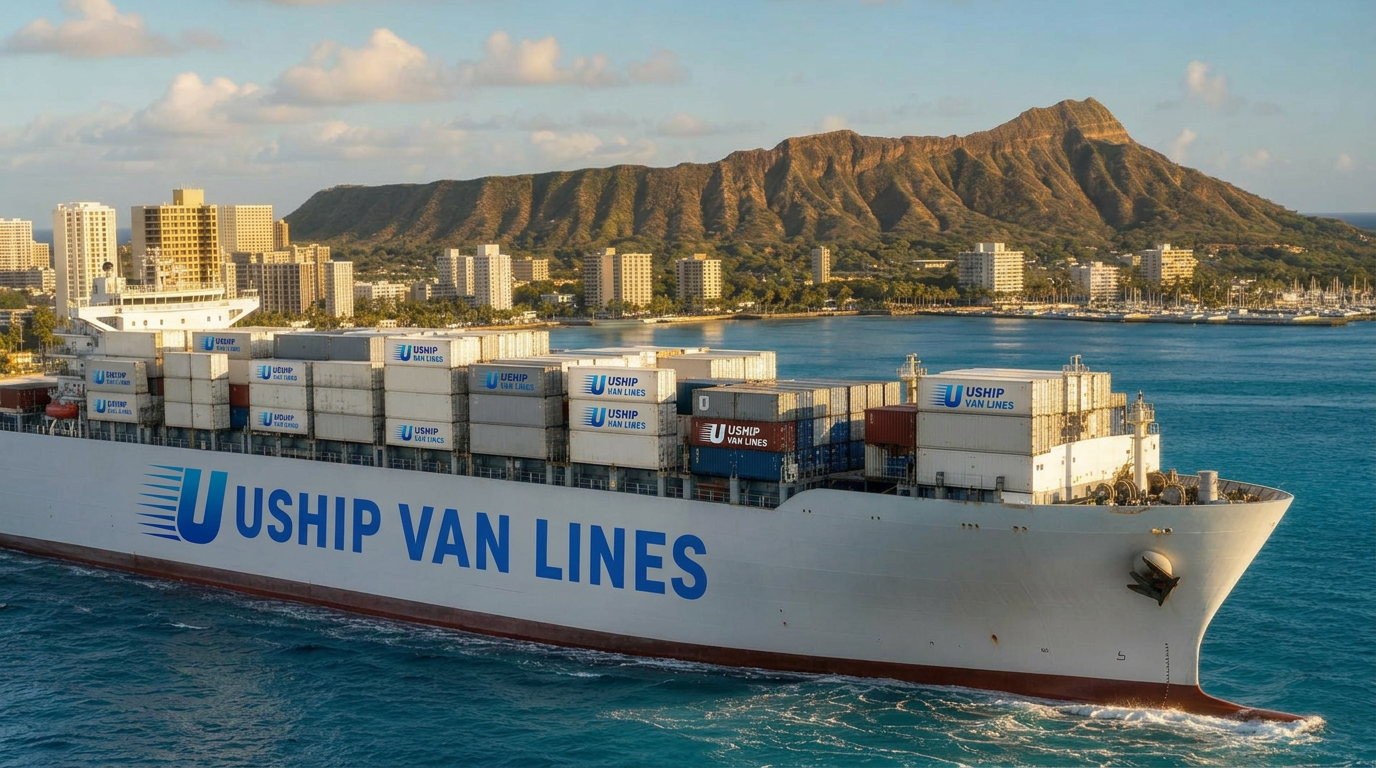
Moving from Hawaii to Woodbury, MN
Relocating from the Hawaiian Islands to Woodbury, Minnesota involves much more than a simple cross-country drive. This move requires ocean container shipping, mainland logistics coordination, and preparation for one of America's most dramatic climate shifts. Whether you're leaving Oahu, Maui, Kauai, or the Big Island, your household goods will travel by ship to the West Coast before continuing overland to Minnesota's Twin Cities metro.
Best Alaska & Hawaii Movers, powered by UShip Van Lines, specializes in these complex multi-modal moves. We coordinate every leg—from your island home through the port, across the Pacific, and onto your new Woodbury residence. Ready to start planning your island-to-mainland transition? Request a free personalized quote and speak with a Hawaii relocation specialist today.
Route overview
Understanding the Hawaii to Woodbury Moving Route
Your household goods depart Hawaii through one of the state's deep-water ports—typically Honolulu Harbor on Oahu, though Kahului (Maui), Nawiliwili (Kauai), and Hilo/Kawaihae (Big Island) also handle containerized cargo. The container travels approximately 2,400 nautical miles across the Pacific to West Coast ports, primarily Long Beach or Oakland, California. From there, your belongings transfer to an over-the-road truck for the roughly 1,900-mile journey through Nevada, Wyoming or Idaho, South Dakota, and into Minnesota's eastern suburbs.
Woodbury sits just 10 miles east of downtown St. Paul in Washington County, offering a suburban environment vastly different from island living. With a population approaching 75,000, this planned community features harsh winter conditions (average January lows around 6°F), significant snowfall, and a family-oriented atmosphere. Most relocations to Woodbury involve corporate transfers, military assignments to nearby installations, or families seeking Midwestern cost-of-living advantages while maintaining proximity to Minneapolis-St. Paul metropolitan amenities.
The total door-to-door distance exceeds 4,300 miles when combining ocean and ground segments. This routing requires careful coordination between ocean carriers (typically Matson Navigation or Pasha Hawaii), drayage operators at California ports, and long-haul trucking companies familiar with Minnesota delivery conditions. Weather considerations span tropical storms in Hawaii, potential California port delays, and winter road conditions in the Upper Midwest.
How the moving process works
The 7-Step Hawaii to Woodbury Moving Process
Step 1: Initial Survey and Quote A moving coordinator conducts a virtual or in-person survey of your Hawaii residence, cataloging items by room and noting special-handling requirements (large furniture, delicate items, vehicles). You'll receive a detailed estimate covering ocean freight, mainland trucking, and any required storage. Book 8–12 weeks ahead during peak summer season, 6–8 weeks for off-peak moves.
Step 2: Restricted Items Review and Pre-Move Purge Ocean carriers prohibit numerous items: hazardous materials (propane tanks, cleaning chemicals, aerosols), perishable foods, plants (subject to USDA restrictions), and certain batteries. Minnesota's climate requires different household goods—island residents often sell warm-weather items and lightweight furniture before departing. Coordinate vehicle shipping separately if bringing cars, as Hawaii vehicles require mainland emissions/safety compliance.
Step 3: Container Loading at Your Island Location Professional packers arrive at your Hawaii home, typically loading into a 20-foot or 40-foot ocean container (depending on household size). Items are carefully packed, wrapped, and secured to withstand ocean transit. The container is sealed at your residence and transported to the nearest deep-water port. Inter-island moves may require barge service to Honolulu if originating from neighbor islands.
Step 4: Ocean Transit to California Your container boards a Matson or Pasha vessel for the 5–7 day Pacific crossing to Long Beach or Oakland. Ships depart Hawaii weekly, though schedules vary by season. Once stateside, the container clears customs (if applicable), undergoes agricultural inspection, and is positioned for mainland transportation.
Step 5: Cross-Country Ground Transportation The container or its contents transfer to a 53-foot semi-trailer for overland transport. The route typically follows I-80 through Nevada, Wyoming, and Nebraska, or I-15/I-90 through Utah and South Dakota, before entering Minnesota via I-90 or I-94. Professional drivers navigate weight stations, weather delays, and route planning to optimize delivery timing.
Step 6: Minnesota Delivery and Unloading Upon arrival in Woodbury, movers unload your container at your new residence, placing items in designated rooms. Winter deliveries may require special arrangements for snow/ice conditions—driveways and walkways should be cleared and salted. Conduct a thorough inventory check against your original packing list, noting any damage or missing items immediately.
Step 7: Post-Move Settlement and Claims Unpack systematically, checking high-value and fragile items first. File any damage claims within the carrier's specified window (typically 9 months for loss, 120 days for visible damage). Dispose of packing materials responsibly—Woodbury offers curbside recycling and the Washington County Public Works facility accepts cardboard and moving supplies.
Estimated moving costs
What Does a Hawaii to Woodbury Move Cost?
A typical 2–3 bedroom household move from Hawaii to Woodbury ranges from $7,800 to $14,500 for full-service door-to-door transport. Studio and 1-bedroom moves may start around $4,200–$6,800, while larger 4+ bedroom homes with extensive furnishings can exceed $18,000–$24,000. These estimates assume standard service during off-peak months; premium services and peak-season moves increase costs.
Primary cost drivers include:
-
Container size and cubic footage: A 20-foot container (approximately 1,100 cubic feet) handles most 1–2 bedroom apartments; 40-foot containers (2,300 cubic feet) accommodate 3–4 bedroom homes. Pricing is often per container or per cubic foot of actual space used.
-
Origin island location: Oahu shipments from Honolulu Harbor cost less than neighbor island moves requiring barge service to the main port. Maui, Kauai, and Big Island originations add $600–$1,400 for inter-island positioning.
-
Packing service level: Self-packing (customer-packed boxes only) reduces costs by $1,200–$2,800 versus full professional packing. Partial packing (fragile items only) offers middle-ground pricing.
-
Seasonal demand: Summer months (May–September) carry 15–25% premiums due to high demand from families moving between school years and military PCS season. November–February offers best value.
-
Vehicle shipping: Adding a car to your move costs $1,400–$2,100 from Hawaii to Minnesota via RORO (roll-on/roll-off) vessel, shipped separately from household goods.
-
Storage requirements: If your Woodbury home isn't ready upon mainland arrival, climate-controlled storage in California or Minnesota runs $150–$300 monthly for typical household volumes.
-
Insurance coverage: Basic carrier liability covers $0.60 per pound per article; full-value protection costs 1–3% of declared shipment value but covers replacement cost.
Request itemized quotes from multiple carriers and verify what services are included. Some quotes bundle all segments; others price ocean and ground transport separately. Never assume advertised low-ball rates include packing, inter-island fees, or final-mile delivery in Minnesota.
Estimated transit times
How Long Does Hawaii to Woodbury Moving Take?
Expect 18–35 days total transit time from pickup at your Hawaii residence to delivery in Woodbury, with most moves completing in 21–28 days. This timeline breaks down into distinct segments:
Container pickup and port delivery (1–5 days): On Oahu, containers typically reach Honolulu Harbor within 24–48 hours of loading. Neighbor island moves require additional time for barge service—Maui adds 2–3 days, Kauai and Big Island 3–5 days to position containers at Honolulu for mainland vessels.
Ocean transit to West Coast (5–7 days): Matson's premium service completes the Hawaii–Long Beach route in 5 days; standard service takes 6–7 days to Oakland or Long Beach. Vessels depart Honolulu multiple times weekly, but your container must meet vessel cutoff dates, potentially adding 2–7 days waiting for the next departure.
Port operations and customs clearance (2–5 days): After docking in California, containers undergo unloading, agricultural inspection, and positioning for ground transport. Peak congestion periods (especially at Long Beach) can extend this phase to 7+ days.
Cross-country trucking (5–9 days): The 1,900-mile overland segment from California to Woodbury takes approximately one week, depending on driver hours-of-service regulations, weather conditions, and routing. Winter storms in Wyoming or Minnesota can add 1–3 days.
Final scheduling and delivery (1–4 days): Once your shipment reaches the Minneapolis-St. Paul area, the delivery team contacts you to schedule a specific delivery window, typically offering 24–48 hours' notice.
Rush service is rarely available for Hawaii moves due to fixed ocean vessel schedules. Plan for maximum estimates when coordinating lease ends, closing dates, and temporary housing. Winter moves (December–March) should add buffer time for weather-related delays in the Upper Midwest.
Regional logistics
Hawaii-Specific Logistics and Requirements
Port operations and container types: Hawaii moves utilize standardized 20-foot or 40-foot ocean containers conforming to International Organization for Standardization (ISO) specifications. These containers are delivered to your residence, loaded by professional crews, and sealed for transport. Most household goods travel in "dry van" containers; vehicles ship separately via RORO service or in specialized auto containers. Honolulu Harbor (Sand Island) processes the majority of residential shipments, with dedicated terminals for Matson and Pasha operations.
Agricultural inspections and restrictions: USDA regulations prohibit transporting soil, fresh plants, certain seeds, and wooden items with bark to the mainland. California maintains particularly strict agricultural import rules. Pack artificial plants instead of live ones; dispose of potted plants before moving. Wooden furniture is generally acceptable if commercially manufactured and bark-free. Inspections occur at West Coast ports; non-compliant items are destroyed at owner's expense.
Vehicle shipping considerations: Hawaii vehicles require mainland emissions compliance and safety modifications. Register your vehicle in Minnesota within 60 days of establishing residency; you'll need a Minnesota emissions test (required for vehicles 7+ years old in metro areas). Ship vehicles via dedicated auto carriers (Matson Vehicle Services, Pasha Auto Transport) rather than in household goods containers. Hawaii vehicle titles must be surrendered to obtain Minnesota registration; complete this at a Deputy Registrar location.
Paperwork requirements: Provide detailed inventory lists (required for customs and insurance purposes), photo identification, and proof of Minnesota residence (lease agreement or purchase contract). Military members need PCS orders. If shipping high-value items (jewelry, artwork, collectibles), obtain professional appraisals for insurance documentation. Keep digital and physical copies of all moving documents—you'll need them for tax deductions and potential claims.
Last-mile delivery in Minnesota: Woodbury's planned community layout features well-maintained streets accessible to full-size moving trucks. However, winter deliveries require special preparation: clear and salt driveways and walkways; ensure truck access (street parking may be restricted during snow emergencies); confirm garage clearance if movers will unload large items there. Homeowners' associations may require move-in notification and elevator reservations for townhome or condo deliveries.
Insurance and valuation: Ocean transit subjects cargo to different risk profiles than ground-only moves. Standard carrier liability ($0.60/lb/article) provides minimal protection—a 50-pound television worth $1,500 would receive only $30 compensation. Purchase full-value protection or third-party insurance covering replacement cost. Document high-value items with photos and serial numbers before packing.
Seasonal considerations
Best Times to Move from Hawaii to Woodbury
Winter (December–February): The most affordable season for Hawaii departures, with 15–20% lower rates than summer. However, Minnesota arrivals face brutal conditions—Woodbury averages 50+ inches of snow annually, with January temperatures frequently below zero. Ensure delivery crews can access your property; schedule deliveries during brief warm spells when roads are clear. Ocean transit is reliable, though Pacific winter storms occasionally delay California port operations by 1–2 days.
Spring (March–May): Shoulder season offers moderate pricing and excellent ocean conditions. Minnesota weather improves dramatically—March remains snowy, but April and May bring milder temperatures ideal for moving day. Book early for Memorial Day weekend moves, as availability tightens. This window works well for families targeting summer settlement before school starts.
Summer (June–August): Peak moving season coincides with hurricane season in Hawaii (officially June 1–November 30, peak August–September). While direct hurricane impacts are rare, tropical storms can delay container loading or port operations by several days. Minnesota delivery conditions are ideal—warm, long daylight hours, minimal precipitation. Expect highest rates and tightest capacity; book 10–12 weeks ahead.
Fall (September–November): Early fall (September–October) remains hurricane-aware but offers improving rates as peak season ends. November provides excellent value with lowest annual demand. Minnesota arrivals before Thanksgiving avoid winter complications but require awareness of early-season snowfall (November averages 11 inches in the Twin Cities area). Matson and Pasha maintain full schedules year-round, so ocean service remains consistent.
Port congestion considerations: Long Beach and Oakland ports experience periodic backlogs during heavy import seasons (typically September–October for holiday goods). These delays rarely affect outbound Hawaii traffic but can slow your container's transition to ground transport by 3–7 days. Monitor California labor negotiations, as West Coast port slowdowns impact all Pacific Rim shipping.
Why choose Best Alaska & Hawaii Movers
Why Choose Best Alaska & Hawaii Movers for Your Woodbury Relocation
-
Specialized Hawaii–mainland expertise: We focus exclusively on Alaska and Hawaii moves, understanding the unique challenges of island departures, ocean container logistics, and coordinating multi-modal transportation. Our specialists know Honolulu Harbor operations, neighbor island barge schedules, and West Coast port procedures intimately.
-
Single-point accountability powered by UShip Van Lines: Rather than coordinating separately with ocean carriers, trucking companies, and local movers, you work with one dedicated moving coordinator who manages all segments. UShip Van Lines' nationwide network ensures quality control from your Hawaii doorstep to your Woodbury driveway.
-
Transparent pricing with no hidden fees: Our quotes itemize every cost component—container size, packing services, inter-island positioning, ocean freight, mainland trucking, and delivery. We explain seasonal pricing variations and optional services clearly, so you can make informed decisions without surprise charges.
-
Real-time shipment tracking: Monitor your container's progress from Hawaii loading through ocean transit and mainland delivery. Receive notifications at key milestones—vessel departure, West Coast arrival, trucking dispatch, and delivery scheduling.
-
Minnesota winter delivery experience: Our Woodbury delivery teams understand Upper Midwest conditions, arriving equipped for snow, ice, and cold-weather challenges. We coordinate delivery timing around weather forecasts and maintain communication if winter storms require rescheduling.
-
Comprehensive cargo protection options: Choose coverage levels matching your needs, from basic carrier liability to full replacement-value insurance. We partner with moving insurance specialists who understand Hawaii–mainland claims processes and can expedite settlements if needed.