
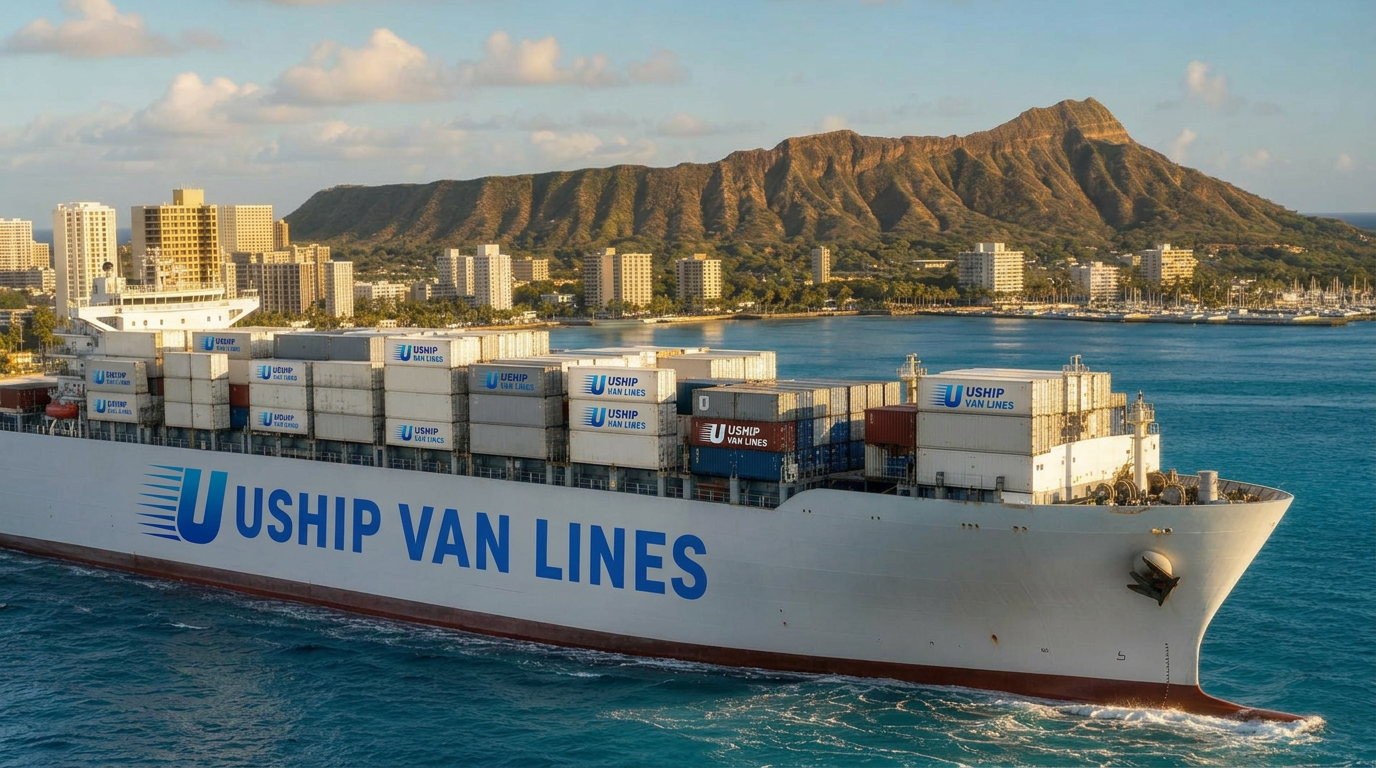
Moving from Hawaii to Oregon
Relocating from Hawaii to Oregon means trading island life for the Pacific Northwest's forests, mountains, and vibrant cities like Portland and Eugene. Whether you're moving to the Willamette Valley, the coast, or Central Oregon, your household goods will travel by ocean container to the West Coast, then overland to your new home—a coordinated journey that typically takes 2–4 weeks door-to-door.
Best Alaska & Hawaii Movers, powered by UShip Van Lines, specializes in Hawaii-to-mainland routes and handles the complexities of port scheduling, customs clearance, and last-mile delivery. Ready to start planning? Request a free, no-obligation quote tailored to your move timeline and inventory.
Route overview
Route Overview: Hawaii to Oregon
Moving from Hawaii to Oregon requires ocean freight from your departure island (Oahu, Maui, Kauai, or the Big Island) to a West Coast port—typically Long Beach, Oakland, or Seattle—followed by ground transport across the Pacific Northwest. Your belongings are loaded into a 20-foot or 40-foot ocean container, sealed, and shipped via Matson Navigation or Pasha Hawaii. Once the container clears U.S. Customs and is offloaded, it's transferred to a truck for final delivery to your Oregon address.
Oregon's proximity to West Coast ports makes this route more straightforward than moves to the interior United States. Transit times are shorter, and the overland leg through California, Oregon, and possibly Washington is well-established. Still, you'll need to coordinate port schedules, book early during peak summer and holiday seasons, and account for inspection and drayage fees. Most households choose shared-container service (LCL, or less-than-container-load) to save money, while larger moves or those requiring exclusive use book full-container-load (FCL) service.
Oregon's diverse geography—from the rainy coast to the high desert east of the Cascades—means delivery logistics vary. Urban moves to Portland metro are straightforward; rural moves to areas like Bend, Crater Lake, or the coast may require smaller shuttle trucks or additional coordination for narrow roads and mountain passes.
How the moving process works
How the Moving Process Works
-
Request a Quote & Schedule Survey: Contact Best Alaska & Hawaii Movers for a free estimate. Provide your departure island, destination city, inventory list, and preferred move dates. A virtual or in-person survey ensures accurate pricing.
-
Book Your Ocean Container Space: We reserve space on the next available Matson or Pasha sailing from your island to the West Coast. Summer and holiday moves book weeks in advance—early reservations are critical.
-
Pack & Load in Hawaii: Professional movers pack your belongings (or you self-pack), load them into the container at your home or a consolidation warehouse, and seal the container for ocean transit. Prohibited items (plants, perishables, hazardous materials) are flagged and removed.
-
Ocean Transit to West Coast Port: Your container sails to Long Beach, Oakland, or Seattle—typically 5–7 days at sea. It's then offloaded, inspected by U.S. Customs (Hawaii is a U.S. state, so agricultural inspection is the primary concern), and transferred to a trucking chassis.
-
Overland Transport to Oregon: The container is hauled by truck from the port to your Oregon address—1–3 days depending on distance. Portland-area deliveries are fastest; eastern Oregon or coastal towns may add a day.
-
Delivery & Unload: Movers deliver the container, unload your items, and place furniture in rooms. You inspect for damage, sign paperwork, and settle any remaining balance.
-
Follow-Up & Claims: If anything is damaged or missing, file a claim with your moving coordinator within the window specified in your contract (typically 9 months for interstate moves).
Estimated moving costs
What Does It Cost to Move from Hawaii to Oregon?
A typical 2–3 bedroom household moving from Hawaii to Oregon costs $5,500–$9,500, depending on volume, island of origin, destination city, and service level. Studio or 1-bedroom moves run $3,500–$5,500; 4+ bedroom homes can exceed $12,000.
Key cost drivers include:
- Volume and weight: Ocean freight is priced per cubic foot or by container size. A shared 20-foot container (LCL) is most economical for small to mid-size households; a dedicated 40-foot container (FCL) suits larger homes or those wanting exclusive use.
- Departure island: Oahu (Honolulu) moves are cheapest due to frequent sailings. Neighbor island moves (Maui, Kauai, Big Island) require inter-island barge or consolidation, adding $500–$1,500.
- Packing services: Professional packing adds $800–$2,000+ depending on inventory. Self-packing saves money but requires proper materials and technique to survive ocean transit.
- Destination accessibility: Portland metro and Eugene are easiest. Rural coastal or mountain towns may require shuttle trucks or longer travel, adding $300–$800.
- Seasonality: Summer (June–August) and holiday moves (November–December) command premium rates due to high demand. Off-season (January–April) offers lower prices and better availability.
- Insurance: Basic carrier liability (60 cents/pound) is included; full-value protection costs 1–3% of declared value and is strongly recommended for ocean moves.
- Storage: If your Oregon home isn't ready, warehouse storage runs $100–$300/month.
Request a detailed quote from Best Alaska & Hawaii Movers to see a breakdown tailored to your inventory and timeline. Prices are never guaranteed until a formal contract is signed, but our estimates are transparent and competitive.
Estimated transit times
How Long Does the Move Take?
Door-to-door transit from Hawaii to Oregon typically takes 14–28 days, broken down as follows:
- Packing and loading in Hawaii: 1–2 days for professional packing and container loading.
- Departure island to Honolulu (if applicable): Neighbor island moves require 2–5 days for inter-island barge to Oahu's port.
- Ocean transit to West Coast: 5–7 days at sea to Long Beach, Oakland, or Seattle.
- Port offload, customs, and drayage: 2–5 days for the container to clear inspection, be transferred to a truck chassis, and scheduled for pickup.
- Overland trucking to Oregon: 1–3 days from the West Coast port to your Oregon address.
- Delivery window: Movers typically offer a 2–3 day delivery window; you'll receive 24-hour notice before arrival.
Factors that extend timelines:
- Sailing schedules: Matson and Pasha sail 1–2 times per week from Honolulu; missing a sailing adds 3–7 days.
- Port congestion: Peak season (summer, holidays) can delay offload and drayage by 3–7 days.
- Weather: Hurricane season (June–November) can delay sailings or cause port closures. Winter storms in the Pacific Northwest may slow overland trucking.
- Destination remoteness: Coastal or mountain deliveries may require scheduling coordination with shuttle trucks.
For time-sensitive moves, book 4–6 weeks in advance and build buffer time into your Oregon arrival plans. Best Alaska & Hawaii Movers provides regular tracking updates so you know exactly where your container is.
Regional logistics
Hawaii-Specific Logistics You Need to Know
Ports and Sailing Routes: Your container departs from Honolulu Harbor (Oahu), Kahului (Maui), Nawiliwili (Kauai), or Hilo/Kawaihae (Big Island). Neighbor island containers are often barged to Honolulu for consolidation onto West Coast sailings. Matson and Pasha are the dominant carriers; sailings run 1–2 times weekly to Long Beach, Oakland, and Seattle.
Inter-Island Moves: If you're moving from a neighbor island, your container is loaded on your island, barged to Oahu, then loaded onto the mainland-bound ship. This adds 2–5 days and $500–$1,500 in cost. Honolulu moves skip this step.
Customs and Inspections: Hawaii is a U.S. state, so there's no international customs, but the USDA conducts agricultural inspections to prevent invasive species from reaching the mainland. Prohibited items include soil, plants, fresh produce, and certain woods. Violations can delay your shipment or result in fines. Best Alaska & Hawaii Movers ensures your inventory is compliant.
Vehicle Shipping: Cars, trucks, and motorcycles must ship separately in a roll-on/roll-off (RoRo) vessel. Matson and Pasha offer vehicle service; costs run $1,200–$1,800 per vehicle from Hawaii to the West Coast, plus overland transport to Oregon ($400–$800). Total transit: 10–21 days. Vehicles must be clean (exterior wash, interior vacuumed) and contain less than 1/4 tank of gas.
Packing Standards: Ocean freight is rougher than overland trucking. Use heavy-duty boxes, double-wrap fragile items, and secure furniture with blankets and straps. Movers load containers tightly to prevent shifting. Self-packers: invest in quality materials and follow carrier guidelines.
Delivery Access in Oregon: Portland metro and Willamette Valley addresses are easy. Coastal towns (Cannon Beach, Newport, Brookings) and mountain areas (Hood River, Bend, Crater Lake) may require smaller shuttle trucks for narrow roads or steep driveways. Confirm access with your moving coordinator during booking.
Storage Options: If your Oregon home isn't ready, your container can be held in port storage ($50–$150/day) or moved to a warehouse ($100–$300/month). Storage in Oregon is typically cheaper than California ports.
Seasonal considerations
Seasonal Considerations for Your Hawaii-to-Oregon Move
Spring (March–May): Ideal moving season. Mild weather in Oregon, lower demand, and competitive pricing. Ports are less congested, and overland trucking is smooth. Book 3–4 weeks ahead.
Summer (June–August): Peak season. High demand from families relocating before the school year drives up prices 15–25%. Hurricane season begins in the Pacific, though direct Hawaii impacts are rare. Book 6–8 weeks in advance. Expect port delays and longer delivery windows.
Fall (September–November): Shoulder season. Demand drops after Labor Day, and rates soften. Hurricane season peaks in September but rarely affects shipping. Oregon weather is pleasant through October; November brings rain. Book 4–5 weeks ahead.
Winter (December–February): Off-season with the lowest rates, but holiday moves (Thanksgiving–New Year) are expensive and tightly booked. Pacific storms can delay sailings, and snow in Oregon's mountains or high desert may complicate delivery. January–February is the best time for budget-conscious moves—book 3–4 weeks out and allow extra transit time for weather.
Hurricane Season (June–November): While Hawaii is rarely hit directly, tropical storms can delay port operations or cause sailings to be rescheduled. Monitor NOAA forecasts if moving during peak hurricane months (August–October) and build 3–5 days of buffer time into your plans.
Oregon Weather: Rain is common October–May, especially west of the Cascades. Movers can work in rain, but you may want to protect floors and entryways. Snow east of the Cascades (Bend, La Grande) can delay delivery December–March.
Why choose Best Alaska & Hawaii Movers
Why Choose Best Alaska & Hawaii Movers for Your Hawaii-to-Oregon Move?
- Hawaii Specialists: We focus exclusively on Alaska and Hawaii moves, so we know the ports, carriers, paperwork, and logistics inside and out. No learning curve—just expertise.
- Transparent Pricing: You'll receive a detailed, line-item estimate with no hidden fees. We explain every cost so you can budget confidently.
- Comprehensive Service: From packing and loading in Hawaii to customs clearance, overland trucking, and final delivery in Oregon, we coordinate every step. One point of contact, zero hassle.
- Flexible Options: Choose full-service packing or self-pack to save. Book a dedicated container or share space to cut costs. We tailor service to your budget and timeline.
- Real-Time Tracking: Know where your container is at every stage—on the water, at port, or in transit to Oregon. We provide regular updates and 24-hour delivery notice.
- Powered by UShip Van Lines: Our nationwide carrier network and logistics platform ensure reliable, on-time delivery across Oregon, from Portland to Pendleton.