
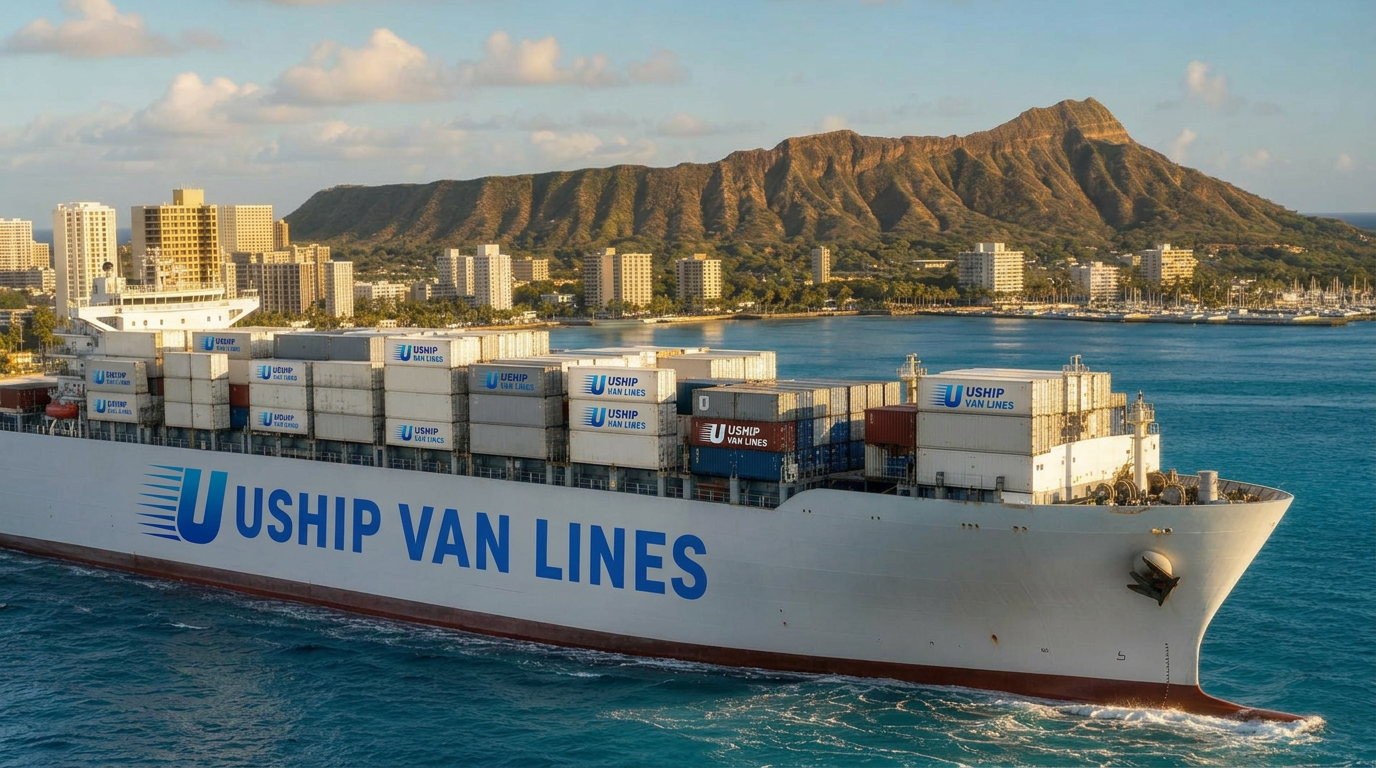
Moving from Hawaii to Paterson, NJ
Relocating from the islands of Hawaii to Paterson, New Jersey means coordinating ocean freight, mainland trucking, and navigating more than 4,900 miles of logistics across the Pacific. Whether you're leaving Honolulu, Maui, Kauai, or the Big Island for the Garden State's third-largest city, this move requires specialized carriers who understand port schedules, container shipping, and East Coast delivery.
Best Alaska & Hawaii Movers, powered by UShip Van Lines, connects you with experienced professionals who handle every stage of your Hawaii-to-Paterson relocation. From initial packing and port documentation to final delivery in your new neighborhood near Great Falls or Eastside Park, we'll help you secure a transparent quote and manage the entire cross-ocean journey.
Route overview
Moving from Hawaii to Paterson: Route and Logistics Overview
Your belongings will travel by ocean container from Hawaii to the U.S. mainland West Coast—typically Long Beach or Oakland—before being transferred to an over-the-road truck for the 2,800-mile cross-country journey to northern New Jersey. Matson Navigation and Pasha Hawaii operate the primary transpacific shipping lanes, with sailings departing weekly from Honolulu and every-other-week from neighbor islands. If you're moving from Maui, Kauai, or the Big Island, your container will first be barged or trucked to Honolulu for consolidation before the mainland voyage.
Once your shipment clears customs and is unloaded at the West Coast port, it's loaded onto a 53-foot semi for transcontinental delivery. The mainland haul crosses Nevada, Utah, Wyoming, Nebraska, Iowa, Illinois, Indiana, Ohio, Pennsylvania, and finally New Jersey—following I-80 or I-76 corridors depending on weather and routing. Paterson sits just off I-80 in Passaic County, making final delivery straightforward once your shipment reaches the New York metropolitan area.
This route demands coordination between ocean carriers, port terminals, customs brokers, and long-haul trucking companies. Choosing a mover experienced in Hawaii-to-East-Coast lanes ensures smooth handoffs, accurate documentation, and proactive communication as your household goods cross the continent.
How the moving process works
How Your Hawaii-to-Paterson Move Works: Step by Step
-
Request quotes and schedule your in-home or virtual survey. A project coordinator will inventory your belongings, note any high-value or fragile items, and provide a detailed written estimate covering ocean freight, mainland trucking, packing, and insurance.
-
Book your move and confirm shipping dates. Ocean sailings from Honolulu typically depart once weekly; neighbor-island pickups require advance scheduling for barge consolidation. Your mover will reserve container space and coordinate pickup timing with port cut-off dates.
-
Professional packing and container loading at origin. Crews pack your furniture, appliances, and boxes into a 20-foot or 40-foot ocean container at your Hawaii residence (or at a local warehouse if you're on an outer island). All items are inventoried, labeled, and secured for the ocean crossing.
-
Ocean transit to Long Beach or Oakland. Your container sails across the Pacific—roughly 5–7 days at sea—then clears U.S. Customs. The steamship line unloads the container at the terminal, where your moving company retrieves it for transfer to a truck chassis.
-
Cross-country overland haul. Your container or its contents are loaded onto a tractor-trailer for the 2,800-mile drive to New Jersey. Transit time averages 5–7 days, depending on weather, driver hours-of-service rules, and any required rest stops.
-
Delivery and unloading in Paterson. The truck navigates Paterson's urban streets—some areas have narrow roads or parking restrictions—and the crew unloads, unpacks (if contracted), and places furniture according to your floor plan.
-
Final walkthrough and paperwork. Inspect your shipment, note any damage on the inventory sheet, and retain all documents for insurance claims if needed. Your driver will collect final payment (typically cash, cashier's check, or verified funds for any remaining balance).
Estimated moving costs
What Does It Cost to Move from Hawaii to Paterson, NJ?
For a typical 2–3 bedroom household (approximately 7,000–10,000 lbs or a 20-foot container), expect to pay $6,500–$11,500 for a full-service door-to-door move. Studio and one-bedroom moves in shared containers often range $3,800–$6,200, while larger 4-bedroom homes requiring a 40-foot container can reach $13,000–$18,000 or more.
Key cost drivers include:
- Container size and volume. Ocean freight is priced per container (20-foot or 40-foot) or per cubic foot for consolidated/LCL shipments. A dedicated 20-foot container offers more control but costs more than sharing space.
- Origin island and accessibility. Pickups on Maui, Kauai, or the Big Island incur additional barge fees and handling charges compared to Oahu-origin moves. Multi-story walk-ups, long carries, or gated communities may add labor surcharges.
- Packing and crating services. Professional packing averages $500–$1,200 for a 2-bedroom home; custom crating for artwork, antiques, or large electronics adds $150–$400 per piece.
- Insurance coverage. Basic carrier liability (60¢ per pound) is included; full-value replacement insurance typically costs 1–2% of your declared shipment value.
- Seasonality and demand. Summer months (June–August) and military PCS season see higher rates and tighter container availability; booking in fall or winter can save 10–15%.
- Vehicle shipping. Automobiles ship separately via RORO (roll-on/roll-off) vessel, averaging $1,400–$2,100 per car from Honolulu to the Port of Newark or Port Elizabeth, New Jersey.
These are estimates only. Every move is unique. Request a detailed, binding quote to understand your specific costs and avoid surprise fees.
Estimated transit times
How Long Does a Hawaii-to-Paterson Move Take?
Plan for 14–21 days door-to-door under normal conditions. Here's the typical breakdown:
- Packing and container loading (Hawaii): 1–2 days, depending on home size and complexity.
- Transport to Honolulu port (neighbor islands only): 1–3 days for barge or inter-island trucking.
- Ocean voyage to West Coast: 5–7 days at sea from Honolulu to Long Beach/Oakland.
- Port unloading and customs clearance: 1–2 days (can extend to 3–4 days during peak congestion or if inspection is required).
- Cross-country truck transit: 5–7 days from California to New Jersey, following I-80 or southern routes.
- Final delivery window in Paterson: Typically scheduled within a 1–2 day window; urban delivery may require advance street permits.
Expect delays during:
- Hurricane season (June–November). Port closures, vessel diversions, or barge cancellations can add 3–7 days.
- Peak moving season (May–September). Container shortages and trucker capacity constraints may extend mainland transit by 2–4 days.
- Winter weather (December–March). Snowstorms along I-80 through Wyoming, Nebraska, or Pennsylvania can pause trucking for 1–3 days.
- Holiday periods. Thanksgiving, Christmas, and New Year's weeks see reduced sailing schedules and terminal closures.
Book early and build buffer time if you have a firm Paterson lease start date or work commitment.
Regional logistics
Hawaii-Specific Logistics for Your Paterson Move
Ports and shipping lines. Honolulu's Sand Island terminal is the primary gateway; Matson and Pasha Hawaii operate weekly sailings to Long Beach and Oakland. Neighbor island pickups (Kahului, Nawiliwili, Hilo, Kona) require barge service to Honolulu—add 2–4 days and $400–$800 to your timeline and cost.
What you cannot ship. USDA and Hawaii Department of Agriculture regulations prohibit moving soil, plants, fresh foods, and certain seeds. Hazardous materials (propane, paint, aerosols, ammunition) are banned from ocean containers. Propane tanks must be purged and certified; some movers will not transport them at all.
Vehicle shipping. Cars, motorcycles, and boats ship separately via RORO vessels. Expect $1,400–$2,100 per standard sedan from Honolulu to Newark/Elizabeth, with 10–14 days ocean transit. Vehicles must be clean (no dirt, no excess cargo) to pass agricultural inspection.
Paperwork and documentation. You'll complete a detailed inventory list, customs declaration (for re-entry to the mainland), and shipper's export declaration if required. Your mover handles most filings, but keep copies of all documents for insurance and claims.
Paterson delivery considerations. Paterson's older neighborhoods feature narrow streets, on-street parking, and occasional low-clearance overpasses. Large tractor-trailers may require shuttle trucks for final delivery in areas like the Riverside or People's Park sections. Confirm whether your building has loading-dock access or requires a Certificate of Insurance for elevator use.
Storage options. If your Paterson apartment isn't ready, most movers offer short-term warehousing in California (before trucking) or in New Jersey distribution centers. Expect $100–$250 per month for a typical household; storage in the New York metro area costs more than West Coast holding.
Military and government moves. If you're relocating under PCS orders, ensure your mover is registered in the Defense Personal Property System (DPS) and can file directly with your transportation office. Best Alaska & Hawaii Movers works with service members year-round.
Seasonal considerations
Best Times of Year to Move from Hawaii to Paterson
Winter (December–February): Lowest demand and best rates—ocean freight and trucking companies offer off-season discounts of 10–15%. However, snowstorms along I-80 (especially in Wyoming, Nebraska, and Pennsylvania) can delay the final leg by 1–3 days. Paterson itself sees cold, snowy winters; coordinate delivery to avoid street parking bans during snow emergencies.
Spring (March–May): Moderate weather on the mainland and increasing availability as moving season ramps up. Ocean sailings are reliable, and I-80 is mostly clear by late March. Book by early March to secure summer delivery slots before peak pricing kicks in.
Summer (June–August): Peak moving season coincides with Hawaii's early hurricane season (official season runs June 1–November 30, though major storms are rare before August). Expect premium pricing, tighter container capacity, and potential delays if a tropical system threatens the islands or disrupts port operations. Paterson enjoys warm, humid summers—ideal for unloading, but schedule early-morning delivery to avoid afternoon heat.
Fall (September–November): September is statistically the most active month for Central Pacific hurricanes, and port congestion peaks as summer moves clear. By October, rates begin to soften and weather improves on both ends. November offers excellent value and reliable transit if you can avoid the Thanksgiving week terminal closures.
Pro tip: If flexibility allows, schedule your pack/load for late October or early November to capture off-peak pricing while avoiding winter weather on the mainland.
Why choose Best Alaska & Hawaii Movers
Why Choose Best Alaska & Hawaii Movers for Your Hawaii-to-Paterson Relocation
- Specialized Hawaii expertise. We handle transpacific logistics daily—port scheduling, container booking, agricultural inspections, and neighbor-island consolidation—so your move proceeds without surprises.
- Transparent, all-inclusive quotes. You'll receive a detailed estimate covering ocean freight, mainland trucking, packing, insurance, and any accessorial charges. No hidden fees at delivery.
- Nationwide carrier network (powered by UShip Van Lines). We connect you with vetted, licensed long-haul carriers experienced in cross-country routes and East Coast urban delivery, ensuring your shipment arrives safely in Paterson.
- End-to-end tracking and communication. From container loading in Hawaii to final unload in New Jersey, you'll have a dedicated move coordinator and real-time shipment updates.
- Flexible service levels. Choose full-service packing and unpacking, container loading only, or hybrid options that match your budget and timeline—we tailor every move to your needs.