
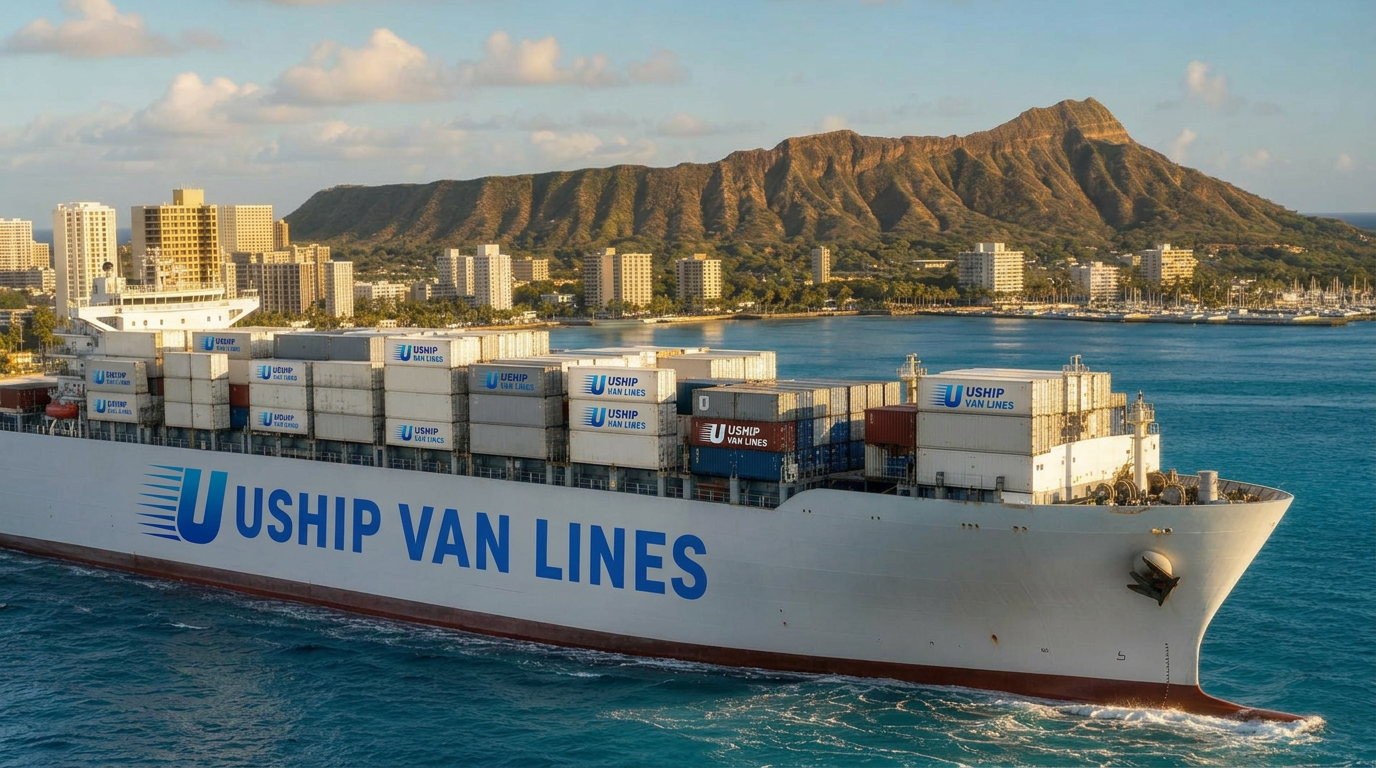
Moving from Hawaii to Vermont
Relocating from the Hawaiian Islands to the Green Mountain State involves one of the most logistically complex residential moves in North America. Your household goods will travel by ocean freight from Hawaii to the West Coast, then across the entire continental United States to Vermont—a journey spanning roughly 5,200 miles and multiple transportation modes.
Best Alaska & Hawaii Movers specializes in these intricate multi-modal routes, coordinating ocean container shipping, mainland trucking, and delivery to Vermont's rural communities and mountain towns. Request a free quote to receive a detailed breakdown of costs, timelines, and logistics tailored to your specific move.
Route overview
Understanding the Hawaii-Vermont Moving Route
Moving from Hawaii to Vermont requires coordinating ocean freight, West Coast port handling, transcontinental ground transportation, and final delivery to one of America's most rural states. Your belongings will be loaded into a shipping container in Hawaii (typically Honolulu, though Maui, Kauai, and Big Island moves require additional inter-island coordination), transported via Matson or Pasha Lines to Long Beach or Oakland, then transferred to a long-haul truck for the 2,800+ mile journey across the country to Vermont.
The unique challenge of this route lies in its extreme distance and Vermont's geography. Once your shipment reaches the East Coast logistics corridor, it must navigate New England's narrow roads, seasonal weather conditions, and Vermont's dispersed population centers. Whether you're moving to Burlington, Montpelier, Brattleboro, or a rural property in the Northeast Kingdom, careful planning ensures your ocean container contents arrive safely despite the dramatic climate and elevation changes.
This route typically takes 3–6 weeks door-to-door during optimal conditions, though winter moves or peak summer shipping seasons can extend timelines. Understanding each leg of the journey helps you plan your own travel, temporary housing, and vehicle shipping separately.
How the moving process works
Step-by-Step: How Your Hawaii to Vermont Move Works
-
Free consultation and survey — We assess your inventory (typically via video call), discuss prohibited items for ocean shipping, explain Vermont delivery access considerations, and provide a detailed quote covering all transportation legs.
-
Container booking and scheduling — We reserve your ocean freight space with Matson or Pasha Lines (typically 2–4 weeks advance booking required), coordinate your Hawaii packing/loading date, and schedule mainland trucking to align with vessel arrival.
-
Professional packing and container loading in Hawaii — Experienced crews pack your household goods using marine-grade materials and load them into a 20-foot or 40-foot shipping container at your Hawaii residence (or you can choose a self-pack option to reduce costs).
-
Ocean transit to California — Your sealed container travels 5–7 days by cargo vessel to Long Beach or Oakland, where it clears customs and undergoes port handling (typically 2–4 business days for release and transfer).
-
Transcontinental trucking — A dedicated long-haul carrier transports your container from California across the Midwest and into New England, a journey typically requiring 5–8 days depending on route and weather conditions.
-
Vermont delivery and unpacking — Your container arrives at your Vermont address, where our crew unloads and places items in designated rooms. We navigate Vermont's seasonal road conditions, town regulations, and rural access challenges.
-
Final walkthrough and paperwork — You inspect your shipment, document any concerns for insurance purposes, and complete delivery confirmation. We remove all packing materials and arrange container return.
Estimated moving costs
What Does a Hawaii to Vermont Move Cost?
A typical 2–3 bedroom household moving from Hawaii to Vermont ranges from $8,500 to $16,000 depending on shipment volume, service level, and timing. Studio/1-bedroom moves may start around $5,500–$7,000, while larger 4+ bedroom homes can exceed $20,000.
Primary cost drivers include:
- Container size and volume — 20-foot containers (800–1,000 cubic feet) versus 40-foot containers (2,000+ cubic feet); shared container space (consolidated moves) costs less but adds time
- Ocean freight rates — Hawaii-West Coast shipping costs fluctuate seasonally, with summer peaks and holiday surcharges significantly impacting total price
- Transcontinental trucking distance — The 2,800+ mile California-Vermont haul represents 40–50% of your total cost; fuel surcharges and route efficiency affect final pricing
- Packing services — Full-service professional packing adds $1,200–$3,000 but ensures proper marine protection; self-packing reduces cost but increases damage risk
- Access and delivery challenges — Vermont's rural roads, mountain properties, long driveways, and winter conditions may require shuttle trucks or special equipment, adding $300–$800
- Insurance coverage — Basic carrier liability covers $0.60/pound; full-value replacement protection adds 1–2% of declared value but provides comprehensive coverage
- Storage needs — If your Vermont residence isn't ready or you need to delay delivery, climate-controlled storage on the mainland runs $150–$350/month
We provide transparent, itemized quotes with no hidden fees. Request your free estimate to see exact costs for your specific inventory and delivery location.
Estimated transit times
How Long Does Hawaii to Vermont Moving Take?
Expect 3–6 weeks total transit time from your Hawaii pickup date to Vermont delivery, broken down by transportation leg:
Ocean freight (Hawaii to California): 5–7 days sailing time, plus 1–2 days for Hawaii port processing and 2–4 days for West Coast port clearance and container transfer. Total ocean leg: 8–13 days.
Transcontinental trucking (California to Vermont): 5–8 days of driving time across 2,800+ miles, with potential delays for weather, required driver rest periods, and East Coast terminal transfers. Expedited service may reduce this to 4–5 days for an additional fee.
Scheduling and coordination buffer: 3–7 days for container availability, booking lead times, and delivery scheduling around Vermont weather and your closing/lease dates.
Seasonal variables significantly impact timelines: Summer moves (June–August) face port congestion and truck capacity constraints, potentially adding 1–2 weeks. Winter moves (December–March) encounter New England weather delays—ice storms, snowfall, and impassable rural roads can delay Vermont delivery by 3–7 days. Spring mud season (March–April) restricts access on Vermont's unpaved roads under town weight limits.
The fastest realistic timeline is 21–24 days during optimal spring or fall conditions with expedited service. Most moves complete in 4–5 weeks. We provide tracking updates at each milestone and proactive communication about any delays.
Regional logistics
Hawaii-Vermont Moving Logistics You Need to Know
Hawaii ports and inter-island coordination: Oahu shipments typically originate from Honolulu's container port. If you're moving from Maui, Kauai, or the Big Island, your container is first transported via inter-island barge (adding 3–5 days and $800–$1,500) to Honolulu before mainland ocean transit. Neighbor island residents should plan accordingly and confirm whether your quote includes inter-island fees.
Container types and consolidation: Dedicated 20-foot or 40-foot containers offer fastest transit and exclusive use of space. Consolidated (shared) containers reduce cost by 20–35% but add 1–2 weeks for warehouse handling and other customers' coordination. Express LCL (less-than-container-load) service is available for smaller moves under 500 cubic feet.
Vehicle shipping: Your car cannot travel in your household goods container. Separate vehicle shipping from Hawaii to the East Coast costs $1,800–$2,800 and takes 2–3 weeks via roll-on/roll-off (RoRo) service to East Coast ports, then ground transport to Vermont. Book vehicle and household shipments simultaneously for coordinated arrival.
Prohibited and restricted items: Ocean shipping regulations prohibit hazardous materials (propane, gasoline, paint, aerosols, cleaning chemicals), perishable foods, plants (USDA restrictions), and ammunition. Vermont has no additional state-level restrictions. Valuable jewelry, important documents, and medications should travel with you personally.
Vermont delivery access: Many Vermont properties feature long gravel driveways, narrow mountain roads, low-clearance bridges, and steep grades. Full-size container trucks may not access rural properties, requiring shuttle transfers to smaller vehicles ($400–$700 additional). Winter ice and mud season weight restrictions further complicate access. Discuss your specific address during the quote phase.
Storage and delivery flexibility: If your Vermont home isn't ready (closing delays, renovations, etc.), we offer climate-controlled storage on the mainland or in Vermont. Most customers store 2–4 weeks during transition periods. Storage adds $150–$350/month depending on volume.
Insurance and valuation: Ocean and transcontinental moves carry inherent risk. Basic carrier liability ($0.60/pound) rarely covers actual replacement costs. We strongly recommend full-value protection (1–2% of declared value) for comprehensive coverage. Document high-value items with photos and appraisals before packing.
Seasonal considerations
Best Times to Move from Hawaii to Vermont
Summer (June–August): Peak moving season with highest demand and costs. Hawaii-mainland ocean freight books weeks in advance, and port congestion extends timelines. Vermont delivery is easiest with dry roads and long daylight hours, but expect premium pricing and book 6–8 weeks ahead. Hurricane season (June–November) poses minimal Hawaii disruption but monitor forecasts.
Fall (September–November): Excellent moving window with moderate pricing and good availability. Ocean freight calms after summer peak, and Vermont roads remain accessible before snow. Early fall offers Vermont's famous foliage but cooler temperatures; late fall risks early snowstorms affecting delivery. Book 4–6 weeks in advance.
Winter (December–February): Lowest prices and best ocean freight availability, but Vermont delivery faces significant weather risks. Snowstorms, ice, and sub-zero temperatures can delay delivery by days or weeks. Rural Vermont roads may be impassable; some seasonal roads close entirely. Only recommended if you have flexible delivery dates and temporary housing. Requires 3–4 week booking lead time.
Spring (March–May): Moderate pricing with improving weather, but Vermont's mud season (typically late March through mid-May) restricts heavy truck access on many unpaved and secondary roads. Town weight limits protect thawing roads. Late spring (May) offers the best balance of cost, weather, and road access. Book 4–5 weeks ahead.
Hurricane considerations: While Hawaii's hurricane season (June–November) rarely disrupts shipping, tropical storms can delay vessel departures by 2–5 days. Port closures are infrequent but possible. Vermont faces no hurricane risk but does experience severe thunderstorms and occasional tornadoes in summer.
Why choose Best Alaska & Hawaii Movers
Why Choose Best Alaska & Hawaii Movers for Your Hawaii-Vermont Move
-
Specialized Hawaii-mainland expertise — We exclusively focus on Alaska and Hawaii long-distance moves, with established partnerships with Matson, Pasha Lines, and transcontinental carriers who understand the unique challenges of multi-modal relocations.
-
Transparent, all-inclusive pricing — Our detailed quotes itemize every cost from Hawaii packing through Vermont delivery, with no hidden fees or surprise charges. You'll know exactly what you're paying for ocean freight, trucking, insurance, and any access surcharges.
-
Proactive communication and tracking — We provide milestone updates at container loading, vessel departure/arrival, trucking dispatch, and Vermont delivery scheduling. You'll have a dedicated move coordinator and real-time container tracking throughout the 3–6 week journey.
-
Vermont delivery experience — Our network includes carriers experienced with New England's narrow roads, seasonal restrictions, rural access challenges, and town-specific regulations. We plan for mud season, winter weather, and remote property delivery logistics.
-
Flexible service levels — Choose full-service packing and white-glove delivery, or reduce costs with self-pack and basic drop-off options. We tailor service to your budget and timeline, with storage solutions for transition periods.
-
Powered by UShip Van Lines' national network — While we specialize in Alaska and Hawaii, UShip Van Lines' extensive mainland infrastructure ensures reliable transcontinental trucking, competitive pricing, and delivery accountability across all 48 continental states.