
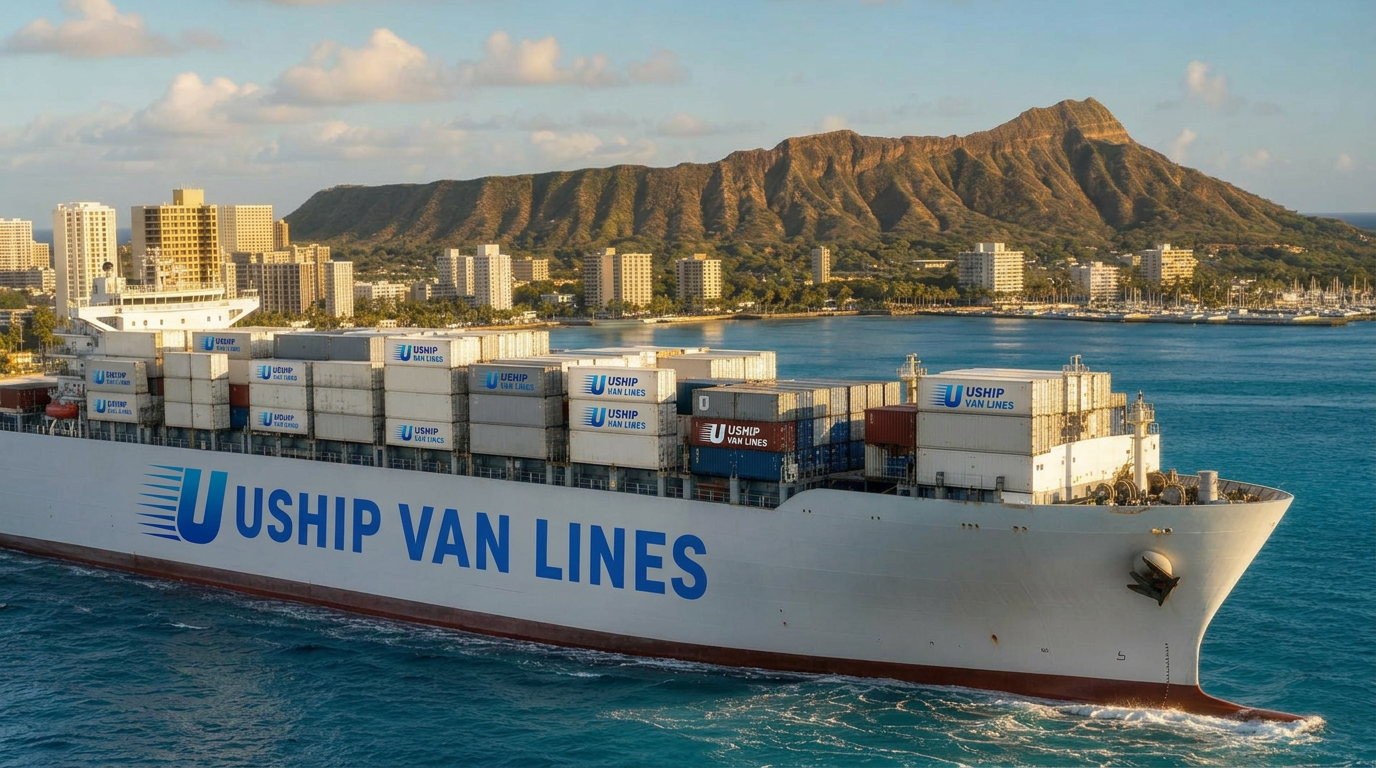
Moving from Hawaii to Texas
Moving from the islands to the Lone Star State is a major transition that combines ocean freight, mainland trucking, and careful coordination across time zones and climate extremes. Whether you're relocating from Oahu to Houston, Maui to Austin, or the Big Island to Dallas, you're looking at a multi-leg journey that typically spans 3–5 weeks from packing to delivery.
Best Alaska & Hawaii Movers, powered by UShip Van Lines, specializes in Hawaii-to-mainland relocations. We handle the entire process—from booking your container through Matson or Pasha, managing port paperwork, and coordinating final delivery anywhere in Texas. Request your free, no-obligation quote today to see exactly what your move will cost and when your belongings will arrive.
Route overview
The Hawaii–Texas Moving Corridor
The Hawaii-to-Texas route is one of the busiest mainland relocation lanes for island residents, driven by military transfers, career relocations, and families seeking lower cost of living. Your household goods travel by ocean container from Honolulu, Kahului, Hilo, or Nawiliwili to West Coast ports (typically Long Beach or Oakland), then cross the continental U.S. via semi-truck to your final Texas destination—whether that's Houston, Dallas-Fort Worth, Austin, San Antonio, or smaller cities.
This move requires coordination between ocean carriers (Matson Navigation and Pasha Hawaii are the primary operators), mainland trucking companies, and customs/USDA inspections. Unlike inter-island moves or simple truck relocations, Hawaii-to-Texas shipments must account for port schedules, weather windows (especially during hurricane season June–November), and the 1,800–2,400 mile overland haul from California to Texas. The result is a longer timeline but competitive pricing compared to air freight or expedited services.
Texas's size and diversity mean your final delivery logistics vary significantly. Major metro areas like Houston and Dallas have excellent trucking infrastructure and frequent LTL (less-than-truckload) consolidation options, while moves to rural West Texas or the Panhandle may require dedicated trucking and careful scheduling to avoid delays.
How the moving process works
How Your Hawaii-to-Texas Move Works: Step by Step
1. Request a Quote & Schedule Your Move Contact Best Alaska & Hawaii Movers 6–10 weeks before your desired move date. We'll assess your inventory (typically via virtual survey), confirm your origin island and Texas destination, and provide a binding or not-to-exceed estimate. Book early—summer and military PCS season (May–September) fill up quickly.
2. Pre-Move Inspection & Documentation Hawaii has strict outbound agricultural inspections. USDA-certified inspectors will examine your shipment for invasive pests, soil, and prohibited plant material. Remove all soil from outdoor items, discard open food, and clean gardening tools. We'll guide you through the prohibited-items list and help you avoid costly delays.
3. Packing & Loading in Hawaii Professional movers pack and load your belongings into a 20-foot or 40-foot ocean container (or a shared container for smaller moves). The container is sealed, inspected, and transported to the port—Honolulu Harbor (Oahu), Kahului Harbor (Maui), Hilo or Kawaihae (Big Island), or Nawiliwili (Kauai). Inter-island transfers add 3–7 days if you're on a neighbor island.
4. Ocean Transit to the West Coast Your container sails to Long Beach or Oakland aboard a Matson or Pasha vessel. Ocean transit takes 5–7 days from Honolulu, 6–9 days from neighbor islands (including inter-island repositioning and sailing). Containers are offloaded, cleared through customs and agriculture inspection, and transferred to a rail yard or truck terminal.
5. Cross-Country Trucking to Texas A semi-truck picks up your container or transfers your goods to a moving van for the overland journey. California-to-Texas transit takes 4–7 days depending on your city: Houston and Dallas are typically 4–5 days, while El Paso or Amarillo may take 6–7 days. LTL shipments (shared truck space) may add 2–4 days for consolidation.
6. Final Delivery in Texas Our crew delivers your belongings to your new home, unloads, and places items in the rooms you specify. Inspect everything before signing the delivery receipt. File any damage claims within 24–48 hours. We'll provide claim forms and guide you through the process.
7. Vehicle Shipping (Optional) If you're shipping a car or truck, it travels via roll-on/roll-off (RoRo) vessel or enclosed container. Vehicle shipping typically runs parallel to your household goods shipment and costs $1,200–$2,000 Hawaii to Texas, with 2–4 weeks transit time.
Estimated moving costs
What Does a Hawaii-to-Texas Move Cost?
For a typical 2–3 bedroom household (8,000–12,000 lbs or 800–1,200 cubic feet), expect to pay $6,500–$12,000 for full-service door-to-door moving. Studio and 1-bedroom moves range $3,500–$6,000, while 4-bedroom homes often exceed $14,000–$18,000.
Key cost drivers include:
- Volume and weight: Ocean freight is priced per cubic foot or by container size (20-foot vs. 40-foot). More belongings = higher cost.
- Origin island: Neighbor island moves (Maui, Kauai, Big Island) cost $800–$1,500 more than Oahu due to inter-island repositioning and smaller port infrastructure.
- Texas destination: Houston and Dallas are the most economical endpoints due to high freight volume. Rural or remote Texas locations may add $500–$1,200 in final-mile surcharges.
- Packing services: Full professional packing adds $800–$2,000. DIY packing (you pack, we load) saves money but increases risk of damage claims.
- Season: Peak summer months (June–August) and military PCS season command 10–20% premiums. Winter (December–February) often offers the best rates.
- Insurance: Basic carrier liability covers $0.60/lb. Full-value replacement insurance (highly recommended for Hawaii moves) costs 1–3% of declared value.
- Storage: If your Texas home isn't ready, warehouse storage in California or Texas costs $150–$400/month plus handling fees.
We never guarantee prices without a detailed inventory. Request your free quote for an accurate, binding estimate tailored to your specific move.
Estimated transit times
How Long Does Hawaii-to-Texas Moving Take?
Door-to-door transit typically requires 21–35 days (3–5 weeks), broken down as follows:
- Packing and port delivery (Hawaii): 1–3 days for professional packing and container loading; add 3–7 days if you're on Maui, Kauai, or Big Island and your container must be repositioned to Honolulu.
- Ocean freight to California: 5–7 days from Honolulu to Long Beach/Oakland; 8–10 days from neighbor islands (including inter-island time).
- Port processing and customs: 2–4 days for offloading, agricultural inspection, customs clearance, and transfer to trucking terminal.
- Cross-country trucking: 4–7 days California to Texas, depending on your city. Houston/Dallas/Austin are typically 4–5 days; rural West Texas or Panhandle locations may take 6–7 days.
- Final delivery window: Movers schedule delivery within a 2–3 day window. Flexibility on your end helps avoid re-delivery fees.
Delays can occur due to:
- Hurricane season disruptions (June–November) or tropical storms affecting sailing schedules.
- Port congestion in Long Beach/Oakland—peak retail season (October–December) can add 3–7 days.
- Agricultural inspection failures (soil, pests, prohibited items) requiring re-inspection or disposal.
- Holiday closures (Thanksgiving, Christmas, New Year's).
To minimize delays, book 8–12 weeks in advance, avoid peak summer/holiday periods if possible, and ensure your shipment passes USDA inspection on the first attempt.
Regional logistics
Hawaii-Specific Moving Logistics You Need to Know
Ocean Carrier and Port Details Matson Navigation and Pasha Hawaii operate the primary Hawaii–mainland freight routes. Containers depart weekly from Honolulu, bi-weekly or weekly from Kahului (Maui), and less frequently from Hilo/Kawaihae (Big Island) and Nawiliwili (Kauai). Neighbor island shipments often consolidate in Honolulu before sailing to California, adding 3–7 days. Your container arrives at Long Beach (Terminal Island) or Oakland (Outer Harbor), where it's offloaded and inspected.
USDA Agricultural Inspection Hawaii is one of the most heavily regulated origins for outbound shipments due to invasive species concerns. USDA inspectors examine every shipment for:
- Soil on outdoor furniture, bikes, tools, shoes, sporting goods
- Live plants (most are prohibited; a few require permits)
- Open food products, seeds, certain fruits
- Wood items with bark or insect damage
Failure to pass inspection results in re-inspection fees ($200–$500), disposal costs, or even shipment rejection. Best Alaska & Hawaii Movers provides a detailed prohibited-items checklist and pre-inspection guidance to ensure you pass on the first attempt.
Vehicle Shipping Cars and trucks ship separately via RoRo vessel or container. You'll need a clean title, registration, and proof of ownership. Vehicles must be empty (1/4 tank gas, no personal items except floor mats and car seat). Roll-on/roll-off is cheaper ($1,200–$1,600) but exposes vehicles to salt air; enclosed container shipping ($2,000–$2,800) offers better protection.
Storage Options If your Texas home isn't ready, we offer warehouse storage in California (near the port) or Texas (near your destination). California storage is billed monthly ($150–$300) plus in/out handling fees ($300–$600). Texas storage may be more convenient if your delivery date is uncertain.
Partial Loads and Consolidation Smaller moves (under 500 cubic feet) often consolidate with other shipments to reduce cost. Consolidated LTL shipments add 5–10 days to transit time but can save 20–30% versus dedicated container service.
Final-Mile Delivery Texas's size means final delivery varies widely. Urban areas (Houston, Dallas, Austin, San Antonio) have daily or near-daily LTL service. Rural counties—especially West Texas, the Panhandle, and Big Bend region—may require dedicated trucking, adding $400–$1,000 to your cost and 2–4 days to transit. Confirm your exact address with our team for accurate final-mile pricing.
Seasonal considerations
Best (and Worst) Times to Move from Hawaii to Texas
Winter (December–February): The off-peak moving season offers the lowest rates (10–20% below summer pricing) and faster scheduling. Ocean weather is generally calm, and mainland trucking faces fewer delays. Holidays (Christmas, New Year's) can slow port operations by 3–5 days. Ideal for budget-conscious moves.
Spring (March–May): Moderate demand and good weather. Military PCS season begins in May, so book early if moving late spring. Rates start climbing in April. Ocean conditions are excellent, and ports run smoothly. A good compromise between cost and convenience.
Summer (June–August): Peak moving season. Highest rates, longest lead times (book 10–12 weeks ahead), and highest risk of hurricane season disruptions starting June 1. Port congestion increases in August. If you must move in summer, secure your booking by March–April and budget 15–20% above off-peak pricing.
Fall (September–November): Hurricane season continues through November, with September–October historically the most active. Tropical storms can delay sailings by 1–2 weeks. However, demand drops post-Labor Day, and rates fall 10–15% by November. Retail shipping season (October–December) can create port congestion in Long Beach/Oakland. Good for flexible movers who can adjust to weather windows.
Pro tip: The absolute best combination of low cost and minimal delays is January–March. The worst is July–August (high cost, high demand, hurricane risk).
Why choose Best Alaska & Hawaii Movers
Why Best Alaska & Hawaii Movers for Your Hawaii–Texas Relocation?
- Hawaii-mainland specialization: We move families and businesses from the islands to the continental U.S. every week, with deep expertise in ocean freight logistics, USDA inspections, and multi-leg coordination that general movers can't match.
- Transparent, binding estimates: No surprise fees. Our quotes include ocean freight, mainland trucking, insurance, and all handling—you'll know your total cost upfront.
- End-to-end service powered by UShip Van Lines: We manage every leg—from packing and port delivery in Hawaii, to ocean carrier booking, customs clearance, cross-country trucking, and final delivery in Texas. One point of contact, one streamlined process.
- Flexible scheduling and storage: Whether you need short-term storage in California, long-term warehousing in Texas, or a tight delivery window, we build a plan around your timeline and budget.
- White-glove packing and handling: Professional packing materials rated for ocean transit, climate-controlled containers when needed, and careful handling of fragile and high-value items throughout the journey.