
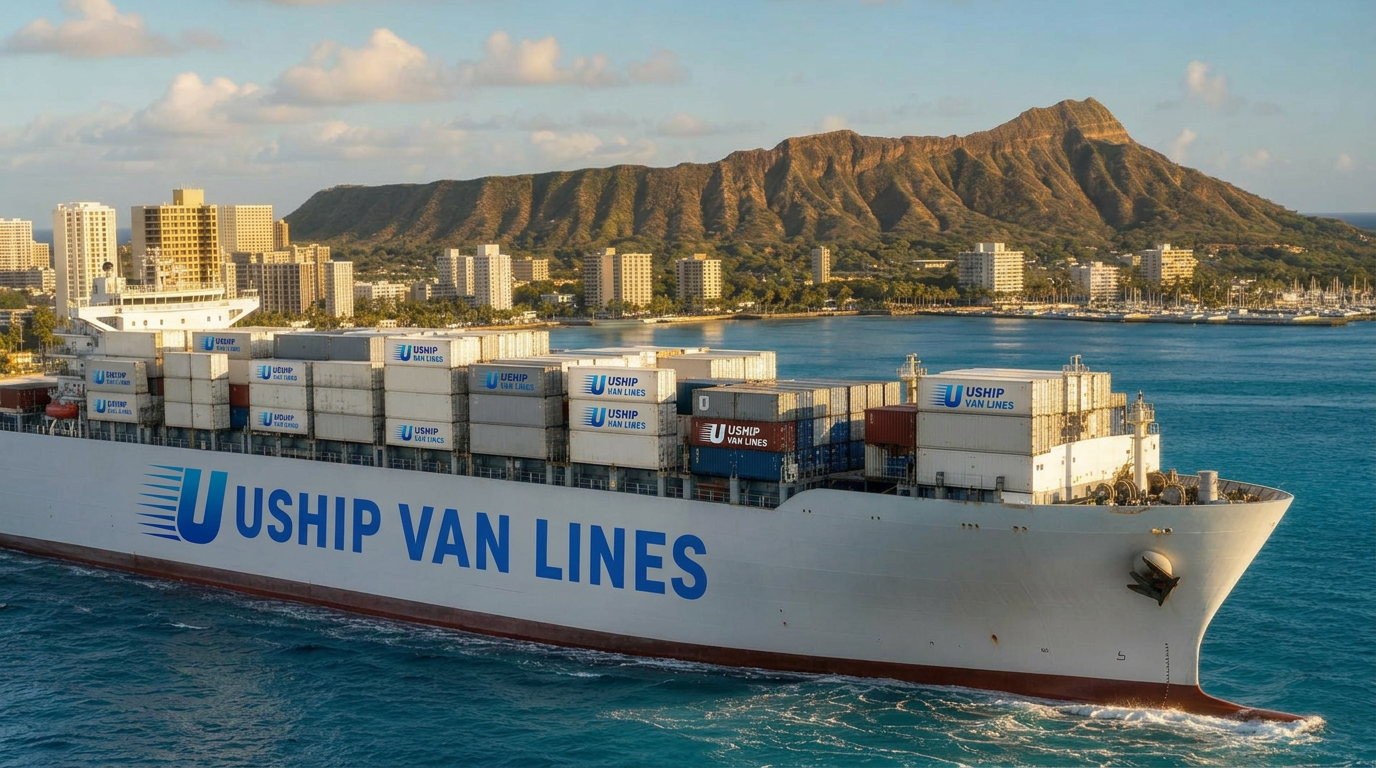
Moving from Hawaii to San Jose, CA
Relocating from the islands to Silicon Valley is a major transition—geographically, logistically, and culturally. Moving from Hawaii to San Jose, CA involves ocean freight shipping across the Pacific, containerization through major West Coast ports, and careful coordination to ensure your belongings arrive safely on the mainland. Whether you're leaving Oahu, Maui, Kauai, or the Big Island, understanding the multi-stage shipping process is essential.
Best Alaska & Hawaii Movers, powered by UShip Van Lines, connects you with experienced carriers who specialize in Hawaii-to-California moves. We handle the complexities of port coordination, container loading, ocean transit, and final delivery to San Jose. Request your free quote today and get transparent pricing tailored to your specific route and shipment size.
Route overview
Route Overview: Hawaii to San Jose, CA
Your household goods will travel from your island home to San Jose via ocean container shipping—the only practical method for long-distance moves from Hawaii to the mainland. Most shipments originate from Honolulu (Oahu) or require inter-island barge service from neighbor islands (Maui, Kauai, Big Island) to Honolulu, then ship aboard Matson or Pasha vessels to Long Beach or Oakland. From the mainland port, your container is either delivered directly to San Jose (about 350–400 miles from Long Beach, 45 miles from Oakland) or unloaded and transferred to a truck for final delivery.
San Jose sits in the heart of the San Francisco Bay Area, making Oakland the closest major container port—just a short inland haul. Long Beach is also commonly used due to higher sailing frequency and vessel capacity. The routing choice depends on sailing schedules, carrier networks, and cost optimization. Either way, expect a multi-modal journey: local pickup in Hawaii, port delivery, ocean crossing, mainland port handling, and ground transportation to your San Jose address.
This route is popular among tech professionals, military families, and retirees seeking mainland opportunities or lower cost-of-living. Understanding each leg of the journey—and the associated timelines and costs—helps you plan your move with confidence and avoid surprises.
How the moving process works
The Moving Process: Step-by-Step
-
Request and compare quotes. Contact Best Alaska & Hawaii Movers to receive detailed estimates from vetted carriers experienced in Hawaii-mainland lanes. Provide your island location, San Jose destination address, inventory size, and preferred move dates.
-
Schedule your packing and pickup. Professional movers will visit your Hawaii home to pack, wrap, and load your belongings into a shipping container (typically 20' or 40' steel ocean containers). If you're on a neighbor island, your container may first be barged to Honolulu for consolidation.
-
Container transport to the port. Your loaded container is trucked to the departure port (usually Honolulu Harbor) and staged for the next available Matson or Pasha sailing to Long Beach or Oakland.
-
Ocean freight crossing. Your container sails across the Pacific—typically 5–7 days at sea to Long Beach, 5–6 days to Oakland. Sailing frequency is weekly or bi-weekly depending on the carrier and season.
-
Mainland port arrival and customs clearance. Once docked, your container clears U.S. Customs (routine for domestic Hawaii shipments) and is unloaded or staged for inland transport. Port dwell time is usually 1–3 days.
-
Ground delivery to San Jose. If shipping to Oakland, expect same-day or next-day truck delivery to San Jose (45 miles). From Long Beach, add 1–2 days for the 350–400 mile haul up Interstate 5 and Highway 101.
-
Unloading and setup. Movers deliver your container or truck to your San Jose address, unload your belongings, and help with basic furniture placement. Inspect items promptly and document any damage for insurance claims.
Estimated moving costs
Cost Estimate for Hawaii to San Jose Moves
A typical 2–3 bedroom household move from Hawaii to San Jose ranges from $4,500 to $9,000, depending on volume, island origin, service level, and season. Larger homes (4+ bedrooms) or full-service white-glove packing can push costs to $10,000–$14,000 or more.
Key cost drivers include:
- Container size and volume. A 20-foot container (roughly 1,100 cubic feet) suits most 2-bedroom apartments; a 40-foot container (2,200+ cubic feet) accommodates larger homes. Partial loads in shared containers (consolidation) can reduce costs but add scheduling complexity.
- Island origin. Neighbor island shipments (Maui, Kauai, Big Island) require inter-island barge to Honolulu, adding $500–$1,200 and 3–7 days to your timeline.
- Mainland port choice. Oakland routing typically costs slightly more but saves 1–2 days of ground transport to San Jose. Long Beach may offer better sailing frequency and competitive pricing.
- Packing and labor. Full-service packing (recommended for fragile items, kitchens, and valuable electronics) adds $800–$2,000. DIY packing saves money but increases risk of damage.
- Insurance and valuation. Basic carrier liability covers 60¢ per pound; full-value replacement insurance costs 1–2% of declared shipment value and is strongly recommended for cross-ocean moves.
- Seasonal demand. Summer (May–August) is peak moving season; expect premium pricing and tighter container availability. Off-season (September–April, excluding holidays) often yields 10–20% savings.
Always request itemized quotes and clarify what's included: packing materials, labor, port fees, fuel surcharges, and delivery. Never assume a quote is all-inclusive without written confirmation.
Estimated transit times
Transit Time: How Long Does It Take?
Door-to-door moving from Hawaii to San Jose typically takes 10–21 days, broken down as follows:
- Island pickup to Honolulu port staging: 1–3 days (Oahu); 4–10 days if you're on Maui, Kauai, or Big Island and need inter-island barge service.
- Waiting for the next sailing: 1–7 days, depending on carrier schedules. Matson and Pasha sail weekly or bi-weekly; timing depends on your pickup date relative to the sailing calendar.
- Ocean transit: 5–7 days to Long Beach; 5–6 days to Oakland. Weather, port congestion, and vessel routing can add 1–2 days.
- Mainland port processing: 1–3 days for unloading, customs clearance (usually routine for domestic Hawaii shipments), and staging for ground transport.
- Ground delivery to San Jose: Same-day to 1 day from Oakland; 1–2 days from Long Beach.
Total realistic range: 10–14 days for Oahu-origin, Oakland-routed shipments with smooth scheduling; 16–21 days for neighbor island origins, Long Beach routing, or peak-season congestion. Always build a 3–5 day buffer into your plans—delays from weather, port labor slowdowns, or equipment shortages do occur.
If you need faster delivery, consider flying essentials and shipping only non-urgent household goods. Expedited air freight is available for high-value or time-sensitive items but costs 3–5× more than ocean shipping.
Regional logistics
Hawaii-Specific Logistics: What You Need to Know
Ports and shipping lines: Nearly all Hawaii-mainland household goods ship via Matson Navigation or Pasha Hawaii, the two dominant carriers with regular container service. Honolulu Harbor (Sand Island) is the primary departure port; Kawaihae (Big Island), Kahului (Maui), and Nawiliwili (Kauai) require inter-island feeder barge to Honolulu.
Container types: Most household moves use 20' or 40' steel ocean containers. Your belongings are loaded, sealed, and remain in the same container from Hawaii pickup through mainland delivery (true door-to-door service). Shared/consolidated containers are available for smaller shipments but add handling and scheduling complexity.
Vehicle shipping: If you're also moving a car, motorcycle, or boat, vehicle shipping is typically booked separately with Matson or Pasha auto services. Costs range from $1,200–$1,800 per standard vehicle (Hawaii to California). Vehicles must be clean (USDA inspection), operable, and have less than ¼ tank of fuel. Coordinate vehicle and household goods timelines carefully.
Quarantine and prohibited items: Hawaii has strict agricultural export rules. Inspect your belongings for soil, plants, and fresh produce—these are prohibited or require inspection. Hazardous materials (propane, paint, cleaners, batteries) cannot be shipped in ocean containers. Pets require separate air travel and health certificates; coordinate with your veterinarian and airline pet programs.
Insurance and documentation: Obtain full-value replacement insurance for peace of mind—ocean shipping involves multiple handling points and weather exposure. Keep an inventory list with photos of high-value items. You'll sign a bill of lading (shipping contract) at pickup; retain copies for delivery and any claims.
Last-mile delivery in San Jose: San Jose's residential streets are generally accessible for standard delivery trucks. If you live in a gated community, apartment complex, or area with parking restrictions, notify your mover in advance. Some carriers require a shuttle fee for difficult-access locations.
Seasonal considerations
Seasonal Considerations for Hawaii to San Jose Moves
Summer (May–August): Peak moving season coincides with school breaks, military PCS cycles, and optimal weather. Expect the highest demand, premium pricing, and tightest container availability. Book 6–8 weeks in advance. Ocean crossings are smooth, and mainland delivery weather is favorable.
Fall (September–November): Shoulder season offers moderate pricing and better availability. Early fall is still warm and dry; late fall (October–November) sees occasional Pacific storms that can delay sailings by 1–2 days. Hurricane season (June–November) rarely impacts Hawaii-California routes but can affect East Pacific shipping lanes.
Winter (December–February): Off-peak pricing and good availability, but holiday weeks (late December, early January) are exceptions—book early. Winter storms in the Pacific can delay sailings or cause rough seas (rare but possible). San Jose delivery is straightforward; rain in the Bay Area is common but manageable.
Spring (March–April): Another shoulder season with moderate demand and competitive pricing. Weather is generally calm, and sailing schedules are reliable. Ideal for budget-conscious movers willing to avoid summer premiums.
Hurricane season note: While Hawaii itself rarely sees direct hurricane strikes, the official season (June 1–November 30) can bring tropical storms that delay port operations or sailings. Carriers monitor forecasts closely and reschedule vessels as needed. Your mover will keep you informed of any weather-related delays.
Why choose Best Alaska & Hawaii Movers
Why Choose Best Alaska & Hawaii Movers
- Specialized Hawaii-mainland expertise. We exclusively focus on Alaska and Hawaii long-distance moves, connecting you with carriers who understand island logistics, ocean shipping, and multi-modal coordination.
- Transparent, competitive pricing. Our platform lets you compare quotes from vetted movers side-by-side, ensuring you get fair rates without hidden fees or surprise surcharges.
- Powered by UShip Van Lines. We leverage UShip's trusted marketplace technology and carrier network, giving you access to hundreds of licensed, insured movers competing for your business.
- End-to-end support. From initial quote request to final delivery in San Jose, our team is available to answer questions, track your shipment, and resolve any issues that arise.
- Customer-first service. We earn your business by delivering reliability, clear communication, and hassle-free moves—not by locking you into contracts or upselling unnecessary services.