
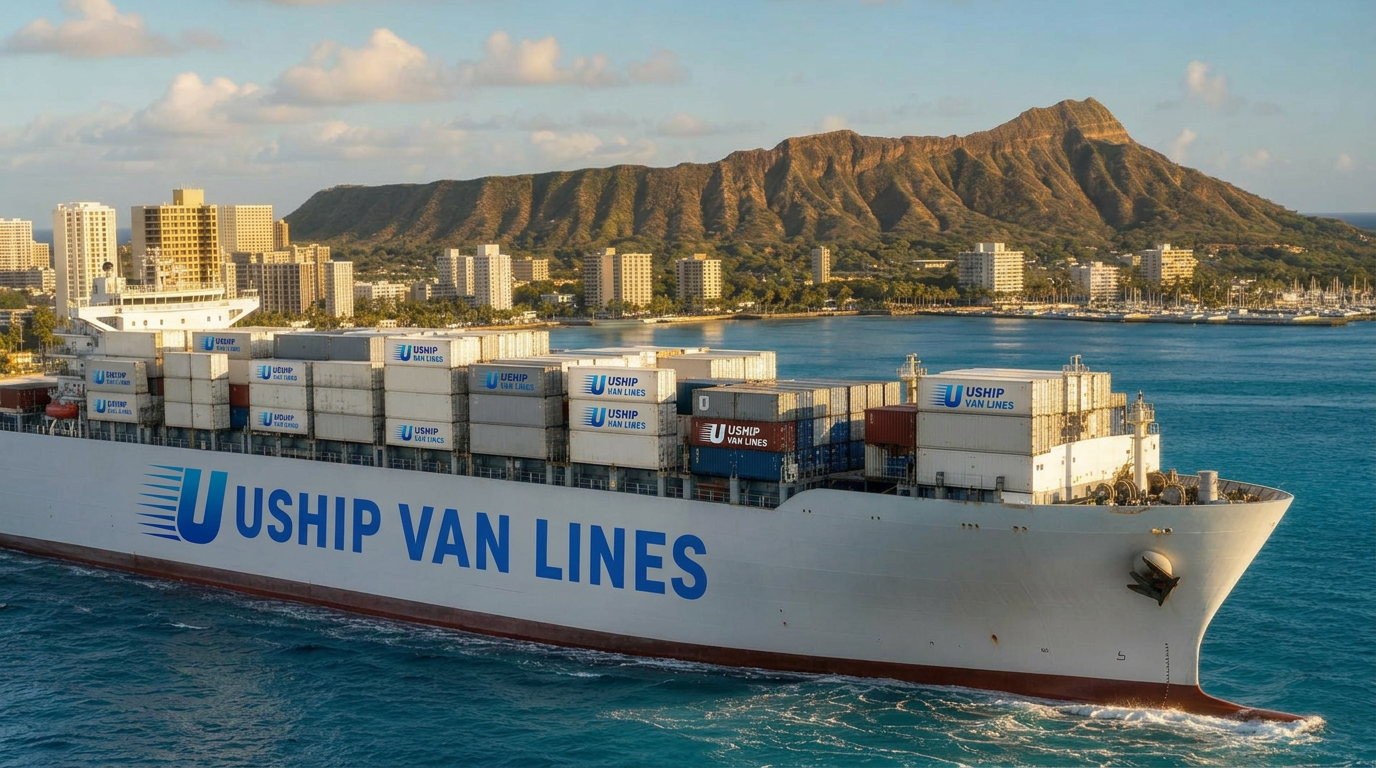
Moving from Hawaii to New Orleans, LA
Moving from Hawaii to New Orleans represents one of the most complex domestic relocations: your household goods will travel by ocean container to the West Coast, then overland nearly 2,000 miles to the Gulf Coast. Between port schedules, cross-country trucking, and Louisiana's humid subtropical climate, every detail matters.
Best Alaska & Hawaii Movers, powered by UShip Van Lines, specializes in Hawaii-to-mainland routes and coordinates every leg—ocean freight, customs clearance, and final delivery to the Crescent City. Ready to start planning? Request your free, no-obligation quote today and get a clear roadmap for your island-to-Louisiana move.
Route overview
Hawaii to New Orleans: The Two-Leg Journey
Your belongings will be packed into a 20-foot or 40-foot ocean container in Hawaii—Honolulu, Maui, Kauai, or the Big Island—and shipped via Matson Navigation or Pasha Hawaii to Long Beach or Oakland, California. This ocean leg takes 5–7 days. Once the container clears U.S. Customs and Agriculture inspection on the West Coast, it's loaded onto a truck chassis for the 1,850–2,000-mile cross-country haul to New Orleans.
The overland portion crosses the Southwest desert, Texas plains, and finally Louisiana's bayous. Expect 4–6 days of trucking time, weather and traffic permitting. Total door-to-door transit averages 14–21 days, with scheduling windows that depend on port availability, inspection queues, and Gulf Coast weather.
New Orleans sits just above sea level along the Mississippi River, which means summer humidity, hurricane season (June–November), and occasional street flooding. Movers must navigate narrow French Quarter alleys, historic Garden District streets, and Uptown parking restrictions. Choosing a carrier experienced in both Hawaii logistics and Louisiana's unique delivery challenges is essential.
How the moving process works
How Your Hawaii-to-New Orleans Move Works
-
Free In-Home or Virtual Survey
A Best Alaska & Hawaii Movers coordinator evaluates your inventory—furniture, appliances, boxes—and designs a container plan. We'll discuss items restricted by USDA (plants, soil, fresh foods) and advise on vehicle shipping if needed. -
Container Packing in Hawaii
Professional packers arrive at your island home, wrap furniture, load boxes, and secure everything inside a steel ocean container. Full-service packing is recommended for fragile items and long-distance transit. The container is sealed and trucked to Honolulu, Kahului, Nawiliwili, or Hilo port. -
Ocean Freight to California
Matson or Pasha sails your container to Long Beach or Oakland (5–7 days). Weekly sailings are common, but holiday and summer schedules may require advance booking. -
West Coast Customs & Agriculture Clearance
U.S. Customs and USDA inspect the container for prohibited items. Clean, well-documented shipments clear in 1–2 days; delays occur if restricted materials are found. -
Cross-Country Trucking
The container is loaded onto a flatbed or chassis and driven east via I-10 or I-20 through Arizona, Texas, and Louisiana. Transit takes 4–6 days, with rest stops and fuel breaks. -
Delivery in New Orleans
The driver schedules a delivery window. Narrow streets, low-hanging oaks, and permit requirements in the French Quarter or Garden District may require shuttle trucks. Our team unloads, places furniture, and removes packing debris. -
Post-Move Support
We follow up within 48 hours to ensure everything arrived intact. Any damage claims are handled promptly through our carrier insurance network.
Estimated moving costs
What Does a Hawaii-to-New Orleans Move Cost?
For a 2–3 bedroom household (approximately 5,000–8,000 pounds or a 20-foot container), expect to invest $6,500–$11,500 all-in. Larger homes requiring a 40-foot container can reach $13,000–$18,000. These ranges reflect ocean freight, port fees, cross-country trucking, and basic liability coverage.
Key cost drivers:
- Container size: 20-foot vs. 40-foot; shared (consolidated) vs. exclusive use.
- Packing services: Full-service professional packing adds $800–$1,800; DIY packing saves money but increases risk.
- Island origin: Neighbor island moves (Maui, Kauai, Big Island) require inter-island barge to Honolulu, adding $600–$1,200.
- Seasonality: Summer (May–August) and winter holidays see 10–20% premium pricing due to high demand.
- Insurance: Basic carrier liability covers $0.60/lb. Full-value replacement insurance (recommended for valuables) costs 1–2% of declared value.
- Vehicle shipping: Cars shipped separately via roll-on/roll-off vessel add $1,200–$1,800 Hawaii-to-mainland.
- Storage: Short-term warehousing in California or New Orleans runs $150–$300/week if delivery dates don't align.
Best Alaska & Hawaii Movers provides itemized quotes with no hidden fees. Rates fluctuate with fuel surcharges and port congestion, so lock in your estimate early. We never guarantee final prices without a formal survey, but our quotes are transparent and comprehensive.
Estimated transit times
How Long Does Hawaii to New Orleans Take?
Total door-to-door: 14–21 days on average, broken down as follows:
- Packing & port delivery (Hawaii): 1–3 days, depending on island and scheduling.
- Ocean transit (Hawaii → California): 5–7 days. Matson and Pasha sail weekly from Honolulu; neighbor islands add 1–2 days for inter-island barge.
- West Coast clearance: 1–3 days. USDA agriculture inspection is mandatory; delays occur if restricted items are flagged.
- Cross-country trucking: 4–6 days. I-10 through Phoenix, El Paso, San Antonio, Houston, and into Louisiana is the most common route. Weather (desert heat, Texas thunderstorms) can add delays.
- Final delivery in New Orleans: Scheduled within a 2–3 day window. Narrow streets and permit requirements in historic neighborhoods may require smaller shuttle trucks.
Expedited options: Exclusive-use containers and priority trucking can shave 3–5 days off the timeline, but expect a 20–30% cost premium. Plan for buffer time—closing on a Louisiana home, starting a new job, or coordinating with a lease? Add at least one week of cushion to avoid last-minute lodging or storage fees.
Regional logistics
Hawaii-Specific Logistics for Your New Orleans Move
Ports of origin: Most shipments leave from Honolulu (Oahu). If you're on Maui (Kahului), Kauai (Nawiliwili), or Big Island (Hilo/Kawaihae), your container travels by inter-island barge to Honolulu first—add 2–4 days and $600–$1,200 in barge fees.
Prohibited and restricted items: USDA bans fresh fruits, vegetables, plants in soil, coffee berries, and certain seeds. Mahogany and koa wood furniture require phytosanitary certificates. Propane tanks, firearms (without proper documentation), and hazardous materials (paint, aerosols, cleaning chemicals) are prohibited on ocean freight. Best Alaska & Hawaii Movers provides a detailed exclusion checklist during your survey.
Vehicle shipping: If you're bringing your car, it ships separately on a Matson or Pasha roll-on/roll-off (RORO) vessel. Hawaii-to-mainland auto transport costs $1,200–$1,800 and takes 7–14 days port-to-port. Vehicles must be clean (no dirt, seeds), contain no personal items, and have less than ¼ tank of fuel. We coordinate pickup in Long Beach or Oakland and overland delivery to New Orleans.
Customs and agriculture inspection: Every container from Hawaii undergoes mandatory USDA inspection on the West Coast. Inspectors check for invasive pests (coffee berry borer, coqui frogs) and prohibited plant material. Clean shipments clear in 1–2 days; contaminated containers face fumigation, fines, or disposal of restricted items—resulting in 5–10 day delays. Pack smart and disclose everything during your inventory survey.
New Orleans delivery challenges: The French Quarter, Marigny, and Bywater have narrow streets, low-hanging live oak branches, and strict parking regulations. Garden District and Uptown homes often require permits for large trucks. If your new address has limited access, movers use a large container truck to a nearby lot, then shuttle items via smaller truck to your door—this is standard practice and included in reputable quotes.
Seasonal considerations
Timing Your Move: Weather, Ports & Peak Season
Summer (May–September): Peak moving season coincides with Hawaii's dry season and mainland summer vacations. Expect higher rates, fuller ships, and longer booking lead times (6–8 weeks recommended). Hurricane season begins June 1 in the Gulf of Mexico; while New Orleans moves are rarely canceled, late-summer tropical storms can delay deliveries by 3–7 days.
Fall (October–November): Shoulder season offers moderate pricing and fewer port delays. Hurricane season officially ends November 30, but October storms still occur. Thanksgiving week sees a brief demand spike—book early.
Winter (December–February): Holiday moves (late December) cost 15–25% more; New Year's week is particularly tight. January and February are the slowest, cheapest months, with 10–20% discounts common. However, rare winter storms in Texas or Louisiana can disrupt trucking schedules.
Spring (March–April): Second-best window for cost and availability. Port congestion is minimal, and Gulf Coast weather is mild. Easter week and spring breaks see minor upticks in demand.
Hurricane considerations: If moving August–October, purchase full-value insurance and build extra buffer time. Carriers monitor NOAA forecasts; your shipment may be held in California or rerouted if a named storm threatens the Gulf Coast.
Why choose Best Alaska & Hawaii Movers
Why Best Alaska & Hawaii Movers for Your Island-to-Louisiana Relocation
- Hawaii-Mainland Specialists: We coordinate ocean freight, West Coast clearance, and cross-country trucking daily—no learning curve, no surprises.
- Transparent, Itemized Quotes: Every charge—ocean freight, port fees, trucking, insurance—is listed clearly. You'll never see hidden fuel surcharges or "administrative fees" on moving day.
- Powered by UShip Van Lines: Access to a vetted network of interstate carriers, competitive pricing, and centralized support from survey to final delivery.
- Full-Service Packing & Crating: Professional teams in Hawaii wrap, box, and secure your belongings for 5,000+ miles of travel. Custom crating available for art, antiques, and electronics.
- Proactive Communication: Real-time tracking, port status updates, and delivery scheduling—no guessing when your container will arrive in New Orleans.
- Comprehensive Insurance Options: From basic carrier liability to full-value replacement policies underwritten by licensed insurers. Protect your investment with the right coverage level.