
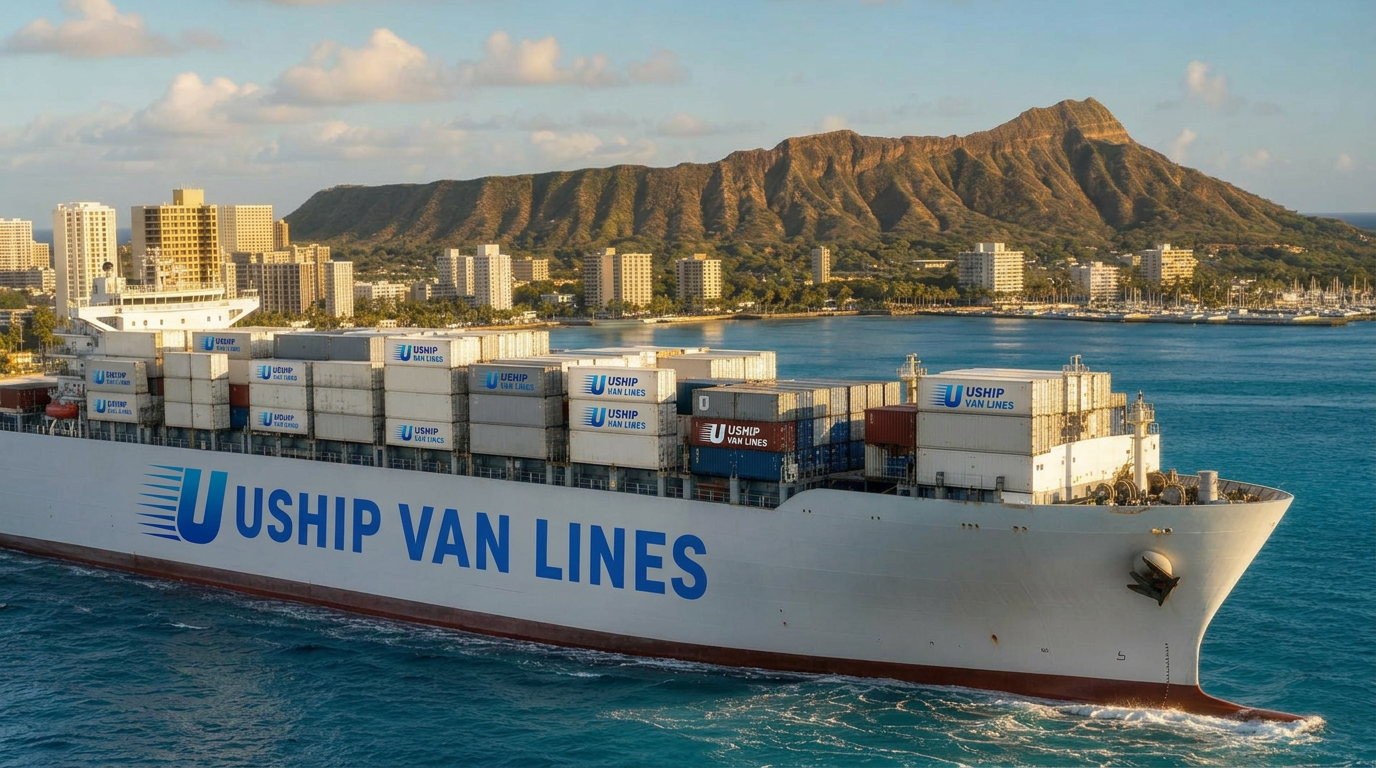
Moving from Hawaii to Greenville, SC
Moving from the Hawaiian Islands to Greenville, South Carolina, means trading Pacific sunsets for Blue Ridge Mountain views—and navigating one of the most complex residential relocations in the United States. Your belongings will travel by ocean container to the West Coast, then overland more than 2,800 miles to the heart of the Upstate.
Best Alaska & Hawaii Movers, powered by UShip Van Lines, specializes in these exact multi-modal moves. We coordinate ocean freight, customs clearance, mainland trucking, and final delivery so you experience one seamless move instead of juggling three separate vendors. Request your free, no-obligation quote today to see how we simplify Hawaii-to-mainland relocations.
Route overview
The Hawaii to Greenville, SC Moving Route
Your household goods begin their journey at one of Hawaii's primary ports—Honolulu on Oahu, Kahului on Maui, Nawiliwili on Kauai, or Hilo/Kona on the Big Island. For neighbor island moves, containers are first consolidated through Honolulu before boarding Matson or Pasha vessels bound for West Coast ports, typically Oakland or Long Beach, California. The ocean voyage alone takes 5–7 days under normal conditions.
Once your container clears U.S. Customs and Agriculture inspections at the mainland port, it's transferred to a 53-foot semi-trailer for the transcontinental haul. From California, your shipment travels east via Interstate 40 through Arizona and New Mexico, then Interstate 20 across Texas, Louisiana, Mississippi, and Alabama, before turning northeast through Georgia into South Carolina. The final segment follows Interstate 85 directly into Greenville, a thriving city of approximately 70,000 residents nestled in the foothills of the Blue Ridge Mountains.
Greenville's accessibility via major interstates makes the final delivery straightforward compared to remote mainland destinations. The city's growing economy—anchored by manufacturing, healthcare, and technology sectors—attracts thousands of new residents annually, many from high-cost coastal markets like Hawaii. Expect lower housing costs, four distinct seasons, and a humid subtropical climate that will feel dramatically different from island life.
How the moving process works
How Your Hawaii to Greenville Move Works: Step by Step
-
Free In-Home or Virtual Survey: A moving specialist assesses your inventory, notes any high-value or fragile items, discusses vehicle shipping if needed, and provides a detailed written estimate. For Hawaii moves, we identify items restricted by USDA (soil, certain plants, fresh foods) and items requiring special ocean-rated packing.
-
Container Selection and Packing: Most 2–3 bedroom households fit within a 20-foot ocean container (approximately 1,100 cubic feet); larger homes may require a 40-foot container (2,300+ cubic feet). Our crew packs your belongings using reinforced cartons, moisture barriers, and tie-down straps rated for ocean transit. Furniture is wrapped, electronics are double-boxed, and weight is distributed to prevent shifting during the voyage.
-
Island Pickup and Port Delivery: Professional movers load your container at your Hawaii residence, seal and document the shipment, then transport it to the departure port. For neighbor islands, the container may travel by inter-island barge to Honolulu for consolidation with other mainland-bound freight.
-
Ocean Freight to California: Your container boards a Matson or Pasha vessel for the 5–7 day Pacific crossing. These carriers operate on published schedules; summer and holiday periods see heavier booking volumes. Container tracking is available throughout the voyage.
-
Customs Clearance and USDA Inspection: Upon arrival at Oakland or Long Beach, U.S. Customs and Border Protection verifies your shipment documentation. USDA inspectors may open the container to check for prohibited agricultural products. Clean, well-documented shipments typically clear within 1–3 business days; complications can add a week.
-
Cross-Country Trucking: Once released, your container is loaded onto a chassis and pulled by semi-truck across approximately 2,800 miles of highway. Professional drivers coordinate fuel stops, required rest periods, and real-time GPS tracking. This leg typically takes 5–7 days depending on weather and routing.
-
Greenville Delivery and Unloading: Your crew contacts you 24–48 hours before arrival to confirm delivery window. They unload your container, place furniture and boxes in designated rooms, reassemble beds and tables, and remove packing debris. You inspect the shipment and sign the final delivery receipt, completing your journey from the Islands to the Upstate.
Estimated moving costs
What You'll Invest: Realistic Cost Expectations
A full-service move from Hawaii to Greenville, SC, for a typical 2–3 bedroom household generally ranges between $8,500 and $14,500, with most families spending around $11,000. This estimate assumes approximately 8,000–12,000 pounds of household goods, full packing services, and door-to-door delivery. Actual costs depend on multiple variables unique to your shipment.
Key cost drivers include:
-
Volume and weight: Ocean freight is priced per container size (20-foot vs. 40-foot), while mainland trucking charges by weight and mileage. A studio or 1-bedroom move in a shared container (LCL) costs $5,000–$7,500; 4+ bedroom households requiring a full 40-foot container can exceed $18,000.
-
Island of origin: Neighbor island moves (Maui, Kauai, Big Island) add $800–$1,500 for inter-island barge and handling compared to Oahu departures. Remote pickup locations with difficult access increase labor and trucking fees.
-
Packing services: Self-packing saves $1,200–$2,000 but increases claims risk if items aren't properly prepared for ocean transit. Professional ocean-rated packing uses specialized materials and techniques that minimize moisture and shift damage.
-
Vehicle shipping: Adding a car to your move costs $1,400–$2,200 for RORO (roll-on/roll-off) ocean service to the West Coast, plus $900–$1,400 for enclosed or open transport to Greenville. Motorcycles, boats, and recreational vehicles are quoted separately.
-
Insurance and valuation: Basic carrier liability covers $0.60 per pound per article. Full replacement value coverage costs approximately 1–2% of the declared value and is strongly recommended for Hawaii moves due to multiple handling points.
-
Storage: If your Greenville home isn't ready, warehouse storage on the mainland runs $150–$350 per month for a typical household volume.
-
Seasonal premiums: Summer months (June–August) see 15–25% surcharges due to peak moving season and heavier port congestion.
We provide transparent, itemized estimates with no hidden fees. Costs are locked in writing before your move begins, protecting you from surprise charges.
Estimated transit times
Timeline: When Your Belongings Will Arrive
Door-to-door transit from Hawaii to Greenville, SC, typically requires 3–5 weeks under normal conditions. This window accounts for all stages of your multi-modal move, from island pickup through final Upstate delivery.
Breakdown by segment:
-
Island pickup to port departure: 1–5 days, depending on your island. Oahu shipments often load within 24–48 hours. Neighbor island pickups require barge transit to Honolulu, adding 2–4 days before the container boards the mainland vessel.
-
Ocean voyage: 5–7 days from Honolulu to Oakland or Long Beach under normal sea conditions. Adverse weather, mechanical issues, or port congestion can extend this by 1–3 days.
-
Customs and USDA clearance: 1–3 business days for straightforward shipments with complete documentation. Inspections, missing paperwork, or prohibited items can delay release by 3–7 days.
-
Cross-country trucking: 5–7 days from California to Greenville, covering roughly 2,800 miles. Drivers follow federal hours-of-service rules requiring rest periods. Winter weather in mountain passes or severe storms in the South can add 1–2 days.
-
Final scheduling and delivery: 1–2 days for crew scheduling and customer coordination once your shipment reaches the Greenville area.
Plan for 4–6 weeks during peak season (May through September) when vessels sail at full capacity and mainland trucking faces heavy demand. Off-season moves (October through March) often complete in 3–4 weeks. Winter moves should account for potential weather delays crossing the Rockies or Appalachians.
We provide milestone tracking throughout your move: container loaded, vessel departed, customs cleared, truck dispatched, and delivery scheduled. You'll have a dedicated coordinator and 24/7 access to shipment status.
Regional logistics
Hawaii-Specific Moving Logistics You Must Know
Port and carrier infrastructure: Hawaii's ocean freight is dominated by Matson Navigation and Pasha Hawaii, both operating from dedicated terminals at Honolulu Harbor. Neighbor island ports (Kahului, Nawiliwili, Hilo, Kawaihae) handle inter-island barges that consolidate cargo through Honolulu. West Coast arrival ports—primarily Oakland's Matson terminal or Long Beach's Pier T—are equipped for rapid container transfers to chassis for overland trucking. Unlike Alaska moves that may require TOFC (trailer-on-flatcar) rail service, Hawaii containers go directly to road transport.
Customs and agricultural inspections: All shipments from Hawaii to the mainland undergo USDA screening because Hawaii is considered a foreign agricultural zone for inspection purposes, despite being a U.S. state. Inspectors look for soil, live plants (except certified houseplants), fresh fruits and vegetables, certain seeds, and pest contamination. Common violations include potted plants in outdoor soil, wooden furniture with bark, or forgotten produce in kitchen boxes. Violations can result in item confiscation, fumigation charges ($300–$800), or multi-day holds. We provide a detailed prohibited-items list during your survey and train packing crews to flag questionable materials before they're loaded.
Vehicle shipping: Cars, trucks, and motorcycles cannot roll onto ocean containers with household goods. Vehicles ship separately via RORO service—driven onto the vessel, secured below deck, then driven off at the mainland port. Matson and Pasha both offer auto shipping; typical transit matches household goods (5–7 days ocean, 1–2 days port processing). Once your vehicle arrives in California, you can either fly back to pick it up (saving $900–$1,400) or add enclosed/open auto transport to Greenville. Most customers choose door-to-door auto shipping for convenience. Ensure your vehicle is clean (no soil in wheel wells or undercarriage) to pass USDA inspection without delay.
Crating and moisture protection: Hawaii's humid environment and ocean salt air demand specialized packing. Mattresses and upholstered furniture receive moisture-barrier bags. Electronics and important documents go into sealed plastic bins inside the container. Wood furniture is wrapped in moving blankets secured with stretch film. We use commercial desiccants (moisture absorbers) inside containers to control humidity during the 5–7 day voyage and prevent mold growth. Standard mainland packing materials aren't sufficient for trans-Pacific moves.
Last-mile delivery in Greenville: Greenville's street grid and residential neighborhoods are accessible for full-size semi-trucks, unlike some historic East Coast cities with narrow streets. If you're moving to a downtown loft or a property with steep driveways, low-clearance bridges, or weight-restricted roads, notify your coordinator during booking. We can arrange shuttle service (transferring your goods from the semi to a smaller truck) for an additional $400–$800, ensuring safe delivery to any address.
Storage options: If your Greenville home purchase or lease isn't finalized when your shipment arrives, we offer secure warehouse storage at our regional facility. Climate-controlled units protect furniture and electronics from South Carolina's humid summers. Storage is billed monthly; we coordinate delivery once you're ready, typically within the same business week you request it.
Seasonal considerations
Best Times to Move from Hawaii to Greenville
Winter (December–February): The most affordable period for Hawaii-to-mainland moves, with ocean freight rates 15–20% below peak and wider carrier availability. Greenville experiences mild winters (average highs in the 50s°F) with occasional snow or ice events that can briefly delay final delivery. Winter storms crossing the Southwest or Southeast may add 1–2 days to trucking schedules, but overall reliability is good.
Spring (March–May): Demand begins climbing as families plan summer relocations, but rates remain moderate. Ocean sailing schedules increase frequency. Greenville's spring is spectacular—azaleas, dogwoods, and mild temperatures—making arrival pleasant. Severe weather risk is low, though springtime thunderstorms and occasional tornadoes affect the broader Southeast. Book 8–10 weeks ahead for best pricing and scheduling.
Summer (June–August): Peak moving season brings premium pricing, heavier port congestion, and longer lead times for container space. Hurricane season officially runs June 1–November 30; Central Pacific storms can disrupt Hawaii port operations or delay sailings by 2–5 days. Mainland heat doesn't significantly impact trucking timelines, but summer construction on interstates can slow cross-country transit. Greenville summers are hot and humid (90°F+ days are common), a stark contrast to Hawaii's trade-wind cooling. Reserve your move 12+ weeks in advance during this period.
Fall (September–November): Demand softens after Labor Day, yielding better pricing and availability. Hurricane risk peaks in September for Hawaii, though major landfalls are rare. Greenville's fall is arguably its finest season—comfortable temperatures, brilliant foliage in nearby mountains, and lower humidity. Thanksgiving week sees brief demand spikes. This is an excellent window for cost-conscious movers willing to be flexible on exact dates.
Year-round consideration: Matson and Pasha maintain regular weekly sailings from Hawaii regardless of season, but container availability tightens June–August. Mainland trucking is reliable year-round along the southern I-40/I-20 corridor used for this route, with weather disruptions less common than northern routes. Always allow buffer time between your Hawaii lease end and Greenville occupancy start.
Why choose Best Alaska & Hawaii Movers
Why Best Alaska & Hawaii Movers for Your Greenville Relocation
-
Single-source accountability: You work with one coordinator who manages ocean carrier booking, customs brokerage, mainland trucking, and final delivery—no finger-pointing between vendors when questions arise. Our integrated system tracks your shipment from Honolulu to Greenville under a single contract.
-
Hawaii logistics expertise: We specialize exclusively in Alaska and Hawaii moves, understanding the USDA regulations, port procedures, and ocean packing requirements that general movers often mishandle. Our crews are trained in moisture-barrier techniques, container weight distribution, and neighbor-island coordination that prevent delays and damage.
-
Transparent pricing with no hidden fees: Your written estimate itemizes ocean freight, mainland trucking, labor, packing materials, insurance options, and any applicable fuel surcharges or seasonal adjustments. The price we quote is the price you pay, locked in before your first box is packed.
-
Comprehensive insurance options: We offer full replacement value coverage underwritten by licensed cargo insurers, protecting your belongings through every segment—island pickup, ocean transit, customs processing, cross-country trucking, and final delivery. Basic carrier liability ($0.60/lb/article) is included; higher coverage is available at reasonable premiums.
-
Powered by UShip Van Lines infrastructure: Our mainland network includes regional terminals, vetted carrier partners, and real-time tracking technology that ensure your shipment moves efficiently from West Coast ports to Greenville. You benefit from UShip Van Lines' nationwide reach combined with our niche Hawaii expertise.