
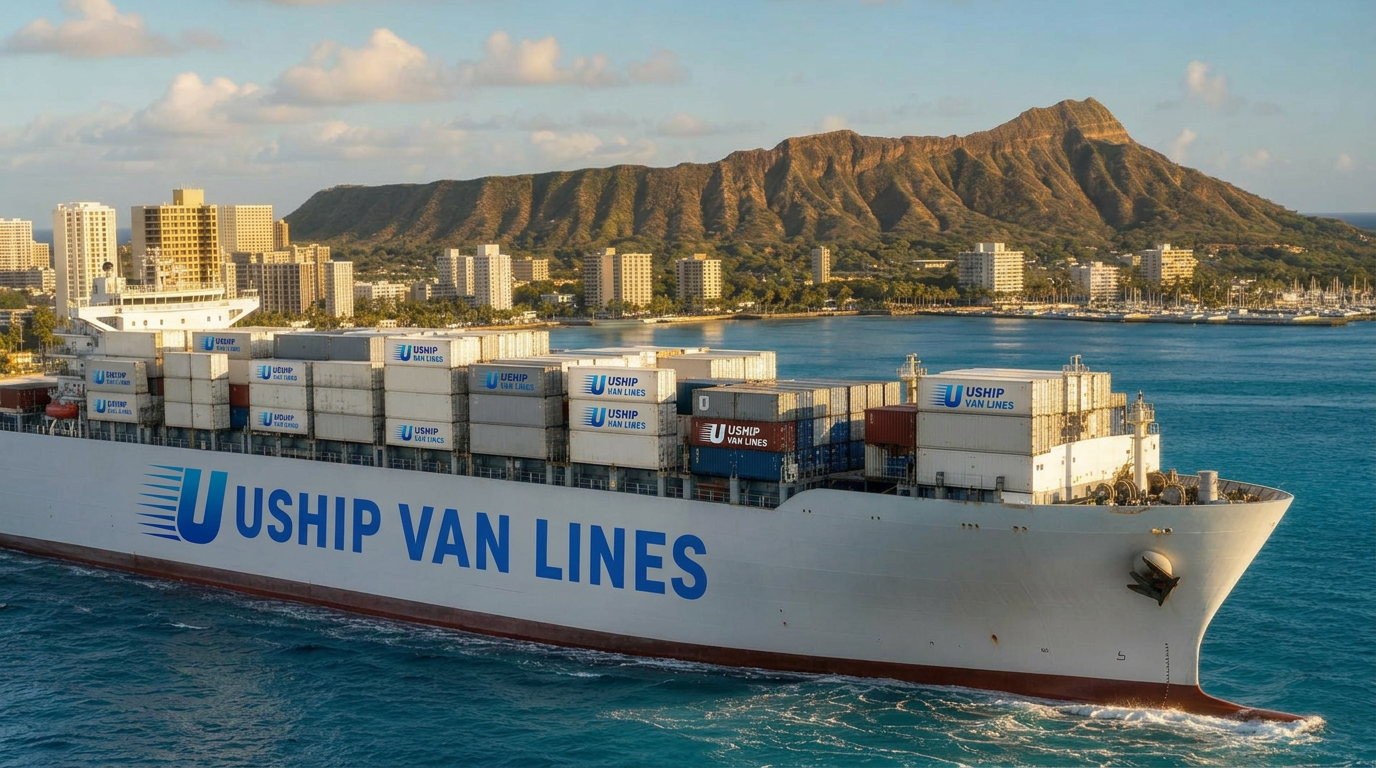
Moving from Hawaii to Miramar, FL
Relocating from the Hawaiian Islands to Miramar, Florida combines complex ocean logistics with cross-country mainland transport. This South Florida city—nestled between Fort Lauderdale and Miami—offers a lower cost of living than the islands while maintaining a warm climate and diverse community. Your household goods will travel by ocean container from Honolulu, Maui, Kauai, or the Big Island to the West Coast, then overland approximately 2,800 miles to Broward County.
Best Alaska & Hawaii Movers, powered by UShip Van Lines, coordinates every segment of your Hawaii-to-Florida relocation. From port documentation and container loading to final delivery in Miramar's residential neighborhoods near Miramar Parkway or the University Drive corridor, we manage the full journey. Request a detailed quote today to see transparent pricing for your specific move size and timeline.
Route overview
Understanding the Hawaii to Miramar Route
Your belongings travel two distinct segments on this transcontinental-plus-ocean move. The first leg crosses the Pacific via Matson Navigation or Pasha Hawaii from your island port (Honolulu on Oahu, Kahului on Maui, Nawiliwili on Kauai, or Hilo/Kawaihae on the Big Island) to Long Beach or Oakland, California—a 5–7 day ocean voyage covering roughly 2,500 nautical miles. Inter-island consolidation may add time if you're shipping from a neighbor island.
Once your container clears U.S. Customs and Agriculture inspection at the California port, your goods transfer to a dedicated moving van for the southern transcontinental haul. The mainland segment crosses California, Arizona, New Mexico, Texas, Louisiana, Mississippi, Alabama, and into Florida—approximately 2,800 road miles to Miramar. This route typically follows I-10 through the Sun Belt, then I-75 or the Florida Turnpike south into Broward County.
Miramar sits in the densely populated Tri-County area (Miami-Dade, Broward, Palm Beach), meaning final delivery navigates suburban traffic patterns and HOA/condo access rules common to South Florida's master-planned communities. Coordination with building management is essential for high-rise or gated-community deliveries.
How the moving process works
How Your Hawaii to Miramar Move Works: Step-by-Step
-
Free Quote & Move Planning – Share your inventory list, move dates, and Miramar delivery address. We provide a binding estimate covering ocean freight, mainland transport, and door-to-door service. Discuss vehicle shipping, storage needs, and any specialty items (pianos, artwork, surfboards).
-
Pre-Move Survey & Documentation – A coordinator reviews your shipment in Hawaii (virtual or in-person) to confirm cubic footage. We arrange USDA agriculture inspection appointments if required and prepare ocean Bill of Lading and mainland carrier paperwork.
-
Island Pickup & Container Loading – Professional packers and loaders arrive at your Hawaii residence. Goods are inventoried, packed (if you've selected full-service packing), and loaded into a 20-ft or 40-ft ocean container. Inter-island households may consolidate at the Honolulu hub before ocean departure.
-
Ocean Transit to California – Your container sails to Long Beach or Oakland (5–7 days at sea). Upon arrival, it undergoes U.S. Customs clearance and mandatory agriculture inspection for prohibited items (certain plants, soil, untreated wood).
-
Mainland Transfer & Cross-Country Transport – Cleared goods transfer from the container to a long-haul moving truck. The driver departs California for the 5–7 day overland journey to Florida, crossing eight states on I-10 and connecting highways.
-
Final Delivery in Miramar – The truck arrives at your Miramar address with advance notice (24–48 hours). Movers unload, place furniture, and reassemble items per your floor plan. You complete a final inventory check and sign delivery paperwork.
-
Post-Move Support – Report any damage or missing items within the claim window (typically 9 months for interstate moves). Our customer service team assists with insurance claims and follow-up questions as you settle into South Florida.
Estimated moving costs
What Does a Hawaii to Miramar Move Cost?
A typical 2-bedroom household (approximately 7,000–9,000 lbs or 800–1,000 cubic feet) costs $6,500–$10,500 door-to-door. A 3-bedroom home (10,000–14,000 lbs or 1,200–1,600 cubic feet) typically ranges $9,500–$14,500. These estimates include ocean freight, mainland trucking, basic liability coverage, and standard delivery.
Key cost drivers:
- Container size & weight – Shared 20-ft container (partial load) vs. exclusive-use 40-ft container; freight is priced per cubic foot or by weight.
- Island of origin – Neighbor island pickups (Maui, Kauai, Big Island) incur inter-island barge fees to Honolulu before the mainland sailing.
- Packing services – Professional full-pack adds $800–$2,000; partial pack (fragiles only) adds $300–$800.
- Vehicle shipping – Cars ship separately via RORO (roll-on/roll-off) vessel, $1,200–$1,800 Hawaii to Florida.
- Storage – Warehouse storage at California port or in Florida runs $100–$250/month; helpful if your Miramar home isn't ready.
- Seasonality – Summer (June–August) and winter holidays see 10–20% premiums due to peak demand and limited container space.
- Access fees – Long-carry, shuttle, or stair-carry charges apply if the Miramar delivery site has restricted truck access or no elevator.
Request a detailed, line-item quote to see exactly what's included. All estimates are non-binding until confirmed in writing; final cost reflects actual weight and services rendered.
Estimated transit times
How Long Does Hawaii to Miramar Take?
Budget 18–28 days door-to-door for most Hawaii to Miramar relocations. This window accounts for island pickup, ocean sailing, port processing, mainland transit, and final delivery scheduling.
Breakdown by leg:
- Island pickup to port departure: 1–3 days (longer for neighbor islands requiring inter-island barge to Honolulu).
- Ocean voyage (Hawaii to California): 5–7 days at sea, depending on vessel schedule and weather.
- Port clearance & transfer: 2–5 days for Customs, USDA agriculture inspection, container unloading, and transfer to mainland truck.
- Mainland transport (California to Miramar): 5–7 days driving approximately 2,800 miles across eight states.
- Delivery scheduling window: 1–3 days; carriers provide 24–48 hour advance notice of the exact delivery appointment.
Variables that extend timelines:
- Vessel schedules – Matson and Pasha sail 1–2 times per week; missing a sailing adds 3–7 days.
- Agriculture holds – Prohibited items (certain seeds, soil, untreated wood) trigger inspection delays or item confiscation.
- Weather – Pacific storms in winter (November–March) can delay sailings; hurricane season (June–November) may affect Florida delivery timing.
- Peak-season congestion – Summer moves and holiday periods create port bottlenecks and truck capacity constraints.
For time-sensitive relocations, discuss expedited options during your quote consultation. Guaranteed delivery windows are available at a premium but require early booking.
Regional logistics
Hawaii-Specific Moving Logistics to Miramar
Port operations: Your goods typically depart Honolulu Harbor (Sand Island) for Matson's Long Beach terminal or Pasha's Oakland facility. Neighbor island residents see items barged to Honolulu first—Maui (Kahului), Kauai (Nawiliwili), or Big Island (Hilo/Kawaihae) add 2–4 days to the timeline. California ports operate 24/6 but face occasional labor slowdowns during contract negotiations.
USDA agriculture restrictions: All shipments from Hawaii undergo mandatory inspection for invasive pests, soil, and prohibited plant material. Common issues: potted plants with soil, wooden furniture with bark, certain seeds. Pack a detailed inventory; declared items speed clearance. Non-compliance can mean cargo holds, item confiscation, or fines. Our team provides a prohibited-items checklist during planning.
Vehicle shipping: Cars, motorcycles, and boats ship separately via RORO vessel (Matson or Pasha) on a similar Hawaii–California route, then overland to Florida. Transit is 14–21 days; cost runs $1,200–$1,800 per standard sedan. Vehicles must be operable, nearly empty (less than ¼ tank fuel), and pass a pre-sail inspection. We coordinate vehicle and household-goods timelines so both arrive within days of each other.
Miramar delivery considerations: South Florida's dense development means many homes are in gated communities, HOAs, or condo towers with strict moving policies. Notify your property manager 2–4 weeks ahead to reserve elevators, loading docks, or parking. Some buildings restrict moves to weekdays or require certificates of insurance. Our drivers carry $1M liability coverage and coordinate access in advance.
Storage options: If your Miramar residence isn't ready, we offer climate-controlled warehouse storage in the Los Angeles area (post-ocean, pre-mainland departure) or in South Florida (post-delivery). Monthly rates are $100–$250 depending on volume. Florida's humidity makes climate control essential for electronics, wood furniture, and paper goods.
Partial loads vs. exclusive use: Most Hawaii moves share a 40-ft container (consolidation) to reduce costs. Exclusive-use containers suit larger homes (4+ bedrooms) or those with strict delivery deadlines. Discuss trade-offs during your quote: shared loads cost less but add 2–5 days for consolidation; exclusive use offers faster, more predictable service.
Seasonal considerations
Best Times to Move from Hawaii to Miramar
Winter (December–February)
Peak "snowbird" season in South Florida drives up housing costs and moving demand, though Hawaii departure is straightforward. Pacific winter storms occasionally delay sailings by 1–2 days. Miramar enjoys mild, dry weather (70–80°F), making delivery easy. Book 8–10 weeks ahead to secure capacity during the holiday exodus.
Spring (March–May)
Ideal for this route. Hawaii weather is pleasant, ocean crossings are smooth, and you arrive before Florida's summer heat and hurricane season. Miramar experiences warm, increasingly humid days (75–85°F) with afternoon thunderstorms starting in May. Demand is moderate; 6–8 week lead time suffices.
Summer (June–August)
High-demand period coinciding with school breaks and military PCS season. Ocean container space tightens, and rates rise 10–20%. Florida's hurricane season begins June 1—while direct hits on Miramar are rare, tropical storms bring heavy rain and delivery delays. Expect sweltering heat (85–92°F) and daily afternoon storms. Book 10–12 weeks in advance; consider storage if your Miramar home isn't ready until fall.
Fall (September–November)
Hurricane season peaks in September–October, introducing weather risk for both ocean transit and Florida delivery. November is excellent: lower rates, calmer seas, and Miramar's most comfortable weather (70–82°F). Thanksgiving week sees a brief demand spike. Book 6–8 weeks out for post-hurricane-season moves.
Year-round tips: Monitor tropical forecasts June–November. Flexible delivery windows help you avoid storm delays. Off-peak moves (late fall, early spring) offer the best value and most predictable timelines.
Why choose Best Alaska & Hawaii Movers
Why Best Alaska & Hawaii Movers for Your Miramar Relocation?
- Specialized Hawaii & Alaska Expertise – We handle the unique logistics of island-to-mainland moves daily, from USDA compliance to inter-island consolidation, ensuring your Hawaii-to-Florida journey is seamless.
- Single-Point Coordination – One team manages ocean carrier bookings, port transfers, mainland trucking, and final Miramar delivery—no handoffs, no confusion, just clear communication at every stage.
- Transparent, Binding Quotes – Receive a detailed estimate with line-item pricing for ocean freight, packing, insurance, and delivery. No hidden fees; your quote reflects the final cost based on actual weight and services.
- Powered by UShip Van Lines – Leverage UShip's nationwide carrier network for reliable mainland transport, real-time tracking, and vetted professional drivers committed to on-time Miramar delivery.
- Flexible Service Levels – Choose full-service packing, partial pack, or DIY; add vehicle shipping, storage, or specialty crating. We tailor solutions to your budget and timeline, from studio apartments to 5-bedroom estates.