
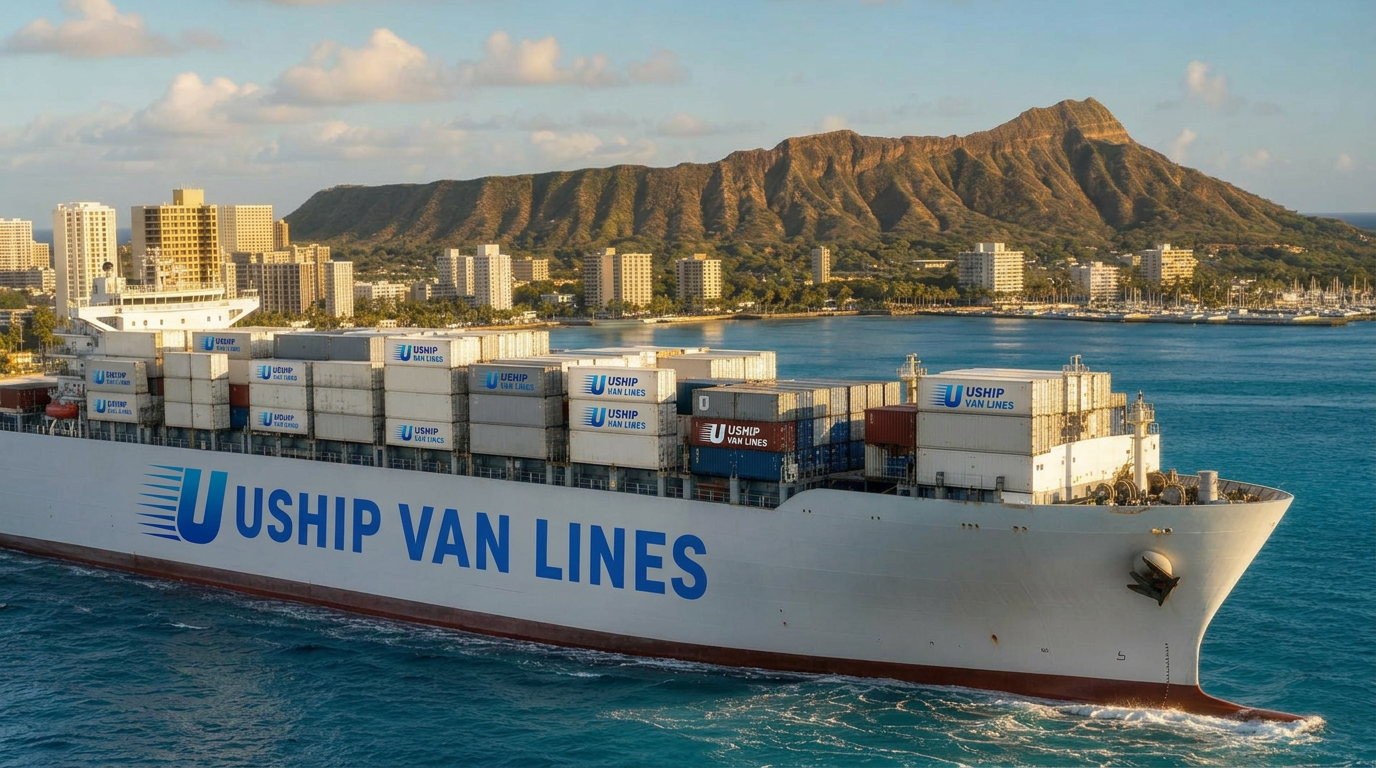
Moving from Hawaii to Jersey City, NJ
Moving from the Hawaiian Islands to Jersey City brings you from Pacific beaches to the bustling Hudson River waterfront, trading aloha spirit for New York metro energy. This cross-Pacific move involves ocean container shipping, mainland transport coordination, and careful timing—more complex than a standard interstate relocation.
Best Alaska & Hawaii Movers, powered by UShip Van Lines, specializes in coordinating these multi-stage moves from Honolulu, Maui, Kauai, and the Big Island directly to Jersey City's urban neighborhoods. Ready to start planning your island-to-East Coast transition? Request a free quote and we'll map out every step of your journey.
Route overview
Understanding the Hawaii–Jersey City Moving Lane
Your belongings travel approximately 4,900 miles from Hawaii to Jersey City, beginning with ocean freight from your island to Long Beach or Oakland, California. From the West Coast port, your container transfers to overland transport across eight states—through Nevada, Utah, Wyoming or Colorado, Nebraska or Iowa, Illinois, Indiana, Pennsylvania, and finally New Jersey. The entire journey combines maritime shipping regulations, cross-country logistics, and final delivery into Jersey City's dense urban environment near Manhattan.
Jersey City has seen tremendous growth as a commuter hub and destination itself, with neighborhoods like Journal Square, the Waterfront, and Bergen-Lafayette attracting residents from across the country and world. Whether you're relocating for New York City career opportunities, family, or a complete lifestyle change, understanding the shipping timeline and logistics ensures your household goods arrive safely while you settle into Garden State life.
This route requires careful coordination between ocean carriers (primarily Matson and Pasha), mainland trucking partners, and local delivery teams familiar with Jersey City's parking restrictions, narrow streets, and high-rise buildings. Most moves take 14–21 days door-to-door, though variables like port congestion, weather, and container availability can extend timelines.
How the moving process works
Your Step-by-Step Moving Process
-
Free Quote & Planning Consultation (Day 1–7): Share your current island location, Jersey City destination address, home size, and preferred moving dates. We provide a detailed cost estimate covering ocean freight, mainland transport, insurance, and any special handling. We'll discuss vehicle shipping separately, restricted items, and Jersey City delivery logistics including building requirements.
-
Pre-Move Survey & Packing (Day 8–21): Our Hawaii partner conducts an in-home or virtual survey to assess your inventory. Professional packing services protect belongings for the ocean voyage and cross-country haul. We supply specialized materials for humidity-sensitive items, electronics, and fragile possessions. You'll receive a detailed inventory list and container loading schedule.
-
Container Loading & Island Pickup (Day 22–24): Our crew loads your household goods into a 20-foot or 40-foot ocean container at your Hawaii residence (Oahu, Maui, Big Island, or Kauai). Items are secured with straps, blankets, and bracing to prevent shifting during the ocean crossing. The sealed container heads to Honolulu port or your island's commercial harbor for inter-island barge transfer if needed.
-
Ocean Transit to California (Day 25–34): Your container ships via Matson or Pasha Lines from Honolulu to Long Beach or Oakland—typically 7–10 days at sea. Ocean carriers maintain regular schedules year-round, though summer and holiday periods may see heavier booking volumes. You receive tracking updates as your container crosses the Pacific.
-
Port Clearance & Mainland Transfer (Day 35–37): After arriving at the California port, your container clears customs (usually quick for household goods), undergoes inspection, and transfers to our mainland trucking partner. The container may be transloaded to a 53-foot truck trailer for more efficient cross-country transport, or continue in the ocean container depending on routing.
-
Cross-Country Transport (Day 38–43): Your shipment travels I-80 or I-70 eastbound across the United States—approximately 2,800 miles and 5–6 days of driving time. Professional drivers coordinate rest stops and route adjustments for weather. You receive GPS tracking and estimated arrival windows as your goods approach the East Coast.
-
Jersey City Delivery & Unloading (Day 44–45): Our New Jersey delivery team contacts you 24–48 hours before arrival to confirm access details—building loading docks, elevator reservations, parking permits, or street closures. The crew unloads your container, places items in designated rooms, reassembles furniture, and removes packing materials. You inspect the shipment and sign off on delivery, noting any concerns for insurance claims.
Estimated moving costs
What Your Move Will Cost
A typical 2–3 bedroom household moving from Hawaii to Jersey City ranges from $7,500 to $14,000, depending on volume, services, and timing. A studio or 1-bedroom condo might cost $4,500–$7,000, while a 4-bedroom home with garage or multiple vehicles can reach $16,000–$22,000.
Primary cost drivers include:
-
Container size and weight: A 20-foot container (approximately 1,100 cubic feet) fits a 2-bedroom home and costs $6,000–$9,000 for ocean freight and mainland transport. A 40-foot container (2,300 cubic feet) accommodates 3–4 bedrooms and runs $10,000–$15,000. Consolidated shipments (sharing container space) offer savings for smaller moves.
-
Island of origin: Oahu shipments from Honolulu often cost slightly less due to direct port access. Maui, Kauai, and Big Island moves add $600–$1,500 for inter-island barge service to Honolulu before the mainland crossing.
-
Packing services: Professional full-pack service adds $1,200–$2,800 depending on home size and specialty items. Fragile-only or partial packing runs $400–$900. Self-packing saves money but increases risk during the long journey.
-
Vehicle shipping: Cars ship separately via roll-on/roll-off (RoRo) vessel from Honolulu to the mainland, then overland to New Jersey. Expect $1,500–$2,200 per vehicle total. Boats, motorcycles, and recreational vehicles require specialized handling and quotes.
-
Insurance coverage: Basic carrier liability covers $0.60 per pound per item—insufficient for most households. Full-value protection costs 1–3% of declared value and covers repair or replacement at current market rates.
-
Storage: If your Jersey City residence isn't ready, mainland storage near the port runs $150–$400 per month for a container. Short-term storage under 30 days may be included in some quotes.
-
Seasonal timing: Summer moves (June–August) and holiday periods cost 10–20% more due to demand. Winter and spring (January–May, September–November) often offer better rates and faster scheduling.
We provide transparent, itemized quotes with no hidden fees. Prices are estimates based on your inventory list—final costs reflect actual weight and services rendered. Request your personalized quote to see exact numbers for your specific move.
Estimated transit times
How Long Your Move Takes
Plan for 14–21 days door-to-door from your Hawaii home to your Jersey City residence under normal conditions. This breaks down into distinct segments:
Hawaii pickup and port delivery: 1–2 days. Container loading at your residence and transport to Honolulu port (or inter-island barge staging for outer islands).
Inter-island transfer (if applicable): 2–4 days for Maui, Kauai, or Big Island shipments to reach Honolulu's Sand Island terminal via barge.
Ocean crossing: 7–10 days from Honolulu to Long Beach/Oakland. Matson and Pasha maintain weekly sailings with predictable schedules. Weather delays are rare but possible during winter storms.
Port processing: 1–2 days for customs clearance, container inspection, and transfer to mainland trucking.
Cross-country transport: 5–7 days from California to New Jersey. Drivers cover approximately 500–600 miles per day with required rest stops.
Final delivery: Coordinated within a 2–3 day window once your shipment reaches the New Jersey area.
Factors that extend timelines:
- Port congestion: Long Beach and Oakland occasionally experience backups during peak shipping seasons, adding 2–5 days.
- Hurricane season: August–October Atlantic storms can delay East Coast deliveries by 1–3 days if Jersey City weather turns severe.
- Holiday schedules: Thanksgiving, Christmas, and New Year's periods may add 3–7 days due to reduced port and trucking operations.
- Container availability: High-demand periods may require waiting 3–5 days for an available container in Hawaii.
- Jersey City access: Urban delivery logistics—securing loading zone permits, coordinating building management, or waiting for elevator access—can add same-day or next-day delays.
We provide tracking updates at each milestone and proactive communication if delays occur. Most customers plan to arrive in Jersey City 3–5 days after their shipment departs Hawaii, settling in while goods are in transit.
Regional logistics
Hawaii Moving Logistics Explained
Container shipping basics: Your household goods travel in a steel ocean container—either 20-foot (1,100 cubic feet, fits 2-bedroom home) or 40-foot (2,300 cubic feet, fits 3–4 bedroom home). Containers are loaded at your residence, sealed, and remain sealed until Jersey City delivery, minimizing handling and loss risk. Consolidated shipments (sharing container space) work for smaller loads but add 2–3 days for terminal cross-docking.
Port operations: Honolulu's Sand Island terminal handles most Hawaii mainland shipments. Matson Lines operates three weekly sailings; Pasha typically runs two. Containers must arrive at the terminal 24–48 hours before sailing for inspection and loading. Long Beach and Oakland serve as primary West Coast ports—both have efficient processes for Hawaii containers, though Long Beach sees heavier commercial volume.
Inter-island connections: If you're moving from Maui, Kauai, or the Big Island, your container travels by inter-island barge to Honolulu before the mainland crossing. Young Brothers operates these services with 2–4 day transit times. This adds $600–$1,500 to your total cost but is seamless—we coordinate all transfers.
Vehicle shipping: Cars ship separately from household goods via RoRo carriers. You drive your vehicle to Honolulu port (or arrange island transport), where it's driven onto a car carrier vessel. Mainland arrival is typically Oakland or San Diego, then overland transport to New Jersey. Allow 3–4 weeks total for vehicle delivery. Vehicles must be empty of personal items and operational (or disclosed as non-running).
Restricted and prohibited items: Hawaii agriculture restrictions don't apply outbound, but you still cannot ship hazardous materials—propane tanks, paint, aerosols, ammunition, cleaning chemicals. Plants and soil require USDA certification if you want to bring them (most people replace plants in New Jersey). Perishable foods spoil during the 14–21 day journey.
Jersey City delivery challenges: Urban delivery requires careful planning. Most buildings need 3–5 days notice for elevator reservations. Street-level homes need parking permits (apply 7–10 days ahead through Jersey City Parking Authority). Narrow streets in older neighborhoods may require shuttle trucks. High-rise buildings often restrict moving to weekday business hours. Communicate your building's requirements early—we'll adjust delivery plans accordingly.
Insurance and valuation: Standard carrier liability ($0.60/lb) is inadequate for ocean moves. We strongly recommend full-value protection, which costs 1–3% of your declared shipment value and covers actual replacement costs. Document high-value items with photos and serial numbers before packing.
Customs and paperwork: Household goods moving within the United States don't require customs declarations in the traditional sense, but Hawaii to mainland shipments undergo agricultural inspection at California ports. Your detailed inventory list speeds this process. Commercial items or business goods may trigger additional review.
Seasonal considerations
Best Times to Move from Hawaii to Jersey City
Winter (December–February): Quieter moving season with better rates and container availability. Pacific crossings remain stable, though occasional winter storms can delay cross-country trucking through mountain passes (I-80 through Wyoming, Pennsylvania). Jersey City winter weather means coordinating delivery around snow events and icy conditions. Book 4–6 weeks ahead.
Spring (March–May): Ideal moving window. Moderate demand keeps costs reasonable, weather improves for mainland transport, and Jersey City experiences mild conditions perfect for move-in. Hawaii's dry season (April–October) means less rain during packing and loading. Ocean carriers maintain full schedules. Book 6–8 weeks ahead as summer approaches.
Summer (June–August): Peak moving season with premium pricing and tighter scheduling. Families relocate before school starts, driving up demand by 20–30%. Hurricane season begins in the Eastern Pacific and Atlantic—typically not a major concern for this route but worth monitoring. Jersey City's summer heat and humidity make move-in days more strenuous. Book 8–12 weeks ahead.
Fall (September–November): Another good window as summer rush subsides. Hurricane season peaks in September (affecting East Coast more than Hawaii for this route), so watch forecasts closely. Port operations remain busy through October with pre-holiday commercial freight, potentially adding 1–2 days to timelines. Jersey City's fall weather is pleasant for delivery. Book 6–8 weeks ahead.
Hawaii-specific considerations: Hurricane season (June–November, peaking August–October) rarely disrupts Honolulu port operations, but tropical storms can delay inter-island barges from Maui or Kauai. Matson and Pasha may adjust sailing schedules 24–48 hours during severe weather warnings.
Jersey City delivery factors: Street parking is notoriously difficult—moving trucks require advance permits from Jersey City Parking Authority. Summer construction seasons may limit access to certain neighborhoods. Winter deliveries need careful coordination around nor'easters and building steam-heat system requirements.
Why choose Best Alaska & Hawaii Movers
Why Best Alaska & Hawaii Movers for Your Jersey City Relocation
-
Specialized Hawaii expertise: We focus exclusively on Alaska and Hawaii moves, understanding the unique challenges of ocean shipping, island logistics, and coordinating with Matson and Pasha carriers. Your move isn't a side project—it's our core competency.
-
Single-point coordination: You work with one team managing every segment—Hawaii pickup, ocean freight, mainland transport, and Jersey City delivery. No handoffs between disconnected vendors. We track your shipment across the Pacific and continent, keeping you informed at every milestone.
-
Transparent pricing: Detailed, itemized quotes break down ocean freight, trucking, insurance, packing, and fees. No surprise charges at delivery. We explain cost drivers and help you make informed decisions about services and timing.
-
Proven mainland partnerships: Our UShip Van Lines network includes vetted, licensed trucking partners and Jersey City delivery teams experienced with urban logistics, building requirements, and parking coordination. We've delivered to every Jersey City neighborhood—Journal Square, Waterfront, Bergen-Lafayette, Greenville, and Heights.
-
Flexible scheduling: We accommodate your timeline, whether you need 2-week rush service or prefer booking months ahead for off-season savings. Our Hawaii partners work around your island lease end dates and Jersey City move-in schedules.
-
Comprehensive insurance options: Beyond basic liability, we offer full-value protection through reputable carriers, plus guidance on documenting your inventory and filing claims if needed (rare, but we're prepared).