
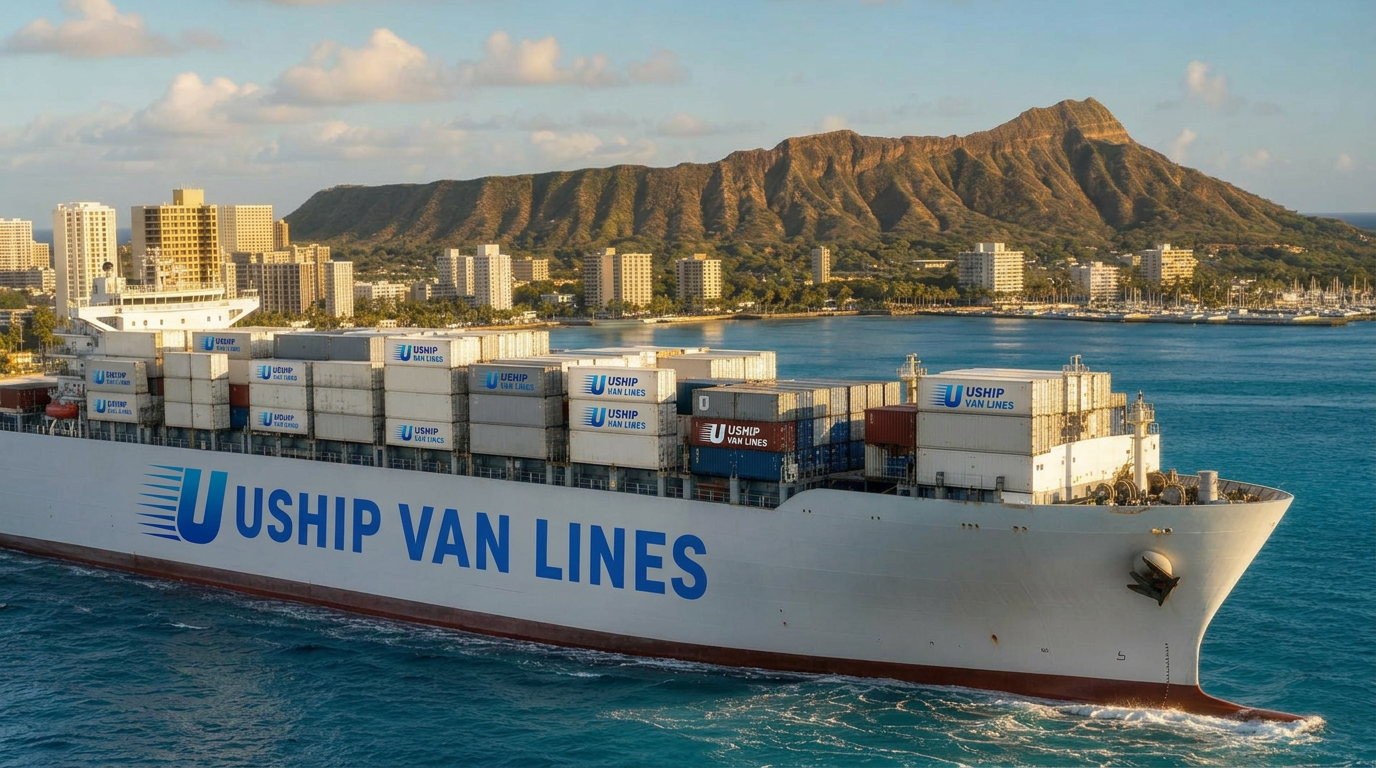
Moving from Hawaii to Fredericksburg, VA
Relocating from the Hawaiian Islands to Fredericksburg, Virginia means trading tropical beaches for historic charm and four distinct seasons. This cross-Pacific move requires specialized ocean container shipping, coordinated logistics across 4,800+ miles, and careful planning to navigate ports, mainland transport, and East Coast delivery.
Whether you're leaving Honolulu, Maui, Kauai, or the Big Island, Best Alaska & Hawaii Movers (powered by UShip Van Lines) connects you with experienced carriers who handle every leg—from island pickup to Fredericksburg doorstep. Request your free quote today and compare vetted movers who specialize in Hawaii-to-mainland relocations.
Route overview
Route Overview: Hawaii to Fredericksburg, VA
Fredericksburg sits in Virginia's historic Rappahannock region, roughly 50 miles south of Washington, D.C. and 60 miles north of Richmond. Your household goods will travel by ocean container from a Hawaiian port (Honolulu, Kahului, Nawiliwili, or Hilo) to the U.S. West Coast—typically Long Beach, Oakland, or Tacoma—then overland approximately 2,800 miles across the country to Virginia's I-95 corridor.
This Hawaii-to-Virginia lane combines maritime logistics with transcontinental trucking. You'll coordinate with ocean carriers (Matson Navigation or Pasha Hawaii), customs clearance at the mainland port, and a domestic moving crew for the final delivery. Because Fredericksburg is a mid-sized city with good highway access, final-mile delivery is straightforward once your container reaches the East Coast.
The route crosses eight to nine states depending on the carrier's preferred interstates (typically I-40 or I-80 east, then I-81 or I-95 south into Virginia). Expect a total transit window of 3–5 weeks door-to-door, with the ocean crossing accounting for roughly two weeks of that timeline.
How the moving process works
The Moving Process: Hawaii to Fredericksburg, VA
-
Request quotes and book your carrier – Contact Best Alaska & Hawaii Movers 6–8 weeks before your move date. Compare quotes, verify carrier credentials, and confirm pickup/delivery windows. Secure your booking with a deposit.
-
Schedule your in-home survey (virtual or physical) – The carrier will assess your inventory, note any oversized items, and provide a detailed estimate. Discuss packing services, crating for fragile items, and whether you'll ship a vehicle separately.
-
Prepare for island pickup – Declutter and donate items you won't move. Reserve an elevator if you're in a condo. Confirm access for the truck or container on your street. If you're on a neighbor island (Maui, Kauai, Big Island), arrange inter-island barge or air freight to Honolulu if your carrier consolidates there.
-
Load and seal your container – Professional movers load your belongings into a 20' or 40' ocean container (or a shared consolidation). The container is sealed, trucked to the port (Honolulu's Pier 2 or Sand Island), and loaded onto the next available Matson or Pasha sailing to the West Coast.
-
Ocean transit and mainland port operations – Your container sails 5–7 days to Long Beach, Oakland, or Tacoma. Upon arrival, it's offloaded, cleared through U.S. Customs (usually quick for household goods), and either reloaded onto a chassis for trucking or transferred to rail if your carrier uses intermodal.
-
Cross-country trucking – The container or your goods (if deconsolidated) travel overland via I-40/I-80 east, then south on I-81 or I-95 into Virginia. Transit takes 5–10 days depending on weather, driver hours-of-service, and whether the carrier runs team drivers.
-
Final delivery in Fredericksburg – The crew unloads at your new residence, reassembles furniture, and removes packing materials. Inspect for damage, sign the bill of lading, and file any claims within the carrier's deadline (typically 9 months for interstate moves).
Estimated moving costs
Cost Estimate: What to Budget
A typical 2–3 bedroom household move from Hawaii to Fredericksburg, VA ranges between $6,500 and $12,000, depending on volume, services, and season. A studio or 1-bedroom might cost $4,000–$6,000; a 4-bedroom home can exceed $14,000.
Key cost drivers include:
- Container size and volume – A full 20' container holds roughly 1,000–1,200 cubic feet; a 40' container holds 2,200–2,400 cubic feet. Shared (LCL) loads price by cubic footage and weight.
- Island of origin – Neighbor island pickups (Maui, Kauai, Big Island) add $500–$1,200 for inter-island barge or consolidation in Honolulu.
- Packing services – Full-service packing adds $800–$2,500. DIY packing saves money but requires sturdy boxes and proper cushioning for the ocean voyage.
- Vehicle shipping – Shipping a car separately via roll-on/roll-off (RORO) costs $1,200–$1,800 Hawaii-to-East Coast. Some carriers offer discounts when you bundle household goods and a vehicle.
- Insurance – Basic carrier liability is 60¢ per pound per article. Full-value protection (replacement cost) adds 1–3 % of declared value.
- Storage – If you need short-term storage at the mainland port or in Fredericksburg, budget $150–$300/month for a 10×10 unit.
- Season – Summer (June–August) and early fall see higher demand and tighter container availability, often adding 10–15 % to base rates.
These are market averages. Every move is unique, so request a detailed, binding estimate that itemizes ocean freight, mainland trucking, accessorial charges, and insurance. Never rely on a quote that doesn't specify container allocation and delivery window.
Estimated transit times
Transit Time: Door-to-Door Timeline
Plan for 21–35 days total door-to-door. Here's the breakdown:
- Island pickup to port – 1–3 days (longer if you're on a neighbor island and require barge consolidation in Honolulu).
- Port dwell and vessel loading – 2–5 days. Matson and Pasha sail weekly, but your container may wait for the next available space.
- Ocean crossing – 5–7 days from Honolulu to Long Beach/Oakland, or 7–9 days to Tacoma.
- Mainland port operations – 2–4 days for offloading, customs clearance, and chassis/rail assignment.
- Cross-country trucking – 6–10 days. Team drivers shorten this to 5–7 days; solo drivers and rail intermodal stretch it to 10–12 days.
- Final delivery window – Carriers typically offer a 2–3 day delivery window. Confirm 24–48 hours in advance.
Factors that extend timelines:
- Port congestion – West Coast ports can experience delays during peak import seasons (late summer, pre-holiday).
- Weather – Winter storms across the Rockies or Mid-Atlantic ice events can pause trucking for 1–3 days.
- Neighbor island logistics – Moves from Maui, Kauai, or Big Island add 3–5 days for inter-island barge.
- Customs holds – Rare, but if your shipment is flagged for agricultural inspection (Hawaii has strict export rules for soil/plants), expect a 1–2 day delay.
Book early and build buffer time if you have a firm start date for work or housing in Fredericksburg.
Regional logistics
Hawaii-Specific Logistics: What You Need to Know
Ports and ocean carriers: Most Hawaii moves funnel through Honolulu's Sand Island or Pier 2 terminals. Matson Navigation (the dominant carrier) and Pasha Hawaii sail weekly to Long Beach, Oakland, and Tacoma. If you're on Maui, Kauai, or the Big Island, your goods are typically barged to Honolulu first, then containerized for the mainland voyage. Some carriers consolidate neighbor island shipments; ask if direct service is available.
Container vs. consolidation: A dedicated 20' container is cost-effective for 2+ bedroom moves. Smaller loads (studio, 1-bedroom) can share space in a consolidation (LCL), priced by cubic feet and weight. Exclusive containers offer faster loading/unloading and less handling; shared containers save money but add 2–4 days for deconsolidation at the mainland port.
Customs and inspections: Household goods moving from Hawaii to the mainland are domestic shipments, so formal customs clearance is minimal. However, the USDA inspects for prohibited agricultural items—soil, certain plants, fresh produce. Remove or declare these before pickup to avoid fines and delays. Your carrier will provide a checklist.
Vehicle shipping: If you're shipping a car, book separately via a RORO carrier like Matson Auto or Pasha. Drop off your vehicle (clean, ¼ tank of gas, no personal items except floor mats and spare tire) at the Honolulu port 3–5 days before sailing. It will arrive at a West Coast terminal (Long Beach, Richmond, Tacoma), then you arrange mainland transport to Fredericksburg (add $1,200–$1,600 for enclosed cross-country auto transport).
Restricted and prohibited items: Ocean carriers prohibit hazardous materials (propane tanks, gasoline, paint, aerosols), perishables, and high-value items (jewelry, cash, irreplaceable documents). Pack valuables in your carry-on. Flammable liquids and batteries must be drained or removed.
Last-mile delivery in Fredericksburg: Fredericksburg's historic downtown has narrow streets and limited truck access. If you're moving into Old Town or near the Rappahannock River, confirm your carrier can navigate or will use a shuttle truck. Most suburban neighborhoods off I-95 (Celebrate, Fall Hill, Southpoint) have no access issues.
Storage options: If your Fredericksburg lease or closing isn't aligned with your delivery window, ask about storage-in-transit (SIT). Many carriers offer 30–90 days of warehousing at the mainland port or in a regional facility. Budget $150–$300/month for a 10×10 climate-controlled unit.
Seasonal considerations
Seasonal Considerations: Timing Your Move
Summer (June–August): Peak moving season. Families relocate before the school year, and container space is tight. Expect 10–15 % higher rates and longer booking lead times (8–10 weeks recommended). Heat and humidity in Fredericksburg mean you'll want climate-controlled storage if there's a gap between your arrival and your household goods.
Fall (September–November): Hurricane season in Hawaii runs June–November, peaking in August–September. While modern container ships are built for rough seas, severe storms can delay sailings by 1–3 days. Mainland trucking benefits from cooler weather and fewer road closures. Rates drop slightly after Labor Day.
Winter (December–February): Off-peak pricing, but cross-country trucking faces snow and ice—especially over the Rockies (I-80) and through the Mid-Atlantic (I-81, I-95). Allow extra buffer days. Holiday weeks (Christmas, New Year's) see skeleton port and carrier crews; avoid moves scheduled for delivery December 20–January 5.
Spring (March–May): Moderate weather, good availability, and competitive pricing. Early spring (March–April) is ideal for Hawaii-to-East Coast moves: ocean conditions are calm, mainland roads are clear, and you'll avoid both hurricane season and peak summer rates. Cherry blossom season in nearby D.C. is a bonus for your arrival.
Hurricane preparedness: If your move coincides with a named storm, Matson and Pasha may delay sailings until the storm passes. Your carrier will notify you of any rescheduling. Maintain flexible move-out dates if booking during hurricane season.
Why choose Best Alaska & Hawaii Movers
Why Choose Best Alaska & Hawaii Movers
- Specialized Hawaii-mainland expertise – We connect you with carriers who run the Hawaii-to-East Coast lane regularly, understand island pickup logistics, and have established relationships with Matson and Pasha.
- Transparent, no-obligation quotes – Compare multiple vetted movers through our UShip Van Lines platform. Every quote itemizes ocean freight, mainland trucking, insurance, and accessorials—no surprise fees.
- End-to-end coordination – From your Oahu condo or Big Island home to your Fredericksburg doorstep, we manage the handoff between ocean carrier, port operations, and long-haul trucking. One point of contact, seamless tracking.
- Vetted, licensed carriers – Every mover in our network is screened for proper licensing (USDOT, FMCSA), insurance, and safety records. Read verified reviews and choose the partner that fits your budget and timeline.
- Flexible service levels – Need full-service packing, vehicle shipping, or climate-controlled storage? Our carriers offer modular options so you pay only for what you need.